We show that remotely hosted applications employing in-context learning when augmented with a retrieval function to select in-context examples can be vulnerable to membership-inference attacks even when the service provider and users are separate parties. We propose two black-box membership inference attacks that exploit query text prefixes to distinguish member from non-member inputs. The first attack uses a reference model to estimate an otherwise unavailable loss metric. The second attack improves upon it by eliminating the reference model and instead computing a membership statistic through a simple but novel weighted-averaging scheme. Our comprehensive empirical evaluations consider a stricter case in which the adversary has a paraphrased version of the text in the queries and show that our attacks can exhibit stronger resilience to paraphrasing and outperform three prior attacks in many cases with small number of prefixes. We also adapt an existing ensemble prompting defense to our setting, demonstrating that it substantially mitigates the privacy leakage caused by our second attack.
Differentially private in-context learning (DP-ICL) has recently become an active research topic due to the inherent privacy risks of in-context learning. However, existing approaches overlook a critical component of modern large language model (LLM) pipelines: the similarity search used to retrieve relevant context data. In this work, we introduce a DP framework for in-context learning that integrates nearest neighbor search of relevant examples in a privacy-aware manner. Our method outperforms existing baselines by a substantial margin across all evaluated benchmarks, achieving more favorable privacy-utility trade-offs. To achieve this, we employ nearest neighbor retrieval from a database of context data, combined with a privacy filter that tracks the cumulative privacy cost of selected samples to ensure adherence to a central differential privacy budget. Experimental results on text classification and document question answering show a clear advantage of the proposed method over existing baselines.
Fully decentralized training of machine learning models offers significant advantages in scalability, robustness, and fault tolerance. However, achieving differential privacy (DP) guarantees in such settings is challenging due to the absence of a central aggregator and varying trust assumptions among nodes. We present a novel privacy analysis of decentralized gossip-based averaging algorithms with additive node-level noise, from arbitrary views of nodes in a graph and especially consider the averaging over nearest neighbors with secure summation and individual node-wise views. Our main contribution is a an analytical framework based on a linear systems formulation that accurately characterizes privacy leakage between nodes across different scenarios. In case the gossip averaging happens via secure summation, we show that the Rényi DP parameter growth is asymptotically O(T), where T is the number of training rounds, similarly as in the case of central aggregation.
Training machine learning models with differential privacy (DP) is commonly done using first-order methods such as DP-SGD. In the non-private setting, second-order methods try to mitigate the slow convergence of first-order methods. The DP methods that use second-order information still provide faster convergence, however the existing methods cannot be easily turned into federated learning (FL) algorithms without an excessive communication cost required by the exchange of the Hessian or feature covariance information between the nodes and the server. In this paper we propose DP-FedNew, a DP method for FL that uses second-order information and results in per-iteration communication cost similar to first-order methods such as DP Federated Averaging.
Tuning the hyperparameters of differentially private (DP) machine learning (ML) algorithms often requires use of sensitive data and this may leak private information via hyperparameter values. Recently, Papernot and Steinke (2022) proposed a certain class of DP hyperparameter tuning algorithms, where the number of random search samples is randomized itself. Commonly, these algorithms still considerably increase the DP privacy parameter $\varepsilon$ over non-tuned DP ML model training and can be computationally heavy as evaluating each hyperparameter candidate requires a new training run. We focus on lowering both the DP bounds and the computational cost of these methods by using only a random subset of the sensitive data for the hyperparameter tuning and by extrapolating the optimal values to a larger dataset. We provide a R\'enyi differential privacy analysis for the proposed method and experimentally show that it consistently leads to better privacy-utility trade-off than the baseline method by Papernot and Steinke.
In recent years, local differential privacy (LDP) has emerged as a technique of choice for privacy-preserving data collection in several scenarios when the aggregator is not trustworthy. LDP provides client-side privacy by adding noise at the user's end. Thus, clients need not rely on the trustworthiness of the aggregator. In this work, we provide a noise-aware probabilistic modeling framework, which allows Bayesian inference to take into account the noise added for privacy under LDP, conditioned on locally perturbed observations. Stronger privacy protection (compared to the central model) provided by LDP protocols comes at a much harsher privacy-utility trade-off. Our framework tackles several computational and statistical challenges posed by LDP for accurate uncertainty quantification under Bayesian settings. We demonstrate the efficacy of our framework in parameter estimation for univariate and multi-variate distributions as well as logistic and linear regression.
Generalized linear models (GLMs) such as logistic regression are among the most widely used arms in data analyst's repertoire and often used on sensitive datasets. A large body of prior works that investigate GLMs under differential privacy (DP) constraints provide only private point estimates of the regression coefficients, and are not able to quantify parameter uncertainty. In this work, with logistic and Poisson regression as running examples, we introduce a generic noise-aware DP Bayesian inference method for a GLM at hand, given a noisy sum of summary statistics. Quantifying uncertainty allows us to determine which of the regression coefficients are statistically significantly different from zero. We provide a previously unknown tight privacy analysis and experimentally demonstrate that the posteriors obtained from our model, while adhering to strong privacy guarantees, are close to the non-private posteriors.
Projecting high-dimensional environment observations into lower-dimensional structured representations can considerably improve data-efficiency for reinforcement learning in domains with limited data such as robotics. Can a single generally useful representation be found? In order to answer this question, it is important to understand how the representation will be used by the agent and what properties such a good representation should have. In this paper we systematically evaluate a number of common learnt and hand-engineered representations in the context of three robotics tasks: lifting, stacking and pushing of 3D blocks. The representations are evaluated in two use-cases: as input to the agent, or as a source of auxiliary tasks. Furthermore, the value of each representation is evaluated in terms of three properties: dimensionality, observability and disentanglement. We can significantly improve performance in both use-cases and demonstrate that some representations can perform commensurate to simulator states as agent inputs. Finally, our results challenge common intuitions by demonstrating that: 1) dimensionality strongly matters for task generation, but is negligible for inputs, 2) observability of task-relevant aspects mostly affects the input representation use-case, and 3) disentanglement leads to better auxiliary tasks, but has only limited benefits for input representations. This work serves as a step towards a more systematic understanding of what makes a good representation for control in robotics, enabling practitioners to make more informed choices for developing new learned or hand-engineered representations.
Concern about how to aggregate sensitive user data without compromising individual privacy is a major barrier to greater availability of data. Differential privacy has emerged as an accepted model to release sensitive information while giving a statistical guarantee for privacy. Many different algorithms are possible to address different target functions. We focus on the core problem of count queries, and seek to design mechanisms to release data associated with a group of n individuals. Prior work has focused on designing mechanisms by raw optimization of a loss function, without regard to the consequences on the results. This can leads to mechanisms with undesirable properties, such as never reporting some outputs (gaps), and overreporting others (spikes). We tame these pathological behaviors by introducing a set of desirable properties that mechanisms can obey. Any combination of these can be satisfied by solving a linear program (LP) which minimizes a cost function, with constraints enforcing the properties. We focus on a particular cost function, and provide explicit constructions that are optimal for certain combinations of properties, and show a closed form for their cost. In the end, there are only a handful of distinct optimal mechanisms to choose between: one is the well-known (truncated) geometric mechanism; the second a novel mechanism that we introduce here, and the remainder are found as the solution to particular LPs. These all avoid the bad behaviors we identify. We demonstrate in a set of experiments on real and synthetic data which is preferable in practice, for different combinations of data distributions, constraints, and privacy parameters.
When encountering novel objects, humans are able to infer a wide range of physical properties such as mass, friction and deformability by interacting with them in a goal driven way. This process of active interaction is in the same spirit as a scientist performing experiments to discover hidden facts. Recent advances in artificial intelligence have yielded machines that can achieve superhuman performance in Go, Atari, natural language processing, and complex control problems; however, it is not clear that these systems can rival the scientific intuition of even a young child. In this work we introduce a basic set of tasks that require agents to estimate properties such as mass and cohesion of objects in an interactive simulated environment where they can manipulate the objects and observe the consequences. We found that deep reinforcement learning methods can learn to perform the experiments necessary to discover such hidden properties. By systematically manipulating the problem difficulty and the cost incurred by the agent for performing experiments, we found that agents learn different strategies that balance the cost of gathering information against the cost of making mistakes in different situations. We also compare our learned experimentation policies to randomized baselines and show that the learned policies lead to better predictions.
In this paper, we study the problem of computing $U$-statistics of degree $2$, i.e., quantities that come in the form of averages over pairs of data points, in the local model of differential privacy (LDP). The class of $U$-statistics covers many statistical estimates of interest, including Gini mean difference, Kendall's tau coefficient and Area under the ROC Curve (AUC), as well as empirical risk measures for machine learning problems such as ranking, clustering and metric learning. We first introduce an LDP protocol based on quantizing the data into bins and applying randomized response, which guarantees an $\epsilon$-LDP estimate with a Mean Squared Error (MSE) of $O(1/\sqrt{n}\epsilon)$ under regularity assumptions on the $U$-statistic or the data distribution. We then propose a specialized protocol for AUC based on a novel use of hierarchical histograms that achieves MSE of $O(\alpha^3/n\epsilon^2)$ for arbitrary data distribution. We also show that 2-party secure computation allows to design a protocol with MSE of $O(1/n\epsilon^2)$, without any assumption on the kernel function or data distribution and with total communication linear in the number of users $n$. Finally, we evaluate the performance of our protocols through experiments on synthetic and real datasets.
The study of object representations in computer vision has primarily focused on developing representations that are useful for image classification, object detection, or semantic segmentation as downstream tasks. In this work we aim to learn object representations that are useful for control and reinforcement learning (RL). To this end, we introduce Transporter, a neural network architecture for discovering concise geometric object representations in terms of keypoints or image-space coordinates. Our method learns from raw video frames in a fully unsupervised manner, by transporting learnt image features between video frames using a keypoint bottleneck. The discovered keypoints track objects and object parts across long time-horizons more accurately than recent similar methods. Furthermore, consistent long-term tracking enables two notable results in control domains -- (1) using the keypoint co-ordinates and corresponding image features as inputs enables highly sample-efficient reinforcement learning; (2) learning to explore by controlling keypoint locations drastically reduces the search space, enabling deep exploration (leading to states unreachable through random action exploration) without any extrinsic rewards.
Counting the fraction of a population having an input within a specified interval i.e. a range query, is a fundamental data analysis primitive. Range queries can also be used to compute other core statistics such as quantiles, and to build prediction models. However, frequently the data is subject to privacy concerns when it is drawn from individuals, and relates for example to their financial, health, religious or political status. In this paper, we introduce and analyze methods to support range queries under the local variant of differential privacy [23], an emerging standard for privacy-preserving data analysis. The local model requires that each user releases a noisy view of her private data under a privacy guarantee. While many works address the problem of range queries in the trusted aggregator setting, this problem has not been addressed specifically under untrusted aggregation (local DP) model even though many primitives have been developed recently for estimating a discrete distribution. We describe and analyze two classes of approaches for range queries, based on hierarchical histograms and the Haar wavelet transform. We show that both have strong theoretical accuracy guarantees on variance. In practice, both methods are fast and require minimal computation and communication resources. Our experiments show that the wavelet approach is most accurate in high privacy settings, while the hierarchical approach dominates for weaker privacy requirements.
Exploration in environments with sparse rewards is a key challenge for reinforcement learning. How do we design agents with generic inductive biases so that they can explore in a consistent manner instead of just using local exploration schemes like epsilon-greedy? We propose an unsupervised reinforcement learning agent which learns a discrete pixel grouping model that preserves spatial geometry of the sensors and implicitly of the environment as well. We use this representation to derive geometric intrinsic reward functions, like centroid coordinates and area, and learn policies to control each one of them with off-policy learning. These policies form a basis set of behaviors (options) which allows us explore in a consistent way and use them in a hierarchical reinforcement learning setup to solve for extrinsically defined rewards. We show that our approach can scale to a variety of domains with competitive performance, including navigation in 3D environments and Atari games with sparse rewards.
We investigate using reinforcement learning agents as generative models of images (Ganin et al., 2018). A generative agent controls a simulated painting environment, and is trained with rewards provided by a discriminator network simultaneously trained to assess the realism of the agent’s samples, either unconditional or reconstructions. Compared to prior work, we make a number of improvements to the architectures of the agents and discriminators that lead to intriguing and at times surprising results. We find that when sufficiently constrained, generative agents can learn to produce images with a degree of visual abstraction, despite having only ever seen real photographs (no human brush strokes). And given enough time with the painting environment, they can produce images with considerable realism. These results show that, under the right circumstances, some aspects of human drawing can emerge from simulated embodiment, without the need for external supervision, imitation or social cues. Finally, we note the framework’s potential for use in creative applications. Pa rs in g Reconstruction Unsupervised Abstraction Emergent Styles Increased Realism Figure 1: Despite not seeing examples of human drawings, generative agents can produce images with a degree of visual abstraction, in a diverse array of styles, and they can scale to approach realistic results. Agents can also learn to reconstruct, for instance parsing Omniglot characters into strokes. See https://learning-to-paint.github.io for an interactive version of this paper, with videos. ar X iv :1 91 0. 01 00 7v 1 [ cs .C V ] 2 O ct 2 01 9
Learning to control an environment without hand-crafted rewards or expert data remains challenging and is at the frontier of reinforcement learning research. We present an unsupervised learning algorithm to train agents to achieve perceptually-specified goals using only a stream of observations and actions. Our agent simultaneously learns a goal-conditioned policy and a goal achievement reward function that measures how similar a state is to the goal state. This dual optimization leads to a co-operative game, giving rise to a learned reward function that reflects similarity in controllable aspects of the environment instead of distance in the space of observations. We demonstrate the efficacy of our agent to learn, in an unsupervised manner, to reach a diverse set of goals on three domains -- Atari, the DeepMind Control Suite and DeepMind Lab.
We investigate using reinforcement learning agents as generative models of images (extending arXiv:1804.01118). A generative agent controls a simulated painting environment, and is trained with rewards provided by a discriminator network simultaneously trained to assess the realism of the agent's samples, either unconditional or reconstructions. Compared to prior work, we make a number of improvements to the architectures of the agents and discriminators that lead to intriguing and at times surprising results. We find that when sufficiently constrained, generative agents can learn to produce images with a degree of visual abstraction, despite having only ever seen real photographs (no human brush strokes). And given enough time with the painting environment, they can produce images with considerable realism. These results show that, under the right circumstances, some aspects of human drawing can emerge from simulated embodiment, without the need for external supervision, imitation or social cues. Finally, we note the framework's potential for use in creative applications.
Advances in deep generative networks have led to impressive results in recent years. Nevertheless, such models can often waste their capacity on the minutiae of datasets, presumably due to weak inductive biases in their decoders. This is where graphics engines may come in handy since they abstract away low-level details and represent images as high-level programs. Current methods that combine deep learning and renderers are limited by hand-crafted likelihood or distance functions, a need for large amounts of supervision, or difficulties in scaling their inference algorithms to richer datasets. To mitigate these issues, we present SPIRAL, an adversarially trained agent that generates a program which is executed by a graphics engine to interpret and sample images. The goal of this agent is to fool a discriminator network that distinguishes between real and rendered data, trained with a distributed reinforcement learning setup without any supervision. A surprising finding is that using the discriminator's output as a reward signal is the key to allow the agent to make meaningful progress at matching the desired output rendering. To the best of our knowledge, this is the first demonstration of an end-to-end, unsupervised and adversarial inverse graphics agent on challenging real world (MNIST, Omniglot, CelebA) and synthetic 3D datasets.
Local differential privacy (LDP), where users randomly perturb their inputs to provide plausible deniability of their data without the need for a trusted party, has been adopted recently by several major technology organizations, including Google, Apple and Microsoft. This tutorial aims to introduce the key technical underpinnings of these deployed systems, to survey current research that addresses related problems within the LDP model, and to identify relevant open problems and research directions for the community.
 Josh Tenenbaum合作论文数Department of Brain and Cognitive Sciences, Massachusetts Institute of Technology;Computer Science & Artificial Intelligence Laboratory, Schwarzman College of Computing, Massachusetts Institute of Technology10
 Divesh Srivastava合作论文数AT&T Chief Data Office6
 Graham Cormode合作论文数Department of Computer Science, St John's College, University of Oxford;Meta6
 Ilker Yildirim合作论文数Department of Interdepartmental Neuroscience, Yale School of Medicine, Yale University5
 Antti Koskela合作论文数Nokia Bell Labs4
 Ali Eslami合作论文数Google DeepMind;Gemini4
 Pushmeet Kohli合作论文数Google DeepMind4
 Oriol Vinyals合作论文数Google DeepMind4
 Catalin Ionescu合作论文数DeepMind;Institute for Numerical Simulation, University of Bonn4
 Vikash Mansinghka合作论文数Department of Brain and Cognitive Sciences, Massachusetts Institute of Technology4
 Igor Babuschkin合作论文数xAI3
 Jiajun Wu (吴佳俊)合作论文数Computer Science Department, Stanford University3
 Yaroslav Ganin合作论文数OpenAI3
 Karthik Narasimhan合作论文数Department of Computer Science, School of Engineering and Applled Sclence, Princeton University;Sierra3
 Ardavan Saeedi合作论文数Optum AI3
 Volodymyr Mnih合作论文数Google DeepMind3Andy Ballard合作论文数2
 Will Whitney合作论文数DeepMind2
 Ankush Gupta合作论文数DeepMind2Joonas Jälkö合作论文数2
 Malcolm Reynolds合作论文数Google DeepMind2John Mellor合作论文数2
 Michael Janner合作论文数OpenAI2
 Pulkit Agrawal合作论文数Department of Electrical Engineering and Computer Science, School of Engineering, Massachusetts Institute of Technology2
 Peter Battaglia合作论文数Google DeepMind2
 Antti Honkela合作论文数Neural Networks Research Centre, Helsinki University of Technology2
 Samuel Kaski合作论文数Aalto University;Centre for AI Fundamentals, The University of Manchester2
 Misha Denil合作论文数DeepMind2
 Nando de Freitas合作论文数Microsoft AI;Canadian Institute for Advanced Research2
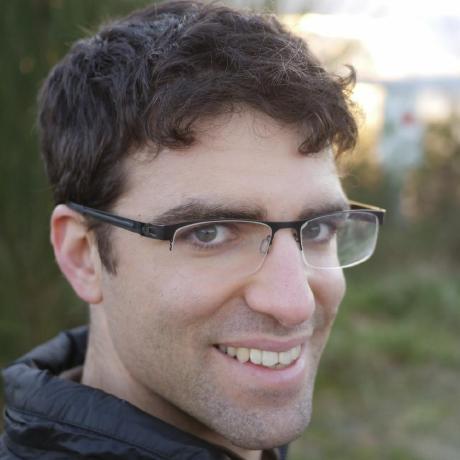 Tom Erez合作论文数Google DeepMind2
 Winrich Freiwald合作论文数Laboratory of Neural Systems, The Rockefeller University2
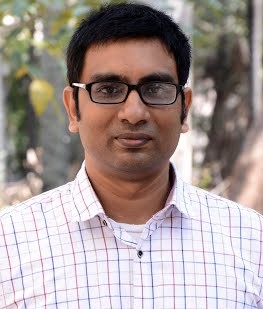 John Augustine合作论文数Department of Computer Science and Engineering, Indian Institute of Technology Madras2
 Samuel J. Gershman合作论文数Department of Psychology, Harvard University;Center for Brain Science, Harvard University2
 Theophane Weber合作论文数Google DeepMind2
 Dan Rosenbaum合作论文数Department of Computer Science, University of Haifa2
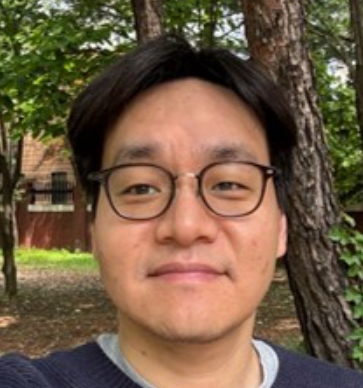 Eunbyung Park合作论文数Department of Artificial Intelligence, School of Computing, Yonsei University2
 Andriy Mnih合作论文数Google2Tom Van de Wiele合作论文数1Thomas Lampe合作论文数Google DeepMind1
 Steven Hansen合作论文数Google DeepMind1Simanta Gautam合作论文数1
 Adrià Gascón合作论文数Google Research1
 Mounssif Krouka合作论文数Centre for Wireless Communications (CWC),, University of Oulu1
 Amir Arsalan Soltani合作论文数Department of Psychology, Boston College1
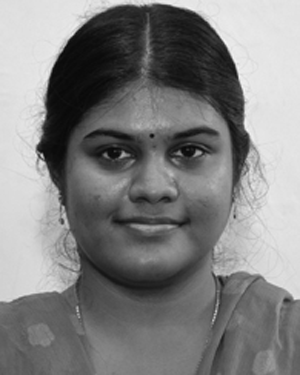 Sumathi Sivasubramaniam合作论文数Indian Statistical Institute1
 Tim Hertweck合作论文数Google DeepMind1James Bell合作论文数Google UK Ltd1Denis Teplyashin合作论文数Google DeepMind1
 Peter Robinson合作论文数Department of Computer Science, College of Engineering, City University of Hong Kong1




