Flow-matching policies hold great promise for reinforcement learning (RL) by capturing complex, multi-modal action distributions. However, their practical application is often hindered by prohibitive inference latency and ineffective online exploration. Although recent works have employed one-step distillation for fast inference, the structure of the initial noise distribution remains an overlooked factor that presents significant untapped potential. This overlooked factor, along with the challenge of controlling policy stochasticity, constitutes two critical areas for advancing distilled flow-matching policies. To overcome these limitations, we propose GoldenStart (GS-flow), a policy distillation method with Q-guided priors and explicit entropy control. Instead of initializing generation from uninformed noise, we introduce a Q-guided prior modeled by a conditional VAE. This state-conditioned prior repositions the starting points of the one-step generation process into high-Q regions, effectively providing a ``golden start'' that shortcuts the policy to promising actions. Furthermore, for effective online exploration, we enable our distilled actor to output a stochastic distribution instead of a deterministic point. This is governed by entropy regularization, allowing the policy to shift from pure exploitation to principled exploration. Our integrated framework demonstrates that by designing the generative startpoint and explicitly controlling policy entropy, it is possible to achieve efficient and exploratory policies, bridging the generative models and the practical actor-critic methods. We conduct extensive experiments on offline and online continuous control benchmarks, where our method significantly outperforms prior state-of-the-art approaches.
The integration of Large Language Models (LLMs) into the natural sciences marks a shift from specialized discriminative models to generalist generative agents. However, adapting LLMs to chemistry presents a core challenge: the mismatch between the linear, ambiguous nature of natural language and the discrete, topological, and physical nature of molecules. This review provides a systematic framework for bridging this gap, organizing recent advances through the dual lenses of representation alignment and cognitive mechanism. First, we examine how molecular modalities are adapted to the transformer architecture, progressing from Linguistic Linearization, which optimizes symbolic grammars such as SMILES and SELFIES, to Topological Perception, which injects graph inductive biases through adapters and projectors, and finally to Geometric Grounding, which encodes 3D physical reality and equivariance. Second, we analyze how LLMs acquire and deploy chemical knowledge through three complementary pathways: Internalization, which cultivates parametric intuition through pre-training and alignment; Externalization, which anchors generation to physical reality via retrieval and tool orchestration; and Reasoning, which we further decompose into four strategies spanning contextual analogy, sequential deduction, strategic planning, and introspective refinement. Building on this dual-lens framework, we map downstream capabilities onto a four-level task hierarchy spanning Semantic Translation, Predictive Inference, Constrained Generation, and Autonomous Discovery, and we identify three coupled challenges at the representation-cognition interface, outlining a research roadmap toward chemically grounded AI systems.
Cross-task generalization (CTG) enables large language models (LLMs) to handle unseen tasks proficiently, enhancing their adaptability in real-world scenarios. However, existing methods relying on per-token dynamic routing to multiple trained LoRA adapters face high computational and GPU memory costs. Recent Representation Fine-Tuning (ReFT) enhances efficiency for single-task adaptation by editing only prefix and suffix token representations. However, the semantic ambiguity of tokens and absence of a self-guided mechanism for parameter selection in unseen tasks limits their application to CTG. To this end, we propose RaMod, a Representation-Aware Modularity framework to extend the ReFT paradigm to CTG through two novel components: (i) Dual-Modular Representation & Parameter Fine-tuning, which manipulates only a strategically chosen subset of hidden representations with modular interventions to guide the model toward solving unseen tasks; and (ii) Asynchronous Orchestrator, which proactively allocates and releases GPU memory for selected interventions, thereby minimizing storage overhead. Extensive experiments demonstrate that RaMod not only achieves superior CTG performance but also substantially reduces the overhead of the latest CTG baseline, achieving 83%, 100%, and 79% reduction in its additional prefill time, generation delays, and memory consumption relative to original LLMs.
On-policy distillation (OPD) provides dense token-level supervision by asking a teacher to score student-generated rollouts. However, when the student drifts into an unrecoverable prefix, the teacher may locally agree with the degraded state, producing low reverse KL but little corrective training signal. We identify this persistent regime as a low-KL agreement trap. Further analyses show that tokens during and after such traps produce less useful supervision signals. We propose KAT (KL Agreement Trap Termination), an online OPD termination rule that detects persistent low-KL agreement with a dynamic training-adaptive threshold. By filtering weak supervision from degenerate agreement, KAT improves avg@k accuracy by 2.66
Graph generation plays a pivotal role across numerous domains, including molecular design and knowledge graph construction. Although existing methods achieve considerable success in generating realistic graphs, their interpretability remains limited, often obscuring the rationale behind structural decisions. To address this challenge, we propose the Neural Graph Topic Model (NGTM), a novel generative framework inspired by topic modeling in natural language processing. NGTM represents graphs as mixtures of latent topics, each defining a distribution over semantically meaningful substructures, which facilitates explicit interpretability at both local and global scales. The generation process transparently integrates these topic distributions with a global structural variable, enabling clear semantic tracing of each generated graph. Experiments demonstrate that NGTM achieves competitive generation quality while uniquely enabling fine-grained control and interpretability, allowing users to tune structural features or induce biological properties through topic-level adjustments.
Flow-matching policies are promising for imitation learning because they model complex multimodal action distributions. However, their stochasticity is largely passive: repeated sampling may yield diverse behaviors, but users cannot directly choose among valid continuations from the same state. We propose Source-Lifted Flow Matching (SL-FM), a source-intervenable flow-matching policy that exposes such a handle while keeping the velocity field shared and latent-free. The handle selects only the source endpoint of the conditional flow, not a mode-specific field, preserving the standard formulation while avoiding decomposition into separate mode-conditioned dynamics. The core mechanism is Orthogonal Source Lifting, designed to prevent path-crossing ambiguity. Instead of partitioning target actions by mode, SL-FM lifts handle-specific sources into auxiliary orthogonal coordinates and keeps targets in the original action subspace. This preserves the demonstrated action distribution while allowing one shared field to carry different branches without merging at crossings. To keep handles usable across states, we learn a state-dependent source mixture end to end and use a responsibility floor, giving each handle weak supervision and mitigating dead modes. Experiments on crossing-flow diagnostics and robot-control benchmarks show that SL-FM converts passive source randomness into an actionable intervention variable. It removes crossing-induced composite trajectories, changes future routes in 91.1% of matched-prefix interventions, and achieves strong free-deployment performance, with improvements in several benchmark settings. Overall, source geometry provides actionable multimodal control without conditioning the velocity field on the selected mode.
In the era of the knowledge economy, understanding how job skills influence salary is crucial for promoting recruitment with competitive salary systems and aligned salary expectations. Despite efforts on salary prediction based on job positions and talent demographics, there still lacks methods to effectively discern the set-structured skills' intricate composition effect on job salary. While recent advances in neural networks have significantly improved accurate set-based quantitative modeling, their lack of explainability hinders obtaining insights into the skills' composition effects. Indeed, model explanation for set data is challenging due to the combinatorial nature, rich semantics, and unique format. To this end, in this paper, we propose a novel intrinsically explainable set-based neural prototyping approach, namely LGDESetNet, for explainable salary prediction that can reveal disentangled skill sets that impact salary from both local and global perspectives. Specifically, we propose a skill graph-enhanced disentangled discrete subset selection layer to identify multi-faceted influential input subsets with varied semantics. Furthermore, we propose a set-oriented prototype learning method to extract globally influential prototypical sets. The resulting output is transparently derived from the semantic interplay between these input subsets and global prototypes. Extensive experiments on four real-world datasets demonstrate that our method achieves superior performance than state-of-the-art baselines in salary prediction while providing explainable insights into salary-influencing patterns.
Large language models (LLMs) are increasingly used as code agents for scientific and engineering analysis, but their ability to analyze raw physical-layer measurements remains untested. We introduce \textbf{EMRB} (\textbf{E}lectro\textbf{m}agnetic \textbf{R}easoning \textbf{B}enchmark), which evaluates whether LLMs can analyze raw I/Q data by writing and running code. EMRB contains 200 problems across five difficulty levels and 27 question types, from signal detection to OFDM design, generated from 11 signal types with verified ground truth. Unlike benchmarks built on preprocessed features or structured tables, EMRB provides only the raw capture; the quantities each question refers to must first be discovered through code. We evaluate 14 LLMs spanning proprietary, open-weight, and reasoning-oriented families. Scores range from 24.1\% to 78.9\%, with the mean dropping from 84.9\% on basic measurement to 21.2\% on system design. We also propose \textbf{ReconPilot}, a structured method that separates signal reconnaissance, targeted analysis, and self-verification. Across three backbones, ReconPilot raises the overall score by 3.8 to 17.6 points and improves 13 of 15 backbone-level combinations tested. All data and code are publicly released in \href{https://github.com/mingxuZhang2/EMRB}{\textcolor{blue}{our GitHub repository}}.
Molecular editing aims to modify a given molecule to optimize desired chemical properties while preserving structural similarity. However, current approaches typically rely on string-based or continuous representations, which fail to adequately capture the discrete, graph-structured nature of molecules, resulting in limited structural fidelity and poor controllability. In this paper, we propose MolEditRL, a molecular editing framework that explicitly integrates structural constraints with precise property optimization. Specifically, MolEditRL consists of two stages: (1) a discrete graph diffusion model pretrained to reconstruct target molecules conditioned on source structures and natural language instructions; (2) an editing-aware reinforcement learning fine-tuning stage that further enhances property alignment and structural preservation by explicitly optimizing editing decisions under graph constraints. For comprehensive evaluation, we construct MolEdit-Instruct, the largest and most property-rich molecular editing dataset, comprising 3 million diverse examples spanning single- and multi-property tasks across 10 chemical attributes. Experimental results demonstrate that MolEditRL significantly outperforms state-of-the-art methods in both property optimization accuracy and structural fidelity, achieving a 74% improvement in editing success rate while using 98% fewer parameters.
Corporate profiling serves as a critical analytical tool for modern enterprises, enabling data-driven decision-making in investment strategies, risk assessment, and strategic planning. It requires integrating quantitative metrics, qualitative insights, and network relationships to capture a company’s role in the business ecosystem. However, traditional methods struggle to synthesize heterogeneous data and model complex interdependencies among corporations, news, and market dynamics, often addressing these aspects in isolation. To address these challenges, this article introduces Financial Graph-based Mixture of Experts Prompt Learning (FGMPL), an innovative framework that unifies graph prompt learning with a multi-task paradigm for corporate profile modeling. The proposed framework reformulates node- and edge-level tasks into a coherent graph-level representation and employs multi-view contrastive learning to effectively integrate textual details with relational structures. Moreover, a novel Financial Multi-Experts Prompting mechanism—with learnable tokens coupled with a Mixture of Experts (MoE) design—is presented to enhance the processing of heterogeneous graph data and bridge the gap between pre-training and downstream tasks. To further improve adaptability, a meta-learning-based prompt tuning strategy is incorporated, enabling rapid transition to various downstream applications. Extensive experiments on real-world financial graphs show that FGMPL consistently outperforms strong pre-training and graph-prompting baselines across corporate performance prediction, relationship prediction, and news classification in both full-data and few-shot settings. In addition, cross-market transfer on a NASDAQ dataset and interpretability/efficiency analyses further demonstrate its robustness and practical applicability.
Existing Graph Neural Networks usually learn long-distance knowledge via stacked layers or global attention, but struggle to balance cost-effectiveness and global receptive field. In this work, we break the dilemma by proposing a novel forest-based graph learning (FGL) paradigm that enables efficient long-range information propagation. Our key insight is to reinterpret message passing on a graph as transportation over spanning trees that naturally facilitates long-range knowledge aggregation, where several trees--a forest--can capture complementary topological pathways. Theoretically, we demonstrate that as edge-homophily estimates improve, the induced distribution biases towards higher-homophily trees, which enables generating a high-quality forest by refining a homophily estimator. Furthermore, we propose a linear-time tree aggregator that realizes quadratic node-pair interactions. Empirically, our framework achieves comparable results against state-of-the-art counterparts on semi-supervised node classification tasks while remaining efficient. Codes are available at \url{https://anonymous.4open.science/r/FGL/}.
In modern cities, there is an increasing trend for the development of business agglomeration, which can foster the prosperity of individual businesses by clustering stores and industries. Recently, the advent of Point-of-Interest (POI) data enables a new paradigm for studying the causal effect of business agglomeration in a data-driven way. To this end, we aim to quantify the contribution of the agglomeration effect to the check-in volume at POIs. This is a non-trivial causal effect estimation task due to the higher-order spatial interference typically exhibited by the agglomeration distribution. Moreover, the confounding bias can be exacerbated due to the complex spatial and functional properties inherent to confounders. Therefore, we propose a Causal effect estimation framework for AgglomeRation Effect (CARE) measurement, which includes a Spatial Interference Diffusion Network (SIDN) and a Disentangled Propensity Estimator (DPE). SIDN captures spatial interference by spreading the treatment effect among POIs through a dedicated spatial agglomeration hypergraph. Then, DPE models a POI's propensity of receiving the treatment and further unravels the spatial and inherent aspects of propensity by disentangled learning objectives. In addition, we incorporate SIDN and DPE into a unified causal effect estimation architecture using neural Robinson decomposition. Finally, extensive experiments on three real-world datasets validate the effectiveness and universality of CARE for measuring the agglomeration effect.
Recent advances in embodied intelligence have leveraged massive scaling of data and model parameters to master natural-language command following and multi-task control. In contrast, biological systems demonstrate an innate ability to acquire skills rapidly from sparse experience. Crucially, current robotic policies struggle to replicate the dynamic stability, reflexive responsiveness, and temporal memory inherent in biological motion. Here we present Neuromorphic Vision-Language-Action (NeuroVLA), a framework that mimics the structural organization of the bio-nervous system between the cortex, cerebellum, and spinal cord. We adopt a system-level bio-inspired design: a high-level model plans goals, an adaptive cerebellum module stabilizes motion using high-frequency sensors feedback, and a bio-inspired spinal layer executes lightning-fast actions generation. NeuroVLA represents the first deployment of a neuromorphic VLA on physical robotics, achieving state-of-the-art performance. We observe the emergence of biological motor characteristics without additional data or special guidance: it stops the shaking in robotic arms, saves significant energy(only 0.4w on Neuromorphic Processor), shows temporal memory ability and triggers safety reflexes in less than 20 milliseconds.
Continual learning enables large language models to adapt to evolving tasks without retraining from scratch, yet catastrophic forgetting remains a central obstacle. Among continual learning methods, regularization-based approaches are widely used to constrain model updates and reduce forgetting, operating in weight space, gradient space, or output space. However, these dense representation spaces suffer from feature superposition, where multiple concepts are encoded in overlapping dimensions, making it difficult to selectively protect previously learned knowledge without impeding new-task learning. To address this issue, we propose (Sparse Autoencoder Feature Distillation), which anchors model representations in the sparse feature space of a pre-trained Sparse Autoencoder, where dense activations are decomposed into a sparse overcomplete basis that reduces representational entanglement, enabling more targeted regularization with less interference to new-task learning. Experiments on two continual learning benchmarks across three model architectures show that consistently outperforms existing regularization-based methods, achieving up to 52.70
The emergence of generative models enables the creation of texts and images tailored to users' preferences. Existing personalized generative models have two critical limitations: lacking a dedicated paradigm for accurate preference modeling, and generating unimodal content despite real-world multimodal-driven user interactions. Therefore, we propose personalized multimodal generation, which captures modal-specific preferences via a dedicated preference model from multimodal interactions, and then feeds them into downstream generators for personalized multimodal content. However, this task presents two challenges: (1) Gap between continuous preferences from dedicated modeling and discrete token inputs intrinsic to generator architectures; (2) Potential inconsistency between generated images and texts. To tackle these, we present a two-stage framework called Discrete Preference learning for Personalized Multimodal Generation (DPPMG). In the first stage, to accurately learn discrete modal-specific preferences, we introduce a modal-specific graph neural network (a dedicated preference model) to learn users' modal-specific preferences, which preferences are then quantized into discrete preference tokens. In the second stage, the discrete modal-specific preference tokens are injected into downstream text and image generators. To further enhance cross-modal consistency while preserving personalization, we design a cross-modal consistent and personalized reward to fine-tune token-associated parameters. Extensive experiments on two real-world datasets demonstrate the effectiveness of our model in generating personalized and consistent multimodal content.
LLMs have garnered substantial attention in recommendation systems. Yet they fall short of traditional recommenders when capturing complex preference patterns. Recent works have tried integrating traditional recommendation embeddings into LLMs to resolve this issue, yet a core gap persists between their continuous embedding and discrete semantic spaces. Intuitively, textual attributes derived from interactions can serve as critical preference rationales for LLMs' recommendation logic. However, directly inputting such attribute knowledge presents two core challenges: (1) Deficiency of sparse interactions in reflecting preference hints for unseen items; (2) Substantial noise introduction from treating all attributes as hints. To this end, we propose a preference hint discovery model based on the interaction-integrated knowledge graph, enhancing LLM-based recommendation. It utilizes traditional recommendation principles to selectively extract crucial attributes as hints. Specifically, we design a collaborative preference hint extraction schema, which utilizes semantic knowledge from similar users' explicit interactions as hints for unseen items. Furthermore, we develop an instance-wise dual-attention mechanism to quantify the preference credibility of candidate attributes, identifying hints specific to each unseen item. Using these item- and user-based hints, we adopt a flattened hint organization method to shorten input length and feed the textual hint information to the LLM for commonsense reasoning. Extensive experiments on both pair-wise and list-wise recommendation tasks verify the effectiveness of our proposed framework, indicating an average relative improvement of over 3.02% against baselines.
Job mobility prediction is an emerging field with significant benefits for organizations and individuals, including enhanced job recommendations and career planning. Existing approaches leveraging textual information primarily rely on traditional neural network embedding methods, which are limited in capturing relationships between job-related entities at the semantic level. While Large Language Models (LLMs) offer greater potential by utilizing extensive background knowledge to better understand latent patterns in career trajectories, pure LLMs often struggle with hallucination issues due to insufficient domain-specific knowledge. To bridge this gap, we propose a knowledge graph-enhanced LLM framework, S mart C areer P redictor ( SCP ). Our approach introduces three key innovations: (1) a job-related sub-knowledge graph retrieval mechanism to retain the most relevant job transition patterns, addressing the hallucination problem by providing enriched background knowledge; (2) an entropy-based retrieval score to alleviate graph imbalance issues by ensuring a more equitable representation of career entities; and (3) a multi-modal adapter to effectively integrate textual and graph-based information, enabling more accurate and context-aware job mobility predictions. Experimental results on two real-world career datasets show that our model significantly outperforms state-of-the-art baselines in next career hop prediction. The code for this paper is available at https://github.com/cuishuting/SCP .
 Hui Xiong (熊辉)合作论文数The Hong Kong University of Science and Technology (Guangzhou)41
 Hengshu Zhu (祝恒书)合作论文数Computer Network Information Center, Chinese Academy of Sciences;University of Chinese Academy of Sciences;The Hong Kong University of Science and Technology (Guangzhou)23
 Fuzhen Zhuang (庄福振)合作论文数Research Center for Intelligent Perception and Cognition, Institute of Artificial Intelligence, Beihang University18
 Dazhong Shen (申大忠)合作论文数College of Computer Science and Technology, Nanjing University of Aeronautics and Astronautics14
 Qing He (何清)合作论文数Key Laboratory of Intelligent Information Processing, Institute of Computing Technology, Chinese Academy of Sciences;University of Chinese Academy of Sciences9
 Chuan Qin (秦川)合作论文数Computer Network Information Center, Chinese Academy of Sciences;University of Chinese Academy of Sciences8
 Weiyu Guo合作论文数Artificail Intelligence Thrust, Information Hub, The Hong Kong University of Science and Technology7
 Yuting Zhang合作论文数Institute of Computing Technology, Chinese Academy of Sciences7
 Chao Wang (王超)合作论文数School of Computer Science and Technology, University of Science and Technology of China;School of Software Engineering, University of Science and Technology of China7
 Zhongmin Liu (刘中民)合作论文数Dalian Institute of Chemical Physics, Chinese Academy of Sciences;University of Chinese Academy of Sciences6Qiuhua Wan (万秋华)合作论文数5Haoran Xin合作论文数University of Science and Technology of China5Zheng Gong合作论文数Beijing Key Laboratory of Big Data Management and Analysis Methods;Gaoling School of Artificial Intelligence, Renmin University of China4
 Hongchao Liu (刘红超)合作论文数Dalian Institute of Chemical Physics, Chinese Academy of Sciences University of Chinese Academy of Sciences4
 Yongchun Zhu (朱勇椿)合作论文数Institute of Computing Technology, Chinese Academy of Sciences;University of Chinese Academy of Sciences4Jianghan Shen合作论文数4
 He Zhang合作论文数Hong Kong University of Science and Technology (Guangzhou)3Yiqing Wu合作论文数Institute of Computing Technology, Chinese Academy of Science3
 Liyi Chen (陈力以)合作论文数Xiaohongshu Inc.3
 Zhao Zhang (张钊)合作论文数State Key Laboratory of Complex and Critical Software Environment, School of Computer Science and Engineering, Beihang University3
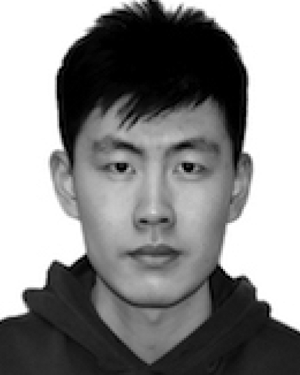 Xin Song合作论文数Baidu Online Network Technology (Beijing) Co. Ltd, No. 10 Shangdi10 road, Haidian district, Beijing, 100094, China3
 Yong Jiang (姜勇)合作论文数Shenyang University of Technology3
 Wenji Mao (毛文吉)合作论文数State Key Laboratory of Management and Control for Complex Systems, Institute of Automation, Chinese Academy of Sciences;School of Artificial Intelligence, University of Chinese Academy of Sciences3
 Tong Xu (徐童)合作论文数School of Computer Science and Technology, University of Science and Technology of China3
 Chuanliang Jia (贾传亮)合作论文数School of Management Science and Engineering, Central University of Finance and Economics3
 Changhai Zhao (赵长海)合作论文数Changchun Institute of Optics, Fine Mechanics and Physics, Chinese Academy of Sciences;University of Chinese Academy of Sciences3
 Le Zhang (张乐)合作论文数School of Information and Communication Engineering, University of Electronic Science and Technology of China3
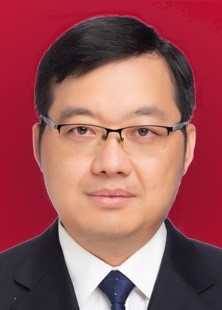 Yongjun Xu (徐勇军)合作论文数Institute of Computing Technology, Chinese Academy of Sciences;University of Chinese Academy of Sciences3
 Zhulin An (安竹林)合作论文数中国科学院计算技术研究所3Yuanxin Zhuang合作论文数The Thrust of Artificial Intelligence, The Hong Kong University of Science and Technology (Guangzhou)2
 Jun Wang合作论文数OPPO Research Institute2Changhua Meng合作论文数2
 Ziyue Qiao (乔子越)合作论文数School of Computing and Information Technology, Great Bay University2
 Rui Zha合作论文数2RongHong She (佘容红)合作论文数2
 Zhiyong Wu (吴志勇)合作论文数中国科学院大学中国科学院长春光学精密机械与物理研究所2
 Hua Wang (王化)合作论文数Hefei Institutes of Physical Science, Chinese Academy of Sciences2Leyu Lin合作论文数WeChat, Tencen2
 Xinjiang Lu (路新江)合作论文数Business Intelligence Lab, Baidu Inc2
 Yongkui Yang (杨永魁)合作论文数School of Artificial Intelligence, University of Chinese Academy of Sciences;Shenzhen Institute of Advanced Technology, Chinese Academy of Sciences2
 Jingbo Zhou (周景博)合作论文数Business Intelligence Lab, Baidu Research2
 Weijia Zhang合作论文数Hong Kong University of Science and Technology2
 Deqing Wang (王德庆)合作论文数School of Computer Science and Engineering, Beihang University2
 Hongting Niu (牛虹婷)合作论文数School of Computer Science and Engineering, Beihang University2
 Aihua Li (李爱华)合作论文数School of Management Science and Engineering, Central University of Finance and Economics2
 Qi Zhang合作论文数Microsoft Software Technology Center Asia2




