目的 探讨双侧丘脑底核脑深部电刺激术(STN-DBS)治疗药物难以控制或副反应难以耐受的帕金森病(PD)的疗效.方法 回顾性分析2015年6月至2019年6月双侧STN-DBS治疗药物难以控制或副反应难以耐受的171例PD的临床资料.术后6个月采用第三版统一帕金森病评分量表(UPDRS-Ⅲ)评分及第二版世界卫生组织生活质量评定量表(WHO-QOL-2)评分评估疗效.结果 术后6个月,UPDRS-Ⅲ评分明显降低(P<0.05),WHO-QOL-2评分明显增高(P<0.05).术后抗PD药物使用剂量明显降低(P<0.05).术后发生颅内出血1例(0.58%),切口感染3例(1.75%),排异反应2例(1.17%),癫痫发作1例(0.58%),因设备故障更换脉冲发生器1例(0.58%),体重增加12例(7.01%),构音障碍8例(4.67%),睁眼困难4例(2.34%),智力减退4例(2.34%).结论 对于药物难以控制及副反应难以耐受的PD病人,双侧STN-DBS治疗PD可显著改善病人症状、提高生活质量及减少口服药物量.
目的 总结神经外科医疗过错司法鉴定的原因及结果.方法 回顾性分析2009~2018年华中科技大学同济医学院法医学系司法鉴定中心涉及神经外科医疗过错的46份司法鉴定报告,总结分析产生医疗纠纷的原因及签定结论.结果 神经外科医疗纠纷多发生于颅脑损伤、脑血管疾病及颅内肿瘤;产生医疗纠纷的原因多为检查诊断不及时、用药不及时或用药错误以及手术不及时或方法不妥,告知义务不详细也是发生医疗纠纷的原因之一;鉴定结论多为医院过错参与度≤40%(93.5%).结论 神经外科临床工作要特别关注告知义务,密切观察病人病情变化,完成相关检查项目,及时调整治疗方案,严格按医疗常规进行诊疗,可有效避免或减少医疗纠纷.
目的 探讨囊性听神经瘤的临床特点及其显微外科手术的治疗方法.方法 回顾性分析2013年1月~2017年12月华中科技大学同济医学院附属同济医院神经外科收治的囊性听神经瘤69例.所有囊性听神经瘤均行手术治疗,采用枕下乙状窦后入路.结果 肿瘤全切61例(88.4%),次全切除6例(8.7%),部分切除2例(2.9%);面神经解剖保留率为64例(92.7%).术后2周采用面神经功能House-Brackmann分级,其中Ⅰ-Ⅱ级47例(68.1%),Ⅲ-Ⅳ级16例(23.2%),Ⅴ-Ⅵ级6例(8.7%);术后后组脑神经功能障碍4例(5.8%),术后实用听力保留患者4例(5.8%).结论 囊性听神经瘤应尽量早期积极手术,在充分保护面神经功能的前提下,力争全切肿瘤.同时术者丰富的显微外科技术,以及超声刀、激光刀、电生理监测等重要工具的应用,是保障囊性听神经瘤手术效果和保全神经功能的关键因素.
目的 探讨枕下乙状窦后入路锁孔手术切除听神经瘤的方法 及效果.方法 回顾性分析2016年1月至2018年6月经枕下乙状窦后入路锁孔手术治疗的116例听神经瘤的临床资料,根据术前增强MRI分为中小型听神经瘤组(最大径≤3 cm;83例)和大型听神经瘤组(最大径>3 cm;33例).结果 中小型听神经瘤组肿瘤全切除率为97.6%(81/83),面神经解剖保留80例(96.4%).术后1周面神经功能良好(H-B分级Ⅰ~Ⅱ级)59例(71.1%).大型听神经瘤组肿瘤全切除率87.9%(29/33),面神经解剖保留28例(84.8%),术后1周面神经功能良好18例(54.5%).结论 对于中小型听神经瘤,采用枕下乙状窦后入路锁孔手术可实现肿瘤完全切除和良好的面神经功能保护.对于大型听神经瘤,在良好体位、充分释放脑脊液、电生理监测等辅助下,采用乙状窦后入路锁孔手术也可实现肿瘤安全满意切除和面神经功能保护.
目的 探讨MRI引导下立体定向活检手术在颅内病灶诊断的准确性、安全性及其临床应用价值.方法 回顾性分析52例病变性质不明的颅内病变病人的临床资料,在MRI导向下行立体定向活检术.结果 52例病人均取得病理诊断,活检成功率100%.星形细胞瘤20例(38.5%),脑转移瘤13例(25.0%),脑非化脓性感染10例(19.2%),非霍奇金淋巴瘤4例(7.7%),胶质细胞增生2例(3.8%),脑真菌病、脑囊尾蚴病及结核性病变各1例(1.9%).术后无一例出现严重并发症.除1例放弃治疗,其余病人转相应专科治疗.结论 对于难以行开颅手术的颅内疑难病变,MRI导向立体定向活检手术可提供一种可靠的诊断手段,为临床进一步诊疗提供理论依据.
目的 探讨猕猴双侧慢性不可逆性帕金森病(PD)模型的制作方法.方法 4只猕猴分别采用不同剂量(0.1 mg/kg/d和0.4 mg/kg/d)和不同频率(每天一次和隔天一次)及不同次数皮下注射1-甲基-4-苯基-1,2,3,6-四氢吡啶(MPrP)制作PD模型,注射MPTP前后观察行为学表现并进行非人类灵长类PD评分量表(PPRS)评分.结果 猕猴注射MPTP一段时间后开始出现PD症状,主要表现为倦怠、迟缓;继续给药PD症状会出现进行性快速加重导致后续动物因进食困难而死亡;若过早停止给药,则导致PD模型不稳定,动物症状可自愈.采用剂量为0.1 mg/kg/d的MPTP连续皮下注射14 d后,猕猴出现中度PD症状(PPRS评分为6~8分)时,改隔日注射一次,共4次,猕猴出现不可逆性PD症状,且可自主摄食并长期存活,是一个成功的模型.结论 适量皮下注射MPTP可制作猕猴慢性、不可逆性、双侧PD模型,其更接近人PD的临床特征,且无需鼻饲喂养可长期存活.
Objective To explore the optimal diagnosis and treatment strategy of tumors at the foramen magnum,the clinical characteristics were analyzed retrospectively.Methods The clinical data of 58 cases with foramen magnum tumors treated with microsurgery in our department were collected and analyzed retrospectively.And intraoperative neurophysiological monitoring was employed in later 21 cases.Results Gross total resection was achieved in 48 of the 58 cases ; Five of the 10 patients with VA encased by tumors were totally resected.Full resection was achieved in 43 of the last 48 cases.Forty-three of the 47 cases with intradural tumors got complete resection,and total resection was achieved in 3 and 2,respectively,in 9 intra-extradural communicated tumors and 2 extradural ones.Symptoms were significantly improved in 50 cases,worsened in 5 patients,and maintained stable in the last 3 patients.Post-operative symptoms were obviously improved in the later 21 cases with intraoperative neurophysiological monitoring employed and the therapeutic effect of the treatment was much better than the former cases.Three patients died postoperatively.Fifty cases got complete follow-up from 6 months to 3 years.Among them,forty-four patients had a KPS score of 80-100,but the other 6 patients less than 80.Conclusion Microsurgical treatment for foramen magnum tumors is effective.Optimal surgical approaches and precise micro-operative techniques are crucial for the tumor removing.It is quite difficult and risky to fully resect the intra-extradural communicated tumors and the ones encasing vertebral artery.Preoperative evaluation should be profound.The application of intra-operative electrophysiological monitoring and the timely management of post-operative complications can improve the prognosis obviously.
目的 探讨神经电生理监测在脊髓髓内肿瘤显微切除术的应用价值.方法 回顾性分析12例脊髓髓内肿瘤的临床资料.均行显微切除术,术中以体感诱发电位和肌电图监测辅助肿瘤切除.结果 肿瘤全切除8例,大部分切除1例,部分切除3例.术后病理诊断:室管膜瘤5例,星形细胞瘤5例,脂肪瘤1例,蛛网膜囊肿1例.随访6~17个月,神经功能障碍不同程度恢复11例,术后神经功能障碍1例.结论 显微手术是脊髓髓内肿瘤的有效治疗措施,术中辅以神经电生理监测可提高肿瘤切除率及手术安全性,最大程度保护神经功能,改善病人预后.
Objective As a non-competitive NMDA receptor antagonist, Ketamine is a commonly used anaesthetic agent. Quinolinic acid (QA) is a glutamate analogue that exerts its excitotoxic effect also via the NMDAR. We tested the QA lesion effect under the conditions of various dosage of Ketamine, to explore the protective effect of Ketamine on the QA-induced striatal lesion. Methods Thirty SD females were unilaterally lesioned using QA: two group were anaesthetised with different dose of ketamine and the other with isoflurane. The surgical coordinates and the dosage of QA were identical. Two weeks post-lesion, the animals were tested on stepping test, and staircase test, followed by perfusion, immunohistochemical and volumetric analysis. Results The isoflurane group, compared with the ketamine groups, showed larger striatal lesions and significant differences in other behavioral measurements reflecting the extent of the lesion (P<0.05). Beside, there were statistically differences between these two ketamine groups in aspect of lesion volume and behavioral performances. Conclusion The use of ketamine anaesthesia in the excitotoxic model can effectively alleviate the development of the lesion and it works in a dose-dependent way.
Objective To investigate the difference between the clinical characteristics of optic pathway gliomas(OPG) inc hildren and adult patients.Methods The clinical dada of 24 patients with OPG who were treated in our department from 2003 to 2011w ere analyzed retrospectively.Of 24 patients with OPG,13 were children and 11 adults.Results Visual dysfunction occurred in all thep atients.There was endocrine dysfunction in 4 children with OPG and 7 adults with OPG.Of 13 children with OPG,2 had optic nerveg liomas,9 optic chiasma ones and 2 diffuse type ones.Of 11 adults with OPG,5 had optic chiasma gliomas and 6 diffuse type ones.Of 8p atients with OPG receiving radiotherapy or chemotherapy after the surgery,2 were children and 6 adults.Histopathological examinations howed that all the children had low grade gliomas,8 adults low grade ones and 3 adults high grade or invasive ones.The following-upf rom 3 months to 8 years showed that the gliomas recurred in 2 children and 5 adults,and 1 patient died in the children group and 3 diedi n the adults group.Conclusions OPG occur mainly in the optic nerve and chiasma,they slant towards benign tumors and the primarys ymptom is optic dysfunction in the children with OPG,in whom the prognoses are good after the surgery.OPG occurs mainly in the opticc hiasma and slant towards diffuse growth(malignant tumors) ,and the primary symptoms include optic and endocrine dysfunction in thea dults with OPG,in whom chemotherapy and radiotherapy should be performed after the surgery and the prognoses are worse.
Activated epidermal growth factor receptor (EGFR) has emerged as an important therapeutic target for a variety of solid tumors, particularly malignant gliomas. A recently discovered transmembrane glycoprotein, LRIG1, antagonizes the activity of epidermal growth factor receptor family receptor tyrosine kinases and acts as a negative feedback loop of EGFR and proposed tumor suppressors. The aim of this study was to investigate the impact of LRIG1 on the biological features of glioma cells and the possible mechanisms of enhanced apoptosis induced by upregulation of LRIG1. We observed that the expression of LRIG1 was decreased, while the expression of EGFR was increased in the majority of astrocytomas, and the ratio of EGFR/LRIG1 was increased by sixfold in tumors versus corresponding non-neoplastic tissue. Upregulation of LRIG1, followed by a decrease of EGFR on the cytomembrane of the cells, induced cell apoptosis and cell growth inhibition, and further reversed invasion in glioma cell lines and primary glioma cells. Our study now clearly indicates that LRIG1 indeed affects cell fate and biology behaviors of the cells in vitro by inhibiting phosphorylation of downstream MAPK and AKT signaling pathway, and the elevated release level of caspase-8 might contribute to the enhanced apoptosis in LRIG1 transfected glioma cells. Taken together, these findings provide us with an insight into LRIG1 function, and we conclude that LRIG1 evolved in gliomas as a rare feedback negative attenuator of EGFR and could offer a novel therapeutic target to treat patients with malignant gliomas.
gra wasalso increased markedly(P < 0.01).Conclusion Intraventricular microinjection of L-dopa can relieve the rotation behaviors and increase the number of dopaminergic neurons in rat PD models.
Objective To investigate the effect of intracerebroventricular injection of different does L-dopa on rotation behavior in parkinsonian rat. Methods The rat models of Pakinson's disease (PD) were prepared by intracerebral injection of 6-hydroxydopamine (6-OHDA). The rotation in the rats with PD was induced by subcutaneous injection of apomorphine (APO). L-dopa of different doses was injected into the lateral cerebral ventricle of the rats with PD who were induced to rotate by APO. One week later, the change in the rotation behavior was observed. The number of dopaminergic neurons in substantia nigra was determined by immunohistochemical technique in all the groups. Results The intracerebroventricular injiection of 1 μg/μl or 5 μg/μl L-dopa could significant decrease the rotation induced by APO in the rats with PD compared to the control group (P<0.01). The inhibitive effect of L-dopa on rotation achieved summit the 2 hours after the injection of L-dopa. The number of dopaminergic neurons in substantia nigra also increased significantly in 1 μg/μl and 5 μg/μl groups compared to the control group (P<0.01). Conclusions Intracerebroventricular injection of adequate dose L-dopa can relieve the rotation behavior induced by APO in rats with PD.
目的 探讨基层医院治疗急性重型颅脑损伤的抢救治疗方法.方法 回顾我科近6年来收治的152例术前GCS评分<8分的重型颅脑损伤病人的治疗.结果 恢复良好92人,中残15人,重残17人,死亡38人.结论 基层医院在急性重型颅脑损伤的急救中,应抓住伤后至就诊时间短的有利时机及时处理、实施以正确手术方法为主的综合治疗,可明显提高病人生存率和改善生存质量.
Objective To explore the curative effect of microsurgery on recurrent acoustic neuromas.Methods The clinical data of 27 patients of recurrent acoustic neuromas undergoing microsurgery in our department was analyzed retrospectively.Of 27 patients with recurrent acoustic neuromas,25 underwent microsurgery through the suboccipito-retrosigmoid approach and 2 through the subtemporal approach.Neuroendoscope-assisted microsurgery was performed in 10 patients with recurrent acoustic neuromas.Results In all the patients,the totally resection of the tumors was achieved in 21 and subtotal resection in 4,and partial resection in 2.The facial nerve was anatomically preserved in 12 of 16 patients who did not have facial palsy after the first operation.Two patients had cerebrospinal fluid(CSF) leakage from the wound and 1 CSF otorrhea.According to the Glasgow Outcome Scale,15 patients returned normal life,8 could take care of themselves and 4 needed another person's help to life.No patients died.Conclusions Although the recurrent tumors often adhere to the surrounding facial nerves and brainstems,the good outcomes can be achieved by microsurgery in most patients with recurrent acoustic neuromas.Regular neurological-image examination after the first surgery is the important helpful to early diagnosis and treatment in the patients with acoustic neuromas.
目的:分析总结成人幕上原始神经外胚叶肿瘤(SPNETs)的临床、病理及影像学表现,降低误诊率,提高诊治率.方法:对我院神经外科收治的9例经病理学证实的成年幕上原始神经外胚叶肿瘤患者的临床特点、诊治经过、影像学及病理特点进行回顾性分析.结果:肿瘤位于额叶外、枕叶外生长各2例,大脑镰旁1例,侧脑室旁2例,枕叶、额叶皮质下生长各1例.在影像学、肿瘤生物学和病理学上有一定的共同特征.所有病例均接受手术治疗,8例镜下全切,术后均行全脑、全脊髓X线放疗36 Gy(23.4~39.6 Gy),其中2例术后存活超过2年;次全切1例术后2个月肿瘤增大.结论:成人SPNET具有一定的影像学、肿瘤生物学和组织病理学共性,综合分析临床和影像学特征有助于和其他颅内肿瘤性疾病鉴别,提高诊治率.手术结合术后放疗可以延长患者生存周期.
<正>肝细胞生长因子(hepatocyte growth factor,HGF)是一种多功能细胞因子,它可以作为分裂素、生成素、活力素和细胞毒素作用于各种细胞。内源性肝营养因子的存在早在1949年就被人们发现,但直到将
<正>同济医院神经外科自1994年引进MRI检查以来,收治脊髓圆锥血吸虫病6例,术前MRI检查均误诊为脊髓圆锥髓内肿瘤而行手术治疗,结合文献的4例报道如下。
目的总结听神经瘤手术并发症的防治体会,以提高此类手术的疗效和病人术后生存质量。方法2001年至2005年收治听神经瘤119例,应用显微外科技术经枕下乙状窦后入路行肿瘤切除,回顾分析手术并发症的发生情况。结果肿瘤全切除71例,次全切除33例,大部切除15例。手术并发症:吞咽困难、声嘶18例;术后硬膜外血肿2例;CT证实颅内积气2例;肢体活动障碍2例;中枢神经感染2例;伤口感染3例;肺部感染2例;脑脊液切口漏5例;死亡2例;术中面神经解剖保留95例(79.8%),其中术中面神经功能监测组(IFNM)较非监测组明显提高。结论肿瘤大小与肿瘤全切率及面听神经保留率密切相关,掌握CPA正常及异常状态下的解剖结构,正确的切除方法及较全面的神经功能监测,是提高听神经瘤手术治疗疗效的关键。
Objective To summarize the experience in surgically resecting 104 cases of acoustic neuromas in order to improve the therapeutic effects of surgery on acoustic neuromas. Methods The acoustic neuromas were definitely diagnosed by CT or MRI scanning in 104 patients. All the tumors were removed by microsurgery through suboccipital retrosigmoid approach. Results Of 104 patients with acoustic neuromas, 89 received total resection of the tumors and 15 subtotal or greatly partial. Two patients died after the surgery. The anatomic preservation of facial nerve and acoustic nerve was achieved respectively in 89 cases (85.58%) and 25 cases (24.04%). The hearing in 7 patients(6.73%) was preserved or improved. Conclusions The size of the acoustic neuromas was closely related to the rate of total removal of the tumors and the preservative rates of facial nerve and acoustic nerve. The key to improving the surgical effects on acoustic neuromas are skillful microsurgical technique and idea of preservation of nervous function.
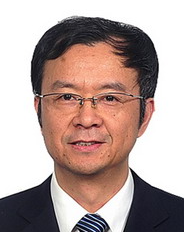 Ting Lei (雷霆)合作论文数Tongji Hospital, Tongji Medical College, Huazhong University of Science & Technology24
 Jian Chen (陈坚)合作论文数Tongji Hospital, Tongji Medical College of Huazhong University of Science and Technology13
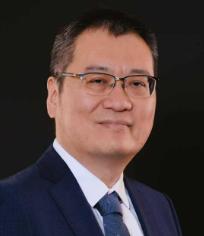 Kai Shu (舒凯)合作论文数Tongji Hospital, Tongji Medical College, Huazhong University of Science and Technology12
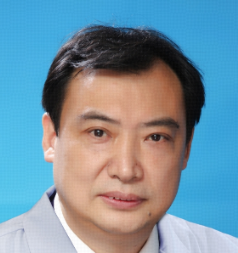 Jincao Chen (陈劲草)合作论文数Zhongnan Hospital of Wuhan University10
 DeLin Xue (薛德麟)合作论文数9
 Wei Jiang (蒋伟)合作论文数Tongji Hospital, Tongji Medical College, Huazhong University of Science and Technology5WenGong Bao (鲍文公)合作论文数4WenAn Hu (胡文安)合作论文数3YuPing Wang (王玉平)合作论文数3
 Ping Zhang (张平)合作论文数南华大学附属南华医院3
 Ling Li (李玲)合作论文数Union Hospital, Tongji Medical College, Huazhong University of Science and Technology3Le Dong (董乐)合作论文数3
 Feng Wan (万锋)合作论文数Tongji Hospital, Tongji Medical College, Huazhong University of Science and Technology3
 Hongquan Niu (牛洪泉)合作论文数Tongji Hospital, Tongji Medical College of Huazhong University of Science and Technology3jie li (李杰)合作论文数2ting lei (雷霆)合作论文数2
 Mingxin Zhu合作论文数2Yue-feng ZHU (朱岳峰)合作论文数2Qing ZHU (朱清)合作论文数2ZhiFeng Zhang (张智峰)合作论文数2Sun Shoujia合作论文数2
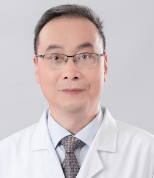 Yunjian Zhang (张允建)合作论文数Union Hospital, Tongji Medical College, Huazhong University of Science and Technology2
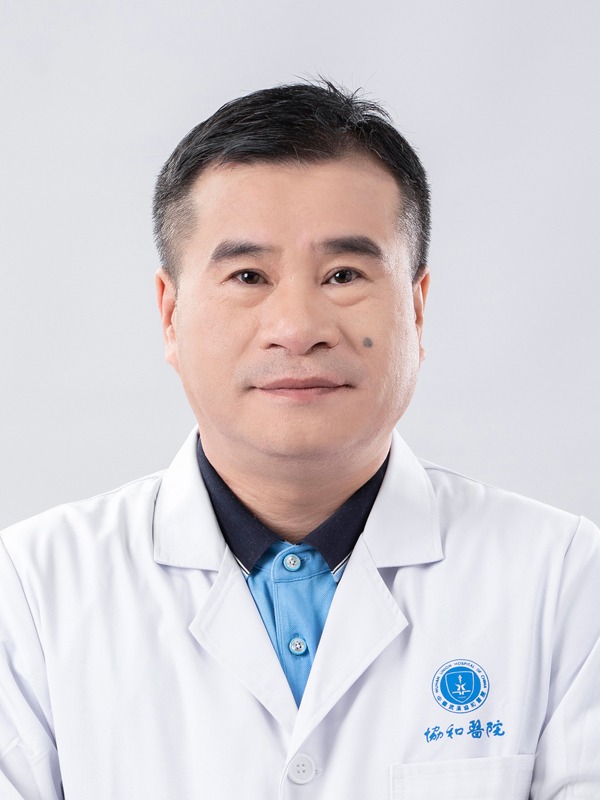 Xuebing Cao (曹学兵)合作论文数Union Hospital, Tongji Medical College, Huazhong University of Science and Technology2Liu Chang-Qing (刘长青)合作论文数2
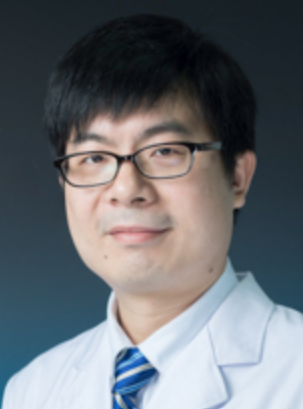 Lin Han (韩林)合作论文数Tongji Hospital, Tongji Medical College, Huazhong University of Science & Technology2
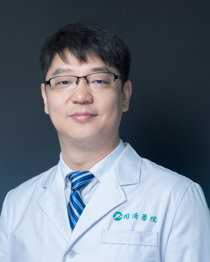 Dongsheng Guo (郭东生)合作论文数Tongji Hospital, Tongji Medical College of Huazhong University of Science and Technology2ZHANG Fuchi (张复驰)合作论文数1Ming-Sheng Wang合作论文数1shengze sun (孙圣则)合作论文数1Liang Zeng合作论文数1Tao Huang合作论文数1qing jia (贾清)合作论文数1shu zhu (朱殊)合作论文数1Weihua Liu合作论文数1Liu Yang合作论文数1Jun TANG (汤珺)合作论文数1HUANG Gang (黄钢)合作论文数1ZuoWei Lei (雷琢玮)合作论文数1PingFeng Chai (柴平锋)合作论文数1GuoHu Kuai (郐国虎)合作论文数1YanWen Li (李炎稳)合作论文数1Ke Wei (韦可)合作论文数1JiongDa Yang (杨炯达)合作论文数1XiaoLi Shen (沈晓黎)合作论文数1Tao Guo (郭韬)合作论文数1MingSheng Wang (王明盛)合作论文数1ChaoXi Li (李朝曦)合作论文数1Fei Guo (郭非)合作论文数1




