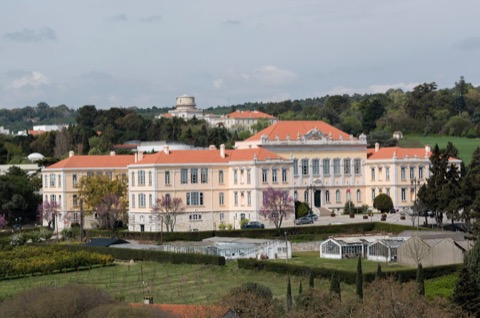
Instituto Superior de Agronomia (ISA), School of Agronomy – University of Lisbon, is a national and international renowned faculty of excellence for graduation and post-graduation studies in Agronomy, Forestry, Food Science, Landscape Architecture, Environment, Animal Production, Plant Protection, Economy and Rural Sociology and Botany and Biological Engineering.Dynamic academic education and research and development have been a priority for the past 150 years. The faculty is currently ongoing an extensive reform that will be fully implemented by the coming year of 2008, with all graduation and post-graduation levels being in a European format.The student population is over 1500 in three levels of studying, including post-doctoral research studies. The teaching staff consists of 145 teachers and 6 researchers, mainly PhDs and post-docs and is organised in 10 departments.The school’s location is quite unique:[citation needed] situated in the heart of Lisbon, it spreads over a green wooded area of 100 hectares (250 acres) with various agronomic and forestry experimentations sites. This vast protected area, classified as of “Public Interest”, plays an important role in the city’s environmental balance and is a fundamental recreational landscape for Lisbon’s population.It also includes a small conference centre with a 300-delegate capacity, an Exhibition Pavilion with a Victorian (iron/Eiffel-like) architecture, several gardens, rugby and football fields and other facilities all of which can also be used by the city community.ISA is executive board of a European project: FIRE PARADOX. Francisco Rego is the coordinator of this project. The aim is to learn to live with fire.

A comprehensive understanding of how and to what extent beta diversity and community-environment relationships vary at various spatial scales is important to derive realistic forecasts of the future of freshwater communities. We assessed how total beta diversity and its two components (species replacement and species richness differences) of river macrophytes change among and across Portugal, Poland, Germany, Denmark and Finland. We further addressed which and how environmental and spatial gradients explain compositional variation of macrophyte communities among European regions and differences in beta diversity across the continent. We employed generalized linear mixed models, permutational analysis of multivariate dispersions and generalized dissimilarity modelling to investigate beta diversity of river macrophytes among study regions, whereas generalized additive model for location, scale and shape was used to research patterns across regions. Macrophytes beta diversity and its replacement component tended to increase or were not significantly related to latitude at regional scales, whereas total beta diversity showed a negative latitudinal effect across study regions in Europe. This finding suggests that patterns predicted at one spatial scale may not necessarily be predicted at other scales. Species replacements also dominated over species richness differences in explaining beta diversity patterns across all the study regions. However, different environmental variables contributed to beta diversity of river macrophytes among the study regions. Environmental heterogeneity manifested by altitude range and geodiversity was the major driver of total macrophyte beta diversity in Europe. These results highlight how spatial scale and context-dependency across different regions have a profound influence on how river macrophytes respond to their environment.
Introduction:Diabetic foot infection (DFI) represents a growing public health problem in Africa, caused by several microorganisms, with Staphylococcus aureus being one of the most prevalent pathogens associated with subsequent complications. This study aimed to characterize S. aureus isolated from the wounds of patients with type 2 diabetes, treated at a health center in Beira, Mozambique, in terms of antibiotic resistance and virulence genes. Methods:Samples were collected by swab, after ulcer debridement, and cultivated onto mannitol salt Columbia agar supplemented with 5% sheep blood, for 24 to 48 h, at 37°C. The antibiotic resistance was assessed by disk diffusion on Mueller-Hinton agar, and Multiplex PCR was used to screen 32 virulence and seven antibiotic resistance genes. Results:S. aureus isolates showed high phenotypic resistance to penicillin (100%), cefoxitin (53.3%), trimethoprim/sulfamethoxazole (40%) and vancomycin (22.2%), and a high percentage of multidrug resistance (68.9%). The most prevalent resistance genes were blaZ (penicillin, 100%), mecA (cefoxitin, 53.3%) and vancA (vancomycin, 28.9%). The most frequent virulence genes were TSST (toxic syndrome staphylococcal toxin, 57.8%), and the colonization factor clfB (37.8%), followed by the Panton-Valentine leukocidin (PLV) genes, lukPV (26.7%) and lukED (15.6%). The regulator factor coded by arcA (37.8%) and the adhesion factors coded by cap5 (20%) and by icaA (17.8%) were also found. Conclusion:A high presence of virulence genes encoding exotoxins and colonization and adhesion factors, associated with a high rate of multidrug resistance, was found in S. aureus isolates. This anticipates increasing difficulty in treating DFI. The greatest resistance was to commonly used antibiotics, particularly penicillin, cefoxitin and vancomycin, with resistance genes, blaZ, mecA and vancA, frequently detected. This emphasizes the urgent need for improved antimicrobial stewardship, routine molecular surveillance, and improved management strategies for DFI in resource-limited settings to mitigate disease complications and reduce the burden of antimicrobial resistance.
Irrigation unintentionally delivers reactive nitrogen to croplands via nitrate-rich water (NIrrig), yet this input remains largely absent from nitrogen budgets and policies. Here, we compile over 1300 field observations of NIrrig to quantify its magnitude and agronomic relevance, and upscale its global contribution. While the median inputs reached 19 kg N ha-1 yr-1, 10% of observations exceeded 100 kg N ha-1 yr-1. Globally, we estimate that irrigation supplies 14 Tg N yr-1, equivalent to 14% of synthetic fertilisers in croplands. Hotspots emerge in regions with intensive irrigation and high inputs, highlighting NIrrig as a substantial but underused nitrogen source. Our findings expose a major overlooked component of agricultural nitrogen budgets, offering a pathway to reduce fertiliser overuse, enhance nitrogen use efficiency and promote nitrogen circularity in irrigated systems.
The interaction between wind and fire has been addressed by several authors in classical fire literature, from George Byram (1959) and Richard Rothermel (1972) in the U.S. Forest Services to Tom Beer (1991) in CSIRO Australia. In this paper, we revisit the early approaches taken by these pioneers and propose a new conceptual model based on their findings. In this new conceptual model, the effect of wind on fire spread is reduced by the indrafts created by fire intensity and the resulting convection. The model is successfully applied to data on experimental fires compiled by Catchpole et al. (1998).
Abstract Exposure to synthetic chemicals, such as pesticides and pharmaceuticals, affects freshwater communities at broad spatial scales. This risk is commonly managed in a prospective environmental risk assessment (ERA). Relying on generic methods, a few standard test organisms, and safety factors to account for uncertainty, ERA determines concentrations that are assumed to pose low risks to ecosystems. Currently, this procedure neglects potential variation in assemblage sensitivity among ecosystem types and recommends a single low-risk concentration for each compound. Whether systematic differences in assemblage sensitivity among ecosystem types exist or their size, are currently unknown. Elucidating spatial patterns in sensitivity to chemicals could therefore enhance ERA precision and narrow a fundamental knowledge gap in ecology, the Hutchinsonian shortfall. We analyzed whether taxonomic turnover between field-sampled macroinvertebrate assemblages of different broad river types across Europe results in systematic differences in assemblage sensitivity to copper and imidacloprid. We used an extensive database of macroinvertebrate assemblage compositions throughout Europe and employed a hierarchical species sensitivity distribution model to predict the concentration that would be harmful to 5% of taxa (HC5) in each assemblage. Predicted $$H{C}_{5}$$ H C 5 values varied over several orders of magnitude. However, variation within the 95% highest density intervals remained within one order of magnitude. Differences between the river types were minor for imidacloprid and only slightly higher for copper. The largest difference between river-type-specific median $$H{C}_{5}$$ H C 5 values was a factor of 3.1. This level of variation is below the assessment factors recommended by the European Food Safety Authority and therefore would be captured in the current ERA for plant protection products. We conclude that the differences in taxonomic composition between broad river types translate into relatively small differences in macroinvertebrate assemblage sensitivity toward the evaluated chemicals at the European scale. However, systematic differences in bioavailability and multi-stressor context were not evaluated and might exacerbate the differences in the ecological effects of chemicals among broad river types in real-world ecosystems.





