我国是全世界老年人口规模最大的国家,也是老年人口增加最快的国家[1].2000-2018年,60岁及以上老年人口从1.26亿人增加到2.49亿人,老年人口占总人口的比重从10.2%上升至17.9%[2].伴随人口老龄化的到来,中国老龄事业十二五发展规划提出了探索"医养结合"的新模式,医养结合机构是指兼具医疗卫生资质和养老服务能力的医疗机构或养老机构,主要为入住机构的老年人提供养老、医疗、护理、康复与心理精神支持等服务.
目的:了解医养结合机构补偿机制存在的问题,提出相关建议.方法:采用问卷调查、现场访谈的方法,收集河南省77家医养结合机构的数据资料并进行分析.结果:多数医养结合机构的收入结构中,70%~80%来源于养老照护服务收入,财政补助收入占比较小;医养结合照护服务费用高于当地人均可支配收入.结论:河南省医养结合机构补偿渠道较单一、财政投入不足,应逐步建立以补需方为主的多渠道长效补偿机制,加大财政投入力度,促进医养结合机构良性运行和可持续发展.
ObjectiveTo understand the status quo of resource allocation in pilot institutions of integrated medical and elderly care services with medical care in areas with different economic levels in Henan province.To provide references for the government to allocate resources rationally.MethodsThe general investigation was used in this study.Among all pilot institutions of integrated medical and elderly care services with medical care in 17 province⁃administered cities in Henan province,a questionnaire survey was conducted from January to July 2019.All the institutions were divided into 3 types of regions according to the real gross domestic product (GDP) per capita. Statistical description,chi square test,and rank⁃sum test were used to compare the regional differences in the scale,service provision, and staff status of the pilot institutions of integrated medical and elderly care services with medical care in Henan province.ResultsThe median building areas of each pilot institution of integrated medical and elderly care services with medical care at high,medium,and low economic levels were 11 583.38 m2、6 283.30 m2、6 000.00 m2,respectively.The difference was statistically significant(P<0.05).The average occupancy rates were 19.57%,31.29%,and 41.99%,respectively;the doctor⁃nurse ratio were 2.07∶1,1.88∶1,and 1.05∶1,respectively.There were less than 5% of nurses with master's degree or above and senior professional titles in moderately developed areas and underdeveloped areas.Among the 18 health service items in 8 categories involved in the survey,there were 9 items,such as living care service,which had statistically significant differences(P<0.05).ConclusionsThe pilot institutions of integrated medical and elderly care services with medical care in areas with different economic levels in Henan province were different in scales,with low occupancy rate.There was difference in service provision.The staff structure was unreasonable,and the number of senior nursing talents was insufficient.It is recommended that the government should play an active guiding role to promote the balanced development of institutions of integrated medical and elderly care services with medical care in various regions.
目的 科学判断卫生科技高层次人才培养实施绩效,加强科技项目资金的管理,提高卫生科技高层次人才经费资源配置的有效性和投资效益.方法 采用现场调查、文献资料及指标评价等研究方法.结果 项目资金到位率为100%.结论 监管良好,后期追踪及绩效评价很关键,项目实施成效显著,优化了河南省卫生科技创新环境.
目的:基于传统医疗服务项目成本测算将医疗服务和其他人类劳动同质化对待,医务人员人力价值得不到很好体现的状况,探讨利用技术劳务指数科学合理测算医疗服务人力价值的可行性与效果.方法:采用美国相对价值的理念,以《全国医疗服务价格项目规范(2012年版)工作手册》为基础,结合技术人员执业授权,建立技术风险指数测算医疗服务的人力价值,并选取样本医院进行实证研究.结果:测算出了样本医院部分医疗服务的人力价值,并将结果与美国的相对价值表进行了比较.结论:测算取得较满意效果,该方法可作为科学合理测算医疗服务人力价值的一种选择.
通过分析河南省城市公立医院医药价格改革的基本思路、主要做法以及取得的成效和存在的问题,研究提出建立医疗服务价格动态调整机制、巩固完善公立医院补偿机制、完善医保支付方式改革和加快对接2012版全国医疗服务价格项目规范等政策建议,推动公立医院建立科学合理的补偿机制,促进公立医院健康可持续发展.
Objective To evaluate intervention effects of the fourth medical behavior on patients with hypertension.Methods Totally 327 hypertension patients were randomized into intervention and control group.One year after the intervention,the differences between the two groups in blood pressure control and quality of life were compared.Results After the intervention,the intervention group was obviously superior to the control group in the rate of blood pressure control.The blood pressure control rate of the intervention group increased from 19.88% to 48.45%,whereas that of the control group increased from 17.47% to 25.90%(P0.05).The scores of the MOS 36-Item Short-Form Health Survey(SF-36) of the intervention group were higher than those of the control group in all dimensions(P0.05).Conclusion The fourth medical model intervention could remarkably improve blood pressure control rate and quality of life among hypertention patients.
[Objective]To investigate the allocation of in-patient reimbursement fund of the new rural cooperative medical system,and probe into the changes of hospital charges in order to provide the practice and serve as a referential mode for the decision department of the government.[Methods]By using the randomly sampling method,we selected Xinzheng City,Xinmi City and Zhongmu County as a sample of counties,meanwhile the 3 pilot counties were investigated to understand the operating conditions of the new rural cooperative medical system in 2007 and 2008 to know the participation case,farmers benefit from the circumstances,hospitalization costs and compensation expenses,etc.[Results]In 2008,the participation rate of 3 pilot counties was 98.98%,increased by 1.26% compared with that of 2007;Hospitalization rate in the overall benefit was 6.65% from 2007 to 2008,and 7.03%;Compared with 2007,and the hospital costs of 3 counties were increased by 29.11% in 2008,but the growth rate of rural hospitals was the fastest,and increased by 45.51%.[Conclusion]The trust that the farmers to new rural cooperative medical were gradually increased,and more and more people continued to increase their enthusiasm for the new rural cooperative medical system.However,people who joined the system didn't get high hospital compensation and the growth of hospital costs was fast.So we should take measures to control the rapid increase of the costs and improve farmers benefiting level.
Objective To compare the effect of community-based self-management mode with category management mode,and provide reference for exploring effective management mode on hypertension prevention.Methods 324 cases of patients with hypertension were randomly divided into self-management group(experimental group)and category management group(control group).After one year's intervention,changes in patients'blood pressure control and quality of life were comparatively studied.Results After being intervened,change of blood pressure in experimental group was better than that of control group(P<0.05).And the rate of blood pressure control in experimental group was significantly higher than that of control group(P<0.05).After being intervened,the scores of all the SF-36 dimensions in two groups were higher than those before being intervened(except for the index of PF in control group).And after being intervened,the scores of all the SF-36 dimensions in experimental group were higher than those in control group(except for the index of PF and VT)(P<0.05).Conclusion The community-based hypertension self-management mode is more effective than category management mode in blood pressure control and improvement of QOL.
Objective: To evaluate the intervention effects of the self-management model on Type 2 diabetes patients. Methods: 292 patients with Type 2 diabetes were randomized into intervention group and control group.One year later,compare the differences between the two groups in aspects such as blood glucose control and quality of life. Results: After intervention,the treated group was obviously superior to the control group in the rate of blood glucose control,which in the rate intervention group rose from 19.05% to 53.06% while in control group it rose from 20.69% to 28.97%(P0.05).The grades of the intervention group was higher than that of control group in all dimensions of SF-36(P0.05). Conclusion: The self-management model could significantly improve the level of blood glucose control and the quality of life.
Objective To explore effect of community health education on type 2 diabetes patients and the quality of life.Methods Enroll 160 type 2 diabetes patients,according to 1∶1 randomly divided into two groups,and the intervention group were given community health education and control not to intervene.One year after,the two groups of the(FPG) blood sugar,fructose of hemoglobin(HbALc),blood pressure,and weight index(BMI),Waist(w)etc were compared.Results In the control of blood sugar is the good in intervention group,obvious statistical significance(P0.05).Conclusions Community health education can improve living quality of type 2 diabetes patients and health awareness,with good social benefit,to be widely promoted in clinical application.
The main problems of the two-way referral implementation of community health service agencies in urban pilot areas are unidirectional hospital-transfer and low general referral rate. The major constraints on the two-way referral efficient function-ning are from the supply-side, demand-side and a third party. Some good suggestions are to be put forward, such as setting up effective supervisory system; advocating community hospitals; establishing first attending system among the community general practitioners; readjusting health resources and implementing the integrated management, etc.
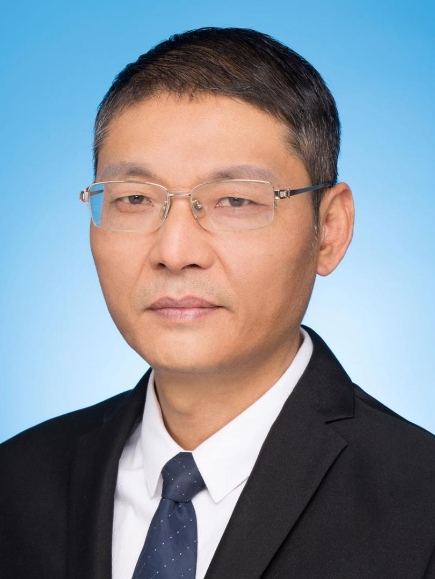 Qingfeng Tian (田庆丰)合作论文数College of Public Health, Zhengzhou University6
 ZhenAng Huo (霍振昂)合作论文数3JianTao Liu (刘建涛)合作论文数3ge dai (戴歌)合作论文数2Xueqi Hu合作论文数2li-ping LI (李利平)合作论文数2YingFei Li (李颖菲)合作论文数2WenLi Zhang (张文莉)合作论文数2LiFang Guo (郭丽芳)合作论文数2
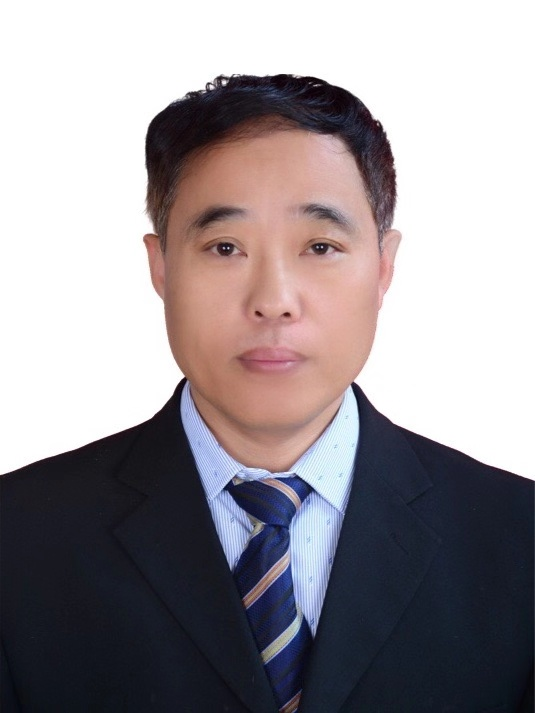 Songhe Shi (时松和)合作论文数College of Public Health, Zhengzhou University2Hao Zhao (赵浩)合作论文数2zhan shi (史展)合作论文数1qian zhang (张倩)合作论文数1zhiqiang zhang (张志强)合作论文数1YANG Fan (杨帆)合作论文数1LI Chao (李超)合作论文数1bin zhou (周斌)合作论文数1Tao SUN (孙韬)合作论文数1xiaoguang liu (刘晓光)合作论文数1Zhan Shi合作论文数1ChengJun Yang (杨承君)合作论文数1XiangXu Li (李向旭)合作论文数1ZhongYang Wang (王仲阳)合作论文数1ShanShan Yin (尹姗姗)合作论文数1ZhenJiang Ma (马振江)合作论文数1LinLin Tan (谭琳琳)合作论文数1YuQin Wang (王玉琴)合作论文数1Nan Ma (马楠)合作论文数1XiaoBin Li (李晓斌)合作论文数1Li Wang (王莉)合作论文数1Qiang Liu (刘强)合作论文数1
 Yongjun Guo (郭永军)合作论文数Henan Academy of Medical Sciences, Henan Cancer Institute1Mingxia Xu (徐明霞)合作论文数1




