Pre-trained vision-language foundation models (VLFM) have shown strong transferability for image-text understanding in multi-view data, but adapting them to downstream tasks remains challenging when one view is missing or incomplete during training or inference. Existing methods fine-tune VLFM on incomplete multi-view data using low-rank adaptation (LoRA), which imposes a fixed implicit low-rank dimensionality reduction on the optimization space and uniformly activates all rank directions. However, they ignore the non-uniform capacity demands induced by different missing-view types, missing-view rates, and missing-view patterns in incomplete multi-view data. To address this issue, we propose RALoRA, a rank-adaptive LoRA framework for downstream incomplete image-text classification under missing-view settings. Specifically, RALoRA equips both the shared rank-adaptive and specific rank-adaptive branches with learnable rank-wise gates, enabling adaptive modulation of individual low-rank directions rather than uniformly activating all predefined ranks. This allows the VLFM to be fine-tuned with shared-view and view-specific low-rank update weights whose effective capacities adapt to different missing-view conditions. In addition, sparsity-aware gate regularization constrains the learned gates to suppress redundant directions, yielding a more compact yet discriminative adaptation for incomplete image-text classification. Since the gates are input-independent, the resulting low-rank update weights remain exactly mergeable into the frozen backbone during inference. Experiments on MM-IMDb, UPMC Food-101, and Hateful Memes under various missing-view settings show that RALoRA achieves state-of-the-art performance and strong overall robustness. Code: https://github.com/GingerCohle/RALoRA
Precise control over complex dynamics remains challenging for modern video generative models, as text prompts alone often cannot specify physically plausible, fine-grained motion and interactions. We introduce proxy-conditioned video generation, where a coarse proxy video from physics-based simulation or real-world recording serves as a dynamics carrier to control foreground object motion. Given a proxy video and a text prompt, the goal is to synthesize a new video that preserves the proxy dynamics while generating novel content and plausible interactions aligned with the prompt. Since paired proxy-target videos are difficult to obtain, we propose ProxyUp, a training-free framework built on pretrained video generative models. ProxyUp first inverts the proxy video into an intermediate latent representation and applies region-wise latent noising, preserving motion-critical proxy latents while injecting noise into regions intended for text-driven regeneration. To mitigate the distribution mismatch and weak foreground-background coupling introduced by this heuristic latent composition, we further propose Stochastic Flow Relaxation (SFR), which progressively relaxes the composed latent toward the model's learned distribution before ODE sampling. Experiments on both simulation and real-world proxies show that ProxyUp outperforms strong video editing and motion transfer baselines in dynamic fidelity and text alignment.
Instruction-based image editing with diffusion models has achieved impressive results, yet existing methods strug- gle with fine-grained instructions specifying precise attributes such as colors, positions, and quantities. While recent approaches employ Group Relative Policy Optimization (GRPO) for alignment, they optimize only at individual sampling steps, providing sparse feedback that limits trajectory-level control. We propose a unified framework CogniEdit, combining multi-modal reasoning with dense reward optimization that propagates gradients across con- secutive denoising steps, enabling trajectory-level gradient flow through the sampling process. Our method comprises three components: (1) Multi-modal Large Language Models for decomposing complex instructions into actionable directives, (2) Dynamic Token Focus Relocation that adaptively emphasizes fine-grained attributes, and (3) Dense GRPO-based optimization that propagates gradients across consecutive steps for trajectory-level supervision. Extensive experiments on benchmark datasets demonstrate that our CogniEdit achieves state-of-the-art performance in balancing fine-grained instruction following with visual quality and editability preservation
Visual intelligence seeks to perceive, interpret, and synthesize the visual world and is central to modern computer vision. Human-centered visual intelligence is especially demanding because it studies people as expressive, socially situated subjects whose meaning is rarely conveyed by appearance alone. It couples vision with audio and language across four representative tasks: human emotion recognition, human video generation, human voice cloning, and human video matting. Yet existing resources remain task-specific, providing modalities and annotations for individual problems rather than a shared foundation coordinating understanding and generation. This limits multimodal signal use and broader research. We address this gap with HUG-VIS, a unified benchmark for Human-centered Understanding and Generation in Visual Intelligence. It contains 8,400 seated half-body videos of 30 professional actors, each performing the same 280 emotion-action-prompt assignments under a controlled Mandarin studio protocol, with synchronized video, audio, text, and alpha mattes. We evaluate diverse open- and closed-source models across the four tasks under a unified zero-shot protocol using automatic metrics, criterion-specific mean opinion scores, and multiple cross-task analyses. Results show that (i) linguistic content dominates current emotion recognition, while purely visual affect recognition is weakest; (ii) in video generation and voice cloning, automatic metrics and human judgment agree overall but differ in their top rankings, requiring joint reporting; (iii) boundary fidelity under motion is the main remaining obstacle for human matting; and (iv) task difficulty varies across emotions, models, and metrics, with notable cross-task correlations. The dataset and results are available at https://github.com/GML-MMGroup/HUG-VIS.
Vision encoders are indispensable for allowing impressive performance of Multimodal Large Language Models (MLLMs) in vision–language tasks such as visual question answering and reasoning. However, existing vision encoders focus on global image representations but overlook fine-grained regional analysis. They are limited in fine-grained perception due to the scarcity of fine-grained annotated data and the lack of a fine-grained pre-training paradigm. In this paper, we propose GranViT, a novel Vision Transformer that integrates fine-grained feature extraction with semantic alignment to Large Language Models (LLMs) via region-level autoregressive training. We first construct Gran-29M, a dataset comprising 29 million natural and OCR images paired with over 180 million high-quality region-level annotations, to enable large-scale fine-grained pretraining. Consequently, we develop a pretraining-adaptation framework along with a self-distillation mechanism to train fine-grained GranViT on Gran-29M. We sufficiently exploit the fine-grained annotations from Gran-29M to resort to bounding-box-to-caption regression to enhance localized visual representation of the vision encoder in the pretraining and caption-to-bounding-box regression to improve vision feature utilization and localization for LLM in the adaptation. We further incorporate a self-distillation mechanism that imposes explicit localization constraints on the vision encoder to strengthen its regional reasoning capability. Extensive experiments show that GranViT surpasses existing vision encoders and attains strong transferability to varying LLMs. Remarkably, it achieves state-of-the-art results on fine-grained recognition, multimodal VQA, and OCR understanding.
Post-training quantization (PTQ) is a widely used method to compress large language models (LLMs) without fine-tuning. It typically sets quantization hyperparameters (e.g., scaling factors) based on current-layer activations. Although this method is efficient, it suffers from quantization bias and error accumulation, resulting in suboptimal and unstable quantization, especially when the calibration data is biased. To overcome these issues, we propose Future-Aware Quantization (FAQ), which leverages future-layer activations to guide quantization. This allows better identification and preservation of important weights, while reducing sensitivity to calibration noise. We further introduce a window-wise preview mechanism to softly aggregate multiple future-layer activations, mitigating over-reliance on any single layer. To avoid expensive greedy search, we use a pre-searched configuration to minimize overhead. Experiments show that FAQ consistently outperforms prior methods with negligible extra cost, requiring no backward passes, data reconstruction, or tuning, making it well-suited for edge deployment.
Current open-source diffusion models struggle to generate stable and synchronized audio-visual content, particularly in scenarios demanding complex semantic reasoning. The root cause is that existing methods rely on coarse text embeddings from off-the-shelf encoders to guide audio-video denoising, which discards fine-grained semantics and, critically, lacks a shared long-horizon plan, leading to uncoordinated denoising trajectories and fragile cross-modal alignment. We propose Baton, the first framework that introduces explicit semantic planning into joint video-audio generation. Our key insight is that complementing coarse text guidance with semantically rich, modality-aware planned tokens, jointly reasoned and mutually aligned before denoising, can simultaneously restore fine-grained semantic detail and establish a shared blueprint that coordinates both audio and video denoising trajectories. Concretely, Baton first introduces the VA-Planner, a multimodal language model equipped with dual semantic alignment towers, where learnable queries cross-attend to both video and audio features to produce a pair of semantically aligned video and audio planned tokens as keyframe-level blueprints. These planned tokens are injected into the diffusion backbone via cross-attention layers, providing temporally grounded guidance complementary to coarse text embeddings. Since planned tokens do not share one-to-one spatial-temporal correspondence with diffusion latents, we further propose Relative Semantic RoPE, a relative positional encoding that maps planned tokens and latents into a shared spatial-temporal coordinate frame, enabling each latent to accurately attend to its positionally corresponding semantic cues. Experiments on benchmarks show the effectiveness of Baton both qualitatively and quantitatively.
Model merging aims to enable multi-task learning by integrating the capabilities of multiple models fine-tuned from the same pre-trained checkpoint into a single model. Its core challenge is inter-task interference among task-specific parameter updates. In this paper, we analyze the output shifts induced by task updates and observe that their energy is concentrated in a small number of principal directions. We call the subspace spanned by these directions the essential subspace. In contrast, most remaining directions carry little task-relevant energy, but their accumulation across multiple task updates can cause severe interference during merging. Motivated by this observation, we propose Essential Subspace Decomposition (ESD), which decomposes each task update according to the principal components of its activation shift. Based on ESD, we introduce Essential Subspace Merging (ESM), a training-free static merging method that orthogonalizes and fuses essential components into one compact multi-task model. We further extend ESM to ESM++, a training-free dynamic merging method that decomposes task-specific residuals into low-rank experts and selects the most relevant expert through prototype-based routing during forward inference. Extensive experiments across multiple task sets and model scales demonstrate that ESM and ESM++ effectively preserves task knowledge while reducing inter-task interference.
Unified multimodal models significantly improve visual generation by combining vision-language models (VLMs) with diffusion models. However, existing methods struggle to fully balance sufficient interaction and flexible implementation due to vast representation difference. Considering abundant and hierarchical information in VLM's layers from low-level details to high-level semantics, we propose ParaUni. It extracts features from variants VLM's layers in a Parallel way for comprehensive information interaction and retains a flexible separation architecture to enhance generation in Unified multimodal model. Concretely, visual features from all VLM's layers are fed in parallel into a Layer Integration Module (LIM), which efficiently integrates fine-grained details and semantic abstractions and provides the fused representation as a condition to the diffusion model. To further enhance performance, we reveal that these hierarchical layers respond unequally to different rewards in Reinforcement Learning (RL). Crucially, we design a Layer-wise Dynamic Adjustment Mechanism (LDAM) to facilitate multiple reward improvements that aligns the hierarchical properties of these layers using RL. Extensive experiments show ParaUni leverages complementary multi-layer features to substantially improve generation quality and shows strong potential for multiple reward advances during RL stages.
Part-aware 3D generation aims to create digital assets that are coherent as complete objects while exposing structural parts for editing, material assignment, animation, and reuse. Existing methods impose this structure outside the native generation loop: segmentation-based methods partition an already generated shape, while additive methods synthesize parts from predefined layouts, boxes, or tokens and then reconcile them into a whole. The former preserves the generated geometry but fixes the object before part boundaries are determined; the latter exposes part cardinality but often leaves shared boundaries vulnerable to gaps, interpenetrations, and material discontinuities. In this paper, we propose SCULPT, a framework that addresses these challenges through subtractive composition. Given a complete object represented in a structured 3D latent space, SCULPT iteratively applies a joint split predictor to generate one extracted part together with the remaining object. The predictor performs a coupled denoising process conditioned on both the image and the current 3D state, so the extracted part and updated remainder are generated together rather than reconciled after generation. The joint split predictor processes both outputs on the union of their native sparse 3D supports, allowing neighboring supports to overlap rather than imposing a disjoint voxel partition. The rollout ends when the remainder support becomes empty or reaches a fixed safety cap, allowing the number of generated parts to adapt to each object within that bound. Extensive experiments demonstrate state-of-the-art geometry on PartObjaverse while preserving strong complete-object reconstruction after part assembly. Results on four dataset images, one text-to-image-generated input, and one real-world photograph further show fine-grained textured part decomposition beyond the benchmark.
Livestreaming platforms attract countless daily active users, making online content regulation imperative. The complex and diverse multimodal content elements in dynamic livestreaming scene pose a great challenge to video content understanding. Thanks to the success of contrastive language-image pre-training (CLIP) for dynamic scene classification, which is one of the basic tasks of video content understanding. We propose a heterogeneous multimodal state space network (HMS2Net) for dynamic scene classification in livestreaming via CLIP. (1) To fully and efficiently mine the dynamic scene elements in livestreaming, we design a heterogeneous teacher-student Transformer (HT-SFormer) with CLIP to extract multimodal features in an energy-efficient unified pipeline; (2) To cope with the possible information conflicts in heterogeneous feature fusion, we introduce a cross-modal adaptive feature filter and fusion (CMAF) module to generate more complete information complementarity by adjusting multimodal feature composition; (3) For temporal context-awareness of dynamic scene, we establish a dynamic state space memory (DSSM) structure for capturing the correlation of multimodal data between neighboring video frames. A series of comparative experiments are conducted on the publicly available datasets DAVIS, Mini-kinetics, HMDB51, and the self-built BJUT-LCD. Our HMS2Net produce competitive results of 71.09%, 95.40%, 53.64%, and 82.36%, respectively, demonstrating the effectiveness and superiority of dynamic scene classification in livestreaming.
Recent generative video compression methods leverage powerful generative priors to achieve perceptually pleasing reconstructions. However, most existing approaches require additional training to adapt generative models to produce realistic reconstructions from compact representations. In this paper, we propose ZeroGVC, a zero-shot generative video compression framework that leverages pretrained autoregressive diffusion priors for low-delay video reconstruction. ZeroGVC encodes the first frame of each group of pictures (GOP) with an image codec and represents subsequent P-frames through Codebook-Guided Autoregressive Latent Compression. This design is motivated by our observation that the compression scheme of denoising diffusion codebook models is effective in few-step consistency sampling. By selecting compact combinations of reproducible codebook noise vectors, ZeroGVC steers the latent denoising trajectory toward the target P-frame while allowing the decoder to reproduce the same trajectory in only a few denoising steps. In addition, we design an optional bidirectional reference mode that mitigates error propagation by leveraging the next I-frame context without introducing any additional bitrate overhead. Extensive experiments on standard video compression benchmarks demonstrate that ZeroGVC achieves superior perceptual reconstruction quality at ultra-low bitrates without any additional training.
Prompt tuning, a recently emerging paradigm, adapts vision-language pre-trained models to new tasks efficiently by learning "soft prompts" for frozen models. However, in few-shot scenarios, its effectiveness is limited by sensitivity to the initialization and the time-consuming search for optimal initialization, hindering rapid adaptation. Additionally, prompt tuning risks reducing the models' generalizability due to overfitting on scarce training samples. To overcome these challenges, we introduce a novel Gradient-RegulAted Meta-prompt learning (GRAM) framework that jointly meta-learns an efficient soft prompt initialization for better adaptation and a lightweight gradient regulating function for strong cross-domain generalizability in a meta-learning paradigm using only the weakly labeled image-text pre-training data. This is achieved through a Cross-Modal Hierarchical Clustering algorithm that organizes extensive image-text data into a structured hierarchy, facilitating robust meta-learning across diverse domains. Rather than designing a specific prompt tuning method, our GRAM can be easily incorporated into various prompt tuning methods in a model-agnostic way and bring about consistent improvement for them. Further, we consider a more practical but challenging setting: test-time prompt tuning with only unlabeled test samples and propose an improved structure-induced gradient regulating function to leverage the structured semantics of the meta-learning data for zero-shot generalization. This novel approach exploits the hierarchically clustered meta-learning data to model relationships between test-time data and meta-learning prototypes, facilitating the transfer of invariant knowledge without explicit annotations. Meanwhile, we introduce a structure complexity-informed strategy for adaptively constructing meta-training tasks and generating prototypes, which fully considers the diverse semantics within hierarchical clusters of different complexities. Comprehensive experiments demonstrate the state-of-the-art few- and zero-shot generalizability of our method.
The rising global prevalence of mental health conditions, together with longstanding barriers in traditional healthcare, such as limited resources, high cost, stigma, and privacy concerns, has created an urgent need for accessible and scalable support. Large Language Models (LLMs) have emerged as a transformative technology with strong potential to democratize mental health support through advanced natural language understanding and generation. However, the rapidly expanding, fragmented body of work in this area lacks a coherent evolutionary narrative, making it difficult to contextualize current progress and identify future directions. This survey addresses this gap by organizing and analyzing the literature around a central thesis: the role of LLMs in mental health is evolving through three distinct, increasingly sophisticated phases. We trace this trajectory from Phase I, in which LLMs act primarily as passive Information Tools and Pattern Recognizers for assessment; through Phase II, where they function as Empathetic Conversationalists for in-the-moment, stateless interactions; to the current frontier, Phase III, which seeks Longitudinal, Personalized Companions implemented as stateful cognitive agents. To support this framework, we systematically review core technologies, agent architectures (Profile, Memory, Reasoning, and Planning), and the critical infrastructure of datasets and benchmarks, highlighting how their evolution underpins this developmental path. Viewing the field through this developmental lens, we provide a comprehensive synthesis of existing work, an insightful narrative of its trajectory, and a clear roadmap for future innovation in responsible, effective, and human-centered AI for mental healthcare. A curated collection of the resources reviewed in this survey is available at our project repository: https://github.com/Emo-gml/Awesome-Mental-Health-LLMs.
Emotion recognition from electroencephalography (EEG) signals remains challenging due to high inter-subject variability, limited labeled data, and the lack of interpretable reasoning in existing approaches. While recent multimodal large language models (MLLMs) have advanced emotion analysis, they have not been adapted to handle the unique spatiotemporal characteristics of neural signals. We present E^2-LLM (EEG-to-Emotion Large Language Model), the first MLLM framework for interpretable emotion analysis from EEG. E^2-LLM integrates a pretrained EEG encoder with Qwen-based LLMs through learnable projection layers, employing a multi-stage training pipeline that encompasses emotion-discriminative pretraining, cross-modal alignment, and instruction tuning with chain-of-thought reasoning. We design a comprehensive evaluation protocol covering basic emotion prediction, multi-task reasoning, and zero-shot scenario understanding. Experiments on the dataset across seven emotion categories demonstrate that E^2-LLM achieves excellent performance on emotion classification, with larger variants showing enhanced reliability and superior zero-shot generalization to complex reasoning scenarios. Our work establishes a new paradigm combining physiological signals with LLM reasoning capabilities, showing that model scaling improves both recognition accuracy and interpretable emotional understanding in affective computing.
Parameter-Efficient Tuning (PET) has been widely studied to adapt pretrained vision-language models (VLMs) to various downstream tasks. Most existing PET methods are limited to uni-modal tuning of textual modality and cannot fully exploit the generalization ability of VLMs. Recent multi-modal tuning methods cannot address the catastrophic performance loss in generalizing to unseen classes without incurring significant memory and computation overheads. In this paper, we reveal the multi-modal forgetting issue that violates model coupling for constraining visual features and textual embeddings in simultaneously tuning both modalities, and propose a novel Vision Language Efficient Tuning (VioLET) framework to address the issue. We first propose VioLET-CMG that leverages Collaborative Multi-modal Gradients (CMG) by incorporating an additional visual encoder to provide extra textual gradients to regulate the multi-modal tuning. VioLET-CMG avoids conflicts between visual and textual gradients and guarantee modal coupling with textual gradient orthogonalization. Furthermore, we present VioLET-CarE that achieves quasi-orthogonal textual tuning by Controlling language hyperspherical Energy (CarE) to remove the additional visual encoder for enabling collaborative multi-modal gradients in VioLET-CMG. VioLET-CarE enhances computational efficiency via additive low-rank feature transformation for textual tuning. Experimental results demonstrate that the proposed VioLET framework consistently achieves state-of-the-art performance in new class generalization and few-shot recognition using both ResNet-50 and ViT/B-16 backbones. Remarkably, compared with VioLET-CMG, VioLET-CarE further reduces GPU memory cost by 27
Robust pavement crack detection in complex scenes remains a significant challenge. This stems not merely from the scarcity of annotated data, but more critically, from the severe lack of pattern diversity within existing datasets. Key variations in morphology, scale, background texture, and imaging conditions are often underrepresented, which fundamentally impedes the generalization capability of recognition models. While generative approaches (e.g., GANs and diffusion models) offer a potential path to augment this diversity synthetically, they commonly suffer from poor background realism, entangled structural-appearance representations, and a lack of precise control over generated defects. This paper presents the Crack Diffusion Generator (DiffCrack), a diffusion-based framework designed for semantic-structural controllability in crack image synthesis. DiffCrack decouples crack geometry and visual appearance through two conditioning inputs: a binary mask to anchor spatial layout, and a Hierarchical Prompt Attention (HPA) module to independently modulate attributes such as width, depth, color, and texture. This design enables the controllable and targeted generation of diverse, photorealistic crack patterns that are often missing from real-world datasets. Extensive experiments on real datasets demonstrate that training with DiffCrack-generated images enhances the F1-score of segmentation models by up to 23% on average under complex scene conditions. This result validates that DiffCrack is a scalable, pattern-aware data augmentation tool. By addressing the critical bottleneck of data diversity, our framework offers a principled pathway to improving the robustness and generalization of infrastructure inspection models.
Music-driven 3D dance generation offers significant creative potential, yet practical applications demand versatile and multimodal control. As the highly dynamic and complex human motion covering various styles and genres, dance generation requires satisfying diverse conditions beyond just music (e.g., spatial trajectories, keyframe gestures, or style descriptions). However, the absence of a large-scale and richly annotated dataset severely hinders progress. In this paper, we build OpenDanceSet, an extensive human dance dataset comprising over 100 hours across 14 genres and 147 subjects. Each sample has rich annotations to facilitate robust cross-modal learning: 3D motion, paired music, 2D keypoints, trajectories, and expert-annotated text descriptions. Furthermore, we propose OpenDanceNet, a unified masked modeling framework for controllable dance generation, including a disentangled auto-encoder and a multimodal joint-prediction Transformer. OpenDanceNet supports generation conditioned on music and arbitrary combinations of text, keypoints, or trajectories. Comprehensive experiments demonstrate that our work achieves high-fidelity synthesis with strong diversity and realistic physical contacts, while also offering flexible control over spatial and stylistic conditions.
Vision token pruning has proven to be an effective acceleration technique for the Efficient Vision Language Model (VLM). However, existing pruning methods demonstrate excellent performance preservation in visual question answering (VQA) and suffer substantial degradation on visual grounding (VG) tasks. Our analysis of the VLM’s processing pipeline reveals that strategies utilizing global semantic similarity and attention scores lose the global spatial reference frame, which is derived from the interactions of tokens' positional information. Motivated by these findings, we propose N\"uwa, a two-stage token pruning framework that enables efficient feature aggregation while maintaining spatial integrity. In the first stage, after the vision encoder, we apply three operations, namely separation, alignment, and aggregation, which are inspired by swarm intelligence algorithms to retain information-rich global spatial anchors. In the second stage, within the LLM, we perform text-guided pruning to retain task-relevant visual tokens. Extensive experiments demonstrate that N\"uwa achieves state-of-the-art performance on multiple VQA benchmarks (from 94\% to 95\%) and yields substantial improvements on visual grounding tasks (from 7\% to 47\%). Code is released.
Diffusion-based image editing models have achieved significant progress in real world applications. However, conventional models typically rely on natural language prompts, which often lack the precision required to localize target objects. Consequently, these models struggle to maintain background consistency due to their global image regeneration paradigm. Recognizing that visual cues provide an intuitive means for users to highlight specific areas of interest, we utilize bounding boxes as guidance to explicitly define the editing target. This approach ensures that the diffusion model can accurately localize the target while preserving background consistency. To achieve this, we propose FineEdit, a multi-level bounding box injection method that enables the model to utilize spatial conditions more effectively. To support this high precision guidance, we present FineEdit-1.2M, a large scale, fine-grained dataset comprising 1.2 million image editing pairs with precise bounding box annotations. Furthermore, we construct a comprehensive benchmark, termed FineEdit-Bench, which includes 1,000 images across 10 subjects to effectively evaluate region based editing capabilities. Evaluations on FineEdit-Bench demonstrate that our model significantly outperforms state-of-the-art open-source models (e.g., Qwen-Image-Edit and LongCat-Image-Edit) in instruction compliance and background preservation. Further assessments on open benchmarks (GEdit and ImgEdit Bench) confirm its superior generalization and robustness.
 Lingxi Xie (谢凌曦)合作论文数173
 Xiaopeng Zhang (张晓鹏)合作论文数Huawei100
 Qingming Huang (黄庆明)合作论文数School of Computer Science and Technology, University of Chinese Academy of Sciences93
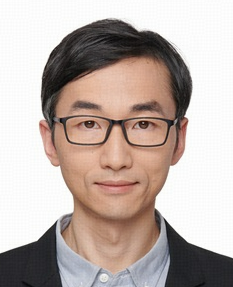 Wengang Zhou (周文罡)合作论文数MCC Lab, Department of Electronic Engineering and Information Science, School of Information Science and Technology, University of Science and Technology of China89
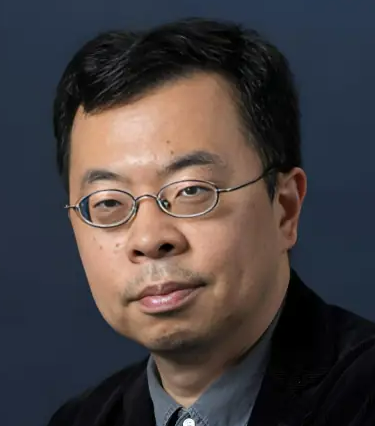 Changsheng Xu (徐常胜)合作论文数National Lab of Pattern Recognition, Institute of Automation, Chinese Academy of Sciences;China-Singapore Institute of Digital Media, Institute of Automation, Chinese Academy of Sciences;School of Artificial Intelligence, University of Chinese Academy of Sciences72
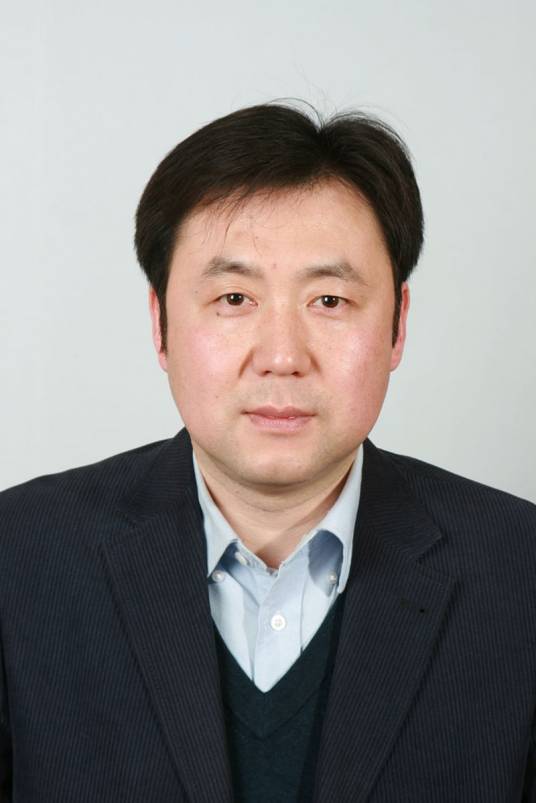 Houqiang Li (李厚强)合作论文数Department of Electronic Engineering and Information Science, University of Science and Technology of China;School of Information Science and Technology, University of Science and Technology of China71
 Longhui Wei合作论文数Huawei Cloud62
 Shiliang Zhang (张史梁)合作论文数School of Computer Science, Peking University;Department of Computer Science, School of Electronics Engineering and Computer Science, Peking University57
 Yijuan Lu合作论文数Media Lab, Texas State University41
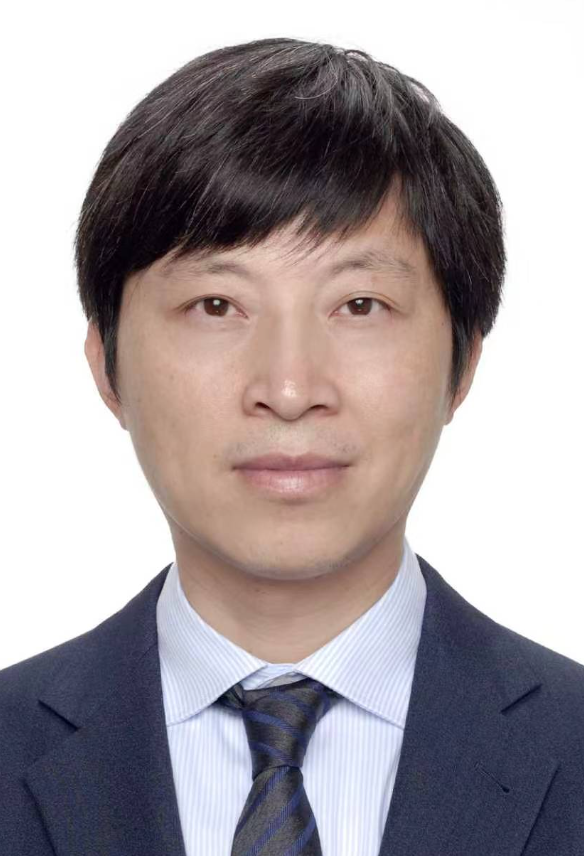 Hongkai Xiong (熊红凯)合作论文数School of Information and Electronic Engineering, East China Normal University;Department of Electronic Engineering, Shanghai Jiao Tong University;Department of Computer Science and Engineering, School of Computer Science, Shanghai Jiao Tong University;Institute of Media,Information, and Network, Shanghai Jiao Tong University40
 Ling-Yu Duan (段凌宇)合作论文数School of Computer Science, Peking University;Institute of Digital Media, School of Electronics Engineering and Computer Science, Peking University37
 Shuhui Wang (王树徽)合作论文数Key Laboratory of Intelligent Information Processing, Institute of Computing Technology, Chinese Academy of Sciences;University of Chinese Academy of Sciences37
 Ya Zhang (张娅)合作论文数School of Artificial Intelligence, Shanghai Jiao Tong University;Cooperative Medianet Innovation Center, School of Electronic Information and Electrical Engineering, Shanghai Jiao Tong University36
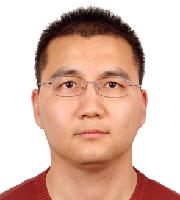 Chunjie Zhang (张淳杰)合作论文数School of Computer and Information Technology, Beijing Jiaotong University36
 Richang Hong (洪日昌)合作论文数School of Computer Science and Information Engineering, Hefei University of Technology;Institute of Dataspace, Hefei Comprehensive National Science Cente35
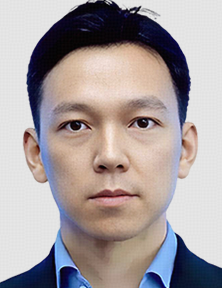 Rongrong Ji (纪荣嵘)合作论文数School of Informatics, Xiamen University34
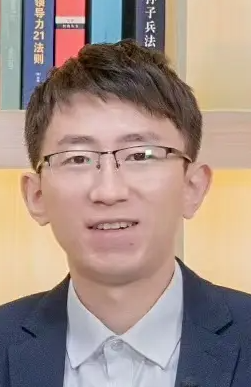 Jianlong Chang (常建龙)合作论文数Huawei34
 Yanfeng Wang (王延峰)合作论文数Artificial Intelligence Institute, Shanghai Jiao Tong University;Cooperative Medianet Innovation Center34
 Meng Wang (汪萌)合作论文数School of Computer Science and Information Engineering, Hefei University of Technology33
 Thomas S. Huang (黄煦涛)合作论文数Beckman Institute, University of Illinois, Urbana-Champaign33
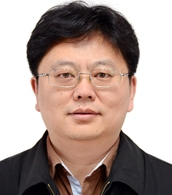 Yongdong Zhang (张勇东)合作论文数Laboratory for Future Networks, University of Science and Technology of China;Department of Electronic Engineering and Information Science, School of Information Science and Technology, University of Science and Technology of China33
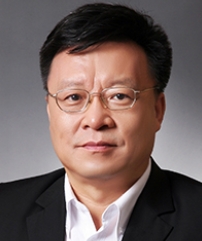 Wen Gao (高文)合作论文数School of Electronics Engineering and Computer Science, Peking University;Pengcheng Laboratory, Peking University;School of Artificial Intelligence, Xidian University33
 Nicu Sebe合作论文数Department of Information Engineering and Computer Science, University of Trento32
 Jiemin Fang (方杰民)合作论文数Huawei29
 Shengjin Wang (王生进)合作论文数Department of Electronic Engineering, Tsinghua University28
 Liang Zheng (郑良)合作论文数School of Computing, Australian National University;Canva28
 Bingbing Ni (倪冰冰)合作论文数Department of Electronlc Engineering, Shanghai Jiao Tong University24
 Yueting Zhuang (庄越挺)合作论文数College of Artificial Intelligence, Zhejiang University;AI Collaboration & Innovation Center of Ministry of Education, Zhejiang University23
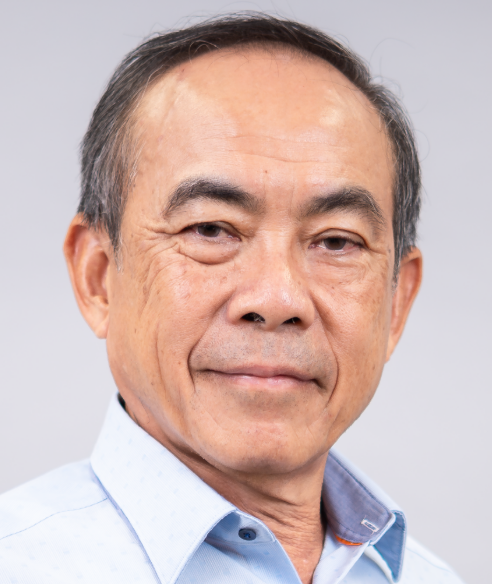 Tat-Seng Chua (蔡达成)合作论文数Department of Computer Science, School of Computing, National University of Singapore23
 Shuicheng Yan (颜水成)合作论文数Department of Computer Science, School of Computing, National University of Singapore23
 Wenrui Dai (戴文睿)合作论文数School of Integrated Circuits, Shanghai Jiao Tong University23
 Fei Wu (吴飞)合作论文数College of Computer Science and Technology, Zhejiang University22
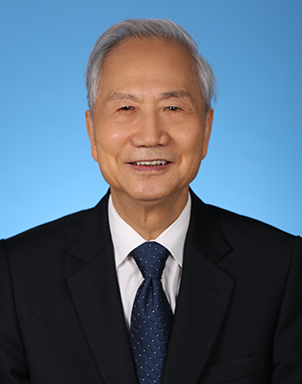 Bo Zhang (张钹)合作论文数Department of Computer Science and Technology, School of Information Science and Technology, Tsinghua University22
 Lin Liu合作论文数Huawei CBG AI Lab21
 Xin Chen合作论文数Meituan21
 Jie Yu (余洁)合作论文数School of Computer Engineering and Science, Shanghai University21
 Jianzhuang Liu (刘健庄)合作论文数Huawei;Shenzhen Institutes of Advanced Technology, University of Chinese Academy of Sciences21
 Wei Shen (沈为)合作论文数Department of Computer Science and Engineering, Shanghai Jiao Tong University;Artificial Intelligence Institute, Shanghai Jiao Tong University;DeepVisionLab, Shanghai Jiao Tong University20
 Jingdong Wang (王井东)合作论文数20
 Wei Xiong合作论文数ASTAR, Inst Infocomm Res, Singapore, Singapore19
 Dongsheng Jiang合作论文数Huawei Technologies Ltd.19
 Hanqing Lu (卢汉清)合作论文数National Laboratory of Pattern Recognition, Institute of Automation, Chinese Academy of Sciences;University of Chinese Academy of Sciences19
 Qixiang Ye (叶齐祥)合作论文数University of Chinese Academy of Sciences19
 Li Zhuo (卓力)合作论文数Faculty of Information Technology, Beijing University of Technology;College of Metropolitan Transportation, Beijing University of Technology17
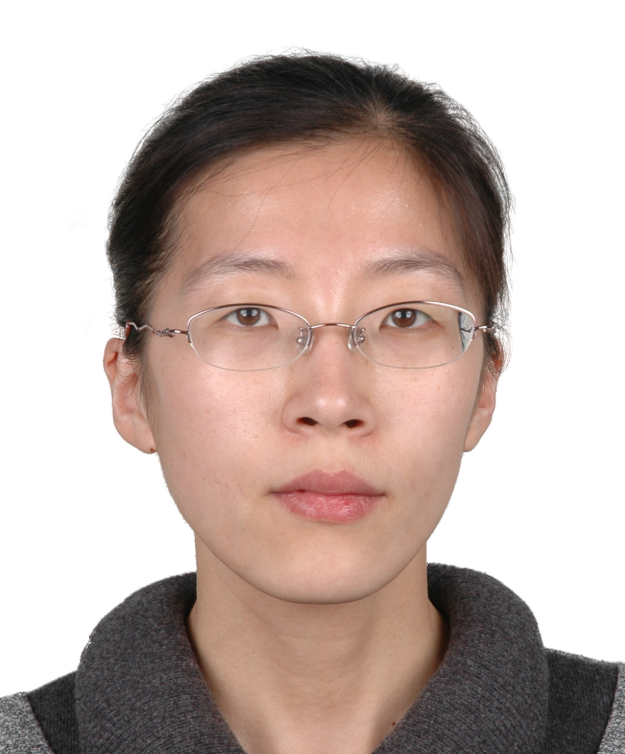 Jing Liu (刘静)合作论文数National Laboratory of Pattern Recognition, Institute of Automation, Chinese Academy of Sciences;University of Chinese Academy of Sciences17
 Jing Zhang (张菁)合作论文数Faculty of Information Technology, Beijing University of Technology17
 Shuqiang Jiang (蒋树强)合作论文数Institute of Computing Technology, Chinese Academy of Sciences;University of Chinese Academy of Sciences17
 Yahong Han (韩亚洪)合作论文数School of Artificial Intelligence, College of Intelligence and Computing, Tianjin University17
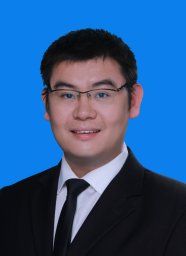 Chi Su (苏驰)合作论文数SmartMore Co., Ltd16