背景 术后留置引流有利于减轻局部血肿、减小切口张力、缓解术后疼痛、加快术后康复等,但同时也存在着增加伤口感染概率等风险.对于经皮脊柱内镜腰椎间盘切除术后是否需放置引流尚无相关文献报道.目的 分析脊柱内镜术后留置引流管的临床疗效,为进一步完善手术流程和术后康复方案提供数据支持.方法 收集 2018年 11月-2020年 12月解放军总医院海南医院骨科收治的 140例单纯腰椎间盘突出症行脊柱内窥镜手术治疗患者的临床资料.按是否进行引流分为引流组和非引流组,观察分析两组术后感染率、术后血肿形成率、术前与术后疼痛视觉模拟评分(visual analog scale,VAS).结果 引流组 70例,男性 54例,女性 16例,平均年龄(46.83±16.31)岁;非引流组 70例,男性 45例,女性 25 例,平均年龄(47.6±17.46)岁.140例患者均获得3个月随访.两组术后1周VAS评分,非引流组显著高于引流组(P<0.05).术后15 d、术后 3个月VAS评分,两组差异无统计学意义(P>0.05).术后随访非引流组有 1例出现术后血肿,引流组无血肿形成病例.两组均无术后感染病例.结论 脊柱内镜术后留置引流对于降低患者术后血肿形成和减轻术后疼痛有一定作用.
目的 探讨通过关节镜下微创射频消融技术治疗肱骨外上髁炎的疗效.方法 选取2010年3月-2019年6月收治的肱骨外上髁炎患者30例,男12例,女18例;年龄28~57岁,平均43.3岁.在关节镜监视下病变区射频清理,TOPAZ刀头行肌腱附着点网状打孔治疗.手术前后分别测量视觉疼痛评分(visual analogue score,VAS)、上肢功能评分(disabilities of the arm and shoulder and hand,DASH)及网球肘功能评分(tennis elbow function score,TEFS).结果 30例患者获得随访,平均随访5.7个月,围术期内无血管神经损伤、伤口感染等并发症.术后患者VAS评分下降(7.4±0.86 vs 3.3±0.67,P<0.001),DASH评分下降(48.5±5.26 vs 26.3±3.76,P<0.001),TEFS评分也下降(32.9±2.26 vs 23.6±1.53,P<0.001),差异均有统计学意义.结论 关节镜下射频消融技术治疗肱骨外上髁炎手术创伤小、效果良好、术后恢复快、并发症少,是治疗肱骨外上髁炎的有效方法 之一.
目的 分析克氏针固定儿童骨折的相关并发症,探讨出现并发症后的解决方法 .方法 分析我院2015年1月-2019年12月采用克氏针手术治疗的儿童骨折病例43例,克氏针固定超过4周组共27例,其中男童15例,女童12例,年龄0.5~12岁,术后随访时间(16.17±5.15)周;克氏针固定不超过4周组共16例,其中男童10例,女童6例,年龄1~13岁,术后随访时间(16.29±5.09)周.通过术后两组患肢外观、病例记录及X线片进行并发症评估.结果 43例中有14例出现并发症,并发症发生率33%.其中针道感染14例,拔除时克氏针松动9例,克氏针移动4例,肉芽过度生长2例,骨质过度生长1例,神经感觉运动障碍2例.所有骨折均愈合,克氏针留置时间超过4周组较不超过4周组并发症发生率高(44.4%vs 12.5%,P=0.03).结论 克氏针治疗的并发症均为轻度和短期.详细的术前规划、术中正确置针、高水平的术后护理,可以有效避免并发症发生.
目的 比较不同人格患者单侧人工全髋关节置换术后的康复效果.方法 选取2016年1月-2018年6月在我院行单侧人工全髋置换术的210例患者,根据艾森克人格评分量表分为四组:胆汁质人格(44例)、多血质人格(61例)、黏液质人格(59例)、抑郁质人格(46例).对四组患者进行术前及术后1个月VAS疼痛评分、Harris髋关节评分、平均住院时间、手术时间、患者满意度的比较.结果 四组患者术前一般资料及各项评分差异均无统计学意义(P>0.05).术后各组VAS评分差异有统计学意义(P<0.05),其中多血质人格患者的(1.9±1.2)分和粘液质人格患者的(2.1±1.1)分为最低,组间无统计学差异,胆汁质人格患者为(2.7±0.8)分,显著高于前两组,抑郁质人格患者的(3.5±1.8)分为最高.术后Harris髋关节评分各组差异有统计学意义(P<0.05),抑郁质人格患者Harris评分(57.6±11.1)显著低于其他3组,胆汁质人格患者Harris评分(65.5±9.8)居中,多血质人格患者Harris评分(72.4±10.7)和显黏液质人格患者Harris评分(70.4±8.9)最高.各组间住院时间及患者满意度方面差异有统计学意义(P均<0.05).胆汁质人格患者住院时间为(7.3±2.1)d,满意度为(84.4±6.9);多血质人格患者住院时间(6.9±3.1)d,满意度为(93.2±5.2);黏液质人格患者住院时间(7.5±1.9)d,满意度为(95.4±4.1);抑郁质人格患者住院时间(9.2±2.7)d,满意度为(89.4±3.6).其中抑郁质人格患者平均住院时间最长,胆汁质人格患者术后满意度最差.手术时间、术后并发症差异无统计学意义(P>0.05).结论 不同人格特点的患者单侧人工髋关节置换术后康复效果不同.
目的 对比骨搬运和抗生素骨水泥结合膜诱导技术治疗胫骨开放性骨折后感染性骨不连老年患者的临床疗效.方法 回顾性分析2013年5月至2016年5月解放军总医院海南医院和解放军总医院第一临床医学中心骨科收治的胫骨开放性骨折后感染性骨不连老年患者72例,研究组和对照组各36例,研究组患者给予骨搬运技术治疗,对照组患者给予抗生素骨水泥结合膜诱导技术治疗.随访12个月,对比2组患者的对位对线情况、骨愈合指数、美国膝关节协会(AKS)膝关节功能评分、Baird-Jackson踝关节功能评分和临床疗效.应用SPSS 19.0统计软件对数据进行分析.组间比较采用t检验或χ2检验.结果 2组患者的年龄、性别及骨折位置等差异无统计学意义(P>0.05).研究组相比于对照组,手术时间缩短[(135±17)vs(146±12)min],AKS膝关节功能评分[(165.7±15.2)vs(123.7±18.1)]和Baird-Jackson踝关节功能评分[(88.6±3.6)vs(77.6±5.4)]提高,骨愈合指数[(42.0±2.0)vs(43.3±3.0)d/cm]降低,临床有效率高[61.1%(22/36)vs 47.2%(17/36)],感染发生率低[5.6%(2/36)vs 25.0%(9/36)],差异均具有统计学意义(P<0.05).结论 骨搬运技术能够促进胫骨开放性骨折后感染性骨不连老年患者的功能康复,值得临床推广.
骨不连是骨折的严重并发症,尚没有权威定义,国内一般认为,骨折超过 6 个月未愈合为骨不连,而美国FDA 则保守地将这个时间延长至伤后 9 个月,并且连续3 个月影像学观察提示骨折部位没有进一步愈合迹象.以往研究认为骨不连发生率为 5%~10%,这些研究的参考文献均引用 Praemer [1] 于 1992 年的《肌肉骨骼的流行病学》,但这篇文献并未进行相关数据分析.
目的:评价防旋股骨近端髓内钉(PFNA)手术治疗老年不稳定型股骨粗隆间骨折的临床疗效.方法:回顾性分析我院骨科收治的48例老年不稳定型股骨粗隆间骨折患者的临床资料,所有患者均行防旋股骨近端髓内钉(PFNA)手术治疗,观察患者的临床疗效及手术相关并发症情况.结果:所有患者手术均成功,术后随访结果表明患者Harris 评分(90.8±1.9)分,疗效优良率为91.7%?随访期内未出现手术相关并发症,骨折平均愈合时间为(14.3±1.1)周?结论:防旋股骨近端髓内钉手术治疗老年不稳定型股骨粗隆间骨折的疗效可靠,安全性高,对于改善患者的关节功能具有重要意义?
在看病过程中,我发现现在骨性关节炎发病人群很高,不少病人想要锻炼,但如何避免在锻炼过程中继发关节炎呢?关于骨关节炎的治疗,目前医生把骨性关节炎进行分级,并采取分级治疗.今天就和大家分享一下,希望对大家平时的防治有帮助.
目的 观察老年髋部骨折围手术期出现的相关并发症,分析其相关因素并探讨相应的防治措施.方法 回顾性分析2003年6月~ 2014年3月我院收治的老年髋部骨折患者236例,男94例,女142例,平均年龄73.7岁,其中股骨转子间骨折136例,股骨转子下骨折27例,股骨颈骨折73例.收集所有患者的在院完整病例信息和出院后半年的随访信息,应用统计学分析性别、年龄、术前伴随病症、骨折类型、麻醉方式、手术持续时间等与所发生的相关并发症之间的关系.结果 所有患者共出现并发症100例次,主要并发症为血栓栓塞性疾病、创伤后神经精神病、肺部及泌尿系感染、伤口局部并发症和心血管意外,其中单发1种并发症者59例,并发2种并发症者18例,并发3种及以上并发症者8例.并发症的发生与患者年龄、术前住院时间、骨折类型、术前伴随症以及手术持续时间等密切相关(P< 0.05,OR=3.33,回归系数为1.20).结论 老年髋部骨折围手术期并发症发生率高、风险大,应针对相关因素进行积极处理,减少发生率.
Background:No consensus has been reached in peri-operative anticoagulation for joint replacement in patients with previous cardiac valve replacement.Objective:To evaluate the safety and efficiency of peri-operative anticoagulation for joint replacement through replacing Warfarin by low molecular weight heparin(LMWH) in patients with previous cardiac valve replacement.Methods:Nineteen patients with artificial cardiac valve who underwent arthroplasty in our institution from April 2007 to June 2011 were retrospectively studied.Warfarin was replaced by continuous LMWH 3 days before operation.In case of postoperative bleeding,intermittent wound drainage,transfusion,and pressure bandaging combined with withdrawal of LMWH were adopted.Early isometric contraction was encouraged.Compressible limb sleeve and bump were used for enhancing circulation in the lower limb,out-of-bed rehabilitation was allowed once the patient's general condition permitted.Warfarin was started 7 days after operation accompanied by LMWH for additional 3 days.The intraoperative blood loss and postoperative drainage were recorded,the mean international normalized ratio(INR) was calculated,and the postoperative bleeding and embolism risk were also evaluated.Results:The average intraoperative blood loss was(347 ± 81)ml,ranging from 230 ml to 520 ml;the average postoperative drainage was(607±103)ml,ranging from 480 ml to 820 ml;and the average INR was 2.16±0.43.No severe bleeding was recorded.Eleven cases experienced curable bleeding.No embolism was found by ultrasonography in the valve and surgical limb.Conclusions:Replacing Warfarin with LMWH for perioperative anticoagulation in patients with artificial cardiac valve 3 days before elective joint replacement is associated with effective anticoagulation preventing valve and lower limb embolism not at the expense of increasing severe bleeding after operation.In case of curable bleeding,transfusion,intermittentwound drainage,pressure bandaging,and withdrawal of LMWH can reduce bleeding effectively.Early isometric contraction,accompanied by compressible limb sleeve and bump,as well as out-of-bed rehabilitation can enhance the recovery after surgery by preventing DVT in lower limb.
目的 探讨有限切开股骨近端锁定钢板内固定治疗老年人复杂股骨转子间骨折的临床疗效. 方法 回顾性分析2008年1月至2011年12月收治且获随访的66例老年股骨转子间骨折患者,男31例,女35例;年龄65~91岁,平均76.2岁.致伤原因:跌倒伤26例,摔伤27例,高处坠落伤7例,交通伤6例.骨折AO分型:均为A3型,其中A3.1型18例,A3.2型22例,A3.3型26例.受伤至手术时间为3~5d,平均3.5d.所有患者均采用有限切开(切口长度为7~10 cm)股骨近端锁定钢板内固定治疗.结果 本组患者手术时间平均为62 min;术中出血量平均为250 mL.所有患者伤口均一期愈合,无一例发生切口延迟愈合或感染.术后2例发生下肢深静脉血栓形成.66例患者术后获平均22个月(16~ 28个月)随访.本组患者骨折愈合时间为6~12个月,平均9个月.末次随访时根据髋关节Harris评分标准评定疗效:优35例,良23例,可8例,优良率为87.9%.本组无死亡、褥疮、股骨头缺血性坏死及肢体短缩等并发症发生. 结论 有限切开股骨近端锁定钢板内固定治疗老年人复杂股骨转子间骨折具有手术操作简便、固定牢固及患者能够早期进行功能锻炼等优点,是一种较好的选择.
Objective To carry out a retrospective study of the polyethylene wear of ceramic on polyethylene and metal on polyethylene in total hip arthroplasty.Methods From March 1995 to August 2002,127 cases with non-cement total hip arthroplasty were selected and divided into two groups(ceramic on polyethylene,CP;metal on polyethylene,MP) according to the interface of the joint prosthesis.After the 8.7 years and 9.1 years follow-up respectively,the translation of the femoral head components was measured on the normal hip joint X-ray obtained post-operation and at the last follow-up.The osteolysis was observed and the Harris score was recorded in the two groups.Results At the last follow-up,85% of the cases in CP group got the liner wear of 0-1 mm range and 49% in MP group.Three cases in CP group got the liner wear of more than 2 mm and 11 cases in MP group.Ten regions in acetabular and 13 regions in femoral side developed osteolysis in CP group.Nineteen regions in acetabular and 42 regions in femoral side developed osteolysis in MP group.The difference between the CP and MP groups in osteolysis was significant(P<0.01).The Harris score had no significant difference between the 2 groups(P>0.05).Conclusions Ceramic on polyethylene is a good choice for joint interface in total hip arthroplasty at present.
目的 为人工全膝关节置换术(TKA)后早期感染探索新的治疗方法 .方法 回顾发生全膝关节置换术后感染患者19例,我们采用手术清创,放射治疗,抗生素抑制疗法和免疫支持疗法等综合治疗.结果 病程在3周内的15例用此方法 全部保留假体成功,其余4例病程在6周以上,保留假体失败.结论 关节置换术后感染是严重并发症,本方法 对早期感染可能是一种保留假体的补救方法 .
Objective To study the surgical treatment outcome of complex acetabular fracture in order to improve its diagnosis and treatment.Methods Data about 34 patients(25 males and 9 females) with complex acetabular fracture at the average age of 36.6 years,who were treated with surgery in our hospital from August 2005 to September 2008,were retrospectively analyzed.Fractures were classified as posterior column combined posterior wall fracture in 2 patients,transverse combined posterior wall fracture in 7 patients,T-shaped fracture in 8 patients,anterior combined posterior hemitransverse fracture in 4 patients,and both column fracture in 13 patients,respectively,according to the Letournel classification.Fracture reduction and fixation were carried out with special instruments,plates and screws through Kocher-Langenbeck + ilioinguinal approach in 15 patients,extended iliofemoral approach in 1 patient,combined anterior and posterior approach in 6 patients.Results All the patients were followed up for 12-36 months(mean 20 months).Anatomical,satisfactory and poor reduction was achieved in 19,10 and 5 patients,respectively.According to the Matta scores,excellent,good,fair and poor results were found in 15,9,7 and 3 patients respectively.Traumatic arthritis,femoral head necrosis and heterotopic ossification occurred in 9,3 and 9 patients,respectively,after operation.Conclusion Early operation,anatomical reduction,good fixation,early functional rehabilitation,surgeon's experience and active prevention of complications are the keys to a good clinical outcome.
Objective To study the role of the cortical strut allograft in femoral revision of THA and it’s result.Methods Cortical strut allografts were used in 3 different conditions of 41 cases of revision THA from October 2001 to December 2007.One is using the cortical strut allograft to enhance bone quality of the proximal part femoral combining with MP prostheses in 20 cases,the second condition is using with impaction bone grating technique in 6 cases and the third one is using in the treatment of peris-thetic femoral fracture in 15 cases.We’ve got an average of 37 months(6~72 months) of follow-up.Results All the allografts showed the signs of incorporating with the host bone in 12 months after the operation.The femoral prostheses were stable without any signs of the infection and loosening.The Harris Hip Score was increased from average of 38 points pre-operations to average of 88.1 points post-operations.Conclusions Cortical strut allograft could provide a good method for some femoral revisions in total hip arthroplasty both in mechanical and biological stability as the biological bone plates.
Objectives To compare antibiotic-impregnated cement spacer and antibiotic irrigating metal spacer in the treatment of infections after total hip arthroplasty(THA) and to determine which is better in the two-stage revision of the infected THA.Method Thirty-six consecutive patients with infection around hip prosthesis were treated from March 2002 to December 2007 in our center,which included forty hips in total.Among them,twenty-six patients were treated with antibiotic-impregnated cement spacer and ten patients were treated with antibiotic irrigating metal spacer.All the patients were assessed by operation time,blood loss during the spacer implantation,time of hospitalization and staying in bed,joint function analysis by Harris score system,and ROM of flexion and extention.X - ray photograph was routinely taken.Results Follow-up for all the patients were gained except one died of MOF 34 months after the revison.Results showed that the patients with antibiotic-impregnated cement spacers gained less operation time(2.52±0.79 vs 3.29±0.33,P0.01),less blood loss1208.57±275.64/2131.82±596.84,P=0.00),less time of staying in bed after the first OP(6.14±1.98/45.18±6.11,P=0.00) and shorter hospital stay time(26.00±3.27/53.63±3.35,P= 0.00),higher control rate of infection in the interval(100%/81.82%,P0.01),better function before the second OP(86.78±7.49/80.35±6.37,P0.05) and free of long-term irrigation.Conclusion Comparing with antibiotic irrigating metal spacers,our self-made antibiotic-impregnated cement spacers have many advantages mentioned in result above.As a result,we recommend this antibiotic-impregnated cement spacer as a standard to be used.
Objective As primary total hip arthroplasties(THA) become more common in younger,physically active patients,the number of revision arthroplasties will also increase.Femoral bone loss,joint instability and possible increased infection rate remain a great challenge for a surgeon performing revision arthroplasty of the hip.The severe proximal femoral bone loss indicates the use of revision stems with a distal fixation.To summarize the application of clinical results and experience of MP distal tapered modular stem for femoral revision in total hip revision.Methods In this study the clinical and radiological outcomes of 21 cementless stem revisions using the MP distal fixed tapered modular stem with an average follow-up time of 2 years were prospectively examined.In addition,the patient’s satisfaction rate was surveyed.Results The Harris Hip Score improved from preoperative(56.2±25.2) to postoperative(85.3±13.2).At the latest follow-up,the Harris Hip Score achieved(89.2±11.5).The patient satisfaction was 90.5%.In 20 cases:healing of bony defects could be found,atrophy of the proximal femur and non-progressive radiolucent lines in zones 1 and 7 according to Gruen were detected,no disadvantages or complications of the Morse taper junctions were observed.Primary stable fixation was achieved in all but one case.The case was revised again due to sinking with persisting infection.Conclusions Given the encouraging results with the MP distal tapered modular stem,the principle of cementless distal fixation appears to solve most of the technical problems in cases of significant bone loss less than Paprosky ⅢB.
Objective:To analysis the main causes of intraoperative periprosthetic femur fractures in congenital dysplasia of the hip(CDH) and summarize the experience of prevention.Methods: A retrospective analysis was taken to 32 cases of CDH patients who have intraoperative periprosthetic femur fractures from Jan 2002 to June 2007.Results:Intraoperative femur fracture occurred in 32 cases(9.3%)of 345 CDH hips.All patients were followed-up.The mean follow-up time was 27.8months(range,5-47 months).There were 26 Mallory typeⅠfractures and 6 typeⅡ fractures.There was no typeⅢ fracture.All fractures were fixed during operation,and 31 cases healed except 1 case.The postoperation mean Harris score was 91.Conclusion: Cementless prosthesis,subtrochanteric osteotomy,inappropriate choice of prosthesis type and size,proximal femur anatomical abnormal are the main cause of femur fractures in total hip arthroplasty of CDH patients.Consummate preoperative planning,excellent exposure and prophylactic cerclage wires fixation are recommend to reduce this risk.
OBJECTIVE:To compare proximal femoral resection with transverse subtrochanteric osteotomy in the treatment of Crowe's IV congenital dislocated hip (CDH) with total hip arthroplasty (THA). METHODS:Thirty-six primary hip arthroplasties were performed in patients with Crowe grade IV CDH from April 2003 to October 2007. These patients were divided into two groups, one for proximal femoral resection (n = 20) and another for subtrochanteric osteotomy (n = 16). The leg length discrepancy, rotation center height and Harris score were measured pre- and post-operation to compare the two methods of osteotomy. RESULTS:All surgeries were successfully performed. The average leg discrepancy was 0.6 cm (range from 0 to 1.5 cm) for subtrochanteric osteotomy group and 0.3 cm (range from -1.0 to 1.5 cm) for proximal femoral resection group, there was no significant difference between them (P > 0.05). There were also no statistically significant difference between the two groups in other index. The complication rates were much higher in the proximal femoral resection group. At the latest follow up, the Harris score of subtrochanteric osteotomy group was 90 +/- 6, and the proximal femoral resection group was 83 +/- 8. There was statistical difference between the two groups (P < 0.05). CONCLUSIONS:Although both the femoral shortening techniques can restore the leg length of Crowe IV CDH, the subtrochanteric osteotomy technique has advantage of avoiding the potential complications in the high riding patients (high dislocation > 4 cm).
目的探讨二期翻修手术治疗人工膝关节置换术后感染的有效性、第二期翻修时机的选择及抗生素使用的时间。方法采用二期翻修术治疗了19例膝关节置换术后感染患者,6例采用金属灌注冲洗型占位器,13例采用抗生素骨水泥占位器,其中2例为非关节型占位器,3例为部分抗生素骨水泥关节型占位器,8例为全抗生素骨水泥关节型占位器。术后定期随访,应用X线片及HSS评分进行评价。结果所有患者均获得随访,平均随访时间21个月(3~36个月),HSS评分由术前平均42.5分提高到最后复查时的88.6分,患者满意率为89.5%。在最后随访时没有感染复发的病例。结论二期翻修手术是治疗人工髋关节置换术后感染的有效方法,临时占位器起到重要的作用,使用关节型抗生素骨水泥占位器有控制感染效果好、术后抗生素使用时间短、术后功能恢复好及术后不用灌注的优点。
 JingDong Li (李静东)合作论文数12
 Jiyuan Dong (董纪元)合作论文数Chinese PLA General Hospital12
 Yan Wang (王岩)合作论文数Nankai University;Chinese People's Liberation Army General Hospital12
 Yonggang Zhou (周勇刚)合作论文数Chinese PLA General Hospital11
 Jiying Chen (陈继营)合作论文数Chinese PLA General Hospital9Yujie Liu (刘玉杰)合作论文数Hainan Hospital of the General Hospital of the People's Liberation Army of China;School of Medicine, Nankai University9
 Libo Hao (郝立波)合作论文数Chinese PLA General Hospital8
 Guoqiang Zhang (张国强)合作论文数Chinese PLA General Hospital7
 Xifeng Zhang (张西峰)合作论文数Dept Orthoped, Chinese Peoples Liberat Army Gen Hosp5BoXun Zhang (张伯勋)合作论文数4JiFang Wang (王继芳)合作论文数4
 Wei Chai (柴伟)合作论文数Chinese PLA General Hospital4Wen-Shan HU (胡文山)合作论文数3
 Shibi Lu (卢世璧)合作论文数Chinese PLA General Hospital3
 Zhongli Li (李众利)合作论文数Chinese PLA General Hospital3Rui MA (马睿)合作论文数2XiangLi Wang (王相利)合作论文数2JunSheng Liang (梁俊生)合作论文数2
 Meng Xu (许猛)合作论文数Chinese PLA General Hospital2
 Xu Cai (蔡谞)合作论文数Chinese PLA General Hospital2
 Peifu Tang (唐佩福)合作论文数Department of Orthopaedics, Chinese PLA General Hospital;School of Medicine, Nankai University2
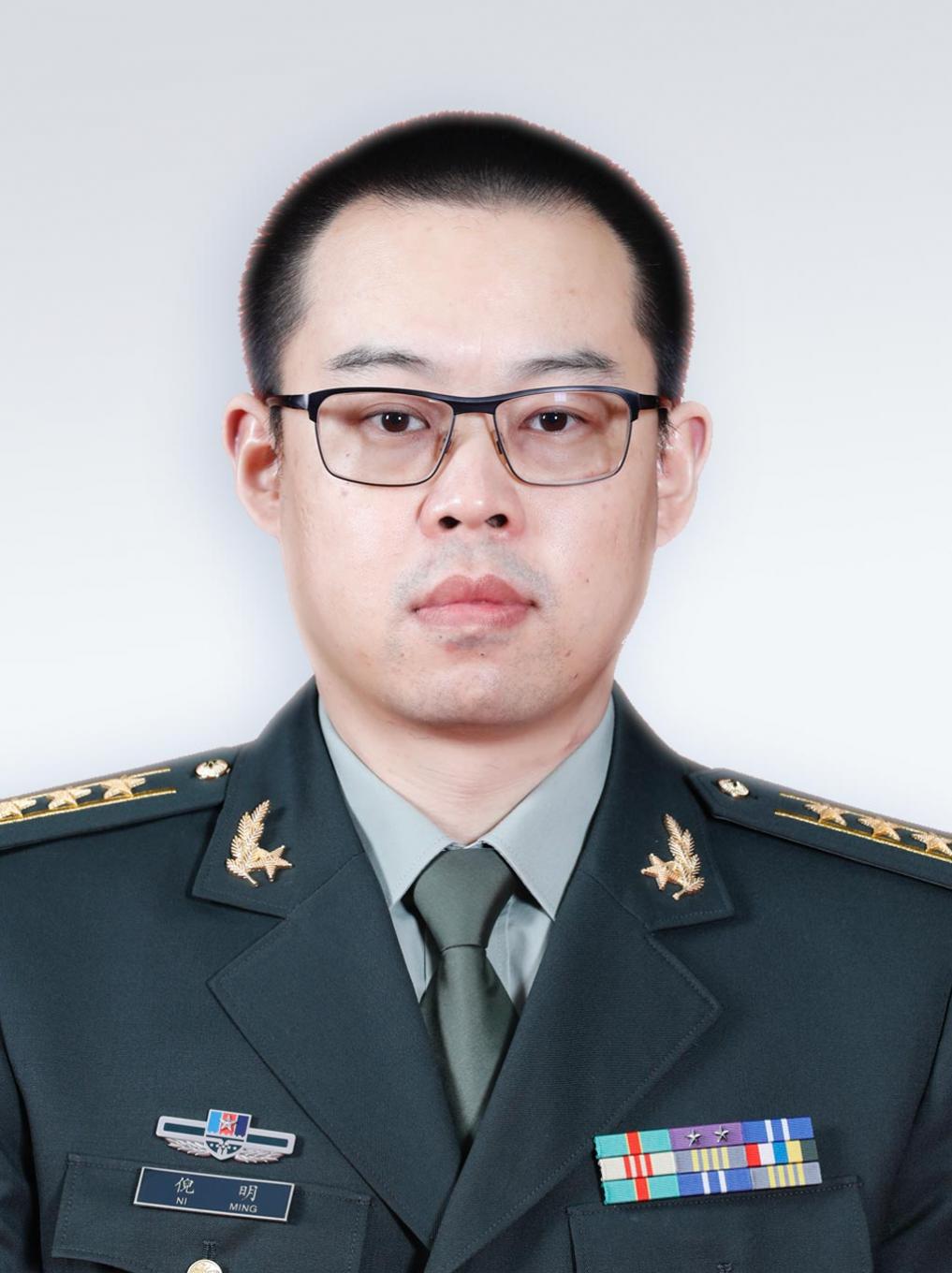 Ming Ni (倪明)合作论文数Chinese PLA General Hospital2
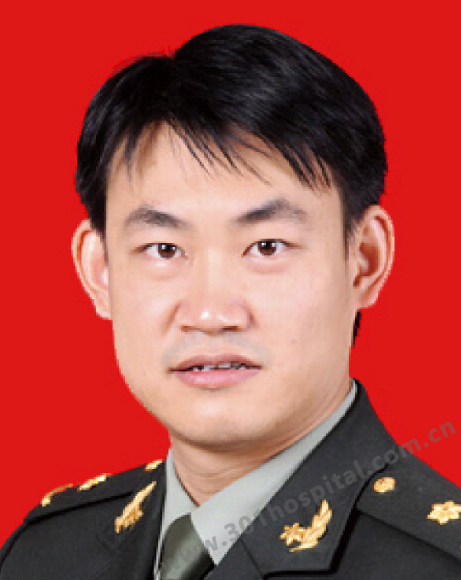 Qiang Zhang (张强)合作论文数Chinese PLA General Hospital2
 Jinpeng Jia (贾金鹏)合作论文数Chinese PLA General Hospital2Zhigang Jin (金志刚)合作论文数2shiming zan (昝世明)合作论文数1Yingying SHI (石莹莹)合作论文数1Zhirui Li合作论文数1ning hou (侯宁)合作论文数1Jian-jun WANG (王建军)合作论文数1Jing-xue NIU (牛敬雪)合作论文数1Bo Zhu (朱博)合作论文数1Hui CHEN (陈辉)合作论文数1Xiao AN (安晓)合作论文数1Tao HAN (韩涛)合作论文数1Haisheng Wang (王海生)合作论文数1Tian-wen LI (李天文)合作论文数1Zhen-yu XU (徐振宇)合作论文数1JianJin Wang (王建锦)合作论文数1LiangCheng Huang (黄良诚)合作论文数1XinCheng Yuan (原新成)合作论文数1YanShui Lin (林炎水)合作论文数1XiaoMu Yu (于晓牧)合作论文数1ZhengSheng Liu (刘郑生)合作论文数1YuTian Liang (梁雨田)合作论文数1HuiLiang Zhang (张辉良)合作论文数1Wei Qi (齐玮)合作论文数1JunLiang Wang (王俊良)合作论文数1JunQiang Wei (魏均强)合作论文数1




