知识追踪是一项评估学生学习过程中知识状态演变情况的任务。现有大多数方法都致力于探索不同的知识状态评估方法。然而,答题过程中更为基础的题目表征受到的关注相对较少。因此,该文提出了一种融合通用题目表征学习的神经知识追踪框架。具体地,该文首先设计了一种通用的题目表征方法,通过知识点、难度和题目独有特征来区分题目。然后,采用现有知识追踪方法同时捕捉知识状态演变并学习题目表征。最后,利用知识状态和待回答题目表征的内积来模拟回答过程。在三个真实数据集上的实验结果表明,该文方法可以在知识追踪过程中学习精确有效的题目表征,并且显著提升了基线知识追踪方法的性能,使其能够超过现有最优方法。
利用自然语言处理技术对作文进行自动评阅是有重要意义和挑战的研究课题,引起了人工智能领域与教育领域学者的共同关注.该文聚焦于语文作文自动评分任务,提出通过深层语言分析,包括应用高性能别字、语法纠错器分析语言运用能力,采用自动修辞分析、优秀表达识别等手段反映语言表达能力,以及通过细粒度篇章质量分析评估篇章整体质量,来构建有效特征.该文同时提出了结合语言分析特征与深度神经网络编码的自适应混合评分模型.在真实语文作文数据上的实验表明,融入深层语言分析特征可有效提高作文评分效果;年级与主题自适应的模型训练策略,可提高模型的迁移能力和预测效果.消融实验进一步分析和解释了不同类型特征对评分效果的贡献.
Disentanglement is a problem in which multiple conversations occur in the same channel simultaneously, and the listener should decide which utterance is part of the conversation he will respond to. We propose a new model, named Dialogue BERT (DialBERT), which integrates local and global semantics in a single stream of messages to disentangle the conversations that mixed together. We employ BERT to capture the matching information in each utterance pair at the utterance-level, and use a BiLSTM to aggregate and incorporate the context-level information. With only a 3% increase in parameters, a 12% improvement has been attained in comparison to BERT, based on the F1-Score. The model achieves a state-of-the-art result on the a new dataset proposed by IBM and surpasses previous work by a substantial margin.
In this paper, we study the problem of employing pre-trained language models for multi-turn response selection in retrieval-based chatbots. A new model, named Speaker-Aware BERT (SA-BERT), is proposed in order to make the model aware of the speaker change information, which is an important and intrinsic property of multi-turn dialogues. Furthermore, a speaker-aware disentanglement strategy is proposed to tackle the entangled dialogues. This strategy selects a small number of most important utterances as the filtered context according to the speakers' information in them. Finally, domain adaptation is performed to incorporate the in-domain knowledge into pre-trained language models. Experiments on five public datasets show that our proposed model outperforms the present models on all metrics by large margins and achieves new state-of-the-art performances for multi-turn response selection.
Dialogue disentanglement aims to separate intermingled messages into detached sessions. The existing research focuses on two-step architectures, in which a model first retrieves the relationships between two messages and then divides the message stream into separate clusters. Almost all existing work puts significant efforts on selecting features for message-pair classification and clustering, while ignoring the semantic coherence within each session. In this paper, we introduce the first end-to- end transition-based model for online dialogue disentanglement. Our model captures the sequential information of each session as the online algorithm proceeds on processing a dialogue. The coherence in a session is hence modeled when messages are sequentially added into their best-matching sessions. Meanwhile, the research field still lacks data for studying end-to-end dialogue disentanglement, so we construct a large-scale dataset by extracting coherent dialogues from online movie scripts. We evaluate our model on both the dataset we developed and the publicly available Ubuntu IRC dataset [Kummerfeld et al., 2019]. The results show that our model significantly outperforms the existing algorithms. Further experiments demonstrate that our model better captures the sequential semantics and obtains more coherent disentangled sessions.
该文提出了一种结合依存句法分析和深度神经网络的自动句子填空技术.首先,提出了一种依存句法信息展开的序列建模方案,可以在引入句法信息的同时兼顾效率,并在此基础上利用排序学习思想,训练候选答案排序模型;其次,针对整体序列建模的细节建模失准问题,提出了一种基于语言模型多状态信息融合的自动句子填空模型;最后,设计了一种结合序列表示、依存句法信息、多状态信息的多源信息融合模型.该文还构建出一个英文答题数据集并据此进行了实验.实验结果表明,依存句法展开模型相对于常用的序列建模方案,准确率有11% 的绝对提升;语言模型状态排序模型相对于基线模型,准确率有9.3% 的绝对提升;最终的多源信息融合模型,在测试集上获得最高76.9% 的准确率.
Natural language inference (NLI) is among the most challenging tasks in natural language understanding. Recent work on unsupervised pretraining that leverages unsupervised signals such as language-model and sentence prediction objectives has shown to be very effective on a wide range of NLP problems. It would still be desirable to further understand how it helps NLI; e.g., if it learns artifacts in data annotation or instead learn true inference knowledge. In addition, external knowledge that does not exist in the limited amount of NLI training data may be added to NLI models in two typical ways, e.g., from human-created resources or an unsupervised pretraining paradigm. We runs several experiments here to investigate whether they help NLI in the same way, and if not,how?
在学习一门语言时,不仅要做到能看会写,还要做到能听会说.然而,对于学生而言,后者通常比前者更具难度.如何让学生更好地将语言学以致用,成为了很多老师深入思考的问题.随着语音评测技术的发展,这一问题有望得到很好的解决.本文将以科大讯飞研发的英语口语智能考试及评分系统、英语听说教考平台、小学口语作业平台为例,解读技术对语言学习带来的改变.
In this paper, we propose a cluster-based senone selection method to speed up the computation of deep neural networks (DNN) at the decoding time of automatic speech recognition (ASR) systems. In DNN-based acoustic models, the large number of senones at the output layer is one of the main causes that lead to the high computation complexity of DNNs. Inspired by the mixture selection method designed for the Gaussian mixture model (GMM)-based acoustic models, only a subset of the senones at the output layer of DNNs are selected to calculate the posterior probabilities in our proposed method. The senone selection strategy is derived by clustering acoustic features according to their transformed representations at the top hidden layer of the DNN acoustic model. Experimental results on Mandarin speech recognition tasks show that the average number of DNN parameters used for computation can be reduced by 22% and the overall speed of the recognition process can be accelerated by 13% without significant performance degradation after using our proposed method. Experimental results on the Switchboard task demonstrate that our proposed method can reduce the average number of DNN parameters used for computation by 38.8% for conventional DNN modeling and 22.7% for low-rank DNN modeling respectively with negligible performance loss.
In online education systems, for offering proactive services to students (e.g., personalized exercise recommendation), a crucial demand is to predict student performance (e.g., scores) on future exercising activities. Existing prediction methods mainly exploit the historical exercising records of students, where each exercise is usually represented as the manually labeled knowledge concepts, and the richer information contained in the text description of exercises is still underexplored. In this paper, we propose a novel Exercise-Enhanced Recurrent Neural Network (EERNN) framework for student performance prediction by taking full advantage of both student exercising records and the text of each exercise. Specifically, for modeling the student exercising process, we first design a bidirectional LSTM to learn each exercise representation from its text description without any expertise and information loss. Then, we propose a new LSTM architecture to trace student states (i.e., knowledge states) in their sequential exercising process with the combination of exercise representations. For making final predictions, we design two strategies under EERNN, i.e., EERNNM with Markov property and EERNNA with Attention mechanism. Extensive experiments on large-scale real-world data clearly demonstrate the effectiveness of EERNN framework. Moreover, by incorporating the exercise correlations, EERNN can well deal with the cold start problems from both student and exercise perspectives.
We propose a nested recurrent neural network (nested RNN) model for English spelling error correction and generate pseudo data based on phonetic similarity to train it. The model fuses orthographic information and context as a whole and is trained in an end-to-end fashion. This avoids feature engineering and does not rely on a noisy channel model as in traditional methods. Experiments show that the proposed method is superior to existing systems in correcting spelling errors.
The RepEval 2017 Shared Task aims to evaluate natural language understanding models for sentence representation, in which a sentence is represented as a fixed-length vector with neural networks and the quality of the representation is tested with a natural language inference task. This paper describes our system (alpha) that is ranked among the top in the Shared Task, on both the in-domain test set (obtaining a 74.9% accuracy) and on the cross-domain test set (also attaining a 74.9% accuracy), demonstrating that the model generalizes well to the cross-domain data. Our model is equipped with intra-sentence gated-attention composition which helps achieve a better performance. In addition to submitting our model to the Shared Task, we have also tested it on the Stanford Natural Language Inference (SNLI) dataset. We obtain an accuracy of 85.5%, which is the best reported result on SNLI when cross-sentence attention is not allowed, the same condition enforced in RepEval 2017.
This paper introduces the IFLYTEK speech synthesis system for Blizzard Challenge 2017. The task is to build a speech synthesis system on a 6.5-hour children’s audio book corpus. The submitted system followed our previous one proposed in Blizzard Challenge 2016. A hidden Markov model (HMM)-based unit selection system was built with improvements in both the front-end text processing and back-end acoustic modeling. In the front-end, long short term memory(LSTM)-based recurrent neural networks(RNN) were adopted for tone and breaking indices (ToBI) prediction. In the back-end, another LSTM-RNN based acoustic model was built and the hidden layer was adopted as context embedding feature for unit selection. Evaluation results demonstrated that our system performed good on all aspects of paragraph test, which proved the effectiveness of our proposed system.
Neural networks have recently been intensively explored for machine comprehension and question answering. Core to the problems is the involvement of questions and hence the understanding of them---questions play a central role in machine comprehension, questions answering, and many other problems (e.g., information retrieval and query-based summarization). In this paper, we explore better question understanding and representation. First, we propose enriched question representation by encoding syntactic information with neural networks and filtering question content to different channels with filter banks. Second, in addition to providing a unified representation scheme for all questions, we differentiate different types of questions to provide the models with the flexibility of modelling different question groups. We propose an adaptation framework for this purpose. On the Stanford Question Answering Dataset (SQuAD), we show that our approaches improve a very competitive baseline to attain the state-of-the-art performance.
•A novel neural network based approach to handwritten mathematical expression recognition.•An end-to-end encoder-decoder framework to alleviate the problem caused by an explicit symbol segmentation and the computational demands of employing a mathematical expression grammar.•The deep fully convolutional neural network as the encoder.•The coverage-based attention model to incorporate the attention history.•Attention visualization to show the link between the input image and output symbol sequence in latex format.•To the best of our knowledge, achieving the best published expression recognition accuracy on CROHME 2014 competition set by only using the official training data.
Reasoning and inference are central to human and artificial intelligence. Modeling inference in human language is very challenging. With the availability of large annotated data (Bowman et al., 2015), it has recently become feasible to train neural network based inference models, which have shown to be very effective. In this paper, we present a new state-of-the-art result, achieving the accuracy of 88.6% on the Stanford Natural Language Inference Dataset. Unlike the previous top models that use very complicated network architectures, we first demonstrate that carefully designing sequential inference models based on chain LSTMs can outperform all previous models. Based on this, we further show that by explicitly considering recursive architectures in both local inference modeling and inference composition, we achieve additional improvement. Particularly, incorporating syntactic parsing information contributes to our best result---it further improves the performance even when added to the already very strong model.
In this paper, we propose a novel neural network structure, namely feedforward sequential memory networks (FSMN), to model long-term dependence in time series without using recurrent feedback. The proposed FSMN is a standard fully connected feedforward neural network equipped with some learnable memory blocks in its hidden layers. The memory blocks use a tapped-delay line structure to encode the long context information into a fixed-size representation as short-term memory mechanism which are somehow similar to the time-delay neural networks layers. We have evaluated the FSMNs in several standard benchmark tasks, including speech recognition and language modeling. Experimental results have shown that FSMNs outperform the conventional recurrent neural networks (RNN) while can be learned much more reliably and faster in modeling sequential signals like speech or language. Moreover, we also propose a compact feedforward sequential memory networks (cFSMN) by combining FSMN with low-rank matrix factorization and make a slight modification to the encoding method used in FSMNs in order to further simplify the network architecture. On the speech recognition Switchboard task, the proposed cFSMN structures can reduce the model size by 60% and speed up the learning by more than seven times while the model can still significantly outperform the popular bidirectional LSTMs for both frame-level cross-entropy criterion-based training and MMI-based sequence training.
This paper introduces the speech synthesis system submitted by IFLYTEK for the Blizzard Machine Learning Challenge 2017-ES1. Linguistic and acoustic features from a 4hour corpus were released for this task. Participants are expected to build a speech synthesis system on the given linguist and acoustic features without using any external data. Our system is composed of a long short term memory (LSTM) recurrent neural network (RNN)-based acoustic model and a generative adversarial network (GAN)-based post-filter for mel-cepstra. Two approaches to build GAN-based post-filter are implemented and compared in our experiments. The first one is to predict the residuals of mel-cepstra given the mel-cepstra predicted by the LSTM-based acoustic model. However, this method leads to unstable synthetic speech sounds in our experiments, which may be due to the poor quality of analysis-synthesis speech using the natural acoustic features given by this corpus. The other approach is to ignore the detailed components of natural mel-cepstra by dimension reduction using principal component analysis (PCA) and then recover them back using GAN given the main PCA components. At synthesis time, mel-cepstra predicted by the RNN acoustic model are first projected to the main PCA components, which are then sent to the GAN for detail recovering. Finally, the second approach is used in the final submitted system. The evaluation results show the effectiveness of our submitted system.
This paper focuses on the investigations in Winograd Schema (WS), a challenging problem which has been proposed for measuring progress in commonsense reasoning.Due to the lack of commonsense knowledge and training data, very little work has been found on the WS problems in recent years.Actually, there is no shortcut to solve this problem except to collect more commonsense knowledge and design suitable models.Therefore, this paper addresses a set of WS problems by proposing a knowledge acquisition method and a general neural association model.To avoid the sparseness issue, the knowledge we aim to collect is the cause-effect relationships between thousands of commonly used words.The knowledge acquisition method supports us to extract hundreds of thousands of cause-effect pairs from large text corpus automatically.Meanwhile, a neural association model (NAM) is proposed to encode the association relationships between any two discrete events.Based on the extracted knowledge and the NAM models, in this paper, we successfully build a system for solving WS problems from scratch and achieve 70.0% accuracy.Most importantly, this paper provides a flexible framework to solve WS problems based on event association and neural network methods.
In acoustic modeling for large vocabulary continuous speech recognition, it is essential to model long term dependency within speech signals. Usually, recurrent neural network (RNN) architectures, especially the long short term memory (LSTM) models, are the most popular choice. Recently, a novel architecture, namely feedforward sequential memory networks (FSMN), provides a non-recurrent architecture to model long term dependency in sequential data and has achieved better performance over RNNs on acoustic modeling and language modeling tasks. In this work, we propose a compact feedforward sequential memory networks (cFSMN) by combining FSMN with low-rank matrix factorization. We also make a slight modification to the encoding method used in FSMNs in order to further simplify the network architecture. On the Switchboard task, the proposed new cFSMN structures can reduce the model size by 60% and speed up the learning by more than 7 times while the models still significantly outperform the popular bidirection LSTMs for both frame-level cross-entropy (CE) criterion based training and MMI based sequence training.
 Lirong Dai (戴礼荣)合作论文数National Engineering Laboratory for Speech and Language Information Processing, University of Science and Technology of China;Department of Electronic Engineering and Information Science, University of Science and Technology of China16
 Zhenhua Ling (凌震华)合作论文数Department of Electronic Engineering and Information Science, School of Information Science and Technology, University of Science and Technology of China;Institute of Advanced Technology, University of Science and Technology of China14
 Guoping Hu (胡国平)合作论文数iFLYTEK Co., Ltd.;School of Computer Science and Technology, University of Science and Technology of China12
 Hui Jiang合作论文数Department of Electrical Engineering and Computer Science, Lassonde School of Engineering, York University11
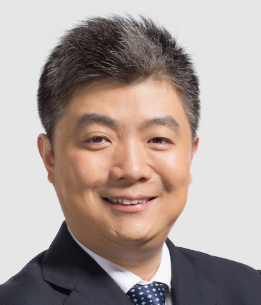 Yu Hu (胡郁)合作论文数iFLYTEK Co., Ltd.;Center for Technology and Business Ecosystem, Hong Kong University of Science and Technology;University of Science and Technology of China9
 Xiaodan Zhu合作论文数Department of Electrical and Computer Engineering, Queen's University;Ingenuity Labs Research Institute, Queen's University;Vector Institute for Artificial Intelligence9
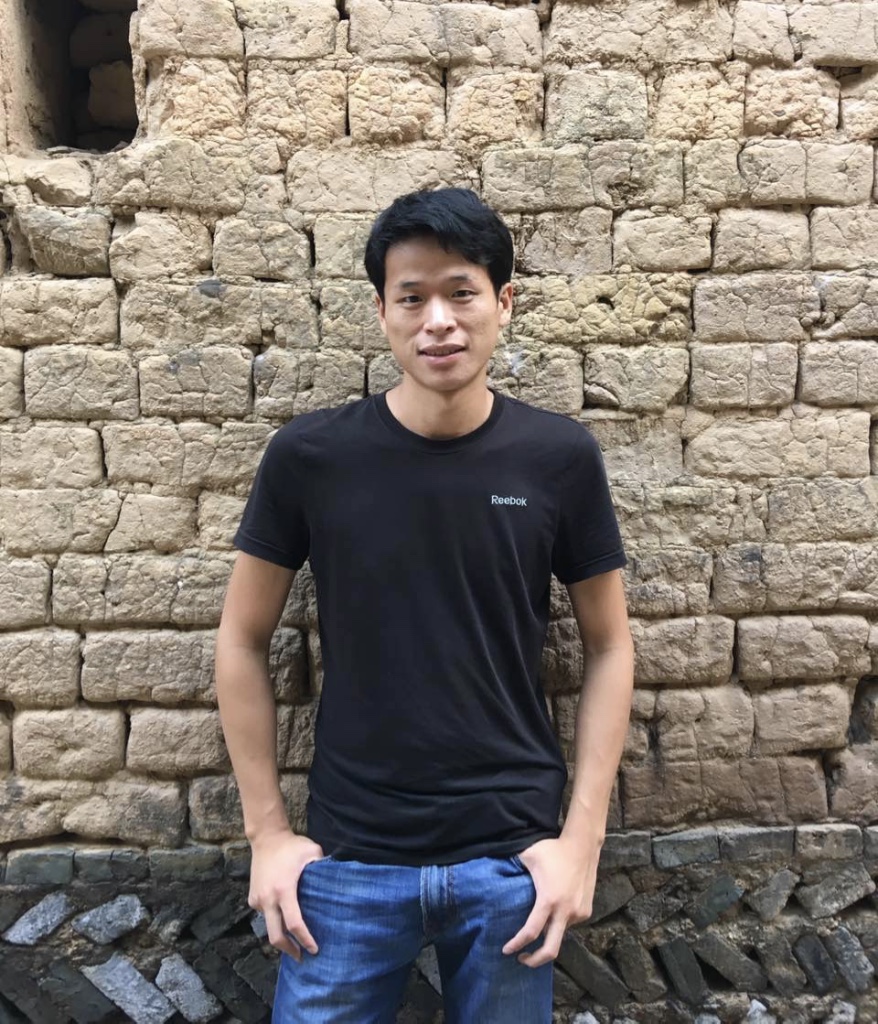 Quan Liu (刘权)合作论文数State Key Laboratory of Cognitive Intelligence, iFLYTEK Research7
 Shiliang Zhang (张史梁)合作论文数School of Computer Science, Peking University;Department of Computer Science, School of Electronics Engineering and Computer Science, Peking University6
 Qianyong Gao合作论文数5
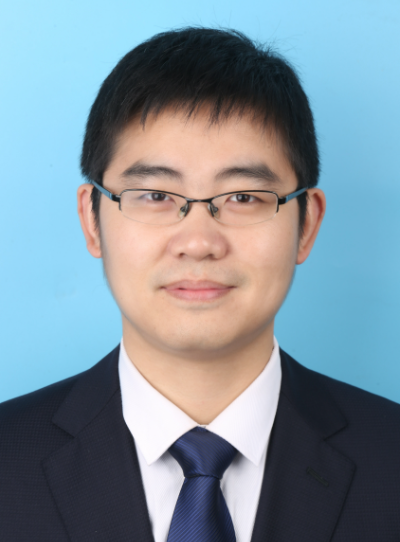 Jun Du (杜俊)合作论文数Department of Electronic Engineering and Information Science, School of Information Science and Technology, The Division of Information and Intelligence, University of Science and Technology of China;National Engineering Laboratory for Speech and Language Information Processing, University of Science and Technology of China5
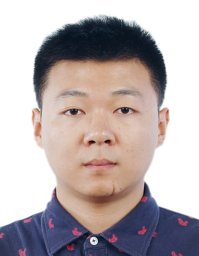 Qian Chen (陈谦)合作论文数Alibaba Group4
 Renhua Wang (王仁华)合作论文数Department of Electronic Engineering and Information Science, University of Science and Technology of China4Jinshui Hu (胡金水)合作论文数4
 Jia-Chen Gu (顾佳宸)合作论文数Department of Computer Science, University of California, Los Angeles3Wei Lin合作论文数iFLYTEK Res, Hefei, Anhui, Peoples R China3
 Qingfeng Liu (刘庆峰)合作论文数Iflytek Co.,Ltd3
 Dan Liu合作论文数Chang'an University, Chang'an University3
 Tianda Li合作论文数ServiceNow3Hansjörg Mixdorff合作论文数3
 Zhigang Chen (陈志刚)合作论文数iFLYTEK Co., Ltd3B. Zhu合作论文数3
 Shijin Wang (王士进)合作论文数iFLYTEK Co., Ltd.;School of Artificial Intelligence and Data Science, University of Science and Technology of China3
 Hongwei Ding (丁红卫)合作论文数School of Foreign Languages, Shanghai Jiao Tong University3Hue San Do合作论文数3Yi-Qian Pan合作论文数3Shu Gong合作论文数2
 Qi Liu (刘淇)合作论文数School of Data Science, University of Science and Technology of China;State Key Laboratory of Cognitive Intelligence, School of Computer Science and Technology, University of Science and Technology of China;Anhui Province Key Laboratory of Big Data Analysis and Application, School of Computer Science and Technology, University of Science and Technology of China2
 Zhenya Huang (黄振亚)合作论文数School of Computer Science and Technology, University of Science and Technology of China;School of Data Science, University of Science and Technology of China2
 Huajun Liu (刘华军)合作论文数Hefei Institutes of Physical Science, Chinese Academy of Sciences;University of Chinese Academy of Sciences2
 Zhiming Su合作论文数2
 Li-Juan Liu合作论文数2Chuang Ding合作论文数2
 Yu Su (苏煜)合作论文数2
 En-Hong Chen (陈恩红)合作论文数Anhui Province Key Laboratory of Big Data Analysis and Application, School of Computer Science and Technology, University of Science and Technology of China2
 Ming Zhou (周明)合作论文数Beijing Langboat Technology Co., Ltd2
 Hussein Hussein合作论文数2
 Yuan Jiang合作论文数2
 Diana Inkpen合作论文数School of Electrical Engineering and Computer Science, University of Ottawa2Junbei Zhang合作论文数1Zhan Shi合作论文数TikTok1zhenhua ling合作论文数1song jianguo合作论文数1Ma Yanhong合作论文数1Yulong Hu合作论文数1Yu Yin合作论文数Anhui Province Key Laboratory of Big Data Analysis and Application, School of Computer Science and Technology, University of Science and Technology of China1Jiefu Gong合作论文数iFLYTEK Res, State Key Lab Cognit Intelligence, Beijing, Peoples R China1Andrew Evdokimov合作论文数Department of Electrical Engineering and Computer Science, York University, Canada#TAB#1Jian-Fang Zhai合作论文数1




