汝窑位居我国宋代五大名窑(汝、官、哥、定、钧)之首,在我国青瓷技术发展史上占有重要地位.汝窑青瓷以天青釉、玉质感、冰裂纹开片、满釉芝麻状支钉等特点闻名于世,深受历代文人墨客的青睐和追捧,特别是被明、清朝皇室收藏并视为至宝.通过对比研究汝官窑和北宋民汝窑标本釉的化学组成发现:相比同一窑址的北宋民汝窑青瓷,汝官窑青瓷釉具有高钙和高铝的元素含量特征,这为釉层中形成较多钙长石微晶簇和较厚釉层提供了物理化学基础,造就了汝官釉的玉质感.同时,汝官窑青瓷釉料配方形成过程中,其制釉技术可能存在不断探索和革新变化.汝官窑和北宋民汝窑青瓷釉在原料种类和配方上皆存在明显差异,即北宋民汝窑青瓷釉采用釉灰和含一定量长石类矿物原料配制,汝官窑青瓷釉则采用釉灰、玛瑙和具有相对较高铝含量的长石类矿物三种或三种以上原料配制.同时,依据釉中MnO和TiO2含量皆比较低,推断两者釉中CaO引入皆是以釉灰的方式.
张公巷窑址位于河南省汝州市区东南部.2000~2004年,河南省文物考古研究所(现为河南省文物考古研究院)对此窑址进行了三次考古发掘,出土了大量青瓷片、窑具和原料过滤池等作坊遗存,其中大量瓷片能复原为整器[1].发掘者认为张公巷窑烧造时间集中在第④B层至第⑥层,而在第④、⑤层中均出土有金代“正隆元宝”铜钱,故判定第⑤层及其上各文化层(包括出土大量瓷片并打破第⑤层的H88等)的年代应晚于金正隆三年(1158年).
我国河南、陕西等地商周都邑遗址和贵族墓葬出土的原始瓷的产地问题争论已久,是北方当地生产还是从南方输入的(以下简称“北方说”和“南方说”),争论始于20世纪60年代.“北方说”的主要代表为安金槐[1],而“南方说”的提出者是周仁和李家治等[2],并得到夏鼐撰写按语支持.争论延续至今,并吸引了古陶瓷科技研究同仁的参与,如本文作者、朱剑和夏季等[3].
本实验采用X射线荧光能谱仪(EDXRF)对故宫博物院藏32件传世宋代官窑瓷器以及14件明清景德镇仿宋代官窑青瓷胎体(圈足、支钉、露胎处)的主次量和微量元素组成进行了无损测试,初步研究了这些瓷器胎体元素组成的特点、规律和类群关系,进而从胎体元素组成角度佐证和补充了根据釉料组成对院藏官窑类瓷器进行分类和产地溯源之研究所得的结论.结果表明:1)传世宋代官窑与明清景德镇仿官窑瓷器胎体组成可明确区分,其中原定为传世宋代官窑青瓷的G1、G29、G39号器物的胎体组成,符合明清景德镇仿官窑青瓷的胎体特征;而原定为明清仿宋代官窑青瓷的M41和Q54号器物,则与宋代官窑青瓷类似.2)综合胎釉分析结果,认为原定宋官窑鬲式炉的序号G26、原定宋官窑斗笠碗的序号G27和原定宋官窑圆洗(残)的序号G30这三件器物很可能为龙泉黑胎青瓷.3)原定为宋代官窑的7件菱花式小碟,胎体组成则符合北方青瓷特征.
In this paper, non-destructive Raman analyses and EDXRF were performed on 21 pieces of Guan wares which were collected by the Palace museum, 42 pieces of the Song dynasty Guan ware shards which were unearthed from Laohudong kiln site in Hangzhou city. According to the Ip value (equare to the area ratio A500/A1000) of the Raman spectra and chemical composition which were examined by EDXRF, the relationship of the flux composition content (such as CaO、K2O) and Ip value was discussed. Combined with the Raman characterization of Simulation samples which composition similar to two groups of Guan wares collected from the Palace Museum, the glaze firing temperature of the Song dynasty Guan wares were also discussed.
We provide a compositional examination on the change of the yellow lead-glaze of architectural tiles duringthe Ming and Qing dynasties in Beijing.An EDXRF analysis is conducted,whose results demonstrate that main elements of the yellow lead-glaze are relatively stable,while being slightly adjusted between the dynasties.The PbO/SiO2 ratio gradually decreased from the Ming dynasty to the Qing dynasty.ln addition,alumina and iron elementsalso witnessed regular variation from the Ming to the Qing dynasty.These data suggest that material rate of the lead-glaze is changing,and it is influenced by multiple factors,such as technological progression,and political,economic and aesthetical contexts.
Not until the late Northern Song dynasty did Qingliangsi kiln in Baofeng county of Henan province that started with Ru green porcelain products for civilian uses from the early Northern Song throughout the Jin and Yuan Dynasties add Ru celadon wares exclusively to imperial uses to production which were fired in the special furnace different from those for the public in design and shape. The author in this paper based a research into the elements, microstructure and thickness of the glazes upon the unearthed shards of different periods from this site which ranks among the top lists offering important materials on the birth, development and decline of Ru celadon production techniques, aiming to get more idea about how the Ru official celadon were linked with the Ru folk green porcelain of the Northern-Song in history. It has been concluded that both were made from almost the same materials but each has its own different formula. There was a stricter quality control of processing and firing the official wares containing more CaO and Al2O3 contents. The lower sintered temperature for official products lead to the thicker layer of glazes, which consequently gives birth to the deep-sky-blue wares that feel as translucent and milky as jade.
Some Qing dynasty glazed tiles from Liaoning province are covered with opaque glaze.Energy Dispersive X-ray Fluorescence Spectrometer(EDXRF) analysis of the glaze shows a maximum tin oxide content of 3.67%.Using the Scanning Electron Microscopy-Energy Dispersive Spectrometer(SEM-EDS),crystals rich in tin have been identi ed in the glaze as well,generally less than 1μm in size.Laser Raman Spectroscopy shows that tin exists in the opaque glaze in the form of tin oxide and no lead tin yellow has been found.Based on the above analysis and historical documents,this paper discusses the function and origin of tin oxide in the opaque glaze.
In this paper, the chemical composition and microstructure of the Song dynasty Guan ware shards which were unearthed from Juan Yanchang, Yan Guanxiang, Wu Zhuang and Tai Miao in Hangzhou city were examined by EDXRF and OM. The provenance of 56 samples were discussed, and results showed that 48 samples may be produced in Hangzhou city, while 8 samples which bodies have different compositions and microstructure may be produced in Longquan kiln, but the specific kiln site in Longquan need further study.
南京大报恩寺塔是明初重要的皇家琉璃建筑,是代表中国文化的标志性建筑之一,和罗马大斗兽场、比萨斜塔、中国万里长城等一道被称为中世纪世界七大奇迹,具有极高的历史、文化、科技研究价值.本文以南京大报恩寺塔的建筑琉璃构件为研究对象,利用WDXRF、EDXRF、XRD、OM、热膨胀仪、高温测试仪等测试方法研究其胎釉化学组成、烧制温度、结构及物理性能;探讨南京大报恩寺塔建筑琉璃构件胎体原料来源和釉料配方的传承发展关系,揭示其制备工艺技术中所蕴含的科技内涵.
This thesis focuses on the pigment on one red-brown under-glazed throne of the Hongwu period of the Ming dynasty which is collected in the Palace Museum by comparing the chemical elements between this throne and the other two pieces of under-glazed red shards of the same age with Energy Dispersive X-ray Fluorescence (EDXRF) Spectrometer, drawing the conclusion that the pigment of the throne has turned out to be Fe2O3 which is nothing of the substance of the shards. It’s therefore suggested that the throne should be under-glazed brown.
Evolution of the labour sharing divided by gender during the Chinese Neolithic Period is studied. Data are obtained from tools unearthed from single-occupant graves of known gender, and thirteen Neolithic sites or cemeteries time-ranged from the Peiligang Culture to the late Dawenkou and Machang Cultures, or from BC 7000 to BC 2000 are involved. The funeral tools are classified into 3 categories: (1) tools used mainly by males,(2) by females and (3) by both genders without preference. The two former categories are considered as gender related tools. The classification was carried out according to the occurrence frequency of the tools between the male and female graves and the hypothesis test method based on binomial distribution was used for the classification. For each site or cemetery the ratio of the number of the gender related tools to the total number of tools of all categories and also the ratio of the number of the male related tools to that of the gender related tools were calculated. These two ratios, which can be considered as the proxies for the gender related labour division, rise from the Peiligang Culture to the early Dawenkou time and remain at the high level with small fluctuation afterwards. We interpret this as evidence for an intensification of the gender related labour-division and the increase of male superiority in labour during the Neolithic time. The observed transition from the tools used by both genders to the male related tools supports this conclusion. The possible time of the transition of the matrilineal clan to the patriarchal clan is also discussed.
<正>陈建立:陈先生,自上世纪50年代夏鼐先生介绍了碳十四测年方法在考古学中的应用情况,并在中国社会科学院考古研究所建立了国内第一家碳十四实验室之后,这种测年方法在中国考古学研究中起到重要作用。1973年,北京大学历史系考古专业在国内建立了第一套液体闪烁法碳十四测年系统,并参加碳十四测年糖碳标准物质的制备工作,您是怎样开展这项工作的?陈铁梅:20世纪50年代初,国家派我去苏联列宁格勒大学(现俄罗斯圣彼得堡大学)学习原子核物理,回国之后分配到北京大学原子核物理系当老师,但在文革中经历了一些波折,自江西干校回
Fifty-eight porcelain samples in Guan ware style from the collections of the Palace Museum in Beijing were analysed using non-destructive ED-XRF. These included 40 vessels that were traditionally ascribed as Guan wares of the Song Dynasty, and 18 vessels traditionally ascribed as imitation Guan wares, made during the Ming and Qing Dynasties. The purposes of this study were: (1) to cross-check the traditional identification of these wares with the new classification based on their chemical compositions; and (2) to carry out a provenance study of the authentic Song Guan waresthat is, to compare the chemical compositions of the authentic Song Guan wares with those of the shards unearthed from the known Guan ware kilns of the Song Dynasty. This study shows that: (1) the chemical compositions of the glaze are significantly different between the Song Guan wares and the imitation waresamong the 58 wares tested, seven are likely to have been misidentified by the traditional method; and (2) the glaze compositions of the authentic Song Guan wares themselves are not homogeneous, and they can be divided into three groups. The provenance of these groups was briefly investigated.
Two chronological frameworks for Locality 1 at the Peking Man Site of Zhoukoudian,Beijing are discussed. One is based on the previously published dates using the fission track,U-series,palaeomagnetism and ESR methods. The other is based on the ages recently obtained with the U-series dating of flowstone and the 26 Al/ 10 Be burial dating.While both frameworks recognize that the Brunhes-Matuyama Boundary of 0.78 Ma is placed below the 13 th layer at Locality 1 of Zhoukoudian,two different ages of about 0.45 Ma and 0.77±0.08 Ma are suggested for the 8-9 th layers respectively by these two frameworks,i.e. the difference being as large as 0.3 Ma. Significant changes in lithography,fauna and flora were observed from the 8-9 th to the 13 th layer,indicating at least one glacial-interglacial cycle. The 26 Al/ 10 Be burial age of 0.77 Ma for the 8-9 th layers would squeeze five stratigraphical layers into a narrow time interval. This is hard to understand. Factors which may cause systematic errors in the 26 Al/ 10 Be burial dating are discussed,such as the uncertainty of the half-life of the 10 Be,the uncertainty with the ratio of the production rates of 26 Al and 10 Be,and the complexity and unpredictability of the exposure-burial history of the quartz samples.Further chronological studies on the Peking Man Site are also suggested.
重庆巫山龙骨坡遗址于1984年发现,迄今已24年了,在此期间,研究者对"巫山人"的分类地位、龙骨坡文化内涵、生态环境、动植物群落、地质时代等进行了多学科的综合研究,取得了令人瞩目的成果.
全面报告了辽西地区早期冶铜技术截止目前所取得的研究成果.这些成果包括辽宁省凌原县牛河梁的两处遗址出土的夏家店下层文化的炼铜遗物、内蒙古敖汉旗大甸夏家店下层文化墓地出土的铜器、内蒙古林西县大井夏家店上层文化古铜矿冶遗址、内蒙古巴林右旗塔布敖包夏家店上层文化炼铜遗址的采矿、冶炼及铜器制作技术.牛河梁炼铜炉壁残片的检测显示当时使用结构独特的带双排鼓风孔的小型炼炉冶炼附近出产的氧化矿石,热释光年代测定其属于夏家店下层文化早期.对大甸子墓地出土的57件铜器中41件进行了检测,发现所有铜器的材质皆为锡青铜并含有少量的铅,铸造制品与锻造制品的含锡量相差8%,表明当时能够根据不同的制作技术来调配锡含量,锡料和铜料是分开使用的,锡料的来源很可能是赤峰北部的锡多金属成矿带.林西大井古铜矿冶遗址和巴林右旗塔布敖包冶炼遗址使用大井出产的铜锡砷共生矿石经死焙烧后直接冶炼出高锡的铜锡砷三元合金并含有微量的银,这些迹象表明在夏家店上层文化早期在西拉沐伦河北岸地区以大井铜矿为中心展开过规模甚大的冶铸活动.上述成果对进一步探讨辽西地区在中国文明的起源与早期发展进程中的地位和贡献提供了新的冶金技术方面的证据.
In order to reveal the provenance, sintering process of ancient pottery from Meihuadun, Yingang, and Henglingshan sites of Boluo county, Guangdong province and additionally the details of technology spread and cultural exchange derived from porcelain production among the three places, thirtyeight hard pottery sherds collected from these sites were studied with WDXRF and INAA. These sherds are of Western Zhou to SpringAutumn, Warring States Periods. Concentrations of 16 or 27 elements were WDXRF or INAA measured and then principal component analysis was applied to the XRF and INAA data sets in the purpose to classify these sherds. The study indicates that ancient pottery of these sites might use raw materials of different origins for hard pottery production, as hard pottery sherds of these 3 sites show different chemical composition patterns. Additional study demonstrates that hard pottery samples of Guangdong are regionally characteristic of higher Al 2O 3 content than those of Zhejiang,Jiangxi,and Fujian provinces.
Seventy-seven pottery and proto-porcelain sherds collected from Meihuadun, Yingang and Henglingshan sites of Boluo County, Guangdong Province were studied with INAA . These sherds are of Western Zhou to Warring States Period. Concentrations of 27 elements were measured, then principal component analysis and other statistical procedures were applied to the data set in order to classify these sherds. This study shows: (1) Though these 3 ar-chaeological sites are located close to each other within an area of about 1000 km2, ancient potters of these sites might use raw materials of different origins for pottery production, as pottery sherds of these 3 sites show different chemical compositions. Such differentiation is also observed for the proto-porcelain samples, indicating that proto-porcelain samples found at Meihuadun and Henglingshan might be of different provenance; (2) In each site during the Western Zhou to Spring- Autumn Period the same raw material was used for both hard pottery and soft pottery manufacturing, while during the Warring States Period no similarity in chemical compositions was observed between hard pottery and soft pottery samples. It is wondered if this phenomenon means an advancement of ceramic technology.
前言 中国商周时期遗址出土的原始瓷的产地,一直是学术界关心的课题.1960年,周仁、李家治等首先提出北方出土的原始瓷(当时称为青釉器)是南方生产的观点,并得到夏鼐的支持①.1987年,程朱海等在化学分析的基础上认为商周青釉器应称为原始瓷,并提出浙江可能是原始瓷的产地②.
 Jianmin Miao (苗建民)合作论文数故宫博物院10
 He Li (李合)合作论文数9YinZhong Ding (丁银忠)合作论文数7Lv Chenglong (吕成龙)合作论文数3XinMin Sun (孙新民)合作论文数3Quan Yang合作论文数2Zhao Lan (赵兰)合作论文数2Tang Junjie (唐俊杰)合作论文数2GuangYao Wang (王光尧)合作论文数2
 Jianli Chen (陈建立)合作论文数School of Archaeology and Museology, Faculty of Humanities, Peking University2yumin gu (顾玉珉)合作论文数1Cheng Yubing合作论文数1
 Lingxia Zhao (赵凌霞)合作论文数Institute of Vertebrate Paleontology and Paleoanthropology, Chinese Academy of Sciences;University of Chinese Academy of Sciences1Wang Jianping (王建平)合作论文数1Han Rubin合作论文数1zhiqiang xu (徐志强)合作论文数1Qi Chen (陈琪)合作论文数1hongying duan合作论文数1Deng He-ying (邓禾颖)合作论文数1haixin jia (贾海新)合作论文数1Qiong-hua SHEN (沈琼华)合作论文数1hongxiang shao (邵宏翔)合作论文数1Yueming Shen (沈岳明)合作论文数1
 Zhichun Jing合作论文数Department of Anthropology, Faculty of Arts, The University of British Columbia1LiBing Gu (古丽冰)合作论文数1BaoQiang Kang (康葆强)合作论文数1JiaYu Hou (侯佳钰)合作论文数1
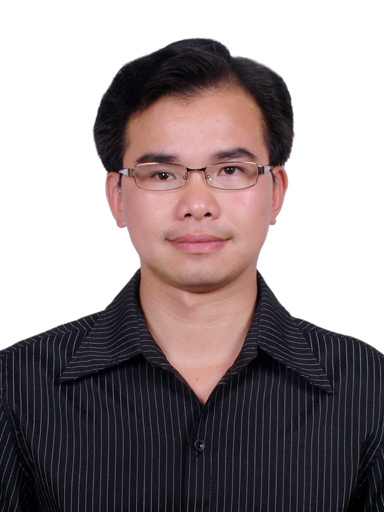 Shaohua Zheng (郑绍华)合作论文数College of Physics and Information Engineering, Fuzhou University1YanPing Zhu (朱延平)合作论文数1BaoLiu Liang (梁宝鎏)合作论文数1JianPing Wang (王建平)合作论文数1
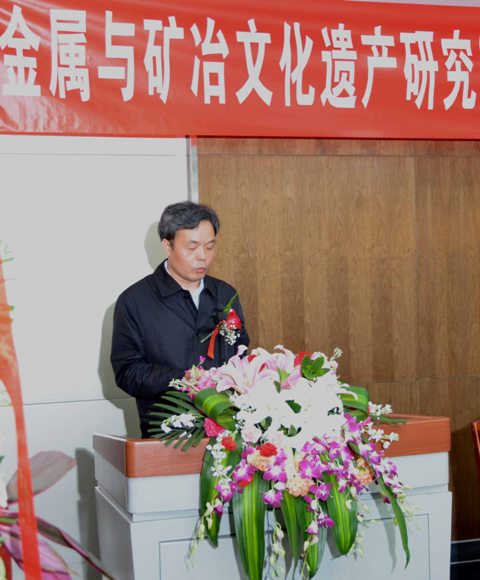 Yanxiang Li (李延祥)合作论文数北京科技大学科技史与文化遗产研究院冶金与材料史研究所1
 Liping Zhou (周力平)合作论文数College of Urban and Environmental Sciences, Peking University1Wenbo Bao (宝文博)合作论文数School of Archaeology and Museology, Peking University1Changming Jia (贾昌明)合作论文数1
 Tung-Sheng Liu (刘东生)合作论文数Institute of Geology and Geophysics, Chinese Academy of Sciences1
 Yamei Hou (侯亚梅)合作论文数Institute of Vertebrate Paleontology and Paleoanthropology, Chinese Academy of Sciences1Yanqiu Hu合作论文数1Kuishan Quan (权奎山)合作论文数1Weiwen Huang (黄慰文)合作论文数1




