The returning migrants are regarded as a key labor source for rural tourism entrepreneurship. However, entrepreneurial anxiety has emerged as a major obstacle. Thus, this research aims to answer: what makes entrepreneurial anxiety, how should it be measured, how does it affect entrepreneurial intentions, and how can its impact be mitigated? Thus, this study constructs and tests the four dimensions of RMEA including "face" anxiety, individual ability anxiety, external environment anxiety, and industrial vulnerability anxiety with 11 items. Further, it revealed the impact of RMEA on entrepreneurial intentions and proves the moderating roles of risk tolerance and trust in government.
Educational travel was once a privilege enjoyed by elite groups. However, within the context of Chinas poverty alleviation efforts, educational travel provided to rural adolescents has pioneered a new paradigm. Through field research, participant observation, and in-depth interviews, the study reveals how these rural adolescents engage with urban environments during their educational travels and the types of support they perceive to facilitate their engagement, including emotional, informational, appraisal, and tangible assistance. It further identifies the processes by which adolescents in supportive environments develop coping strategies and emotional growth, leading to positive behavioral tendencies and long-term development. The research expands the boundaries and scope of educational travel and offers a new human-centered approach to the practice of tourism-based poverty alleviation.
Rural areas in China are undergoing significant transformations and development phases. This study employs fuzzy-set qualitative comparative analysis (fsQCA) on quantitative data from a survey of 168 college students to investigate the configurations of factors leading to a high willingness to return to their hometowns for employment. The study focuses on their intentions to return as the dependent variable, with independent variables including rural sentiment, social compatibility, risk tolerance, family support, and life satisfaction. The findings reveal nine distinct pathways that meet the criteria of perfect consistency (1.0) and demonstrate high explanatory power (coverage of 89.19%). These pathways are categorized into four types based on underlying motivations: emotion-oriented, value-oriented, responsibility-oriented, and social-oriented. The results offer theoretical and practical insights into encouraging talent return in rural China, emphasizing the importance of a multifaceted approach that incorporates emotional, social, and familial considerations. The study's findings are contextualized within the Chinese socioeconomic environment, offering valuable insights into rural-urban dynamics in China. These findings could also be applied to other countries and regions with similar urban-rural dynamics and immigration patterns.
Alongside the rapid development of China’s tourism sector, the continuous increase in the number of academic articles and research findings related to tourism in China has expanded the related research topics. Using a visual exploration of keywords and Delphi surveys, this paper systematically summarizes the progress in tourism research in China. The findings show that the research topics of national parks, rural revitalization, virtual tourism, the tourism economy and all-for-one tourism were hotspots in Chinese tourism filed over the past decade. Research methodologies have evolved from qualitative concept clarification to combining qualitative and quantitative approaches. In the future, Chinese tourism research should be explored further to the unique theoretical underpinnings of tourism in China; innovative research should be fostered to achieve theoretical originality; and collaborations between academia and the tourism industry should be facilitated to enhance the practical implications of academic findings. The aforementioned research bottlenecks and corresponding measures, and research vision and prospects indicated in the paper can guide future research, and let Western scholars know the hotspots and future trends of tourism research from the Eastern perspective.
高质量发展是中国式现代化的本质要求.旅游业是国民经济战略性支柱产业,推动旅游业实现高质量发展意义重大、势在必行.本文围绕中国式现代化视域下旅游业高质量发展的理论内涵、机遇挑战、战略重点、逻辑进路等重要科学议题展开探讨.核心观点如下:(1)中国式现代化视域下旅游业高质量发展的科学内涵,应从更高品质满足大众需求、促进全体人民共同富裕、持续推进文旅深度融合、促进人与自然和谐共生、发挥和平桥梁纽带作用等方面进行把握.(2)中国式现代化视域下推进文化旅游业高质量发展,需要厘清中国式现代化的旅游业高质量发展的现实逻辑、学术逻辑和推进逻辑.(3)可从旅游产品优质供给、旅游产业协同发展、文化旅游深度融合、旅游产业绿色转型等方面探索旅游业高质量发展新道路.(4)旅游业高质量发展应通过建立更具韧性的文旅供给、激活引导普惠全民的文旅消费、全面推动文旅深度融合与创新、打造更高品质的文旅服务体系,开创中国式现代化新局面.(5)推进乡村旅游高质量发展,打通"绿水青山就是金山银山"转化通道是助力乡村振兴、逐步实现共同富裕、推进中国式现代化的重要途径.
乡村旅游发展的区域不平衡是制约乡村共同富裕的突出问题.研究立足共同富裕新挑战,超越单一经济视角,兼顾物质和精神富裕,考量绝对与相对贫困,剖析区域间与区域内多层空间,在宏微观人本理念指导下对乡村旅游发展区域不平衡的内涵进行更新;指出共同富裕视域下乡村旅游发展的区域不平衡性关键问题;建构宏观、中观和微观指标体系.宏观层面通过生态指标、供给指标、文化指标衡量发展能力,社会指标衡量发展机会,经济指标和治理指标衡量发展结果;中观层面通过居民协同治理水平、分配公平水平测度各主体间发展过程的公平性与发展结果的共享程度,主客价值共创水平测度居民与旅游者的互动关系;微观层面以居民满意度为落脚点,关注乡村旅游地居民的幸福感、获得感、公平感、安全感等.研究为动态化、精细化和定量化研究区域不平衡性提供新的理论视角与分析工具,有助于丰富乡村旅游研究的理论内涵,为推动乡村共同富裕和区域旅游协调发展提供科学依据与应用参考.
High-quality development is essential to Chinese modernization. As a strategic pillar industry, tourism plays a key role in the Chinese national economy and in people’s livelihoods. It is, therefore, imperative to promote high-quality tourism development. This paper focuses on such important issues as theoretical connotation,opportunities and challenges, strategic priorities, and logical approaches to highquality tourism development from the perspective of Chinese modernization. The core insights are as follows:(1) The theoretical connotation of high-quality tourism development from the perspective of Chinese modernization should be understood with a view to satisfying public needs with higher-quality services, promoting common prosperity, continuously boosting the in-depth integration of culture and tourism, promoting the harmonious coexistence of man and nature, and serving as a bridge of peace;(2) To promote high-quality development of cultural tourism from the perspective of Chinese modernization, it is necessary to clarify the realistic,academic, and promotional rationales for the development of high-quality modernized Chinese tourism;(3) A new method of high-quality tourism development can be explored with a focus on high-quality tourism supply, coordinated development of the tourism industry, in-depth integration of culture and tourism, and green transformation of the tourism industry;(4) High-quality tourism development will help create a new variety of Chinese modernization through establishing a more resilient cultural and tourism supply, activating and guiding inclusive cultural tourism consumption, comprehensively promoting the in-depth integration and innovation of cultural tourism, and establishing a higher-quality cultural tourism service system;(5) Promoting high-quality rural tourism development and opening up the transformational channel of “turning lucid waters and lush mountains into invaluable assets” are conducive to revitalizing rural areas, gradually realizing common prosperity, and expediting Chinese modernization.
Rural tourism is an important breakthrough to realize the revitalization of rural areas in the new era. The new background of double cycle new economic pattern puts forward new challenges for China’s rural tourism. Based on the new background of the economic pattern with internal circulation as the main body and double circulation driving, this paper analyzes the organic relationship between it and the development of rural tourism in China; Based on the new market pattern, new resource pattern and new development demand brought by the double cycle, this article expounds the necessity of the adaptation of rural tourism,combs the logical relationship between rural tourism and rural revitalization under the new mode of internal circulation, and explains the adaptation connotation of domestic economic cycle and rural tourism; Based on the direction of dual cycle rural tourism adaptation in the future, this paper puts forward the research framework of rural tourism adaptation in the context of dual cycle, and focuses on four levels of research content,points out the potential theoretical innovations, including the theoretical basis analysis of dual cycle driven rural tourism adaptation, the exploration of the elements and combination path of dual cycle driven rural tourism adaptation.
人才是乡村地域空间发展的基础,鼓励在外务工人员回流就业是推进乡村振兴的重要举措,也是实现共同富裕的保证.论文采用多变量交互作用的模糊集定性比较分析方法,以乡村旅游地居民回流就业意愿为结果变量,构建地方参与、地方情感、感知获益、风险承受能力、政府信任、支持度为前因变量的研究模型,探索居民回流就业的驱动机制与多元影响路径.研究结果表明:①所有单项因素均不构成乡村旅游地居民回流就业的必要条件;②满足条件的组合路径共7条,总体一致性为0.876,总体覆盖率为0.862;③在所有路径组合中,支持度和政府信任出现的频率最高,包含地方情感的路径覆盖率较高;④7条路径构成了情感主导路径、信任主导路径、支持主导路径,以及知—情—意—行综合路径4大类路径模式;⑤当同时包含情感、信任、支持和参与因素时,路径具有最高解释力;⑥不同类型的乡村旅游地在回流就业影响路径上显示出差异.研究结论可为鼓励和吸引乡村旅游地在外务工人员回乡参与旅游发展提供参考,也可为更广泛的乡村地区鼓励人才回流提供理论依据.
文旅融合新格局之下,戏曲作为宝贵的非物质文化遗产资源迎来了新的发展机遇,戏曲非遗旅游对实现中华传统文化认同具有重要作用.本文采用模糊集定性比较分析方法,构建主客互动(社会互动、服务互动、互动质量)、感知价值(情境价值、教育价值、情感价值、审美价值)、沉浸体验为前因变量,将游客文化认同作为结果变量,对长三角地区3个代表性非遗剧目旅游案例地展开问卷调查与比较分析,探索多个因素对游客文化认同的影响路径与多元组合形式.研究发现:①就影响游客文化认同的单项因素来说,教育感知价值的一致性最高,然而任一单变量均不能构成游客文化认同的必要条件.②8个单变量因素共有256条可能组合生成,其中有9条组合满足充分条件要求,总体覆盖率约为0.830 9,构成情感参与模式、教育融合模式、主客共创模式、情境体验模式四类路径模式.③除路径9外的所有组合路径均包含至少一个感知价值的二阶变量,其中以教育感知价值出现频率最高.当教育感知价值与情感感知价值组合时,原始覆盖率最高.
The 'homecoming' wave of migrant workers is a new phenomenon in the current stage of China's modernization. How can the rural tourism industry develop a mechanism to attract migrants back to their hometowns? The answer to that question is key to understanding the new human-place relationship between migrant workers and rural destinations in tourism development. This study developed a model to examine migrant workers' intentions to return for employment by integrating multiple elements, including two types of emotion, perceived benefits, perceived cost, and risk taking. We conducted an empirical test using PLS-SEM and found that both real and assumed emotions played significant roles in the perceptions of benefit in returning, and assumed emotions negatively affected perceived cost. Perceived benefit positively affected tourism support and intention to return for tourism employment; tourism support was an important factor affecting migrant workers' intention to return. Risk taking could enhance the influence of tourism support for that intention. This study makes a theoretical contribution to research into place emotion in rural areas and presents theoretical starting points for further explorations.Keywords: Migrant workersrural tourism destinationsintention to return for tourism employmentperceived benefitsperceived costplace emotionrisk takingChinaView correction statement:Correction Author contributionsYuangang Zhang: Writing; Investigation; Visualization; Funding acquisition; Yameng Hao: Methodology; Data Curation; Validation; Yingzhi Guo*: Conceptualization; Funding acquisition; Lu Liu: Data collection; Funding acquisition.Disclosure statementThe authors report there are no competing interests to declare.Additional informationFundingThis work is supported by the Humanities and Social Sciences Youth Foundation, Ministry of Education of the People's Republic of China [22YJCZH248], the National Natural Science Foundation of China [Grant no. 72074053], and National Natural Science Foundation of China [Grant no. 42001168].Notes on contributorsYuangang ZhangDr. Yuangang Zhang is an Associate Professor in College of Tourism, Shanghai Normal University. He is also taking a postdoc position in the Postdoctoral Station of Business Administration at Fudan University. Dr. Zhang's research interest focuses on rural tourism and destination management.Yameng HaoYameng Hao is a master's degree candidate in in College of Tourism, Shanghai Normal University, China. She mainly engages in rural tourism research.Lu LiuDr. Lu Liu is a lector in Tourism College of Beijing Union University, China, her research focus on rural tourism and destination conservation.
Encouraging migrant workers to return to their hometowns for employment is not only an important measure to solidly promote rural revitalization but also a fundamental guarantee to achieve common prosperity. Rural tourism is an effective way to implement the rural revitalization strategy,which helps to stimulate residents’ consumption potential and promote the adjustment of industrial structure in rural areas. The key to achieving comprehensive rural revitalization is“manpower”, and the development of rural tourism cannot be separated from labor force with professional knowledge and skills. However, in most rural areas, there is an outflow of the core labor force, leading to the aging and hollowing out of the rural population. Improving the rural population structure and breaking the labor shortage dilemma are the problems that must be solved to revitalize the rural economy. Taking the migrant workers from rural tourism destinations as the research object, this paper constructs the research model of rural tourism destination residents ’ intention to return to their hometowns for employment, proposes relevant assumptions, and discusses the formation mechanism. The partial least square structural equation modeling method(PLS-SEM) was conducted. The results show that the constructed model has good predictive and explanatory power, the model has good adaptability, and the GOF value is higher than the standard suggested by scholars. Community involvement and place emotion are important pre-factors for the perceived benefits of migrant workers, and the perceived benefits positively affect the support for the development of rural tourism, which has a positive effect on the intention to return to their hometowns for employment; The support for the development of rural tourism is an important factor for the intention to return to their hometowns for employment;Government trust has enhanced the impact of support on migrant workers’ intention to return to their hometown for employment. Comparing to previous studies on rural tourism destination residents’ behavior of returning to their hometowns for employment, this study considers the level of residents’ trust in the government and points out the positive effects of government policies and breaks down the limitation of only regarding government policies as external driving forces. Meanwhile, the impact path of rural tourism destination residents’ intention to return to their hometowns for employment has been clarified(place emotions/community involvement—tourism impact perception—support for tourism development—intention to return to their hometowns for employment). Finally, the management implications were proposed including: First, managers should enhance the sense of ownership of rural tourism destination residents and create conditions and opportunities for residents to participate in tourism activities; Second, strengthen revenue perception and enhance the emotional connection between rural tourism destination residents and their hometown; Third, implement relevant security policies for rural tourism destination residents returning to their hometowns for employment, and enhance residents’ trust in the government. The conclusion not only provides a reference for encouraging migrant workers from rural tourism destinations to participate in tourism development but also provides a theoretical basis for other villages to formulate employment policies for people returning to rural areas.
资源创造性利用是乡村旅游促进共同富裕的重要基础和关键动力,也是重大科学问题和现实需求.访谈表明:乡村旅游蓬勃发展,但仍存在认识不足、机理不清、促进效应有限等现实问题.鉴于共同富裕短板、弱项、潜力均在乡村,要从不同视角持续关注.紧扣这一问题,要厘清乡村旅游促进共同富裕的理论内涵与驱动逻辑、创新乡村旅游产业体系、构建促进共同富裕模式与实现机制等;还要落脚于村民参与机制与内生动力培育、文化资源保护传承及对精神生活共同富裕促进机制、数字赋能机制与路径、旅游收入分配制度改革、空间效应与土地利用优化等实践中,并促进平衡性、协调性、包容性发展等.以便为乡村旅游资源创造性利用、促进共同富裕提供理论支撑和应用依据.
文旅融合与社会福祉之间存在有机联系.当前,在"十四五"规划新时代与新冠疫情挑战的复杂背景下,以高质量文旅融合增强人民幸福感的要求尤为迫切,文旅融合推动社会福祉的内涵更加复杂,亟待理论更新.基于此,文章从逻辑诠释、量化测度、机制框架等层面对文旅融合发展的社会福祉效应研究及其需求进行提炼与探索.①研究厘清了文旅融合发展推动社会福祉的基本概念、宏观逻辑和"人本"逻辑.②研究明确了现有文旅融合和社会福祉测量方式及其不足,提出文旅融合推进社会福祉的测度创新,构建的测量模型既包含传统文旅产业耦合测度,也包括广义文化与全域旅游融合度,并涵盖旅游者与居民的双主体测度.③研究提出文旅融合推动社会福祉的机制,涉及宏、中和微观层面,包括文旅融合多维度发展对宏观经济社会福祉的推动机制、文旅融合区域协同对目的地集体福祉的推动机制以及文旅融合体验优化对主客主观福祉的提升机制.研究提出文旅融合发展推动社会福祉的挑战与契机,为政府治理和目的地管理提供建议.
Rural tourism in China entails intensive interpersonal interactions. This study aims to answer the question: “What is the sense of place pursued by rural tourists through their interactions?” The existing sense of place theories focus on the one-dimensional relationship between residents and their land. We update the knowledge regarding tourists' multidimensional sense of place, which involves locals and their environment. A Sense of Human Place Scale (SHPS) was developed. Study 1 explores four categories with 16 secondary dimensions for tourists' sense of human place (SHP) in rural tourism based on a two-step content analysis. In study 2, a SHPS with 15 items was compiled and its effectiveness was verified. Study 3 conducted a criterion validity test to analyze the impact of SHP on tourists’ rural tourism desire. We explain how rural tourism became an emotional compensation mechanism in modern society and provide references for tourism management in rural destinations.
English is not only the most widely used language in the world, but a good command of English can certainly offer an array of benefits for international travel. Drawing on the language socialization paradigm and the travel-learning perspective, this research investigates independent tourists' foreign language (i.e., English) acquisition obtained from international trips. It adheres to a phenomenology approach with semi-structured interviews to gauge tourists' English preparation prior to departure, en route English acquisition, and post-trip language achievement. Results highlight the advantages of high English proficiency on tourists' favorable travel experience and language educational benefits of experiential learning in truly authentic environments. They also illustrate that one's English ability works in tandem with his/her interest, and it helps the tourist to imbue better connotative meaning of the toured objects with greater perceived authenticity and pleasure and hence, a greater sense of appreciation of the destination.
乡村旅游者游憩行为作为乡村旅游研究的核心要素一直得到研究者持续的关注.尽管很多研究探索了乡村旅游者游憩行为的影响因素,但是从自我印象一致的角度给予的关注却较少.文章以自我印象一致理论和计划行为理论为基础,基于地方情感因素,构建了乡村旅游者游憩行为意向影响的研究模型并提出了相关假设.运用偏最小二乘法结构方程模型(PLS-SEM)进行了实证检验.结果显示,自我印象一致和地方情感因素变量的拓展与重塑是成功的,构建的模型具有良好的解释力和预测力,模型具有交叉效度,整体模型的GOF值高于良好适配度的标准值;自我印象一致因素对乡村旅游者游憩行为意向的影响最高,其次为地方情感、态度、主观规范,知觉行为控制的影响最小;自我印象一致与地方情感的重塑降低了知觉行为控制对旅游者行为意向的影响.该研究过程提供了模型构建的思路,结论为提升乡村旅游的发展提供切实可行的营销对策,同时为政府和业界制定乡村旅游发展政策提供理论依据.
红色旅游资源及其开发具有个体和群体意义,是国家认同实现的重要途径。采用多变量交互作用的模糊集定性比较分析方法,以游客国家认同为结果变量,构建社会记忆(人物记忆、环境记忆、时间记忆、空间记忆)、景区形象(吸引物形象、设施环境形象、文创宣传形象)、旅游体验、感知价值为前因变量,探索影响国家认同的前因条件组合与多元路径。研究结果表明:(1)对于单项因素来说,虽然人物记忆的一致性相对较高,但所有单因素都无法构成国家认同的充要条件。(2)9个变量共产生512种条件组合,满足条件的路径组合共11条,总体覆盖率为0.8916,构成了空间环境模式、形象价值模式、历史体验模式和时间综合模式四大类路径模式。(3)人物记忆出现在所有路径组合中,且所有组合同时包含至少一个社会记忆下的其他的二级维度,例如环境、时间或空间记忆。当社会记忆的四个二级维度全部出现时,产生了原始覆盖率最高的路径组合。(4)在原始覆盖率大于20%的6条路径中,都同时包含社会记忆和景区形象中的二级要素;在原始覆盖率小于20%的5条路径中,皆"一定不包含"设施环境形象。本文为红色旅游目的地在新格局下的高质量发展提供了理论参照。
 JingJing Cheng (程静静)合作论文数21XiangYang Yu (余向洋)合作论文数14BingGen Zhou (周秉根)合作论文数10
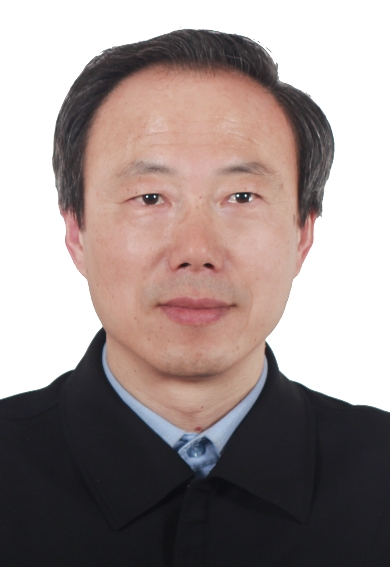 Xinyuan Wang (王心源)合作论文数Aerospace Information Research Institute, Chinese Academy of Sciences8YU Run-zhe (余润哲)合作论文数7
 Yingzhi Guo (郭英之)合作论文数The Department of Tourism, Fudan University7GuoXing Zhu (朱国兴)合作论文数6
 Xi Chen (陈希)合作论文数School of Leisure Sports and Tourism, Academic Division of Sports and Health, Beijing Sport University6HAO Yameng (郝亚梦)合作论文数5JI Leilei (季磊磊)合作论文数4
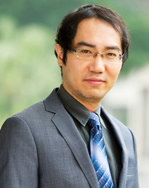 Anthony Ip Kin Wong (黃業堅)合作论文数Department of Integrated Resort and Tourism Management, Faculty of Business Administration, University of Macau4DONG Xiaoting (董晓婷)合作论文数3CHEN Ran (陈然)合作论文数3DeMing Li (李德明)合作论文数3ShanFeng Hu (胡善风)合作论文数3Juan Wang (王娟)合作论文数3Jingjing Cheng (程静静)合作论文数3HE Yangmei (何杨媚)合作论文数2
 Junsheng Liu (刘军胜)合作论文数School of Economics and Management, Northwest University2
 He Zhu (朱鹤)合作论文数Institute of Geographic Sciences and Natural Resources Research, Chinese Academy of Sciences;University of Chinese Academy of Sciences2
 Hongmei Zhang (张宏梅)合作论文数Shanghai Normal University2Qingzhong Ming (明庆忠)合作论文数2Wenbing Tang (唐文兵)合作论文数2Gongpeng Zhang (张公鹏)合作论文数1
 Mingge Tian合作论文数1YU Wenting (余文婷)合作论文数1
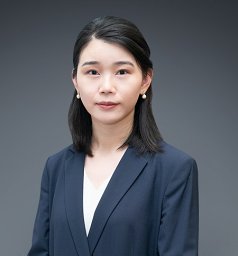 GuoQiong Ivanka Huang合作论文数ORCID: 0000-0001-9232-68221
 Yun Victoria Chen合作论文数Dept Tourism Sport & Hotel Management, Griffith Univ1Xingyang Lv合作论文数1JIA Wentong (贾文通)合作论文数1Hai-qing PAN (潘海青)合作论文数1Xialei Duan合作论文数1Shuying Zhang (张书颖)合作论文数1Jinwei Wang合作论文数1LONG Fei (龙飞)合作论文数1Lu LIU (刘鲁)合作论文数1Guanpeng Dong (董冠鹏)合作论文数1Xiangyang Yu合作论文数1JI Bing (季冰)合作论文数1Chao ZHOU (周超)合作论文数1LIU Ting (刘婷)合作论文数1JiaoJiao Sun (孙佼佼)合作论文数1XueTing Hong (洪学婷)合作论文数1LanFeng Lu (卢兰凤)合作论文数1YongZheng Hu (胡永政)合作论文数1ChuanKai Yang (杨传开)合作论文数1ShuJing Zheng (郑淑婧)合作论文数1Hu Yu (虞虎)合作论文数1FengLong Yu (余凤龙)合作论文数1




