Fermented foods play a significant role in the human diet for their natural, highly nutritious and healthy attributes. Our aim was to study the effect of yeast extract, a fermented substance extracted from natural yeast, on colonic motility to better understand its potential therapeutic role. A yeast extract was given to rats by gavage for 3 days, and myogenic and neurogenic components of colonic motility were studied using spatiotemporal maps made from video recordings of the whole colon ex vivo. A control group received saline gavages. The yeast extract caused excitation of the musculature by increasing the propagation length and duration of long-distance contractions, the major propulsive activity of the rat colon. The yeast extract also evoked rhythmic propulsive motor complexes (RPMCs) which were antegrade in the proximal and mid-colon and retrograde in the distal colon. RPMC activity was evoked by distention-induced neural activity, but it was myogenic in nature since we showed it to be generated by bethanechol in the presence of tetrodotoxin. In conclusion, ingestion of yeast extract stimulates rat colon motility by exciting neurogenic and myogenic control mechanisms.
Background Lung cancer is the leading cause of cancer-associated mortality worldwide, and most lung cancers are classified as non-small cell lung cancer (NSCLC). MiR-328 influence the progression of multiple tumors, but the role of miR-328-5p in NSCLC has not been elucidated. The aim of this study was to illuminate the oncogenic role and potential molecular mechanisms of the miR-328-5p and lysyl oxidase like 4 (LOXL4) in NSCLC. Methods Expression of miR-328-5p was detected by real-time quantitative polymerase chain reaction (qRT-PCR) in tumor and non-tumor adjacent tissues. After Lentivirus-miR-328-5p was employed to intervene this miRNA in NSCLC cell lines, RT-qPCR was used to detect the expression levels of miR-328-5p. Cell Counting Kit-8 (CCK-8), cell colony formation, flow cytometry, wound healing, Transwell assays were used to determine the malignant phenotypes of NSCLC cells. Nude mice models of subcutaneous tumors were established to observe the effect of miR-328-5p on tumorigenesis. Targeting the 3'UTR of LOXL4 by miR-328-5p was verified by integrated analysis including transcriptome sequencing, dual-luciferase and western-blot assays. Results High miR-328-5p level was observed in NSCLC cells from The Cancer Genome Atlas (TCGA) database and tumor tissues collected from NSCLC patients. Overexpressed miR-328-5p promoted NSCLC cell proliferation, survival, and migration, and promoted tumor growth in vivo. Knockdown of miR-328-5p suppressed tumorigenic activities. Transcriptome sequencing analysis revealed that LOXL4 was downregulated by miR-328-5p, which was confirmed by dual-luciferase reporter and western-blot assays. Conclusions miR-328-5p showed targeted regulation of LOXL4 to promote cell proliferation and migration in NSCLC.
ABSTRACT Purpose: To evaluate the protective effect of Cuscuta chinensis Lam. polysaccharides (PCCL) on 5-fluorouracil-(5-FU)-induced intestinal mucositis (IM) in mice. Methods: PCCL was orally administered at a dose of 20 mg·kg–1 for 7 days and its protective effect on 5-FU-induced IM (5-FU, 50 mg·kg–1 for 5 days) was evaluated by monitoring changes in body weight, degree of diarrhea, levels of tissue inflammatory factors (tumor necrosis factor α, interleukin 6, and interleukin 1β levels), apoptosis rates, and the expression levels of caspase-3, Bax and Bcl-2. Results: The severity of mucosal injury (as reflected by body weight changes, degree of diarrhea, height of villi, and damage to crypts) was significantly attenuated by PCCL administration. PCCL also reduced the levels of tissue inflammatory factors, the apoptosis rate, and the expression of caspase-3 and Bax, and increased Bcl-2 expression. Conclusions: PCCL administration may be significantly protective against 5-FU-induced IM by inhibiting apoptosis and regulating the abnormal inflammation associated with it.
目的:评价广东省名中医罗仁教授临床经验方罗氏肾病三号方治疗中医辨证为脾肾两虚、瘀热互结型的慢性肾脏病4期患者的有效性及安全性.方法:在2015年3月-2016年6月随师罗仁教授门诊期间收集慢性肾脏病4期且中医证型符合脾肾两虚、瘀热互结病例60例,收集患者临床资料,观察患者治疗前后24h尿蛋白定量(24 hpro)、血尿素氮(BUN)、血清肌酐(Scr)、血尿酸(UA)、胱抑素C(Cys-C)的变化及中医证候、体征的变化等指标,对临床安全性及疗效、用药规律进行总结.结果:共收集慢性肾脏病4期患者60例,患者服用罗氏肾病三号方3~4周,与治疗前相比,治疗后患者血肌酐和血尿素氮得到明显改善(P<0.05),24h尿蛋白定量及胱抑素C较治疗前均明显下降(P<0.05),总有效率为78.3%.随访患者的肌酐清除率和血肌酐水平基本保持稳定.结论:罗氏肾病三号方治疗慢性肾脏病4期患者具有较好的有效性和安全性.
IgA肾病在我国具有较高的发病率,是一种常见的原发性肾小球疾病,由于其病因至今未能明晰,以往认为本病尚无特异疗法,随着中西医对本病的逐步认识以及治疗手段的不断探索,近年来许多研究表明积极有效的诊断及治疗可以明显改善疾病的预后,现就该病在诊断、西医治疗、中医药治疗等方面的研究进展进行综述.
OBJECTIVE:To evaluate the protective effect of catalpol against diabetic nephropathy in db/db mouse.METHODS:8 week old C57BLKS/J db/db mice (type 2 diabetic mouse model) were divided into three groups to feed for 16 weeks on chow diet with or without catalpol supplementation. Their food intake, water consumption, body weight, and fasting glucose levels were recorded every 4 weeks. At the end of study, urine and blood samples were examined for several metabolic variables, and kidneys were harvested for structural characterization and microarray analysis.RESULTS:Catalpol efficiently lowers the fasting glucose and the 24 h urinary albumin excretion rate. Catalpol significantly lowers serum triglycerides, increases high-density lipoproteins, and improves serum creatinine and urea nitrogen. Catalpol-fed mice preserve their kidney structure and renal function better than chow fed db/db mice. Microarray data indicates that lipid metabolism is a potential target of catalpol in exerting protective effect.CONCLUSION:Catalpol has a renal protective effect in diabetic db/db mice.
<正>罗仁教授是南方医科大学中医药学院教授,博士研究生导师,国家中医药管理局中医肾病重点学科学术带头人,广东省名中医,从事中医医疗、教学、科研工作四十余年,在肾病的临证中有独到的经验体会,对肾性血尿、蛋白尿、糖尿病肾病、急慢性肾炎、慢性肾功能衰竭、肾结石等疾病有着丰富
Objective:To observe the effect of Qidan Dihuang Grain(QDDHG) for the treatment of a type 2 diabetic nephropathy mice model.Methods:Twelve db/db mice of 8 weeks old were divided into DN model group(n=6) and QDDHG treatment group(n=6) accroding to their fasting blood glucose(FBG) before treatment and another 6 db/+ mice were as normal control group.Mice of model and control groups were given food and water normally,while QDDHG group were fed with food containing QDDHG,for totally 16 weeks intenvention.At the end of the 4th,8th,12 th and 16 th weeks,FBG was detected.At the end of 16 th week,mice were sacrificed after 24 h urine was collected and urinary albumin excretion rate(24 h-UAER) was tested.Serum was obtained to test serum creatinine(SCr),blood urea nitrogen(BUN) and blood lipid,while kidneys were obtained to perform pathological morphological and transmission electron microscopic tests.Results:In model group,the FBG,SCr,BUN,24 h-UAER,TG,TC and LDL levels increased significantly than those in normal group(P<0.05),while in QDDHG group,the FBG,SCr,BUN,24 h-UAER and TG levels decreased significantly than those in model group(P<0.05),and no statistical differences can beseen in TC or LDL levels.Histopathology indicated glomerulus of model group,number of endothelial cells and mesangial cells were decreased,glycogen deposition wasincreased,and fibroblasts were proliferated.Transmission electron microscopy indicated inmodel group,basilar membranewas thickened evidently and podocytic process was reduced.After medicine treatment,these lesions listed above were significantly alleviated.Conclusion:QDDHG shows an effective impact on improving the renal pathological damageand fuction in db/db mice.
目的 寻找能预测原发性胃腺癌(gastric adenocarcinoma,GAC)浸润、转移及预后的指标。方法 采用免疫组织化学ElivisionTM plus法检测261例GAC组织和80例正常胃黏膜组织中Slug、ZEB1和KISS-1蛋白的表达情况。结果 在正常胃黏膜组织中Slug、ZEB1和KISS-1蛋白的阳性表达率分别为2.5%,1.3%和87.5%;在GAC组织中阳性表达率分别为62.1%、29.1%和45.2%,两组之间差异有统计学意义(P<0.05)。Slug在GAC组织中的阳性表达率与肿瘤组织的浸润深度、淋巴结转移及临床病理分期均相关;ZEB1在GAC组织中的阳性表达率与分化程度、浸润深度、有无淋巴结转移及临床病理分期高低均相关;KISS-1在GAC组织中的阳性表达率与浸润深度、淋巴结转移与否及临床病理分期均有关。Slug的表达和ZEB1的表达呈正相关关系;KISS-1与Slug和ZEB1呈负相关关系。Kaplan-Meier生存分析表明Slug和ZEB1蛋白阳性表达组患者总的生存时间明显低于其阴性组患者;KISS-1阳性表达组患者总的生存时间明显高于其阴性组患者。COX多因素模型分析显示,Slug、ZEB1和KISS-1蛋白的阳性表达以pTNM分期是影响GAC患者预后的独立因素。结论 Slug、ZEB1和KISS-1的异常表达参与了GAC的发生,并与 GAC的淋巴结转移、pTNM分期及预后等均有关;Slug、ZEB1和 KISS-1联合检测对 GAC的进展及预后判断有重要意义。
Suboptimal health status(SHS),the intermediate state between health and disease,is characterized by a decline in vitality,physiological function and the capacity to adapt to varying conditions.With the social economy development and the increasing competition,great changes have taken place in people ’s lifestyle and working environment and there are an increasing number of people in the SHS.Owing to its bi- directional and translational nature,FSH may be regression to health or progression to disease.However,the etiology of sub- health and the mechanism of its development are still unclear.Therefore,to study the factors affecting SHS and identify high-risk groups or individuals,it can make sense for health-promoting,the prevention,and intervention of SHS and disease.This review studies the factors affecting health,such as lifestyle factors(including smoking,alcohol consumption,poor nutrition state,stress and life events,lacking of exercise or sedentary behavior,sleep problems),environmental factors(including natural geographical environment factors,social environment,home environment),and biological factors(sex,educational background,weight,constitution of traditional Chinese medicine).
Objective To investigate the association between sufficient sleeping,healthy lifestyle and suboptimal health status( SHS) within the population of Guangdong Province,China. Methods A cross- sectional survey was conducted within a clustered sample of 24,159 individuals in Guangdong. Sleep sufficiency was categorically defined by the level of whether sleeping is enough( ’never,sometimes,often or always’). Lifestyle was assessed via the health- promoting lifestyle scale. SHS was evaluated using the medical examination report and Suboptimal health Measurement Scale V1. 0. Results Of the 24,159 participants,the prevalence for the ’SHS’ and ’disease’ were 46. 0% and 35. 2%,respectively,higher than that for ’healthy’( 18. 8%). Overall,4. 1 %( 986) of participants reported they ’never’ had sufficient sleeping,with 36. 9%( 8913) ’sometimes’,44. 9%( 10847) ’often’ and 14. 1 %( 3413) ’always’. Health status were correlated with whether sleep is enough or not.( 2= 1 499. 945,P = 0. 000). After demographic adjustment,regression analyses revealed a significant correlation between sufficient sleeping and healthy lifestyle( P < 0. 001). Individuals who’never’ had sufficient sleeping were 8. 391 times more likely to suffer from SHS than individuals who ’always’ had it( OR:8. 391,95% CI: 6. 325- 11. 131),infrequent sufficient sleeping( ’sometimes’) with OR 6. 049 and CI 5. 414- 6. 758,’often’ sufficient sleeping with OR 2. 263 and CI 2. 058- 2. 488)( P = 0. 000). Conclusion Sufficient sleeping is significantly associated with a healthy lifestyle,and appears to be a useful predictor of a healthy lifestyle. Sleep deprivation is related to an increased risk of SHS.
OBJECTIVE:To determine evaluate the effect of health-promoting lifestyle on the outcomes of suboptimal health status (SHS). METHODS:A prospective population cohort was conducted by consecutively enrolling 5676 college students who took routine health examination from March to May 2013. The participants were assessed for baseline health status and lifestyle and 2972 participants with SHS were followed up for 1.5 years. Exposure was defined as an unhealthy lifestyle. The health-promoting lifestyle was assessed via the Health-promoting Lifestyle Profile (HPLP-II). SHS was evaluated using the medical examination report and Sub-health Measurement Scale V1.0 (SHMS V1.0). RESULTS:Among the 2972 students with SHS, 422 showed recovery of the healthy status at 1.5 year follow-up, 579 showed progression into disease conditions, and 1971 remained in SHS. The participants with recovered health status presented with significant increase of SHMS V1.0 scores by 8.75∓6.95 points compared to the baseline assessment (t=-2.14, P=0.000) in physiological, psychological and social dimensions; they also showed a marked improvement of HPLP-II scores by 14.73 points in 6 dimensions (t=-15.34, P=0.000). Multivariable regression analyses with adjusted demographic variables revealed a significant association between health status and health-promoting lifestyle (P<0.05). Compared with a healthy lifestyle (minimal exposure), a 'poor' lifestyle (the highest level of exposure) was associated with a 30 times higher risk of developing SHS (OR: 30.598, 95% CI: 3.928-238.331), while a 'moderate' lifestyle (a relatively high-level exposure) had a 24 times higher risk of SHS (OR: 23.988, 95%CI: 14.695-39.158), and a suboptimal lifestyle had a nearly 4 times higher risk of SHS (OR: 4.306, 95%CI: 2.767-6.702). CONCLUSION:s SHS may evolve into either a healthy or a disease condition. A unhealthy lifestyle is the important risk factor contributing to the progression of SHS into a disease condition, suggesting the importance of intervention of unhealthy lifestyles in promoting good health.
 Ren Luo (罗仁)合作论文数南方医科大学南方医院中医科11
 LeBin Yang (杨乐斌)合作论文数8
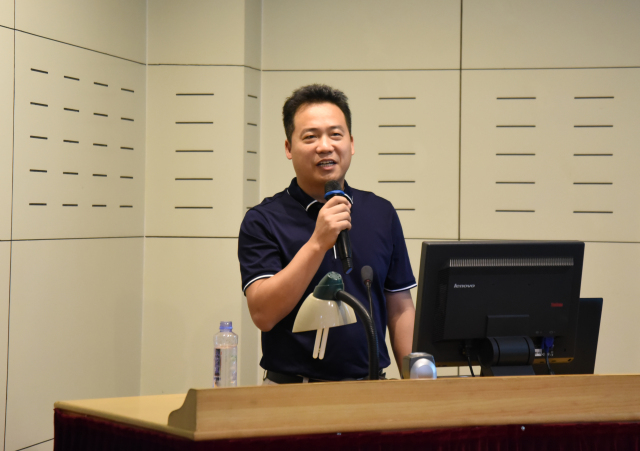 Xiaoshan Zhao (赵晓山)合作论文数南方医科大学中医药学院7
 Xiaomin Sun (孙晓敏)合作论文数南方医科大学珠江医院中医科7Lei Xiang (项磊)合作论文数5
 Xiaoli Nie (聂晓莉)合作论文数南方医科大学5JieYu Chen (陈洁瑜)合作论文数4ZeWei Chen (陈泽伟)合作论文数3Xinghong Zhou合作论文数2Hanqi Lu合作论文数2Yanting You合作论文数2liang guojun (梁国骏)合作论文数2Lin Zhou合作论文数2wang jiali (王嘉莉)合作论文数2ZuJiang Chen (谌祖江)合作论文数2MingMan Cao (曹明满)合作论文数2Yanyan Liu合作论文数2Liqian Chen (陈立倩)合作论文数1Yifen Wu合作论文数1Chunyang Tian合作论文数1Qiuxing He合作论文数1Shengwei Wu合作论文数1Min Wang合作论文数1Hongfei Li合作论文数1Keqiang YU (于克强)合作论文数1LiuYan Kuang (邝柳燕)合作论文数1Wei Tan (谭为)合作论文数1Yuan Jing (经媛)合作论文数1XiaoWen Zhang (张晓文)合作论文数1
 Xiuqiong Fu (符秀琼)合作论文数School of Chinese Medicine, Hong Kong Baptist University;Teaching and Research Division, Hong Kong Baptist University1
 Jihong Chen合作论文数Renmin Hospital, Wuhan University1
 Yingfeng Deng (邓迎峰)合作论文数Touchstone Diabetes Center, Department of Internal Medicine, University of Texas Southwestern Medical Center1
 Keqiang Yu (余克强)合作论文数School of Traditional Chinese Medicine, Southern Medical University1
 Hesheng Luo (罗和生)合作论文数Gastroenterology Department, Renmin Hospital, Wuhan University1
 WeiDong Zhou (周卫东)合作论文数Emergency General Hospital1
 Hiu Yee Kwan合作论文数School of Chinese Medicine,Hong Kong Baptist University1Jan D Huizinga合作论文数1Qiang Zuo合作论文数1




