В книге представлены результаты исследования консолидационного потенциала российской идентичности в контексте межнациональных отношений. В разделах монографии рассматриваются динамика распространённости и текущее состояние общероссийской идентичности на общероссийском и региональном уровне, процесс обновления ценностных маркеров общероссийской идентичности, роль языковой политики, взаимосвязь межэтнических установок, обобщённого и межэтнического доверия, воспринимаемого этнического неравенства. Книга будет интересна специалистам, работающим в сфере регулирования межэтнических отношений, преподавателям школ и вузов, студентам и аспирантам, а также всем интересующимся вопросами российской идентичности и межэтнических отношений.
Since the times of M. Weber, sociologists have been looking for explanations to the peculiarities of national populations and methods of interaction that ensure the harmonious development of society. M. Weber and K. Marx thought that ethnic differences would be erased and lose social importance with the development of industrial society and the process of civilization. Globalization theorists (M. Castells) had the same line of thinking. The results have been ambiguous at different stages of history.
The article analyses the lessons that the state and society could learn from the institutional contradictions and violent conflicts that were overcome in Russia in the 1990s. Ethnic mobilization and ways of getting out of conflict situations are analysed. Based on specific materials, it is shown that the most important lesson was the ability to find compromise, dialogue ways to remove contradictions in the field of language, ecology, requests for participation in the use of local natural resources, increasing independence in the economy, and developing culture. Most of the controversy was related to the institutional sphere, violation of the constitution and federal laws. The author shows that the regulation of such conflicts in multi-component federations is facilitated by the understanding that the ethnic nationalism of elites in the republics is different. On the example of the analysis of the discourse and legislative practice of Bashkortostan, North Ossetia-Alania, Tatarstan and Tuve, it is shown that divided sovereignty (not secession) was discussed in Tatarstan, but in it, as in Sakha and Bashkortostan, economic and cultural nationalism, defensive in North Ossetia Alania, mainly cultural in Tuve. Accordingly, the agreements between the government of the Russian Federation and the government of the republics differed. Compromise solutions were temporary and as soon as a strong legitimate government was formed in the Centre, they ceased to operate, this is also one of the lessons of the 1990s. Interethnic contradictions within the republics were also achieved by compromise solutions. However, the problem of ensuring equal opportunities in the labour and political spheres still remains. The lesson in preventing the escalation of power conflicts was the recognition of the legitimate monopoly of power on the part of the state. The protection of society is based on the rule of law, but compliance with the law needs control from both the state and society. The final part of the article is devoted to the regulation of interethnic relations in the second decade of the 2000s. The author supports the idea of calling this process the management of cultural diversity, since the term nation-building used earlier contains a,double understanding of the nation, both ethnocultural and civil. The cited research results in the country and the republics show that ethnic identity remains very stable. But nowhere does it appear as a confrontational all-Russian identity, but is combined with it among the majority of the population. It can be assumed that the idea of the people as co-citizenship, aimed at consolidating social, spatial and ethnocultural communities, realizing their interests in the economy, politics, culture, contributes to the provision of solidarity in the country.
The article is devoted to the formation of all-Russian identity in an ethno-cultural complex society. The article analyzes the main debates in the scientific and socio-political community about the understanding of integrating identity. Changes in its interpretation in the "Strategy of state national policy for the period up to 2025" and competing interpretations of all-Russian identity during the discussion of the amendments to the 1993 Constitution are shown. On the basis of the most representative Russian studies- Russian monitoring of the economic situation and public health (RLMS-HSE), Institute of Sociology FCTAS RAS and FADN-WCIOM, author shows development of all-Russian national identity in the 2000s, main socio-demographic profiles of people who have actualized national identity, their focus on interethnic consent and trust. The author argues for the compatibility of all-Russian and ethnic identity under the condition of their nonhyperbolization. It is proved that the interpretation of integrating identity as all-Russian civic identity has a basis in the everyday experience of people. At the same time, this identity is dynamic, it depends on the political and social conditions of the country. Ideas about citizenship, language, territory, history, and cultural community are changeable, not differentiated, and nominal for some in the population. Efforts are required from the state and society to form and get their approval through education, media space and public activity.
На материалах мониторингового исследования Федерального агентства по делам национальностей, выполненного Всероссийским центром изучения общественного мнения по общероссийской выборке (2000 респондентов), анализируется значимость интегрирующих представлений об общем государстве, территории, историческом прошлом, культуре, гражданских ценностях. Показано, что российская идентичность формировалась не только государством, но и усилиями самого общества. В современных условиях наиболее широко распространен тип государственной идентичности, связанный со страновыми и территориальными представлениями, и меньше — историко-культурный и гражданский. Идентифицирующие паттерны динамичны и корреспондируют в представлениях людей. Акцентируются множественность идентичностей и совмещение российской и этнической идентичностей. Показано, что вариативность содержания российской идентичности в наибольшей мере проявляется в оценке значимости идентификации на основе общего государства и в наименьшей — исторического прошлого. Содержание российской идентичности сходно среди жителей городов и сёл, выделяются только крупные города, жители которых большее значение придают исторической и культурной составляющей. Доля людей, ощущавших связь с гражданами России, увеличилась с 84% в 2016 г. до 91% в 2019 г. Среди людей с сильной (актуальной) идентичностью несколько больше молодых и образованных, ориентированных на межэтническое согласие и доверие, но при этом не более трети россиян чувствуют ответственность за судьбу страны. Задачей государства и общества является формирование гражданского сознания, ответственности за позитивную направленность общероссийской идентичности.
On November 28-30, 2019 an International Scientific Conference "The Future of Sociological Knowledge and Challenges of Social Transformation (to the 90th Anniversary of V.A. Yadov)" took place, and within the framework of the conference a round table discussion of Community of Professional Sociologists was held, the general content of which we offer to the readers. The main issue of the discussion was the state and role of sociology in Russia and the world. The participants expressed different positions, outlined a main problems of sociological knowledge and profession, diagnosed both crisis phenomena and grounds for development of a modern sociology. Specialists stated that the crisis in the theoretical understanding of society in sociology is reflected to a certain extent in society's distrust to sociology. Practically each of the participants discussed the public role of sociologist in the modern world, which faces the need to interact with commercial and power organizations. Discussing the fate of sociology in the 21st century, the participants proposed ways out of the crisis - rethinking the subject of sociology, new ways of assembling the palette of modern sociological research, the need to return to the theory of a holistic image of society and construction of ideas about the ways of future development of society.
В статье рассматривается разработка и реализация политики интеграции российских народов и адаптации мигрантов через формирование российской политической нации, гражданского самосознания. Представлен сложный путь принятия консенсусных решений от Конституции 1993 г. до Стратегии государственной национальной политики и внесенных в нее изменений в декабре 2018 г. Показаны дебаты и основные контрверсии политики в отношении российской нации и гражданской идентичности со стороны либеральных политиков, националистов и сторонников консенсусных решений. На основе репрезентативных мониторинговых социологических исследований – RLMS-HSE и Института социологии ФНИСЦ РАН 2005–2018 гг. показано, – на каких представлениях россиян базируется российская гражданская идентичность. Утверждается, что она не является альтернативой позитивной этнической идентичности,а совмещающейся с ней. Анализируется, какие политические идеологии могут найти поддержку на основе массовых настроений. Сделаны выводы о направлениях совершенствования политики в отношении этничности и межэтнических отношений.
В статье рассматриваются особенности развития и современное состояние этносоциологии в России. Применительно к первому выделяются три этапа: 1) с конца 1960-х по конец 1980-х гг., когда доминировало изучение социальной структуры контактирующих этнических групп в союзных и автономных республиках и проводились масштабные межреспубликанские исследования; 2) 1990-е гг., для которых характерно расширение проблематики и усиление внимания к методологии исследований вследствие актуализации этничности в стране и углубления контактов с мировой социологией; 3) с начала 2000-х гг. по настоящее время. На современном этапе развития отечественной социологии происходит уточнение ее предмета, обусловленное изменениями в понимании этничности и стремлением уйти от жесткого «привязывания» людей к этнической группе. Анализ тематического репертуара публикаций последних лет и наблюдаемые сдвиги в используемой методологии позволяют сделать вывод о перемещении (дрейфе) этносоциологии из междисциплинарного направления в отраслевую социологическую дисциплину, по своей предметной области близкую к западной социологии расовых и этнических отношений. В заключение формулируется ряд актуальных на сегодняшний день задач, стоящих перед нашей наукой.
В статье обсуждаются теоретические вопросы, связанные с подготовкой нормативно-правового акта, регулирующего отношения в сфере укрепления единства многонационального народа России (российской нации). В его Проекте предусматривается "сохранение российского общества как гражданской нации" и "утверждение общероссийской идентичности". Показано, почему не обоснованы предложения замены термина российская нация русской нацией, почему в ходе корректировки Стратегии государственной национальной политики до 2025 года сохраняется формулировка "многонациональный народ России (политическая нация)". На материалах репрезентативных общероссийских опросов Института социологии ФНИСЦ РАН и центров изучения общественного мнения показано, что в массовом общественном сознании присутствует российская идентификация. За 25 лет такая идентификация стала существенно более распространенной и в последние годы фиксируется у 75-84% россиян. Анализируется динамика ее положения в иерархии макроидентичностей: уступая прежде этнической, она превратилась в одну из доминирующих. Акцентируется внимание на содержательном, смысловом наполнении российской идентичности. Показано, что российская идентичность в восприятии людей основывается главным образом на общих государстве и территории, в ней присутствуют элементы общероссийской культуры, истории, гражданственности в отношении российского государства. По содержательному наполнению массовых представлений она представляет собой государственно- гражданскую идентичность. Препятствием в формировании гражданской идентичности является невысокое доверие к институтам власти (исключение – Президент РФ, здесь доверие к институту подкреплено доверием к персоне), недостаточная легитимация в массовом сознании правовых и поведенческих норм гражданского общества, в том числе чувства ответственности за дела в стране и представлений о государстве как "общем доме" всех его граждан, независимо от национальности и вероисповедания.
The article considers main stages of development in ethnosociological studies. The first stage lasted from the late 1960s to the late 1980s. At this stage the studies of social structure of the contacting ethnic groups in the Union- and Autonomous republics dominated. Social aspects of culture and interethnic relations were considered in the context of social and professional groups. Large-scale inter Republican comparative studies were conducted. The second stage since the 1990s was related to the actualization of ethnicity in the country and to the expansion of research problems: the study of national movements, nationalisms, causes and consequences of interethnic conflicts, social and cultural distance and the impact of social and structural changes, social inequality in the society, the inflow of migrants, interethnic attitudes. The importance of expanding contacts with world sociology, increasing attention to research methodology and expanding constructivist approach to understanding identity is noted as well. The next stage since the 2000s was connected to the obvious movement of ethnosociology from the discipline at the intersection of sociology and ethnology toward the sociology. This is manifested in clarifying the subject of study and presenting it as a study of ethnically marked space, the disclosure of the object of study, taking into account the fact that ethnicity can be nominal and real, manifested both in the form of categories and network connections, associations and communities, understanding the flexibility of ethnicity and the desire to get away from the rigid "binding" of people to an ethnic group. The publications topics show that changes in subject and specification of an object of research proves that ethnosociology turns from the interdisciplinary discipline into a branch of sociology. The analysis of main directions of studies shows similarity of modern Russian ethnosociology to the Western sociology of the racial and ethnic relations. The difference is mainly in methods and terminology. The author suggests directions which demand further studying.
The article discusses theoretical issues related to the preparation of a legal act regulating relations in the field of strengthening the unity of the multiethnic people of Russia (the Russian nation). The project includes "preservation of Russian society as civil nation" and "strengthening of the all-Russian identity". The article shows that the term "Russian (civil) nation" isn't equivalent to the "Russian (ethnic) nation", as well as why (during adjustment of the Strategy of the State Ethnic Policy until 2025) the formula "multinational people of Russia (political nation)" remains. The results of all-Russian representative surveys of the Institute of Sociology FNISC RAS and public opinion research centers showed that Russian identification does exist in the public consciousness. During the last 25 years, this identification has been growing, and in recent years is shown by 75-84% of Russians. We analyzed the dynamics in hierarchy of macro-identities. The Russian civil identity has become one of the dominating ones, along with the ethnic identity. Author's attention is focused on the semantic content of the Russian identity. In people's perception, Russian identity is based mainly on the common state and territory and has state-civil content. In the mass consciousness, the formation of civil identity is slowed down by low level of trust towards power institutions (except for the President of the Russian Federation), low legitimacy of laws and norms of civil society, low responsibility for affairs in the country (30-50%) and representations of the state as "common home" for all citizens, regardless of ethnicity, race and religion.
This article discusses how national identity in Russia is understood by the public and among experts who study ethnic issues. The author separates the notion of national identity into categorical identity and associative identity (i.e., the consolidating type of identity which is based on a strong feeling of connection with other citizens). The latter type of identity is present only among a third of people who identify themselves as Russian. The author further analyses the connection of this type of identity with inter-ethnic negativism. She finds that national identity does not remove bias toward abstract “others.” However, it affects direct inter-ethnic communication in the labor and family spheres. The positive impact of national identity on inter-ethnic attitudes is more apparent in the Astrakhan region, which has longer experience of inter-ethnic communication. It is argued that one obstacle to national identity having a positive impact on inter-ethnic attitudes is the lack of a clear and consistent understanding of national identity among education experts, social scientists, and journalists. The study utilizes data from Wave 24 of the Russian Longitudinal Monitoring Survey conducted by the Institute of Sociology (“The dynamics of social transformation of modern Russia in the socioeconomic, political, sociocultural, and ethno-confessional contexts,” Wave 4) and several separate regional polls conducted by the Department of Ethno-sociology of the Institute of Sociology, Russian Academy of Science between 2014 and 2016.
The paper provides scientific definition and describes public perceptions of civic identity. Conceptual approaches towards civic identity and the dynamics of its public perceptions and identity changes during 2005—2015 are presented in the article. The study is based on the data of the Russian Longitudinal Monitoring Survey (RLMS-HSE) and results of a survey conducted by the Russian Public Opinion Research Center (VCIOM) and the Federal Agency for Nationality Affairs. The author analyzes the growth and changes in civic identity compared to ethnic and regional identity. The paper highlights that tendency towards parity between these identities which replaced ethnic identity dominance is prevalent. The paper also investigates public representations of civic identity and concludes that the unifying role of state is the strongest representation. There are indications that the Russian civic identity can be referred to as national and civic identity. The author assumes that one of the reasons behind inadequate understanding of civic identity is insufficient scientific study of the issue and poor public dissemination (in media and ed-ucation spheres). A number of measures to develop consolidation trends in the Russian polyethnic space are proposed by the author.
The article is devoted to the comprehending of nationwide (all-Russian) identity, its intensity, differentiation in regional sceneries and ethnic fields, conjunction with the character of interethnic relations and directions of consolidation processes in all-Russian space. The author analyzes understanding of interethnic accord and factors helping to sustain it in regions with differing modernization levels and ethnic structures. It is found out that nationwide identity has state-civil nature. It is connected to interethnic accord and creates basis for consolidating processes. Positive orientation of consolidation can be supported only by entrenched civil solidarity. The research is based on repreSentative polls data in the Astrakhan region, Kaliningrad region, Moscow region, Moscow, Stavropol region, the Republics of Karelia and Sakha (Yakutia) analyzed against the background of all-Russian polls.
The concept of interethnic consent and its understanding in mass consciousness reveal themselves as directions of the State national policy. Concepts of the interethnic relations and interethnic consent and its components are theoretically discussed. Balance of positive and negative ethnic attitudes of Muscovites (Russians and other nationalities) against the background of 2014 IS RAS polls in Russia is analyzed. It is found out that pragmatic attitudes are corrected by general values, ideas about goals of societal development, level of trust and civil identity. Distinctions between ethnic groups do not exceed 10%, except for the idea of equal rights (difference here is more than one-third).
The article analyzes problems connected with the idea of civil identity in official discourse, among the scientific elite and in mass consciousness. Attention is focused on the dynamics of multiple identity, congruence and balance of civil and ethnic identity of Russians and other Russian nationalities. The analysis is based on representative all-Russian research, research in a number of republics conducted by the Institute of Sociology of the Russian Academy of Sciences in 2013-2015 as well as discourse analysis of doctrinal and scientific materials. The topics: what do people understand of the term civic identity, and the place of the state in individual identity; how adequately the use of the concept of state-civil identity reflects the conception of Russians at the present stage; the balance of state-civil and ethnic identities among Russian and titular nationalities of the republics; evidence of the compatibility of these identities when they are positive; the importance and relevance of ethnic identity among Russians, which is no less than that for titular nationalities of the Russian republics, and civil identity for them is connected with ethnic identity more strongly than for people of other nationalities. The idea of a common state is the basic connecting segment between civil and ethnic identity, among Russians, and among other nationalities. But the idea of the preferred state differs in different social and ethnic environments and this requires the attention of society and the government to maintain loyalty to the state as a "common home of many peoples". In order to strengthen civil identity it is important to develop a sense of responsibility for affairs in the country, which is currently shared by 30-50% of citizens in different regions of the country.
 юрий вартанович арутюнян合作论文数6владимир александрович ядов合作论文数6олег николаевич яницкий合作论文数5анатолий григорьевич вишневский合作论文数4Svetlana V. Ryzhova合作论文数3в н дахин合作论文数3м и левина合作论文数3владимир леопольдович каганский合作论文数3андрей григорьевич здравомыслов合作论文数3теодор шанин合作论文数3юрий александрович левада合作论文数3борис владимирович дубин合作论文数3татьяна ивановна заславская合作论文数3юрий андреевич красин合作论文数3Кирилл Георгиевич Холодковский合作论文数3VS ZELENCHUK合作论文数3михаил дмитриевич алексеевский合作论文数3никита евгеньевич покровский合作论文数3
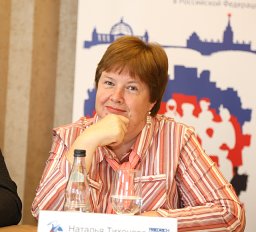 наталья евгеньевна тихонова合作论文数3Igor Kuznetsov合作论文数3v v amelin合作论文数3
 Elena Zdravomyslova合作论文数3Iu. V. Arutiunian合作论文数3Lev Gudkov合作论文数3ольга дмитриевна захарова合作论文数2яков ильич гилинский合作论文数2Ольга Юрьевна Бойцова合作论文数2Малева Татьяна Михайловна合作论文数2а в гордон合作论文数2Илья Борисович Левин合作论文数2в т логинов合作论文数2татьяна евгеньевна ворожейкина合作论文数2виктор леонидович шейнис合作论文数2людмила александровна беляева合作论文数2леонид леонидович рыбаковский合作论文数2leonid abramovich gordon合作论文数2борис гурьевич капустин合作论文数2Юрий Валерьевич Латов合作论文数2елена давыдовна игитханян合作论文数2николай иванович лапин合作论文数2сергей петрович перегудов合作论文数2Сергей Александрович Магарил合作论文数2алла евгеньевна чирикова合作论文数2шейла фитцпатрик合作论文数2энди байфорд合作论文数2стивен ловелл合作论文数2александр афанасьевич клецин合作论文数2александр юрьевич согомонов合作论文数2вадим борисович ольшанский合作论文数2




