Affected by natural and social environmental factors, the human body makes corresponding adjustments, and its comprehensive reactions can be summarized as TCM state which can be identified. Moreover, TCM state characterization parameters provide an important basis for state identification, and scale, an objective and standardized measurement tool commonly used in modern medicine, can be used as a supplement on the basis of four diagnostic methods(inspection, auscultation, inquiry and palpation) of TCM. Guided by TCM state theory, the collection scale of characterization parameters should accord with the principles of comprehensiveness, standardization and accuracy, and it mainly includes: The scope of parameter items should comprises macro-, meso-and micro-levels; the attributes of the parameter items should be determined by the combination of qualitative and quantitative methods, and the selection of the parameter items should be based on both subjective and objective examination. With the strong inclusiveness of TCM state characterization, its parameters collection scale can be applied to different stages of different people, especially to the condition where there are difficulties in assessing health status.
新医科建设与高校课程思政建设都是当前研究生教育改革的重要环节,也是医学研究生课程体系改革的切入点.文章探讨了新医科背景下中医诊断学专业研究生课程开展课程思政建设的必要性、存在的问题,并提出3个解决途径:挖掘新课程体系的思政元素、提升师资队伍水平以及优化教学评价体系,以期培育更多符合新时代发展需求、具备综合素质能力的中医诊断学专业高层次人才.
中医的研究生教育应当注重思维模式的培养,《伤寒论》经典论著除却临床效用突出外,更是传达了其完整的辨证论治思维.以六经病为体系架构,精练概括证候的核心鉴别要点,以类属各代表性方证,从而形成具有统领性纲目、逐级分类的一般性辨证论治思维,知常达变,篇中变证部分着重强调以复杂性辨证论治思维处理杂病、难病的诊治过程,系其为实践性著作,医者辨证不明,失治误治及其救误理论的详述亦是仲景学说的一大内容,本文从培养系统性知识架构思维、复杂性辨证论治思维及避误思维来阐述中医人才思维模式培养的加强内容,以期为完善培养体系,提高教育质量提供参考.
OBJECTIVE:To examine the efficacy of Qinghuayin (, QHY) in rat chronic atrophic gastritis (CAG) models and explored the molecular mechanism of QHY in treating CAG.METHODS:In total, 65 Wistar rats were randomly divided into the control (= 10) and CAG groups ( = 55). CAG model rats were further divided into five groups: model ( = 10), vitacoenzyme ( = 10), low-dose QHY ( = 10), medium-dose QHY ( = 10), and high-dose QHY groups ( = 10). We analyzed histopathological changes using hematoxylin and eosin staining and measured interleukin (IL)-6 and IL-8 levels in serum using enzyme-linked immunosorbent assay (ELISA) (Boster Bio, Pleasanton, USA). In addition, gastrin (GAS), pepsinogen I (PGI), and PGII expressions were evaluated using ELISA. The protein and mRNA expression of toll-like receptor 4 (TLR4) and toll or interleukin-1 receptor domain-containing adaptor inducing interferon-β (TRIF) was detected by Western blotting and quantitative reverse transcription-polymerase chain reaction, respectively.RESULTS:Our results revealed that histopathological changes in CAG model rates could be restored by low-, medium-, and high-dose QHY. The changes in GAS and PGI/II expression demonstrated that QHY improved CAG. Serum IL-6 and IL-levels were decreased by QHY administration. TLR4 and TRIF were upregulated at the mRNA and protein levels in the model group but downregulated by QHY administration.CONCLUSION:We concluded that QHY could effectively improve the histopathological changes of the gastric mucosa induced by CAG in rats. The therapeutic mechanism of QHY may be related to inhibition of the inflammatory factors IL-6 and IL-8 and suppression of TLR4/TRIF mRNA and protein expression.
痛泻要方被普遍认为是治疗肝脾不和所致泄泻、风泻的经典方,尽管当今方剂学教材将痛泻要方中的防风列为佐使药,但方剂的君臣佐使配伍法乃后人的理解,不可避免地夹杂主观因素,而非一成不变,故配伍法需要继承也需要批判.从痛泻要方原方及防风的诸多妙用出发,以用药剂量、炮制方法及方证病机、症状等角度为切入点,整理阐述并探讨.研究发现:防风药量虽非最大,但有无防风、防风剂量的改变均能引起治疗效果的改变.通过控制防风切片的厚度、干燥时间和温度可使药材含水量最少、主要有效成分含量最高;痛泻要药方中防风不经炮制处理,药效彰、药性峻.从痛泻要方证的表现可推测出中焦风邪的夹杂,无论内风、外风都可在胃肠症状上体现出动、行、急、变的特点.防风治风,能发散风寒,兼顾内外风,治其标证,因此防风在方中具有重要地位.笔者认为:防风对风泻、肝脾不和所致泄泻均有针对性治疗作用,为君药,且能入脾经、味辛走表而引药为使;臣药术芍健脾调肝固本而辅防风;佐药陈皮行气调气.若按此划分该方君臣佐使,亦不失其理.另外,在临床治疗痛泻要方证的过程中,更应重视"风邪"作用,从而为临床诊疗提供一定的新思路.
风药在脾胃病临床用药中运用广泛,风药治风,对症使用风药往往效如桴鼓;因风有动、行、变的特性,责之于风邪之脾胃病,其病证表现多样,一言难以蔽之,故脾胃之风邪的理论较零散,值得整理阐述.
林平,主任医师、教授、博士研究生导师,福建中医药大学中医学院院长.林教授从事临床、科研及教学工作30余年,擅长中西医结合诊治脾胃病证,尤其对慢性胃炎的诊治有独到的临床经验.慢性胃炎在现代医学认为是由多种原因引起的胃黏膜慢性炎性反应[1].林教授团队长期研究认为,慢性胃炎的中医核心病机为脾虚气滞,故在诊治慢性胃炎过程中,将谨守核心病机贯穿于治疗始终,创立以“健脾理气”为组方原则的“调脏运气汤”作为基本方,并依据疾病的发展情况,分三期辨治.前期辨治,以人为核心,中期辨治,以病为核心;后期辨治,综合调理.结合不同时期的服药方法,治疗慢性胃炎,并结合病例加以阐析.
林平主任系福建中医药大学中医学院院长,教授,博士生导师,第四、五批全国老中医药专家学术经验继承人,攻读临床医学硕士专业学位指导教师,福建省优秀中医临床人才,从事临床、科研及教学30余年,擅长脾胃病的中西医结合诊断与治疗,尤其对慢性胃炎及其相关疾病有独特见解和颇深的造诣.临床上,慢性胃炎合并睡眠障碍的患者不在少数,林平主任治之甚效.笔者有幸跟随林平主任门诊学习,收获颇丰,现将林平主任诊治此类疾病的思路及典型案例梳理归纳如下:
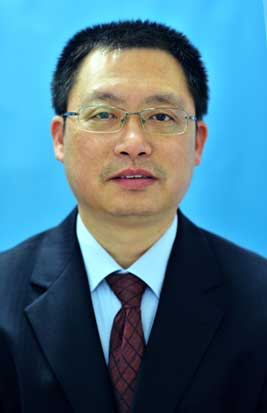 Ping Lin (林平)合作论文数福州中医药大学第二临床医学院4
 li yu (于莉)合作论文数3MingHan Huang (黄铭涵)合作论文数3Hongjian ZHOU (周宏剑)合作论文数2mei lin (林梅)合作论文数2Xuejuan Lin (林雪娟)合作论文数福建中医药大学中医学院2YANG Chengwei (杨丞玮)合作论文数1LI Can-dong合作论文数1Ning Su合作论文数1Youcheng HE (何友成)合作论文数1Ruoying XU (许若缨)合作论文数1Rong ZHENG (郑榕)合作论文数1jing xia (夏婧)合作论文数1Yao Xiaoling (姚晓玲)合作论文数1QianQing Lai (赖虔青)合作论文数1SiHan Li (李思汉)合作论文数1Wei Pan (潘玮)合作论文数1XiaoYan Huang (黄小燕)合作论文数1Yuan Gao (高远)合作论文数1WeiYing Zhang (张伟英)合作论文数1
 Yanfeng Shao (邵岩峰)合作论文数福建中医药大学附属第三人民医院脾胃病科
1Long Zhu (朱龙)合作论文数福建中医药大学中医学院1
Yanfeng Shao (邵岩峰)合作论文数福建中医药大学附属第三人民医院脾胃病科
1Long Zhu (朱龙)合作论文数福建中医药大学中医学院1




