The detachment of a bound electron by an electric field pulse whose duration ranges from a fraction of to a few times the optical cycle but is long compared to (h) over bar /I((h) over bar Planck constant, I binding energy) is studied theoretically, simulating the ionization of atoms by extremely short laser pulses. Because of the strong nonlinearity, the solution to the problem does not reduce to the sum of monochromatic harmonic contributions and depends significantly on the pulse shape features. A general analysis is carried out for an analytical pulse shape, and exact formulas are given for standard pulse shapes such as solitonlike, gaussian, lorenzian, etc., one or a half optical cycle in duration. The intensity and pulse length dependences of the ionization probability are of a near-universal tunneling type at high intensities. However, at moderate intensities in the multi photon regime, these dependences differ widely for different pulse shapes, with ionization probabilities always a few orders of magnitude higher than for ionization by a monochromatic wave of the same intensity and mean frequency.
The concept of a coherent exciton state is formulated. It is shown that for this state, a macroscopic wave function can be introduced such that it satisfies a nonlinear equation of the type familiar in the phenomenological theory of a superfluid liquid. The corresponding nondissipative flux is the flux of energy. For excitons interacting with an electromagnetic field, a coupled system of Maxwell equations and Ginzburg–Pitaevskii-type equations (phenomenological theory of Bose liquid) is obtained.
О конкурсе "Лучшие обзоры и статьи, опубликованные в журнале "Успехи физических наук" в 2014 году", Келдыш Л.В., Аксентьева М.С.
О конкурсе "Лучшие обзоры и статьи", опубликованные в журнале "Успехи физических наук" в 2013 году, Аксентьева М.С., Келдыш Л.В., Рубаков В.А., Руденко О.В.
Евгений Григорьевич Максимов (к 70-летию со дня рождения), Андреев А.Ф., Васильев М.А., Гинзбург В.Л., Гуревич А.В., Изюмов Ю.А., Каган Ю.М., Келдыш Л.В., Копаев Ю.В., Месяц Г.А., Ритус В.И., Садовский М.В., Файнберг В.Я.
Юрий Васильевич Копаев (к 70-летию со дня рождения), Алферов Ж.И., Андреев А.Ф., Асеев А.Л., Багаев С.Н., Гинзбург В.Л., Горбацевич А.А., Елесин В.Ф., Келдыш Л.В., Крохин О.Н., Максимов Е.Г., Месяц Г.А., Чаплыгин Ю.А.
Геннадий Андреевич Месяц (к семидесятилетию со дня рождения), Алферов Ж.И., Андреев А.Ф., Гинзбург В.Л., Кардашев Н.С., Келдыш Л.В., Ковальчук Б.М., Коровин С.Д., Крохин О.Н., Садовский М.В., Фейнберг Е.Л., Фортов В.Е., Шпак В.Г.
world science, died on 1 July 2001. He was one of the founders of quantum electronics which ranks among the great achievements of the 20th century, together with atomic energy, space exploration, semiconductor technology, and computers. In 1952 Nikolai Basov and Aleksandr Prokhorov were the érst to demonstrate, on the basis of theoretical analysis, the feasibility of constructing ampliéers and generators of electromagnetic éelds based on induced radiation by quantum systems in an inverse-population state. In 1955 these two scientists proposed an effective method for generating an inverse population by selective pumping of a three-level system ë a method which is now widely used in lasers and quantum ampliéers. The same period saw the construction of fundamentally new devices ë quantum oscillators (masers) and low-noise radio-frequency ampliéers. In 1959 Basov and Prokhorov were awarded the Lenin Prize for discovering this new principle of generation and ampliécation of electromagnetic radiation by quantum systems, and in 1964 they were awarded, jointly with Charles Townes, the Nobel Prize for physics for fundamental studies in the éeld of quantum electronics which have led to the creation of masers and lasers. After developing in 1956 the érst quantum-electronic devices ë masers ë and successfully applying them to frequency standards, Basov came up with an initiative of constructing quantum light generators ë lasers. For the érst time ever the use was suggested of semiconductors as active media, with various excitation methods, including injection across the p ë n junction (1961). This method led to the creation of injection (diode) lasers, now most widespread and extensively used in science and technology, the annual world production of which now amounts to several hundred million. In the 1960s Basov carried out a wide range of investigations of laser frequency standards. To a large extent thanks to the work of Basov and his students the precision of measurement of the frequencies and wavelengths of atomic and molecular transitions was increased by several orders of magnitude. Laser standards of time and frequency were created in the Department of Quantum Radiophysics of the Physics Institute of the Academy of Sciences [FIAN, more widely known as the Lebedev Physics Institute] which had unrivalled parameters, and which are now being introduced into the State time-keeping service. Basov was always a true patriot, never separating his interests in developing science and using its achievements from the interests of the State. He was the initiator of the érst and many subsequent decrees of the Government of the USSR on the development of quantum electronics in our country. In the early 1960s, together with his team, he identiéed and solved various scientiéc and technical problems related to practical applications of lasers, including those designed to improve the defence capacity of our country. Regarding the problem of creating a powerful laser as the most important one for quantum electronics, Basov started in 1962, and subsequently headed, a wide range of investigations which led to the creation of a broad family of new powerful photodissociation, excimer, electron-beamcontrolled, and chemical lasers. The most important in this family of powerful highenergy lasers developed under the leadership of Basov are iodine photodissociation lasers in which a shock wave is used for the excitation of the active medium. The scientiéc basis of such lasers was worked out at the Lebedev Physics Institute, and they were jointly produced by teams from the Lebedev Physics Institute and the All-Union Scientiéc Research Institute for Experimental Physics. Already in 1968 our country had explosion-type iodine photodissociation lasers capable of generating megajoule pulses. With the object of maximising laser energy concentration Basov initiated studies aimed at increasing the brightness of laser beams by frequency conversion and coherent integration through stimulated light scattering ë Raman (SRS) and Mandel'shtam ëBrillouin (SMBS). This led to the construction of powerful SRS lasers ë coherent beam combiners ë and successful application of phase conjunction by SMBS discovered in the Department of Quantum Radiophysics of the Lebedev Physics Institute with the aim of increasing the brightness of multichannel lasers. Kvantovaya Elektronika 31 (8) 751 ë 752 (2001) Translated by A Gelbtuch PACSnumbers: 01.60.+q OBITUARY DOI:10.1070/QE2001v031n08ABEH002039
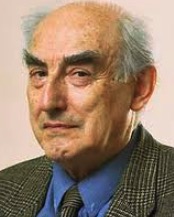 Vitaly L. Ginzburg合作论文数P.N.Lebedev Physical Institute, Russian Academy of Sciences25
 Aleksandr F Andreev合作论文数22Oleg N Krokhin合作论文数13
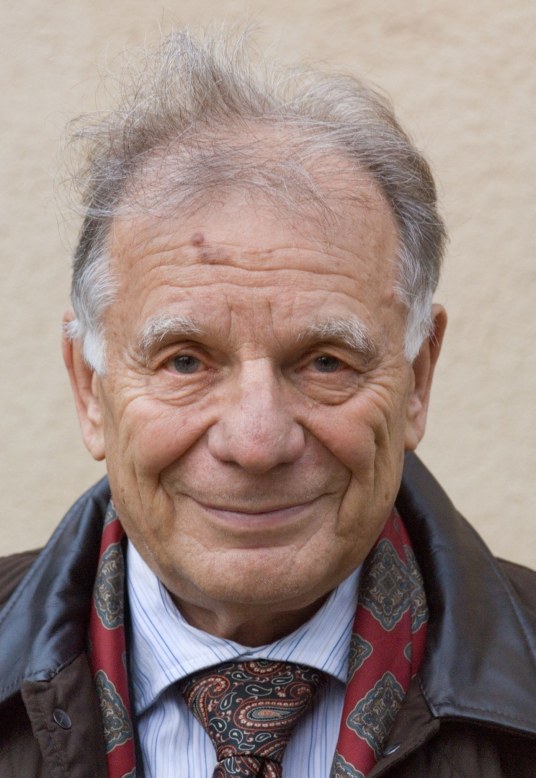 Zhores I. Alferov (若列斯·阿尔费罗夫)合作论文数Saint Petersburg Academic University12Evgenii L Feinberg合作论文数11V. Ya. Fainberg合作论文数11
 A.M. Prokhorov合作论文数P.N. Lebedev Physical Institute, the Academy of Sciences of the USSR9Vladimir I Ritus合作论文数9Aleksandr V Gurevich合作论文数P N Lebedev Physics Institute, Russian Academy of Sciences7m a vasilev合作论文数5yurii a osipyan合作论文数5Yurii M Kagan合作论文数5Boris B Kadomtsev合作论文数5A. V. Gurevich合作论文数Lebedev Physical Institute, Russian Academy of Sciences5
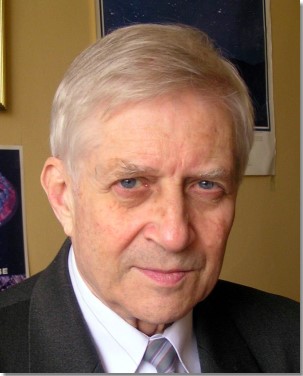 Nikolai S. Kardashev合作论文数Lebedev Physical Institute, Russian Academy of Sciences in Moscow5
 Gennadii Andreevich Mesyats合作论文数Lebedev Physical Institute, Russian Academy of Sciences5Andrei V Gaponov-Grekhov合作论文数5Yv Kopaev合作论文数4
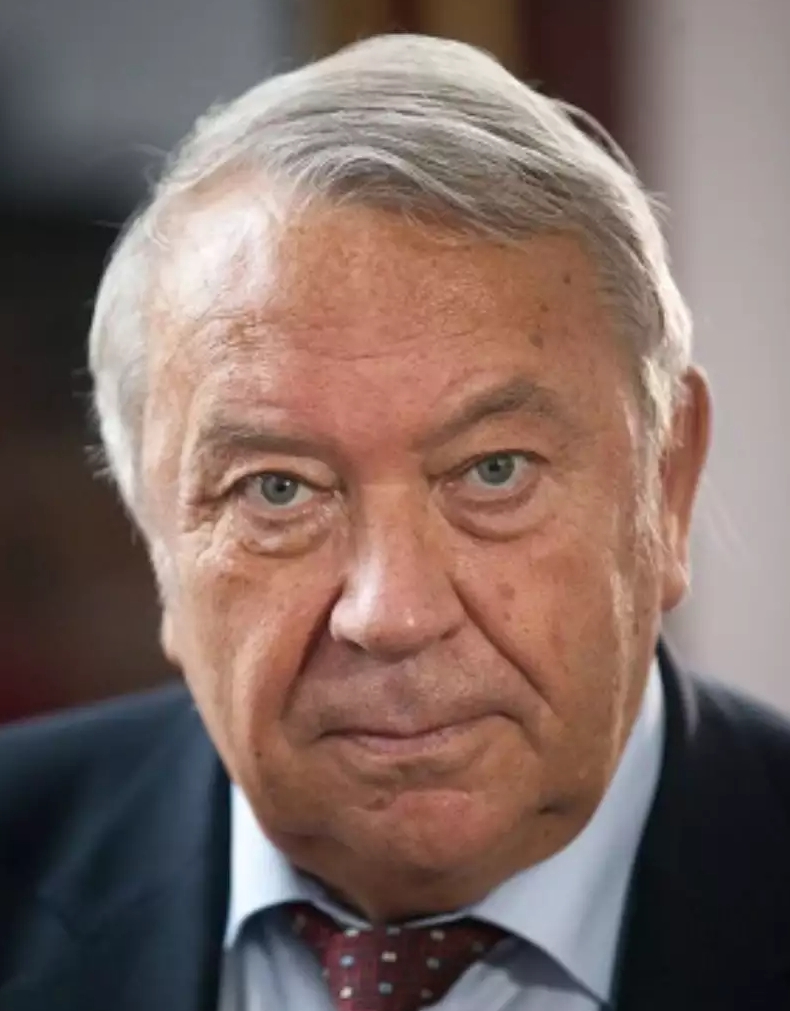 Vladimir Fortov合作论文数Russian Academy of Sciences4A S Borovik-Romanov合作论文数4Aleksandr M Dykhne合作论文数4Moiseĭ Aleksandrovich Markov合作论文数4D A Kirzhnits合作论文数4Evgenii B Aleksandrov合作论文数4Isaak M Khalatnikov合作论文数4
 Lev Pitaevskii合作论文数4
 Evgeny Velikhov合作论文数Kurchatov Institute3Yurii M Popov合作论文数3Igor I Sobel'Man合作论文数3N S Kardashov合作论文数3Nicolai G Basov合作论文数3Anatolii I Nikishov合作论文数3Boris P Zakharchenya合作论文数3Aleksandr N Skrinskii合作论文数3
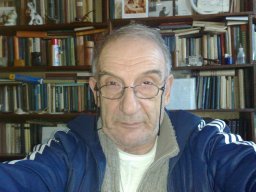 Robert A Suris合作论文数Institute of Radioengineering & Electronics, RAS3
 Mikhail V Sadovskii合作论文数Institute for Electrophysics, Russian Academy of Sciences3Evgenii G Maksimov合作论文数3A I Isakov合作论文数3
 YaB Zeldovich合作论文数Department of Physics, Moscow State University;Sternberg Astronomical Institute, Moscow State University;Institute of Problems of Chemical Physics, Russian Academy of Sciences3Nikolay S Kardashev合作论文数3Viktor P Silin合作论文数3B. M. Bolotovsky合作论文数2mikhail b menskii合作论文数2andrei n lebedev合作论文数2Mikhail A. Vasil'ev合作论文数2Юрий В. Копаев合作论文数2виталий лазаревич гинзбург合作论文数2александр алексеевич горбацевич合作论文数2P.A. Cherenkov合作论文数2




