Russian Academy of Sciences, an outstanding Russian physicist whose name is closely connected with progress in modern quantum electrodynamics as the nonlinear theory of electromagnetic interaction celebrated his 80th birthday on 23 May 2007. Vladimir Ivanovich was born in Moscow. His parents, both researchers at the Timiryazev Academy of Agriculture, worked in plant-growing and entomology. V I Ritus's path to theoretical physics was far from straightforward and rather tortuous. By the time he graduated brilliantly from his first year at the Moscow Aviation Institute (MAI) Ð this was in 1945 Ð the field of heroics moved from aviation to nuclear physics and V I Ritus decided to sacrifice one year to make his knowledge more fundamental, and to transfer to Moscow State University (MGU). The Chancellor of MGU at the time had shortsightedly decided that wasting valuable human resource in this way was unacceptable and banned Ritus's transfer ``because he was doing well at MAI'' (!?) Ð until certain pressure was exerted on him. Ultimately, Vladimir Ivanovich wrote his graduation thesis at the P N Lebedev Physical Institute of the USSR Academy of Sciences (FIAN) as an experimenter in I M Frank's laboratory. In the course of this graduation project he designed a coincidence circuit of scintillation counters and measured the angular correlation of cascade gamma quanta of some radioactive nuclei. V I Ritus's work at FIAN on his thesis during his postgraduate course (he was enrolled in January 1951) was interrupted by being assigned, on the strength of M A Markov's recommendation, to what was known at the time as the First Main Directorate of the USSR Council of Ministers, later rechristened the Ministry of Medium Machine Building (Sredmash) Ð a powerful state body placed above any other in the name of implementing the Soviet Governmentsponsored program of thermonuclear weapons design.Working in the highly classified town of Sarov, then denoted by euphemism `object' [in fact, in the theoretical department formed by I E Tamm within the Design Bureau No. 11 (KB-11)], V I Ritus took part directly in the work of creating the RDS-6S thermonuclear device, known as `sloika' (a layer cake), and drew up under Andrei D Sakharov's guidance mathematical task orders for L D Landau's and A N Tikhonov's groups which computed energy release from sloika. Vladimir Ivanovich studied the efficiency of fission of 238U nuclei by neutrons from ddand dt-reactions, computed the neutron ranges in lithium deuteride, and evaluated the energy release from sloika for various concentrations of Li and tritium. The successful test of the Soviet hydrogen bomb on August 12, 1953 that, according to GMMalenkov's declaration, marked the end of the American monopoly on this sort of weapon, was commemorated for V I Ritus by receiving a Class III Stalin Prize. To V I Ritus belongs the suggestion of double implosion made in 1954 in the wake of the `third idea' (as Sakharov put it) that assumed the use of the pressure of radiation and was realized in higher-power devices of subsequent generations: RDS-37 and others. In this, however, V I Ritus played no part and was even kept completely ignorant of the fate of his suggestion (until very recently). In the spring of 1955, I E Tamm succeeded at last in returning V I Ritus, who had continued to work in Sarov under the veil of extraordinary secrecy, to academic research Ð but this time, and now irreversibly, as a theoretical physicist in the Theoretical Department of FIAN. The first stage of this life, new toV IRitus, was inspired by Fermi's experiments on interaction between p-mesons and nucleons, in which the resonance nature of a scattering cross section was discovered. Vladimir Ivanovich studied the photoproduction of p-mesons and scattering of photons by nucleons, taking into account the excited states of nucleons. The angular polynomials-matrices he introduced became an efficient tool when considering polarization effects in nuclear reactions. V I Ritus's thesis for Candidate of Physicomathematical Sciences presented a theory of reactions involving polarized particles; it was submitted and defended in 1959 but published only in 1971, by which time its results were already Uspekhi Fizicheskikh Nauk 177 (7) 801 ± 802 (2007) Translated by V I Kisin PERSONALIA PACS number: 01.60.+q
standing physicist and a Corresponding Member of the Russian Academy of Sciences, marked his 70th birthday. He was born in a family of research workers of the Timiryazev Agricultural Academy, Moscow. He joined the community of theoretical physicists in an unusual way. After he had successfully finished the preparatory division and firstyear course of education at the Moscow Aviation Institute (MAI), Ritus determined to enter the first course of the Faculty of Physics at Moscow State University (MSU), specializing in nuclear physics. That was in year 1945, a year of exciting advances in theoretical and experimental nuclear physics, which culminated in the first nuclear explosions. It was therefore easy to see why the young man found new interests. Still, his first attempt to make his wishes come true failed. As the reason for his refusal, the University's rector wrote onRitus's application: `` I don't feel it possible to accept a successful MAI student. A typical case of delay in specialist training.'' However, everything had a happy end owing to Ritus's reasonable insistence. He carried out his diploma project under the guidance of I Ya Barit, a talented experimental physicist, in I M Frank's laboratory at the Physical Institute of the USSR Academy of Sciences (known as FIAN for short in Russian). The project evoked the strong interest of I V Shtranikh and F L Shapiro. In this work, probably for the first time in this country, a system of scintillation counters was constructed and the angular correlation of cascade g-quanta of several nuclei was measured. In January 1951, Ritus was admitted to a postgraduate course. However, unforeseen circumstances soon changed the natural course of events. By a special decision, the government ruled to set up a team to work on thermonuclear weapons, and Ritus was `pulled out' of the post-graduate studentship and sent to the `installation' where he was to join I E Tamm's and A D Sakharov's group. Working with these remarkable persons, Ritus was engrossed in complicated scientific and applied problems and did much to resolve them. This won him a USSR State Prize in 1953. About two years after the Soviet Union had built and tested its first H-bomb, Tamm was able to return Ritus to FIAN's Theoretical Department he headed. Soon, Ritus reported in the Zh. Eksp. Teor. Fiz. his first unclassified studies which he had begun at Tamm's suggestion at the `installation'. The studies were concerned with the theory of pion photoproduction and the scattering of photons on nucleons with regard to isobaric states. This choice of studies had been induced by Fermi's pion ± nucleon interaction experiments which revealed the resonance behaviour of the scattering cross-section. Ritus derived angular polynomials ± matrices which proved a very efficient tool for studying the polarization effects in nuclear reactions. Even at that time, Ritus's scientific self-reliance, exceptional conscientiousness, and emphasis on quality performance won him the deep respect not only of his colleagues but of all those who were around him. His candidate of sciences dissertation (1959) on the theory of reactions involving polarized particles could have made several dissertations. Its findings were cited inmonographs by other authors, but it was not until 1971 that Ritus published it. Ritus's doctor of sciences dissertation (1969) dealt with a different subject Ð quantum processes in strong external electromagnetic fields. This fundamental work had been the outcome of many years' strenuous effort, and nobody would have doubted its carrying enough weight for a doctor's degree, but Ritus did. His reward was his opponents' Uspekhi Fizicheskikh Nauk 167 (5) 569 ± 570 (1997) Translated by B V Kuznetsov PERSONALIA PACS number: 01.60.+q
 Анатолий Е. Шабад合作论文数5Lv Keldysh合作论文数3
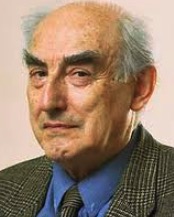 Vitaly L. Ginzburg合作论文数P.N.Lebedev Physical Institute, Russian Academy of Sciences3Anatolii I Nikishov合作论文数3а а комар合作论文数3леонид вениаминович келдыш合作论文数2Mikhail A. Vasil'ev合作论文数2Igor Viktorovich Tyutin合作论文数2михаил андреевич васильев合作论文数2борис леонидович воронов合作论文数2Igor V. Tyutin合作论文数2A. V. Gurevich合作论文数Lebedev Physical Institute, Russian Academy of Sciences2Б. Б. Говорков合作论文数2
 Renata Kallosh合作论文数Department of Physics, School of Humanities and Sciences, Stanford University2Boris L. Voronov合作论文数2Nikolay S Kardashev合作论文数2B. M. Bolotovsky合作论文数1игорь михайлович дремин合作论文数1виктор павлович силин合作论文数1борис михайлович болотовский合作论文数1виталий лазаревич гинзбург合作论文数1александр викторович гуревич合作论文数1Gelii F Zharkov合作论文数1IS Shapiro合作论文数1Igor V Tyutin合作论文数1Boris M Bolotovskiĭ合作论文数1игорь викторович тютин合作论文数1Aleksandr V Gurevich合作论文数P N Lebedev Physics Institute, Russian Academy of Sciences1Leonid V Keldysh合作论文数1Vladimir I. Ritus合作论文数1Evgenii L Feinberg合作论文数1D A Kirzhnits合作论文数1
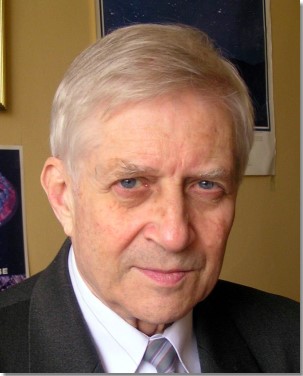 Nikolai S. Kardashev合作论文数Lebedev Physical Institute, Russian Academy of Sciences in Moscow1Vladimir I Ritus合作论文数1Viktor P Silin合作论文数1




