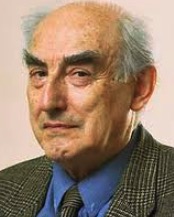
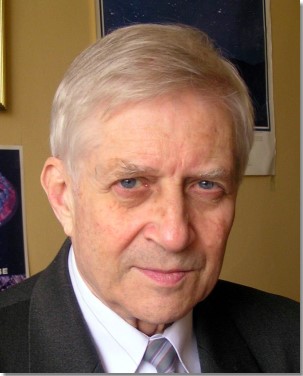
Russian Academy of Sciences, an outstanding Russian physicist whose name is closely connected with progress in modern quantum electrodynamics as the nonlinear theory of electromagnetic interaction celebrated his 80th birthday on 23 May 2007. Vladimir Ivanovich was born in Moscow. His parents, both researchers at the Timiryazev Academy of Agriculture, worked in plant-growing and entomology. V I Ritus's path to theoretical physics was far from straightforward and rather tortuous. By the time he graduated brilliantly from his first year at the Moscow Aviation Institute (MAI) Ð this was in 1945 Ð the field of heroics moved from aviation to nuclear physics and V I Ritus decided to sacrifice one year to make his knowledge more fundamental, and to transfer to Moscow State University (MGU). The Chancellor of MGU at the time had shortsightedly decided that wasting valuable human resource in this way was unacceptable and banned Ritus's transfer ``because he was doing well at MAI'' (!?) Ð until certain pressure was exerted on him. Ultimately, Vladimir Ivanovich wrote his graduation thesis at the P N Lebedev Physical Institute of the USSR Academy of Sciences (FIAN) as an experimenter in I M Frank's laboratory. In the course of this graduation project he designed a coincidence circuit of scintillation counters and measured the angular correlation of cascade gamma quanta of some radioactive nuclei. V I Ritus's work at FIAN on his thesis during his postgraduate course (he was enrolled in January 1951) was interrupted by being assigned, on the strength of M A Markov's recommendation, to what was known at the time as the First Main Directorate of the USSR Council of Ministers, later rechristened the Ministry of Medium Machine Building (Sredmash) Ð a powerful state body placed above any other in the name of implementing the Soviet Governmentsponsored program of thermonuclear weapons design.Working in the highly classified town of Sarov, then denoted by euphemism `object' [in fact, in the theoretical department formed by I E Tamm within the Design Bureau No. 11 (KB-11)], V I Ritus took part directly in the work of creating the RDS-6S thermonuclear device, known as `sloika' (a layer cake), and drew up under Andrei D Sakharov's guidance mathematical task orders for L D Landau's and A N Tikhonov's groups which computed energy release from sloika. Vladimir Ivanovich studied the efficiency of fission of 238U nuclei by neutrons from ddand dt-reactions, computed the neutron ranges in lithium deuteride, and evaluated the energy release from sloika for various concentrations of Li and tritium. The successful test of the Soviet hydrogen bomb on August 12, 1953 that, according to GMMalenkov's declaration, marked the end of the American monopoly on this sort of weapon, was commemorated for V I Ritus by receiving a Class III Stalin Prize. To V I Ritus belongs the suggestion of double implosion made in 1954 in the wake of the `third idea' (as Sakharov put it) that assumed the use of the pressure of radiation and was realized in higher-power devices of subsequent generations: RDS-37 and others. In this, however, V I Ritus played no part and was even kept completely ignorant of the fate of his suggestion (until very recently). In the spring of 1955, I E Tamm succeeded at last in returning V I Ritus, who had continued to work in Sarov under the veil of extraordinary secrecy, to academic research Ð but this time, and now irreversibly, as a theoretical physicist in the Theoretical Department of FIAN. The first stage of this life, new toV IRitus, was inspired by Fermi's experiments on interaction between p-mesons and nucleons, in which the resonance nature of a scattering cross section was discovered. Vladimir Ivanovich studied the photoproduction of p-mesons and scattering of photons by nucleons, taking into account the excited states of nucleons. The angular polynomials-matrices he introduced became an efficient tool when considering polarization effects in nuclear reactions. V I Ritus's thesis for Candidate of Physicomathematical Sciences presented a theory of reactions involving polarized particles; it was submitted and defended in 1959 but published only in 1971, by which time its results were already Uspekhi Fizicheskikh Nauk 177 (7) 801 ± 802 (2007) Translated by V I Kisin PERSONALIA PACS number: 01.60.+q
 м а соловьев合作论文数5Boris L. Voronov合作论文数4а а комар合作论文数4Igor Viktorovich Tyutin合作论文数3михаил андреевич васильев合作论文数3Igor V. Tyutin合作论文数3
 Vitaly L. Ginzburg合作论文数P.N.Lebedev Physical Institute, Russian Academy of Sciences3Anatolii I Nikishov合作论文数3B. M. Bolotovsky合作论文数2леонид вениаминович келдыш合作论文数2Boris M Bolotovskiĭ合作论文数2борис леонидович воронов合作论文数2Lv Keldysh合作论文数2A. V. Gurevich合作论文数Lebedev Physical Institute, Russian Academy of Sciences2Leonid V Keldysh合作论文数2Б. Б. Говорков合作论文数2
 Renata Kallosh合作论文数Department of Physics, School of Humanities and Sciences, Stanford University2
 Nikolai S. Kardashev合作论文数Lebedev Physical Institute, Russian Academy of Sciences in Moscow2Nikolay S Kardashev合作论文数2игорь михайлович дремин合作论文数1m a vasilev合作论文数1виктор павлович силин合作论文数1Mikhail A. Vasil'ev合作论文数1борис михайлович болотовский合作论文数1виталий лазаревич гинзбург合作论文数1александр викторович гуревич合作论文数1игорь викторович тютин合作论文数1Aleksandr V Gurevich合作论文数P N Lebedev Physics Institute, Russian Academy of Sciences1Vladimir I. Ritus合作论文数1Sergei M Stishov合作论文数Los Alamos National Laboratory1Vladimir I Ritus合作论文数1Viktor P Silin合作论文数1




