Measuring observables to constrain models using maximum-likelihood estimation is fundamental to many physics experiments. Wilks' theorem provides a simple way to construct confidence intervals on model parameters, but it only applies under certain conditions. These conditions, such as nested hypotheses and unbounded parameters, are often violated in neutrino oscillation measurements and other experimental scenarios. Monte Carlo methods can address these issues, albeit at increased computational cost. In the presence of nuisance parameters, however, the best way to implement a Monte Carlo method is ambiguous. This paper documents the method selected by the NOvA experiment, the profile construction. It presents the toy studies that informed the choice of method, details of its implementation, and tests performed to validate it. It also includes some practical considerations which may be of use to others choosing to use the profile construction.
The determination of the direction of a stellar core collapse via its neutrino emission is crucial for the identification of the progenitor for a multimessenger follow-up. A highly effective method of reconstructing supernova directions within the Deep Underground Neutrino Experiment (DUNE) is introduced. The supernova neutrino pointing resolution is studied by simulating and reconstructing electron-neutrino charged-current absorption on Ar-40 and elastic scattering of neutrinos on electrons. Procedures to reconstruct individual interactions, including a newly developed technique called "brems flipping," as well as the burst direction from an ensemble of interactions are described. Performance of the burst direction reconstruction is evaluated for supernovae happening at a distance of 10 kpc for a specific supernova burst flux model. The pointing resolution is found to be 3.4 degrees at 68% coverage for a perfect interaction-channel classification and a fiducial mass of 40 kton, and 6.6 degrees for a 10 kton fiducial mass respectively. Assuming a 4% rate of charged-current interactions being misidentified as elastic scattering, DUNE's burst pointing resolution is found to be 4.3 degrees (8.7 degrees) at 68% coverage.
The Module-0 Demonstrator is a single-phase 600 kg liquid argon time projection chamber operated as a prototype for the DUNE liquid argon near detector. Based on the ArgonCube design concept, Module-0 features a novel 80k-channel pixelated charge readout and advanced high-coverage photon detection system. In this paper, we present an analysis of an eight-day data set consisting of 25 million cosmic ray events collected in the spring of 2021. We use this sample to demonstrate the imaging performance of the charge and light readout systems as well as the signal correlations between the two. We also report argon purity and detector uniformity measurements, and provide comparisons to detector simulations.
The NOvA collaboration reports cross-section measurements for ν_μ charged-current interactions with low hadronic energy (maximum kinetic energy of 250 MeV for protons and 175 MeV for pions) in the NOvA Near Detector. The results are presented as a double-differential cross section as a function of the direct observables of the final-state muon kinematics. Results are also presented as a single-differential cross section as a function of the derived square of the four-momentum transfer, Q^2, and as a function of the derived neutrino energy. The data correspond to an accumulated 8.09×10^20 protons-on-target (POT) in the neutrino mode of the NuMI beam, with a narrow band of neutrino energies peaked at 1.8 GeV. The analysis provides a sample of neutrino-nucleus interactions with an enhanced fraction of quasi-elastic and two-particle-two-hole (2p2h) interactions. This enhancement allows quantitative comparisons with various nuclear models. We find strong disagreement between data and theory-based models in various regions of the muon kinematic phase space, especially in the forward muon direction.
Double- and single-differential cross sections for inclusive charged-current neutrino-nucleus scattering are reported for the kinematic domain 0 to 2 GeV/c in three-momentum transfer and 0 to 2 GeV in available energy, at a mean muon-neutrino energy of 1.86 GeV. The measurements are based on an estimated 995,760 muon-neutrino CC interactions in the scintillator medium of the NOvA Near Detector. The subdomain populated by 2-particle-2-hole reactions is identified by the cross-section excess relative to predictions for neutrino-nucleus scattering that are constrained by a data control sample. Models for 2-particle-2- hole processes are rated by chi-square comparisons of the predicted-versus-measured muon-neutrino CC inclusive cross section over the full phase space and in the restricted subdomain. Shortfalls are observed in neutrino generator predictions obtained using the theory-based Val`encia and SuSAv2 2p2h models.
ProtoDUNE Single-Phase (ProtoDUNE-SP) is a 770-ton liquid argon time projection chamber that operated in a hadron test beam at the CERN Neutrino Platform in 2018. We present a measurement of the total inelastic cross section of charged kaons on argon as a function of kaon energy using 6 and 7 GeV/$c$ beam momentum settings. The flux-weighted average of the extracted inelastic cross section at each beam momentum setting was measured to be 380$\pm$26 mbarns for the 6 GeV/$c$ setting and 379$\pm$35 mbarns for the 7 GeV/$c$ setting.
This Letter reports a search for charge-parity (CP) symmetry violating non-standard interactions (NSI) of neutrinos with matter using the NOvA Experiment, and examines their effects on the determination of the standard oscillation parameters. Data from $\nu_{\mu}(\bar{\nu}_{\mu})\rightarrow\nu_{\mu}(\bar{\nu}_{\mu})$ and $\nu_{\mu}(\bar{\nu}_{\mu})\rightarrow\nu_{e}(\bar{\nu}_{e})$ oscillation channels are used to measure the effect of the NSI parameters $\varepsilon_{e\mu}$ and $\varepsilon_{e\tau}$. With 90% C.L. the magnitudes of the NSI couplings are constrained to be $|\varepsilon_{e\mu}| \, \lesssim 0.3$ and $|\varepsilon_{e\tau}| \, \lesssim 0.4$. A degeneracy at $|\varepsilon_{e\tau}| \, \approx 1.8$ is reported, and we observe that the presence of NSI limits sensitivity to the standard CP phase $\delta_{\tiny\text{CP}}$.
DUNE is an international experiment dedicated to addressing some of the questions at the forefront of particle physics and astrophysics, including the mystifying preponderance of matter over antimatter in the early universe. The dual-site experiment will employ an intense neutrino beam focused on a near and a far detector as it aims to determine the neutrino mass hierarchy and to make high-precision measurements of the PMNS matrix parameters, including the CP-violating phase. It will also stand ready to observe supernova neutrino bursts, and seeks to observe nucleon decay as a signature of a grand unified theory underlying the standard model. The DUNE far detector implements liquid argon time-projection chamber (LArTPC) technology, and combines the many tens-of-kiloton fiducial mass necessary for rare event searches with the sub-centimeter spatial resolution required to image those events with high precision. The addition of a photon detection system enhances physics capabilities for all DUNE physics drivers and opens prospects for further physics explorations. Given its size, the far detector will be implemented as a set of modules, with LArTPC designs that differ from one another as newer technologies arise. In the vertical drift LArTPC design, a horizontal cathode bisects the detector, creating two stacked drift volumes in which ionization charges drift towards anodes at either the top or bottom. The anodes are composed of perforated PCB layers with conductive strips, enabling reconstruction in 3D. Light-trap-style photon detection modules are placed both on the cryostat's side walls and on the central cathode where they are optically powered. This Technical Design Report describes in detail the technical implementations of each subsystem of this LArTPC that, together with the other far detector modules and the near detector, will enable DUNE to achieve its physics goals.
The international collaboration designing and constructing the Deep Underground Neutrino Experiment (DUNE) at the Long-Baseline Neutrino Facility (LBNF) has developed a two-phase strategy toward the implementation of this leading-edge, large-scale science project. The 2023 report of the US Particle Physics Project Prioritization Panel (P5) reaffirmed this vision and strongly endorsed DUNE Phase I and Phase II, as did the European Strategy for Particle Physics. While the construction of the DUNE Phase I is well underway, this White Paper focuses on DUNE Phase II planning. DUNE Phase-II consists of a third and fourth far detector (FD) module, an upgraded near detector complex, and an enhanced 2.1 MW beam. The fourth FD module is conceived as a "Module of Opportunity", aimed at expanding the physics opportunities, in addition to supporting the core DUNE science program, with more advanced technologies. This document highlights the increased science opportunities offered by the DUNE Phase II near and far detectors, including long-baseline neutrino oscillation physics, neutrino astrophysics, and physics beyond the standard model. It describes the DUNE Phase II near and far detector technologies and detector design concepts that are currently under consideration. A summary of key R&D goals and prototyping phases needed to realize the Phase II detector technical designs is also provided. DUNE's Phase II detectors, along with the increased beam power, will complete the full scope of DUNE, enabling a multi-decadal program of groundbreaking science with neutrinos.
Doping of liquid argon TPCs (LArTPCs) with a small concentration of xenon is a technique for light-shifting and facilitates the detection of the liquid argon scintillation light. In this paper, we present the results of the first doping test ever performed in a kiloton-scale LArTPC. From February to May 2020, we carried out this special run in the single-phase DUNE Far Detector prototype (ProtoDUNE-SP) at CERN, featuring 720 t of total liquid argon mass with 410 t of fiducial mass. A 5.4 ppm nitrogen contamination was present during the xenon doping campaign. The goal of the run was to measure the light and charge response of the detector to the addition of xenon, up to a concentration of 18.8 ppm. The main purpose was to test the possibility for reduction of non-uniformities in light collection, caused by deployment of photon detectors only within the anode planes. Light collection was analysed as a function of the xenon concentration, by using the pre-existing photon detection system (PDS) of ProtoDUNE-SP and an additional smaller set-up installed specifically for this run. In this paper we first summarize our current understanding of the argon-xenon energy transfer process and the impact of the presence of nitrogen in argon with and without xenon dopant. We then describe the key elements of ProtoDUNE-SP and the injection method deployed. Two dedicated photon detectors were able to collect the light produced by xenon and the total light. The ratio of these components was measured to be about 0.65 as 18.8 ppm of xenon were injected. We performed studies of the collection efficiency as a function of the distance between tracks and light detectors, demonstrating enhanced uniformity of response for the anode-mounted PDS. We also show that xenon doping can substantially recover light losses due to contamination of the liquid argon by nitrogen.
NOvA is a long-baseline neutrino oscillation experiment that measures oscillations in charged-current $\nu_{\mu} \rightarrow \nu_{\mu}$ (disappearance) and $\nu_{\mu} \rightarrow \nu_{e}$ (appearance) channels, and their antineutrino counterparts, using neutrinos of energies around 2 GeV over a distance of 810 km. In this work we reanalyze the dataset first examined in our previous paper [Phys. Rev. D 106, 032004 (2022)] using an alternative statistical approach based on Bayesian Markov Chain Monte Carlo. We measure oscillation parameters consistent with the previous results. We also extend our inferences to include the first NOvA measurements of the reactor mixing angle $\theta_{13}$ and the Jarlskog invariant. We use these results to quantify the strength of our inferences about CP violation, as well as to examine the effects of constraints from short-baseline measurements of $\theta_{13}$ using antineutrinos from nuclear reactors when making NOvA measurements of $\theta_{23}$. Our long-baseline measurement of $\theta_{13}$ is also shown to be consistent with the reactor measurements, supporting the general applicability and robustness of the PMNS framework for neutrino oscillations.
Neutrino experiments are set to probe some of the most important open questions in physics, from CP violation and the nature of dark matter. The technology of choice for many of these experiments is the liquid argon time projection chamber (LArTPC). In current LArTPC experiments, reconstruction performance often represents a limiting factor for the sensitivity. New developments are therefore needed to unlock the full potential of LArTPC experiments. NuGraph2 is a state of the art Graph Neural Network for reconstruction of data in LArTPC experiments. NuGraph2 utilizes a heterogeneous graph structure, with separate subgraphs of 2D nodes (hits in each plane) connected across planes via 3D nodes (space points). The model provides a consistent description of the neutrino interaction across all planes. NuGraph2 is a multi-purpose network, with a common message-passing attention engine connected to multiple decoders with different classification or regression tasks. These include the classification of detector hits according to the particle type that produced them (semantic segmentation) and the separation of hits from the neutrino interaction from hits due to noise or cosmic-ray background. Additional decoders are being developed, performing tasks such as the regression of the neutrino interaction vertex position. Performance results will be presented based on publicly available samples from MicroBooNE. These include both physics performance metrics, achieving 95% accuracy for semantic segmentation and 98% classification of neutrino hits, as well as computational metrics for training and for inference on CPU or GPU. The status of the NuGraph integration in the LArSoft software framework will be presented, as well as initial studies about model interpretability and injection of domain knowledge.
This white paper provides a comprehensive review of our present understanding of experimental neutrino anomalies that remain unresolved, charting the progress achieved over the last decade at the experimental and phenomenological level, and sets the stage for future programmatic prospects in addressing those anomalies. It is purposed to serve as a guiding and motivational "encyclopedic" reference, with emphasis on needs and options for future exploration that may lead to the ultimate resolution of the anomalies. We see the main experimental, analysis, and theory-driven thrusts that will be essential to achieving this goal being: 1) Cover all anomaly sectors -- given the unresolved nature of all four canonical anomalies, it is imperative to support all pillars of a diverse experimental portfolio, source, reactor, decay-at-rest, decay-in-flight, and other methods/sources, to provide complementary probes of and increased precision for new physics explanations; 2) Pursue diverse signatures -- it is imperative that experiments make design and analysis choices that maximize sensitivity to as broad an array of these potential new physics signatures as possible; 3) Deepen theoretical engagement -- priority in the theory community should be placed on development of standard and beyond standard models relevant to all four short-baseline anomalies and the development of tools for efficient tests of these models with existing and future experimental datasets; 4) Openly share data -- Fluid communication between the experimental and theory communities will be required, which implies that both experimental data releases and theoretical calculations should be publicly available; and 5) Apply robust analysis techniques -- Appropriate statistical treatment is crucial to assess the compatibility of data sets within the context of any given model.
We report cross-section measurements of the final-state muon kinematics for nu mu charged-current interactions in the NOvA near detector using an accumulated 8.09 x 10²⁰ protons on target in the NuMI beam. We present the results as a double-differential cross section in the observed outgoing muon energy and angle, as well as single-differential cross sections in the derived neutrino energy, E nu, and square of the four-momentum transfer, Q(2). We compare the results to inclusive cross-section predictions from various neutrino event generators via chi(2) calculations using a covariance matrix that accounts for bin-to-bin correlations of systematic uncertainties. These comparisons show a clear discrepancy between the data and each of the tested predictions at forward muon angle and low Q(2), indicating a missing suppression of the cross section in current neutrino-nucleus scattering models.
The Exa.TrkX project presents a graph neural network (GNN) technique for low-level reconstruction of neutrino interactions in a Liquid Argon Time Projection Chamber (LArTPC). GNNs are still a relatively novel technique, and have shown great promise for similar reconstruction tasks in the Large Hadron Collider (LHC). Graphs describing particle interactions are formed by treating each detector hit as a node, with edges describing the relationships between hits. We utilise a multi-head attention message passing network which performs graph convolutions in order to label each node with a particle type. We present an updated variant of our GNN architecture, with several improvements. After testing the model on more realistic simulation with regions of unresponsive wires, the target was modified from edge classification to node classification in order to increase robustness. Removing edges as a classification target opens up a broader possibility space for edge-forming techniques; we explore the model's performance across a variety of approaches, such as Delaunay triangulation, kNN, and radius-based methods. We also extend this model to the 3D context, sharing information between detector views. By using reconstructed 3D spacepoints to map detector hits from each wire plane, the model naively constructs 2D representations that are independent yet fully consistent.
The rapid development of general-purpose computing on graphics processing units (GPGPU) is allowing the implementation of highly-parallelized Monte Carlo simulation chains for particle physics experiments. This technique is particularly suitable for the simulation of a pixelated charge readout for time projection chambers, given the large number of channels that this technology employs. Here we present the first implementation of a full microphysical simulator of a liquid argon time projection chamber (LArTPC) equipped with light readout and pixelated charge readout, developed for the DUNE Near Detector. The software is implemented with an end-to-end set of GPU-optimized algorithms. The algorithms have been written in Python and translated into CUDA kernels using Numba, a just-in-time compiler for a subset of Python and NumPy instructions. The GPU implementation achieves a speed up of four orders of magnitude compared with the equivalent CPU version. The simulation of the current induced on 10^3 pixels takes around 1 ms on the GPU, compared with approximately 10 s on the CPU. The results of the simulation are compared against data from a pixel-readout LArTPC prototype.
A primary goal of the upcoming Deep Underground Neutrino Experiment (DUNE) is to measure the $\mathcal{O}(10)$ MeV neutrinos produced by a Galactic core-collapse supernova if one should occur during the lifetime of the experiment. The liquid-argon-based detectors planned for DUNE are expected to be uniquely sensitive to the $\nu_e$ component of the supernova flux, enabling a wide variety of physics and astrophysics measurements. A key requirement for a correct interpretation of these measurements is a good understanding of the energy-dependent total cross section $\sigma(E_\nu)$ for charged-current $\nu_e$ absorption on argon. In the context of a simulated extraction of supernova $\nu_e$ spectral parameters from a toy analysis, we investigate the impact of $\sigma(E_\nu)$ modeling uncertainties on DUNE's supernova neutrino physics sensitivity for the first time. We find that the currently large theoretical uncertainties on $\sigma(E_\nu)$ must be substantially reduced before the $\nu_e$ flux parameters can be extracted reliably: in the absence of external constraints, a measurement of the integrated neutrino luminosity with less than 10\% bias with DUNE requires $\sigma(E_\nu)$ to be known to about 5%. The neutrino spectral shape parameters can be known to better than 10% for a 20% uncertainty on the cross-section scale, although they will be sensitive to uncertainties on the shape of $\sigma(E_\nu)$. A direct measurement of low-energy $\nu_e$-argon scattering would be invaluable for improving the theoretical precision to the needed level.
The inclusive electron neutrino charged-current cross section is measured in the NOvA near detector using 8.02×10^{20} protons-on-target in the NuMI beam. The sample of GeV electron neutrino interactions is the largest analyzed to date and is limited by ≃17% systematic rather than the ≃7.4% statistical uncertainties. The double-differential cross section in final-state electron energy and angle is presented for the first time, together with the single-differential dependence on Q^{2} (squared four-momentum transfer) and energy, in the range 1 GeV≤E_{ν}<6 GeV. Detailed comparisons are made to the predictions of the GENIE, GiBUU, NEUT, and NuWro neutrino event generators. The data do not strongly favor a model over the others consistently across all three cross sections measured, though some models have especially good or poor agreement in the single differential cross section vs Q^{2}.
The inclusive electron neutrino charged-current cross section is measured in the NOvA near detector using 8.02×10^{20} protons-on-target in the NuMI beam. The sample of GeV electron neutrino interactions is the largest analyzed to date and is limited by ≃17% systematic rather than the ≃7.4% statistical uncertainties. The double-differential cross section in final-state electron energy and angle is presented for the first time, together with the single-differential dependence on Q^{2} (squared four-momentum transfer) and energy, in the range 1 GeV≤E_{ν}<6 GeV. Detailed comparisons are made to the predictions of the GENIE, GiBUU, NEUT, and NuWro neutrino event generators. The data do not strongly favor a model over the others consistently across all three cross sections measured, though some models have especially good or poor agreement in the single differential cross section vs Q^{2}.
Cross sections for the interaction nu(mu)A -> mu(-)pi X-0 with neutrino energies between 1 and 5 GeV are measured using a sample of 165,000 selected events collected in the NOvA experiment's near detector, a hydrocarbon-based detector exposed to the Neutrinos from the Main Injector beam at the Fermi National Accelerator Laboratory. Results are presented as a flux-averaged total cross section and as differential cross sections in the momenta and angles of the outgoing muon and pi(0), the total four-momentum transfer, and the invariant mass of the hadronic system. Comparisons are made with predictions from a reference version of the GENIE neutrino interaction generator. The measured total cross section of (3.57 +/- 0.44THORN x 10(-39) cm(2) is 7.5% higher than the GENIE prediction, but is consistent within experimental errors.
 C. Bromberg合作论文数Michigan State University, USA571
 A. Artikov合作论文数528
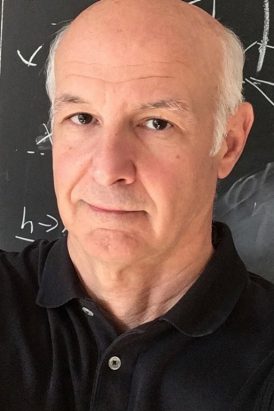 Dante Amidei合作论文数Department of Physics, College of Literature, Science, and the Arts, University of Michigan521
 Davit Chokheli合作论文数Georgian Technical University;Joint Institute for Nuclear Research521A. Anastassov合作论文数520
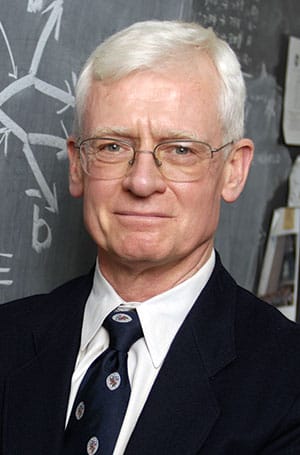 Bruce Barnett合作论文数William H. Miller III Department of Physics and Astronomy, Krieger School of Arts and Sciences, Johns Hopkins University520
 Bill Ashmanskas合作论文数Department of Physics & Astronomy, College of Arts & Sciences, University of Pennsylvania520
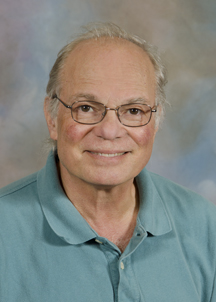 Arie Bodek合作论文数Department of Physics and Astronomy, School of Arts & Sciences, University of Rochester518Silvia Amerio合作论文数Liceo Statale Galileo Galilei;University of Padua517G. Bellettini合作论文数515
 Daniela Bortoletto合作论文数Department of Physics, University of Oxford513
 Massimo Casarsa合作论文数Istituto Nazionale di Fisica Nucleare512
 William F. Badgett Jr.合作论文数Fermi National Accelerator Laboratory510
 Julian Budagov合作论文数Joint Institute for Nuclear Research507
 Ray Culbertson合作论文数Fermi National Accelerator Laboratory506
 Giorgio Apollinari合作论文数Fermi National Accelerator Laboratory505
 Giorgio Chiarelli合作论文数Istituto Nazionale di Fisica Nucleare505
 Alison Lister合作论文数Department of Physics & Astronomy, Faculty of Science, The University of British Columbia501Andrew Beretvas合作论文数501
 Adrian Buzatu合作论文数U. Grundler, R.C. Group501
 Steven Errede合作论文数Department of Physics, The Grainger College of Engineering, University of Illinois Urbana-Champaign500A. Cerri合作论文数A.G. Clark500Rodolfo Carosi合作论文数498
 Alberto Annovi合作论文数INFN497
 Heather Kay Gerberich合作论文数On Point Technology, LLC496
 Ting Miao合作论文数Neutrino Physics Division, Fermi National Accelerator Laboratory496
 Michael S. Gold合作论文数Department of Physics and Astronomy, The University of New Mexico495I. Gorelov合作论文数495C. Grosso-Pilcher合作论文数495
 Javier Cuevas Maestro合作论文数Universidad de Oviedo;European Organization for Nuclear Research495M. Datta合作论文数495P. Catastini合作论文数Istituto Nazionale di Fisica Nucleare Pisa 56127 Pisa Italy495K. Goulianos合作论文数494S. M. Farrington合作论文数494R. Forrest合作论文数493G. Flanagan合作论文数493
 Luc Demortier合作论文数Laboratory of Experimental High Energy Physics, The Rockefeller University493
 Niccolò Moggi合作论文数Department of Industrial Engineering, University of Bologna492M. Hare合作论文数492
 Fabio Happacher合作论文数Istituto Nazionale di Fisica Nucleare491Franco Bedeschi合作论文数Istituto Nazionale di Fisica Nucleare Sezione di Pisa490
 Melissa Franklin合作论文数Department of Physics, Harvard University490B. Blumenfeld合作论文数490
 Joey W Huston合作论文数Department of Physics & Astronomy, College of Natural Science, Michigan State University489
 Satyajit Behari合作论文数Univar Solutions488Di Ruzza B合作论文数487S. Carrillo合作论文数486
 Anwar Bhatti合作论文数Department of Physics, College of Computer, Mathematical, & Natural Sciences, University of Maryland486K. Lannon合作论文数484




