This systematic review aims to identify and analyze factors affecting mental health among high‐achieving students through a comprehensive examination of personal, family, school, and social dimensions. Four electronic databases (PubMed, Web of Science, PsycINFO, and ERIC) were systematically searched through December 31, 2024, examining literature published between 2014 and 2024. Studies were included if they: (1) focused on students in the top 10% of academic performance through standardized measures or formal gifted identification; (2) examined mental health outcomes using validated instruments; (3) employed quantitative or mixed‐methods designs. We excluded qualitative‐only studies, dissertations, and conference abstracts. Study quality was assessed using established frameworks: STROBE for cross‐sectional studies, TREND for quasiexperimental designs, and MMAT for mixed‐methods studies, with triple independent review achieving high inter‐rater reliability. Data were synthesized using thematic synthesis guided by ecological systems theory, categorizing factors into personal, family, school, and social/contextual domains. After screening 931 articles and removing duplicates, 39 studies met the inclusion criteria. Analysis of 39 studies revealed perfectionism as the most extensively studied factor, with three distinct profiles identified: adaptive perfectionists, maladaptive perfectionists, and nonperfectionists. Maladaptive perfectionism consistently predicted elevated anxiety, depression, and emotional exhaustion, with effects moderated by cognitive flexibility and emotional intelligence. Significant cultural variations emerged—East Asian students demonstrated distinct academic pressure responses compared to Western contexts. Protective factors included cognitive flexibility, resilience, and family support; risk factors encompassed maladaptive perfectionism and achievement‐oriented parental psychological control. Key limitations include the predominance of cross‐sectional designs (approximately 62% of studies) limiting causal inference, geographic concentration in Western and East Asian contexts with underrepresentation of African and Latin American research, and English‐language restriction potentially excluding relevant non‐English studies. Educational institutions should implement comprehensive support systems that address both individual and environmental factors affecting high‐achieving students’ mental health, with particular attention to cultural contexts. Interventions should focus on enhancing protective factors while addressing risk factors through culturally sensitive approaches.
Based on the relevant framework of evolutionary geography, this article explores the direct effect of industrial diversification on urban economic resilience and its indirect effect on urban economic resilience through entrepreneurial spirit. The research finds that during the period from 2018 to 2023, cities with a stronger degree of industrial diversification demonstrated stronger economic resilience in the face of external shocks. Industrial diversification can not only disperse the risks from external shocks, but more importantly, it can stimulate entrepreneurial spirit, thereby promoting innovation and transformation in industries and enhancing the economic resilience of cities.
This article first selects the “Urban Statistical Yearbook” data of 264 prefecture-level cities in China from 2004 to 2018 as the raw data, and uses principal component analysis and the Wilson model to calculate the spatial information diffusion capacity of each prefecture-level city. The correlation analysis between industrial agglomeration, spatial information diffusion capacity, and urban economic resilience is verified, and this article provides reference materials for the specific application of principal component analysis and the Wilson model in urban economics.
Women remain under-represented in science, technology, engineering, and mathematics (STEM) careers worldwide, despite decades of effort to narrow the gender gap. Universities are expected to serve as gender equalizers in STEM education; however, it is still unclear whether university-led STEM programs provide women and men with equal access and comparable outcomes. Although prior research has examined factors shaping students’ STEM career commitment, limited attention has been given to gender differences in how these factors operate or to the mechanisms underlying such differences. Therefore, grounded in Social Cognitive Career Theory, this study investigates gender differences in the effects of university-led STEM program factors (course resources, research opportunities, mentoring quality, and peer interactions) on undergraduates’ STEM career commitment through the mediating roles of STEM professional self-efficacy and perceptions of STEM professionals. A nationwide survey was conducted with 19,108 undergraduate students from 39 leading universities across China. Analyses employing t tests, regression models, and multi-group structural equation modeling yielded three principal findings. First, students who participated in the university-led STEM program exhibited smaller gender disparities in STEM career commitment than their non-participating peers. Second, the influence of program-related factors on STEM career commitment differed significantly between men and women students. Third, gender differences emerged in the mediating roles of STEM professional self-efficacy and perceptions of STEM professionals in linking program-related factors to STEM career commitment. The findings underscore the pivotal role of university-led STEM program factors in fostering STEM career commitment among undergraduates while also revealing distinct gender-specific pathways. Notably, despite the under-representation of women students in the university-led STEM program, their levels of STEM career commitment were comparable to those of their men counterparts. Course resources and research opportunities were particularly beneficial for women students, whereas peer interactions exerted a stronger influence on men students. Mentoring quality emerged as equally valuable for both groups. For women students, STEM career commitment was more strongly shaped by course resources and research opportunities through the mediating effects of STEM professional self-efficacy and perceptions of STEM professionals. Conversely, men students’ STEM career commitment was more strongly influenced by peer interactions via their perceptions of STEM professionals. Overall, the results suggest that thoughtfully structured university-led STEM programs can act as powerful gender equalizers, promoting equitable pathways into STEM careers and contributing to the reduction of gender disparities.
Academic major selection is a critical decision-making process influenced by various socioeconomic factors. This study investigates the behavioral patterns in educational choices, focusing on the impact of urban-rural background and family cultural capital on college students’ major selection in China. Employing a mixed-methods approach, we analyzed data from a nationwide sample of 19,772 college students across various institution types. We constructed a major tendency index and applied logit regression models to examine the decision-making patterns of four distinct groups: rural first-generation, rural second-generation, urban first-generation, and urban second-generation college students. Our findings reveal significant behavioral differences in major selection across these groups. Urban students demonstrated a higher probability of choosing humanities and social sciences (OR = 1.260, 95% CI [1.166, 1.362], p < 0.001), while rural students were more inclined towards science, engineering, agricultural, and medical fields (OR = 1.080, 95% CI [1.003, 1.163], p < 0.05). Family cultural capital emerged as a crucial predictor of major choice behavior, with its influence path being relatively “concealed” compared to economic factors. Students from families with higher cultural capital showed a 32.4% increased likelihood of selecting humanities and social science majors (p < 0.001). Notably, the effect of cultural capital varied significantly across different tiers of universities (χ2 = 15.27, df = 2, p < 0.001). Our research contributes to the understanding of human decision-making behavior in educational contexts, highlighting the complex interplay between socioeconomic background, cultural capital, and academic choices. These findings have implications for behavioral economics, social cognition theory, and educational policy, offering insights into the mechanisms of social mobility and the perpetuation of educational inequalities.
We examined the results of a large-scale national survey of online secondary education in China. The online survey of 33,194 high school students and 5,667 teachers has provided comprehensive and representative data regarding the quality of online education and its implementation during the pandemic. Questionnaire surveys administered to students and teachers in different grades and comparative analysis of different cohorts revealed group heterogeneity of the online learning effect. The findings have elucidated the emergency teaching situation in China during the pandemic, yielding targeted suggestions for school education following the resumption of classes.
Attracting high-caliber students is a crucial goal in university development, and obtaining authoritative third-party quality disclosures may be an effective strategy. However, existing literature predominantly focuses on overall university rankings and lacks research on the vast higher education market in China. Utilizing a quasi-natural experiment opportunity provided by the disclosure of discipline rankings by the Chinese Ministry of Education, this study constructs a unique dataset comprising university admission information from 2014 to 2020, covering 1733 disciplines across 117 elite Chinese universities. Employing a two-way fixed effects model, the study empirically examines the impact of discipline rankings on university admission attractiveness. The results indicate that improvements in discipline rankings significantly enhance the appeal of universities to prospective students, while declines in rankings result in even greater losses. The findings remain robust across alternative specifications of core variables, additional control variables, and adjusted samples. Analysis of moderating mechanisms reveals that the impact of discipline rankings on attractiveness is significantly stronger for disciplines with higher reputations, while increases in information quality costs diminish the value of ranking information.
近年来我国硕士研究生教育规模持续增长,且专业学位硕士生规模已超过学术学位硕士生;专业学位和学术学位硕士研究生教育规模扩大对经济增长均有直接促进作用,且都有一定滞后性;两类硕士研究生教育均由技术创新、消费水平、人口素养、城镇化水平因素部分中介促经济增长作用,前者经消费水平因素、后者经技术创新因素传导了较多间接效应.更好发挥硕士研究生教育促进经济增长的作用,在稳步扩大规模的基础上,既要强化学术学位研究生教育的促进经济增长作用,也要进一步深化专业学位研究生教育的产教融合培养模式.
National higher education initiatives are government-led strategies designed to enhance university quality, international ranking, and competitiveness through targeted policy measures and investments. In order to improve human capital and global competitiveness, many countries worldwide such as China, Japan, Russia, and Germany have implemented national higher education initiatives in recent years. This study used panel data from the top universities in the QS ranking and ARWU ranking to evaluate the impact of these initiatives on university rankings using a Staggered Difference-in-Differences Model and explore the underlying reasons for heterogeneity in effectiveness across different regions and countries. It found that national higher education initiatives have a significant positive impact on universities’ rankings by improving 12.1 to 17.7 places in QS and ARWU rankings respectively. Compared to European universities, universities in Asia-Pacific region improved rankings more obviously. The findings suggest that developing countries can learn from the experiences of other countries in implementing national higher education initiatives and improving higher education quality through encouraging competitiveness while offering autonomy, optimizing higher education management model, enhancing regular quality evaluations, and dynamic withdrawal mechanism.
Vocational education is an important way to accumulate human capital. Human capital is the core element of economic growth and has huge positive externalities. Building a scientific and effective human capital development system is an important driving force to improve workers’ living standards and promote innovative development. Based on statistical techniques such as Lasso dimensionality reduction, stepwise regression, and partial least squares, as well as on the 2012–2016 China Labor Force Dynamics Survey (CLDS), this paper studies the impact of human capital on workers’ wage income and capital income, and establishes an income-determining equation that can be used for interpretation and forecasting. The empirical results show that education, professional skills, health, and communication ability are important components of human capital and are significantly positively correlated with income. China should build a good and effective human capital development system to increase workers’ income and narrow the income gap among residents.
This paper collects the data of 264 Prefecture-level city in China from 2012 to 2018, and uses the least square method, fixed effect analysis and GMM analysis to study the relationship between urban size, human capital and urban economic resilience. This paper analyzes the mechanism of human capital on urban economic resilience. This paper is a practical application of statistics in the field of economics of education.
基于全国高中在线学习状况调查数据,系统考察了普通高中在线教学师生互动和学生学业成绩变化的基本情况,并使用有序多分类逻辑回归模型重点分析在线教学师生互动质量对学业成绩变化的影响.结果表明,全国普通高中师生线上互动的整体状况尚佳,师生互动过程中教师参与度更高,学生的参与度相对较低.女生、城镇户口学生和高社会经济地位家庭子女在线教学中师生互动的水平更高.进一步研究发现,在线教学中师生互动水平的提升有助于显著提高高中学生的学业成绩.
在高等教育普及化背景下,博士入学机会的竞争日趋激烈.而导师指导作为学术型硕士研究生培养的重要途径,对其读博机会具有何种影响则是其中一个亟待回答的现实问题.基于2021年5—7月联合开展的"中国博士毕业生调查",采用二元Logit回归、组间回归系数差异检验以及中介效应检验方法进行研究后发现:导师指导频率、多导师制以及指导质量均对学术型硕士研究生的读博概率具有显著正向影响;影响效应在不同导师选择模式和不同学科间存在显著差异;机制分析结果表明,更多的科研论文发表和更高的科研能力增值是可能的影响路径.
对我国11个省份11066名高三学生在线学习的调查结果显示:我国高中学生对在线学习感到满意的比不满意的占比更高,其中男生、非农村户口学生、高社会经济地位家庭子女以及地级市高中学生的在线学习满意度相对更高;个人学习自主性和自我监控能力的提升对改善学生在线学习满意度尤为重要;家校关系和网络环境对高中生在线学习满意度的积极影响进一步扩大.线上教育应全面提升高中学生学习的主动性,帮助他们适应在线教学方式;继续加强在线教育网络建设,努力改善家校支持环境;重点加深师生对在线教育的认识,保障师生互动的质量.
通过对MPA研究生的学位论文质量状况及其影响因素进行调查分析,研究发现,虽然 MPA 学位论文质量总体状况较好,但是不同个体特征、院校特征、学习科研经历、论文选题来源和导师指导对研究生学位论文质量的影响存在显著性差异.从学位论文质量的影响因素来看,在导师指导方面,学术导师和实践导师的指导作用对研究生的学位论文质量具有显著性的正向影响;在学习和科研经历方面,与其他群体相比,入学前具有科研经历、读研期间参与过导师课题、论文选题来自读研期间所参与研究课题、班级同学学习积极性越高的研究生,其学位论文获得优秀评价的概率更大;在个体特征方面,就读于"双一流"建设高校的研究生、男性研究生、来自事业单位和国有企业的研究生,其学位论文获得优秀评价的概率更大.
硕士专业学位研究生教育作为培养高层次应用型专门人才的主渠道,其人才培养质量对于国民经济发展至关重要.采用北京市委教育工委联合北京大学教育学院在2016年进行的首都高校抽样调查数据,采用描述性统计、多元回归、中介效应模型等方法分析了学术融入和社交融入对硕士专业学位研究生就业起薪的影响.结果表明:第一,家庭经济状况较好、2年制学生、人文社会科学专业学生的学术融入和社交融入程度更高;第二,硕士专业学位研究生的学术融入和社交融入均对就业起薪具有显著正向影响,此外学生的就业起薪还受到性别、学制、家庭经济状况等因素的影响;第三,在学术融入和社交融入对就业起薪的影响路径中,专业能力和个人能力发挥了重要的中介作用.
Based on the national large-scale baseline survey data, using the method of propensity score matching and mediation model, this study explores the impact of students’ visual health on academic performance. Excessive academic burden will endanger the health of students’ vision. More time for homework, less time for exercise and sleep will cause myopia. There is no significant effect of myopia on academic achievement grade. The influence of family background on academic achievement is mainly through time allocation, especially homework, sleep and exercise time, rather than vision health. It is not advisable to improve students’ academic performance by sacrificing their visual health. Increasing exercise and sleep time can improve students’ academic performance and eyesight. Therefore, it is necessary to continue to strengthen the publicity of vision health, construction of family school community linkage prevention mechanism, improve the awareness of prevention and control of students and parents, establish a life cycle eye health system, implement the requirements of burden reduction, and allocate time reasonably.
研究生教育担负着"高端人才供给"和"科学技术创新"的双重使命.随着我国成为单年学术博士学位授予数量最多的国家,博士研究生教育对经济增长的作用愈发凸显.通过省际面板数据,基于博士学位授权点区域差异的视角,从规模和质量两个维度探究我国博士研究生教育对经济增长的影响及其作用机制发现,我国区域间博士学位授权点发展不均衡,呈现"东多西少"、"东强西弱"的特点.同时,博士学位授权点对经济增长影响存在区域差异,其中博士学位授权点质量对东部地区经济增长的作用更高,而博士学位授权点规模对中西部地区经济增长的作用更高.进一步分析发现,博士学位授权点通过提高消费水平、城镇化水平、创新水平等多种途径拉动区域经济增长,且不同区域的影响路径有所差异.鉴于此,博士学位授权点发展需要兼顾规模和质量,避免地区的"马太效应",并注重区域差异,构建与经济社会协调发展的学位点区域布局.
教学方法是教学过程的重要组成部分,教学方法的使用情况直接关系着教学目标能否顺利实现.为了检验案例教学方法对专业学位研究生实践能力发展是否起到了真实的促进作用,基于2020年全国公共管理硕士毕业生调查数据,采用倾向得分匹配法和有序逻辑斯蒂回归模型,对案例教学在公共管理硕士研究生教育中的使用和评价情况,以及案例教学对研究生实践能力发展可能存在的影响关系进行了探讨.研究发现,案例教学在公共管理硕士研究生教学中使用较为普遍,研究生对案例教学质量的评价较高;在控制了其他条件的情况下,与没有接受过案例教学的研究生相比,接受过案例教学的研究生在公共服务意识及能力、专业知识运用能力、决策能力、沟通协调能力、创新能力、应急能力等六种实践能力发展方面均有显著性提升,其中,案例教学对研究生决策能力的发展促进作用最大,对创新能力的发展促进作用最小;研究还证实案例教学的质量对研究生的能力发展具有显著的正向影响作用.
Promoting educational equity is essential for preventing intergenerational transmission of poverty,enhancing social mobility,and realizing common prosperity.Using nationwide survey data on graduate education quality,this study employs the Logit and Mediation Effect models to analyze how the high school backgrounds of students from prefecture-level cities and county-level regions impact their admission to master’s programs in “Double-First Class” universities.The results indicate that due to relatively weaker undergraduate school backgrounds,college students from county-level senior high schools are less likely to gain high-quality master’s program admission than their counterparts from prefecture-level city senior high schools.Moreover,the graduate entrance examination is the primary means for college students from county-level senior high schools to gain admission to master’s programs.It still indicates relative fairness and openness of the enrollment for graduate education in China,with a certain level of mobility among students from universities of different echelons.Undergraduate students who study at nonelite universities have a good chance of moving up to “Double-First Class” universities for master’s level studies through their efforts.After controlling for the type of undergraduate school,undergraduate students in “not DoubleFirst Class” universities from county-level senior high schools have a slight advantage in obtaining admission opportunities to high-quality master’s programs. The findings provide empirical evidence not only for comprehending how disparities in educational quality between county-level and prefecture-level city high schools affect higher education equity and long-term student development in China but also offer policy recommendations for promoting county-level education development,narrowing group disparities in admission opportunities to master’s programs,and advancing fairness in graduate admission opportunities.
 ChenChen Fang (方晨晨)合作论文数8ZhuZhu Xu (徐柱柱)合作论文数7
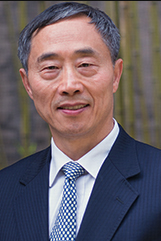 Weifang Min (闵维方)合作论文数National School of Development, Peking University;Institute of Economics of Education, Peking University6
 Xiaohao Ding (丁小浩)合作论文数Graduate School of Education, Peking University;Institute of Educational Economics, Peking University5
 Qiming Sun (孙启明)合作论文数School of Economics and Management, Beijing University of Posts and Telecommunications5Mengchao Guo (郭孟超)合作论文数4Liang Wang (王亮)合作论文数4
 Xiaowei Hao (郝晓伟)合作论文数Center for World-Class Universities, School of Education, Shanghai Jiao Tong University4Chenchen Fang合作论文数3Shoudeng Zhang (张首登)合作论文数3Hanwen Fu (傅翰文)合作论文数3Tian-jiao WANG (王天骄)合作论文数3boshen wan (万博绅)合作论文数2Jiaqi Wu (吴嘉琦)合作论文数2Jiaqi Wang (王家齐)合作论文数2Zhao Liu (刘钊)合作论文数2
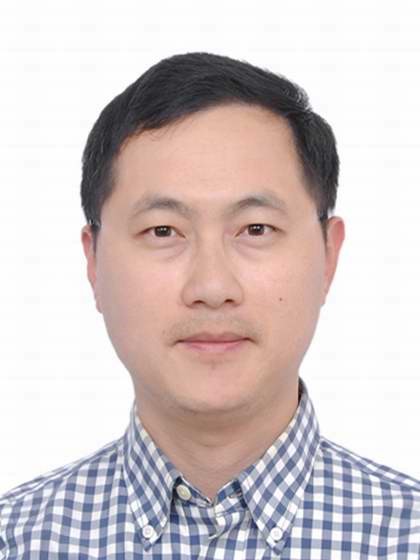 Youliang (张优良)合作论文数Faculty of Humanities and Social Sciences, Beijing University of Technology2Xi Yang合作论文数1yuzhi zhu (朱昱治)合作论文数1Kunzhao Kou合作论文数1Yu Zhang合作论文数1Yang li (杨莉)合作论文数1Xueheng Gao (高雪姮)合作论文数1Xia Yufeng (夏宇锋)合作论文数1Bo Qin (秦博)合作论文数1Yide Duan (段义德)合作论文数Business and Tourism SchooI, Sichuan Agricultural University1Huawei Hou (侯华伟)合作论文数1
 Hongjie Chen (陈洪捷)合作论文数Ningbo University1Yingjie Lin (林英杰)合作论文数1
 Jun Zhu (祝军)合作论文数Graduate School of Eduation, Beijing Foreign Studies University1Fei He (何菲)合作论文数1
 Mun C. Tsang合作论文数1




