Chips are hotter than ever! Presented at the 11th Hot Chips Symposium in August 1999 at Stanford University were a good number of chips that can execute many billions of operations per second. These are not expensive supercomputers used only in national laboratories and large companies. They are special-purpose chips used in communication and entertainment systems that are even more affordable and pervasive than PCs.
First Page of the Article
No abstract available.
Abstract MIPS is a new single chip VLSIprocessor,architecture. it attempts to achievehigh,performance,with the use of a simplified instruction set, similar to those found in microengines. The processor is a fast pipelined engine without pipeline interlocks. Software solutions to severaltraditional hardware problems, such as providing pipeline interlocks, are used. . Key Words and Phrases: Instruction set design, VLSI, computer architecture, pipelining,
MIPS is a new single chip VLSI microprocessor. It attempts to achieve high performance with the use of a simplified instruction set, similar to those found in microengines. The processor is a fast pipelined engine without pipeline interlocks. Software solutions to several traditional hardware problems, such as providing pipeline interlocks, are used.
Most new computer architectures are concerned with maximizing performance by providing suitable instruction sets for compiled code and providing support for systems functions. We argue that the most effective design methodology must make simultaneous tradeoffs across all three areas: hardware, software support, and systems support. Recent trends lean towards extensive hardware support for both the compiler and operating systems software. However, consideration of all possible design tradeoffs may often lead to less hardware support. Several examples of this approach are presented, including: omission of condition codes, word-addressed machines, and imposing pipeline interlocks in software. The specifics and performance of these approaches are examined with respect to the MIPS processor.
The Computer Systems Laboratory has been involved in a VLSI research program for one and a half years. The major areas under investigation have included: analysis and synthesis design aids, applications of VLSI to computer graphics, the design of a personal workstation, special purpose chip design, VLSI computer architectures, and hardware specification and verification. Progress on these research problems is discussed, and a research program for the next two years is proposed.
A frame buffer architecture is presented that reduces the overhead of frame buffer updating by three means. First, the bit-map memory is (x,y) addressable, whereby a string of pixels can be accessed in parallel. Second, the pixel-change operation is performed by hardware in a single read-modify-write cycle. Third, multiple objects in the frame buffer are addressable simultaneously by a set of address registers. The remaining task of generating (x,y) addresses and providing new data can be managed rapidly by current microprocessors or DMA-devices. With a modest expenditure of hardware, this architecture eliminates all the bit-shifting, bit-masking, and bit-manipulation conventionally associated with frame buffer graphics, while retaining the full generality of user-programmable control. The particular implementation described allows raster manipulation at full bit-map memory bandwidth. It can paint a 16×16 pixel character into the frame buffer in 16 microseconds and can modify a 1024×1024 pixel raster in 64 milliseconds.
This code generation technique for WHILE, FOR, and DO loops is simple to implement and usually results in the best loop code in the absence of flow analysis. Also the technique makes it possible to move code from inner loops without doing flow analysis and without ever moving code from a less frequently executed block to a more frequently executed block.
article More on microprocessors of the future Share on Author: Forest Baskett Los Alamos Scientific Laboratory, Los Alamos, New Mexico & Stanford University, Stanford, California Los Alamos Scientific Laboratory, Los Alamos, New Mexico & Stanford University, Stanford, CaliforniaView Profile Authors Info & Claims ACM SIGARCH Computer Architecture NewsVolume 6Issue 5December 1977 pp 14–17https://doi.org/10.1145/859412.859414Online:01 December 1977Publication History 1citation109DownloadsMetricsTotal Citations1Total Downloads109Last 12 Months0Last 6 weeks0 Get Citation AlertsNew Citation Alert added!This alert has been successfully added and will be sent to:You will be notified whenever a record that you have chosen has been cited.To manage your alert preferences, click on the button below.Manage my AlertsNew Citation Alert!Please log in to your account Save to BinderSave to BinderCreate a New BinderNameCancelCreateExport CitationPublisher SiteGet Access
This paper analyzes the memory interference caused by several processors simultaneously using several memory modules. Exact results are computed for a simple model of such a system. The limiting value is derived for the relative degree of memory interference as the system size increases. The model of the limiting behavior of the system yields approximate results for the simple model and also suggests that the results are valid for a much larger class of models, including those more nearly like real systems than the simple model. The assumptions and results of the simple model are tested against some measurements of program behavior and simulations of systems using memory references from real programs. The model results provide a good indication of the performance that should be expected from real systems of this type.
When the parameters of a simple stochastic model of the memory referencing behavior of computer programs are carefully selected, the model is able to mimic the paging behavior of a set of actual programs. The mimicry is successful using several different page replacement algorithms and a wide range of real memory sizes in a virtual memory environment. The model is based on the independent reference model with a new procedure for determining the page reference probabilities, the parameters of the model. We call the result the A0 inversion independent reference model. Since the fault rate (or miss ratio) is one aspect of program behavior that the model is able to capture for many different memory sizes, the model should be especially useful for evaluating multilevel memory organizations based on newly emerging memory technologies.
We have designed and built a computer terminal that provides low cost, high quality graphics and programmable text processing by taking advantage of the latest memory and microprocessor technology. A microprocessor control element allows most of the control functions to be programmed so that all of the control electronics require less than 100 integrated circuits. The graphic image is generated by a microprocessor which accepts vector commands intended for a Tektronix storage tube display terminal. The microprocessor maps those vector commands into a random access memory, and the resulting bit map of the graphic image is displayed on a standard TV monitor. Reasonable resolution in the graphic image requires a large number of bits in the bit map, but with the use of 4K memory chips, less than 100 integrated circuits are required for the bit map memory in our design. At 1975 small-quantity prices, the parts cost for the terminal is approximately $2000.
This article discusses the modeling and analysis of drum-like storage units. Two common forms of drum organizations and two common scheduling disciplines are considered: the file drum and the paging drum; first-in-first-out (FIFO) scheduling and shortest-latency-time-first (SLTF) scheduling. The modeling of the I/O requests to the drum is an important aspect of this analysis. Measurements are presented to indicate that it is realistic to model requests for records, or blocks of information to a file drum, as requests that have starting addresses uniformly distributed around the circumference of the drum and transfer times that are exponentially distributed with a mean of 1/2 to 1/3 of a drum revolution. The arrival of I/O requests is first assumed to be a Poisson process and then generalized to the case of a computer system with a finite degree of multiprogramming. An exact analysis of all the models except the SLTF file drum is presented; in this case the complexity of the drum organization has forced us to accept an approximate analysis. In order to examine the error introduced into the analysis of the SLTF file drum by our approximations, the results of the analytic models are compared to a simulation model of the SLTF file drum.
We derive the joint equilibrium distribution of queue sizes in a network of queues containing N service centers and R classes of customers. The equilibrium state probabilities have the general form: P(S) - Cd(S) $f_1$($x_1$)$f_2$($x_2$)...$f_N$($x_N$) where S is the state of the system, $x_i$ is the configuration of customers at the ith service center, d(S) is a function of the state of the model, $f_i$ is a function that depends on the type of the ith service center, and C is a normalizing constant. We consider four types of service centers to model central processors, data channels, terminals, and routing delays. The queueing disciplines associated with these service centers include first-come-first-served, processor sharing, no queueing, and last-come-first-served. Each customer belongs to a single class of customers while awaiting or receiving service at a service center but may change classes and service centers according to fixed probabilities at the completion of a service request. For open networks we consider state dependent arrival processes. Closed networks are those with no arrivals. A network may be closed with respect to some classes of customers and open with respect to other classes of customers. At three of the four types of service centers, the service times of customers are governed by probability distributions having rational Laplace transforms, different classes of customers having different distributions. At first-come-first-served type service centers the service time distribution must be identical and exponential for all classes of customers. Many of the network results of Jackson on arrival and service rate dependencies, of Posner and Bernholtz on different classes of customers, and of Chandy on different types of service centers are combined and extended in this paper. The results become special cases of the model presented here. An example shows how different classes of customers can affect models of computer systems. Finally, we show that an equivalent model encompassing all of the results involves only classes of customers with identical exponentially distributed service times. All of the other structure of the first model can be absorbed into the fixed probabilities governing the change of class and change of service center of each class of customers.
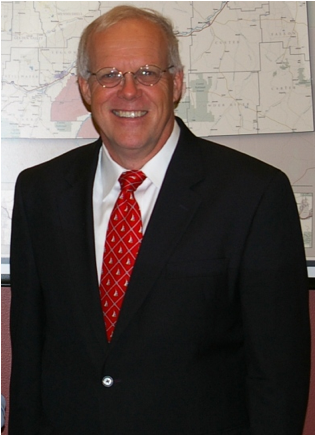 John L. Hennessy (约翰·轩尼诗)合作论文数Department of Electrical Engineering and Computer Science, Stanford University5
 John Gill合作论文数4
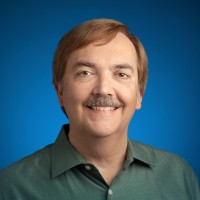 Norm Jouppi合作论文数Google4
 Thomas Gross合作论文数Department of Computer Science, Eidgenössische Technische Hochschule Zürich3Christopher Rowen合作论文数2
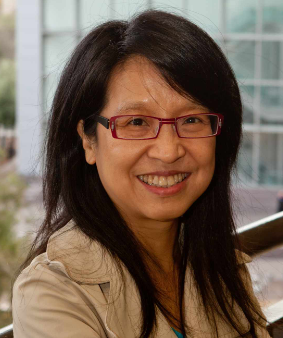 Monica S. Lam (林倩玲)合作论文数Department of Computer Science, Stanford University;Open Virtual Assistant Lab, Stanford University2Abbas Rafii合作论文数2judson s leonard合作论文数1D. Solomon合作论文数1T. A. Jermoluk合作论文数1Leonard J. Shustek合作论文数1Brian Reid合作论文数1
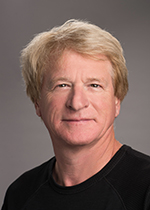 Jan M. Rabaey合作论文数Department of Electrical Engineering and Computer Sciences, University of California, Berkeley1James C Browne合作论文数1Kamal Malik合作论文数1
 Kanianthra M. (Mani) Chandy合作论文数Computing and Mathematical Sciences, Department, Division of Engineering and Applied Science, California Institute of Technology1Norris Parker Smith合作论文数1Kenneth Yeager合作论文数1
 James J. Clark合作论文数Department of Electrical and Computer Engineering, McGill University1
 Richard R. Muntz合作论文数Department of Computer Science, University of California, Los Angeles1David a Mrazek合作论文数1
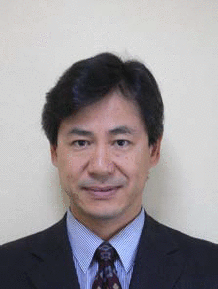 Fumio Arakawa合作论文数1Joel Tendler合作论文数1
 Susan Owicki合作论文数Strategic Technologies and Architectural Research Laboratory1Sean Mcgee合作论文数1Jim Greene合作论文数1Steven A. Przybylski合作论文数1
 Samuel H. Fuller合作论文数Analog Devices1David Sonnier合作论文数1Fernando G. Palacios合作论文数1Chuck Moore合作论文数1Michael Carchia合作论文数1Alex Strong合作论文数1Kevin Reick合作论文数1William M. Raike合作论文数1Roger Bailey合作论文数1
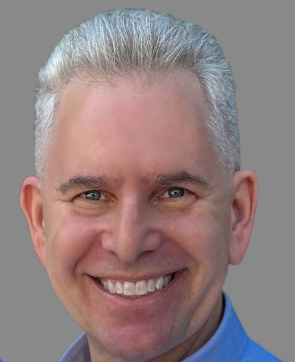 Stuart F. Oberman合作论文数NVIDIA1Jean Lan合作论文数1
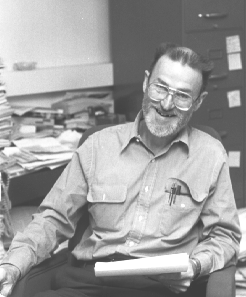 James Browne合作论文数CODE
POEMS1Mahdi Seddighnezhad合作论文数1
James Browne合作论文数CODE
POEMS1Mahdi Seddighnezhad合作论文数1




