A measurement of the spin alignment of charged D mesons produced in continuum ee → cc̄ events at √s = 10.5 GeV is presented. This study using 4.72 fb of CLEO II data shows that there is little evidence of any D spin alignment.
We have searched for the effective FCNC decays b → sl+l− using an inclusive method. We set upper limits on the branching ratios B(b → se+e−) < 5.7 × 10⁻⁵, B(b → sμ+μ−) < 5.8 × 10⁻⁵, and B(b → seμ) < 2.2 × 10⁻⁵ (at 90 % C.L.). Combining the di-electron and di-muon decay modes we find: B(b → sl+l−) < 4.2 × 10⁻⁵ (at 90 % C.L.).
The resonant structure of the four pion final state in the decay τ → 3ππντ is analyzed using 4.27 million τ+τ− pairs collected by the CLEO II experiment. We search for second class currents in the decay τ → ωπντ using spin-parity analysis and establish an upper limit on the non-vector current contribution. The mass and width of the ρ resonance are extracted from a fit to the τ → ωπντ spectral function. A partial wave analysis of the resonant structure of the τ → 3ππντ decay is performed; the spectral decomposition of the four pion system is dominated by the ωπ and a1π final states.
A study of charm fragmentation into D∗+ s and D + s in e +e− annihilations at √ s = 10.5 GeV is presented. This study using 4.72±0.05 fb−1 of CLEO II data reports measurements of the cross-sections σ(D∗+ s ) and σ(D + s ) in momentum regions above x = 0.44, where x is the Ds momentum divided by the maximum kinematically allowed Ds momentum. The Ds vector to vector plus pseudoscalar production ratio is measured to be PV (x(D + s ) > 0.44) = 0.44± 0.04.
We report results from a direct search for ? ! h ? (h ? = ? or K ?) using 3.1 f b ?1 of data collected with the CLEO II detector. We nd model-dependent upper limits on the branching fractions in the range: B(? !
Using a sample of 3.3×10⁶ B-meson decays collected with the CLEO detector at the Cornell Electron Storage Ring, we have studied B → D0l−ν̄ and B̄0 → D+l−ν̄ decays, where l can be either e or μ. We distinguish B → Dlν from other B semileptonic decays by examining the net momentum and energy of the particles recoiling against D − l pairs. We find Γ(B → Dlν) = (14.1±1.0±1.2) ns−1 and derive branching fractions for B → D0l−ν̄ and B̄0 → D+l−ν̄ of (2.32±0.17±0.20)% and (2.20±0.16±0.19)% respectively, where the uncertainties are statistical and systematic. We also investigate the B → Dlν form factor and the implication of the result for |Vcb|.
We have searched for the charmless hadronic decay of B-0 mesons into two neutral pions. Using 9.13 fb(-1) taken at the Y(4S) with the CLEO detector, we obtain an improved upper limit for the branching fraction B(B-0-->pi(0)pi(0)) < 5.7 x 10(-6) at the 90% confidence level.
We present a search for the ``wrong-sign'' decay D0 -> K+ pi- pi+ pi- using 9 fb-1 of e+e- collisions on and just below the Upsilon(4S) resonance. This decay can occur either through a doubly Cabibbo-suppressed process or through mixing to a D0bar followed by a Cabibbo-favored process. Our result for the time-integrated wrong-sign rate relative to the decay D0 -> K- pi+ pi- pi+ is (0.0041 +0.0012-0.0011(stat.) +-0.0004(syst.))x(1.07 +-0.10)(phase space), which has a statistical significance of 3.9 standard deviations.
Using 13.6 fb of continuum two-jet e+e− → cc events collected with the CLEO detector, we have searched for baryon number correlations at the primary quark level. We have measured the likelihood for a Λc charmed baryon to be produced in the hemisphere opposite a Λc − relative to the likelihood for a Λc charmed baryon to be produced opposite an anticharmed meson D; in all cases, the reconstructed hadrons must have momentum greater than 2.3 GeV/c. We find that, given a Λc − (reconstructed in five different decay modes), a Λc is observed in the opposite hemisphere (0.72 ± 0.11)% of the time (not corrected for efficiency). By contrast, given a D in one hemisphere, a Λc is observed in the opposite hemisphere only (0.21± 0.02)% of the time. Normalized to the total number of either Λc − or D “tags”, it is therefore 3.52±0.45±0.42 times more likely to find a Λc opposite a Λc − than a D meson. This enhancement is not observed in the JETSET 7.3 e+e− → cc Monte Carlo simulation. 13.30.-a, 13.60.Rj, 13.65.+i, 14.20.Lq Typeset using REVTEX
Using 12.7 fb{sup -1} of data collected with the CLEO detector at CESR, we observed two-photon production of the c{bar c} states {chi}{sub c0} and {chi}{sub c2} in their decay to {pi}{sup +}{pi}{sup -}{pi}{sup +}{pi}{sup -} . We measured {Gamma}{sub {gamma}{gamma}}({chi}{sub c}) x B({chi}{sub c}{yields}{pi}{sup +}{pi}{sup -}{pi}{sup +}{pi}{sup - }) to be 75{+-}13(stat){+-}8(syst) eV for the {chi}{sub c0} and 6.4{+-}1.8(stat){+-}0.8( syst) eV for the {chi}{sub c2} , implying {Gamma}{sub {gamma}{gamma}}({chi}{sub c0})=3.76{+-}0.65(stat){+-} 0.41(syst){+-}1.69(br) keV and {Gamma}{sub {gamma}{gamma}}({chi}{sub c2})=0.53{+-}0.15(stat){+-} 0.06(syst){+-}0.22(br) keV . Also, cancellation of dominant experimental and theoretical uncertainties permits a precise comparison of {Gamma}{sub {gamma}{gamma}}({chi}{sub c0})/{Gamma}{sub {gamma}{gamma}}({chi}{sub c2}) , evaluated to be 7.4{+-}2.4(stat){+-}0.5( syst){+-}0.9(br) , with QCD-based predictions.
We analyze 9.7x10(6) B_B pairs recorded with the CLEO detector to determine the production ratio of charged to neutral B-meson pairs produced at the Upsilon(4S) resonance. We measure the rates for B0-->J/psiK((*)0) and B+-->J/psiK((*)+) decays and use the world-average B-meson lifetime ratio to extract the relative widths f(+-) / f(00) = gamma(Upsilon(4S)-->B+B-) / gamma(Upsilon(4S)-->B0 B-0)) = 1.04+/-0.07(stat)+/-0.04(syst). With the assumption that f(+-)+f(00) = 1, we obtain f(00) = 0.49+/-0.02(stat)+/-0.01(syst) and f(+-) = 0.51+/-0.02(stat)+/-0.01(syst). This production ratio and its uncertainty apply to all exclusive B-meson branching fractions measured at the Upsilon(4S) resonance.
We search for CP nonconservation in the decays of tau leptons produced via e(+)e(-) annihilation at roots similar to 10.6 GeV. The method uses correlated decays of pairs of tau leptons, each decaying to the pi pi (0)nu (tau) final state. The search is done within the framework of a model with a scalar boson exchange. In an analysis of a data sample corresponding to 12.2 x 10(6) produced tau pairs collected with the CLEO detector, we find no evidence of violation of CP symmetry, We obtain a limit on the imaginary part of the coupling constant parametrizing the relative contribution of diagrams that would lead to CP violation to be -0.046)<0.022 at 90% C.L This result provides a restriction on CP nonconservation in tau lepton decays. As a cross-check, we study the decay angular distribution and perform a model-independent search for a CP violation effect of a scalar exchange in single --> pi (0)nu (tau) decays. The limit on the imaginary part of the tau scalar coupling is -0.033 )<0.089 at 90% C.L.
We have searched for the two-body decay of the B meson to a light pseudoscalar meson h = π±,K±,K0 S and a massless neutral weakly-interacting particle X0 such as the familon, the Nambu-Goldstone boson associated with a spontaneously broken global family symmetry. We find no significant signal by analyzing a data sample containing 9.7 million BB̄ mesons collected with the CLEO detector at the Cornell Electron Storage Ring, and set a 90% C.L. upper limit of 4.9 × 10⁻⁵ and 5.3 × 10⁻⁵ on the branching fraction for the decays B → h±X0 and B0 → K0 S X0, respectively. These upper limits correspond to a lower bound of ≈ 108 GeV on the family symmetry breaking scale involving the third generation of quarks.
Using a sample of 4.7 ${\mathrm{fb}}^{\ensuremath{-}1}$ integrated luminosity accumulated with the CLEO II detector at the Cornell Electron Storage Ring (CESR), we investigate the mass spectrum and resonant structure in ${\ensuremath{\tau}}^{\ensuremath{-}}\ensuremath{\rightarrow}{K}^{\ensuremath{-}}{\ensuremath{\pi}}^{+}{\ensuremath{\pi}}^{\ensuremath{-}}{\ensuremath{\nu}}_{\ensuremath{\tau}}$ decays. We measure the relative fractions of ${K}_{1}(1270)$ and ${K}_{1}(1400)$ resonances in these decays, as well as the ${K}_{1}$ masses and widths. Our fitted ${K}_{1}$ resonances are somewhat broader than previous hadroproduction measurements, and in agreement with recent CERN LEP results from tau decay. The larger central value of our measured width supports models which attribute the small ${\ensuremath{\tau}}^{\ensuremath{-}}\ensuremath{\rightarrow}{K}^{\ensuremath{-}}{\ensuremath{\pi}}^{+}{\ensuremath{\pi}}^{\ensuremath{-}}{\ensuremath{\nu}}_{\ensuremath{\tau}}$ branching fraction to larger ${K}_{1}$ widths than are presently tabulated. We also determine the ${K}_{a}{\ensuremath{-}K}_{b}$ mixing angle ${\ensuremath{\theta}}_{K}.$
We have studied charmless hadronic decays of B mesons into two-body final states with kaons and pions and observe three new processes with the following branching fractions: B(B → ππ) = (4.3 −1.4±0.5)×10 , B(B → Kπ) = (14.6 −5.1−3.3) × 10 , and B(B → Kπ) = (11.6 −2.7−1.3) × 10 . We also update our previous measurements for the decays B → Kπ and B → Kπ.
We determine the CKM matrix element |Vcb| using a sample of 3.33 million BB̄ events in the CLEO detector at CESR. We determine the yield of reconstructed B → D∗+lν decays as a function of w = vB · vD∗ , and from this we obtain the differential decay rate dΓ/dw. By extrapolating dΓ/dw to w = 1, the kinematic point at which the D is at rest relative to the B, we extract the product |Vcb|F (1), where F (1) is the form factor at w = 1 and is predicted accurately by theory. We find F (1)|Vcb| = 0.0424±0.0018(stat.)±0.0019(syst.). We also integrate the differential decay rate over w to obtain B(B → D∗+lν) = (5.66 ± 0.29 ± 0.33)%. All results are preliminary. . . . . . . . . . . . . . . . . . . . . . . . . . . . . . . . . . . . . . . . . . . . . . . . . . . . . . . . . . . . . . . . . . . . . . . . . . . . . . . . . . . . . . . . . . . . Submitted to XXXth International Conference on High Energy Physics, July 2000, Osaka, Japan
Based on a sample of approximately 500 000 hadronic Z(o) decays accumulated between 1993 and 1998, the SLD experiment has set limits on 24 fully charged two-body and quasi-two-body exclusive charmless hadronic decays of B(+), B(o), and B(s)(o) mesons. The precise tracking capabilities of the SLD detector provided for the efficient reduction of combinatoric backgrounds, yielding the most precise available limits for ten of these modes.
We report results of a search for the rare radiative decay B̄0 → Dγ. Using 9.66 × 10 BB̄ meson pairs collected with the CLEO detector at the Cornell Electron Storage Ring, we set an upper limit on the branching ratio for this decay of 5.0×10 at 90% CL. This provides evidence that anomalous enhancement is absent in W -exchange processes and that weak radiative B decays are dominated by the short-distance b → sγ mechanism in the Standard
 B. Eisenstein合作论文数119V. Cook合作论文数92G. Blaylock合作论文数82TH Burnett合作论文数79C. Simopoulos合作论文数79R. Cassell合作论文数77
 Terry L. Schalk合作论文数Division of Physical & Biological Sciences, Department of Physics, University of California, Santa Cruz;Santa Cruz Institute for Particle Physics, University of California, Santa Cruz74T. Bolton合作论文数74
 Gerald Eigen合作论文数Department of Physics and Technology, University of Bergen72William J. Wisniewski合作论文数72
 Abraham Seiden合作论文数Santa Cruz Institute for Particle Physics, University of California, Santa Cruz;Department of Physics, University of California, Santa Cruz71a wattenberg合作论文数69Rh Schindler合作论文数67
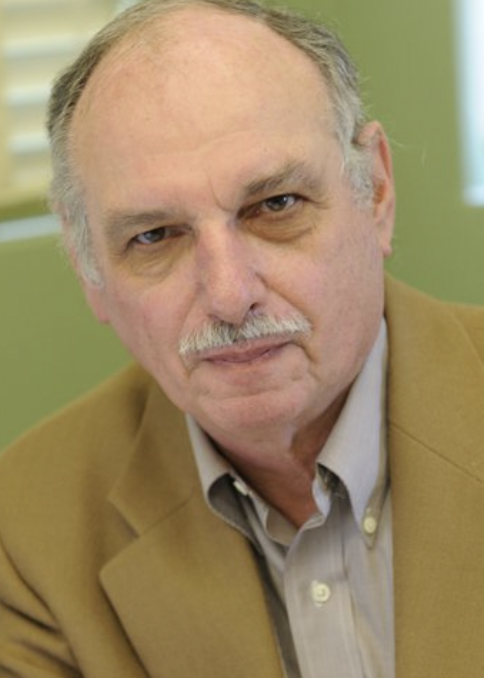 David Hitlin合作论文数Division of Physics Mathematics and Astronomy, California Institute of Technology63Paul M Mockett合作论文数62J.J. Russell合作论文数60
 Inga Karliner合作论文数59D. Coffman合作论文数58M. Scarlatella合作论文数56Allen Odian合作论文数56
 Hartmut Sadrozinski合作论文数Santa Cruz Institute for Particle Physics, Science Division, University of California Santa Cruz;Physics Department, University of California Santa Cruz53W. Toki合作论文数52R. Messner合作论文数51F. Villa合作论文数49Roger M Partridge合作论文数49
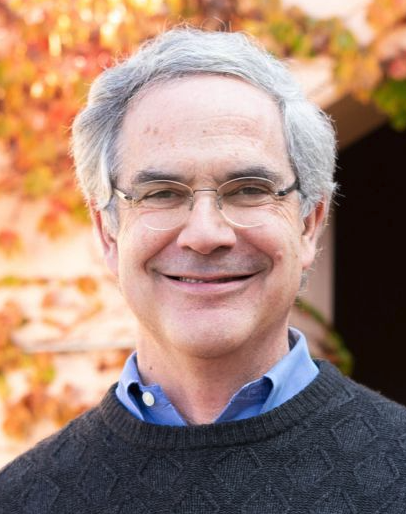 Jeffrey D. Richman合作论文数Physics Department, University of California, Santa Barbara48D. Wisinski合作论文数47B. Nemati合作论文数47B. Tripsas合作论文数44J. Thaler合作论文数University of Illinois at Urbana–Champaign44
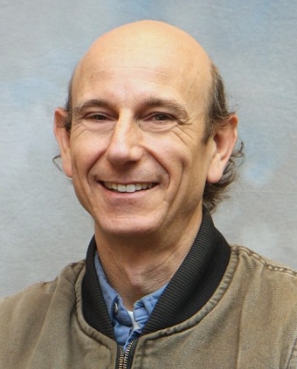 Joseph M. Izen合作论文数Department of Physics, School of Natural Sciences and Mathematics, The University of Texas at Dallas43A. Szumilo合作论文数42A. Weinstein合作论文数42
 Alice L. Bean合作论文数Department of Physics & Astronomy, College of Liberal Arts & Sciences, University of Kansas42Martin Breidenbach合作论文数Stanford Linear Accelerator Center42R. Elia合作论文数42O. H. Saxton合作论文数42M. Kalelkar合作论文数41P. Rensing合作论文数41
 Philip Burrows合作论文数Department of Physics, University of Oxford;Jesus College, University of Oxford41R. Ben-David合作论文数41P. Stamer合作论文数41R. Cotton合作论文数41R. Dubois合作论文数41R. Kajikawa合作论文数41D. Calloway合作论文数41S. Hedges合作论文数41H. Kawahara合作论文数41T. Usher合作论文数40




