On a very fundamental level, particle detectors share similar requirements for their read-out chain. This is reflected in the way that typical read-out solutions are developed, where a previous design is taken and modified to fit some changes in requirements. One of the two common approaches is the current-based read-out, where the waveform of the sensor output is sampled in order to later extract information from there. This approach is used in many detector applications using scintillation based detectors, including PET. With this contribution, we will introduce how we use Matlab in order to simulate the read-out electronics of particle detectors. We developed this simulation approach as a base for our ongoing development of software-defined read-out ASICs that cover the requirements of a variety of particle detector types. Simulink was chosen as a base for our developments as it allows simulation of mixed-signal systems and comes with built-in toolkits to aid in developments of such systems. With our approach, we want to take a new look at how we approach designing such a read-out, with a focus on digital signal processing close to the sensor, making use of known signal characteristics and modern methods of communications engineering. We are taking into account the time profile of an event, the bandwidth-limiting properties of the sensor and attached electronics, digitization stages and finally the parameterization of approaches for digital processing of the signal. We will show how we are applying the design approach to the development of a read-out for the proposed SHiP SBT detector, which is a scintillation based detector relying on SiPMs sensors, using this as an example for our modelling approach and show preliminary results.
We present the design and performance (i.e., position and time resolution) of a 25 × 25 cm^2 extruded scintillator plate with embedded wavelength-shifting fibers that are read out by silicon photomultipliers. The detector can serve as the main building block of sampling calorimeters and muon trackers for future particle and nuclear-physics experiments. We show that our prototype can record the position of a particle interaction point in two dimensions with a resolution of better than 6 mm and determine the time of the interaction with a precision of better than 800 ps. We also explore its limitations and identify approaches for improving the performance of future detectors based on the same design principle.
After rapid approval and installation, the SND@LHC Collaboration was able to gather data successfully in 2022 and 2023. Neutrino interactions from νμs originating at the LHC IP1 were observed. Since muons constitute the major background for neutrino interactions, the muon flux entering the acceptance was also measured. To improve the rejection power of the detector and to increase the fiducial volume, a third Veto plane was recently installed. The energy resolution of the calorimeter system was measured in a test beam. This will help with the identification of νe interactions that can be used to probe charm production in the pseudo-rapidity range of SND@LHC (7.2 < η < 8.4). Events with three outgoing muons have been observed and are being studied. With no vertex in the target, these events are very likely from muon trident production in the rock before the detector. Events with a vertex in the detector could be from trident production, photon conversion, or positron annihilation. To enhance SND@LHC’s physics case, an upgrade is planned for HL-LHC that will increase the statistics and reduce the systematics. The installation of a magnet will allow the separation of νμ from ν¯μ
The Scattering and Neutrino Detector at the LHC (\SND) started taking data at the beginning of Run 3 of the LHC. The experiment is designed to perform measurements with neutrinos produced in proton-proton collisions at the LHC in an energy range between 100GeV and 1 TeV. It covers a previously unexplored pseudo-rapidity range of $7.2<\eta<8.4$. The detector is located 480 m downstream of the ATLAS interaction point in the TI18 tunnel. It comprises a veto system, a target consisting of tungsten plates interleaved with nuclear emulsion and scintillating fiber (SciFi) trackers, followed by a muon detector (UpStream, US and DownStream, DS). In this article we report the measurement of the muon flux in three subdetectors: the emulsion, the SciFi trackers and the DownStream Muon detector. The muon flux per integrated luminosity through an 18$\times$18 cm$^{2}$ area in the emulsion is $1.5 \pm 0.1(\textrm{stat}) \times 10^4\,\textrm{fb/cm}^{2}$. The muon flux per integrated luminosity through a 31$\times$31 cm$^{2}$ area in the centre of the SciFi is $2.06\pm0.01(\textrm{stat})\pm0.12(\textrm{sys}) \times 10^{4} \textrm{fb/cm}^{2}$. The muon flux per integrated luminosity through a 52$\times$52 cm$^{2}$ area in the centre of the downstream muon system is $2.35\pm0.01(\textrm{stat})\pm0.10(\textrm{sys}) \times 10^{4}\,\textrm{fb/cm}^{2}$. The total relative uncertainty of the measurements by the electronic detectors is 6 $\%$ for the SciFi and 4 $\%$ for the DS measurement. The Monte Carlo simulation prediction of these fluxes is 20-25 $\%$ lower than the measured values.
Using the entire BABAR gamma(4S) dataset, the first two-dimensional unbinned angular analysis of the semileptonic decay (B) over bar -> Dl(-)(v) over bar (l) is performed, employing hadronic reconstruction of the tag-side B meson from gamma(4S) -> B (B) over bar. Here, l denotes the light charged leptons e and mu. Anovel data-driven signal-background separation procedure with minimal dependence on simulation is developed. This procedure preserves all multidimensional correlations present in the data. The expected sin(2) theta(l) dependence of the differential decay rate in the Standard Model is demonstrated, where theta(l) is the lepton helicity angle. Including input from the latest lattice QCD calculations and previously available experimental data, the underlying form factors are extracted using both model-independent (BGL) and dependent (CLN) methods. Comparisons with lattice calculations show flavor SU(3) symmetry to be a good approximation in the B-(s) -> D-(s) sector. Using the BGL results, the CKM matrix element vertical bar V-cb vertical bar = (41.09 +/- 1.16) x 10(-3) and the Standard Model prediction of the lepton-flavor universality violation variable R(D) = 0.300 +/- 0.004, are extracted. The value of vertical bar V-cb vertical bar from (B) over bar -> Dl(-)(v) over bar (l) tends to be higher than that extracted using (B) over bar -> Dl(-)(v) over bar (l). The Standard Model R(D) calculation is at a 1.97 sigma tension with the latest HFLAV experimental average.
SND@LHC, Scattering and Neutrino Detector at the LHC, is a compact experiment designed to perform measurements with neutrinos produced at the LHC in the unexplored pseudo-rapidity region of 7.2 < \eta η < 8.4, complementary to all the other experiments at the LHC. The experiment was approved in March 2021. It was constructed in about one year and it is now taking data during the Run 3 of the LHC. In this paper we review the detector concept, the physics case and the status of the data taking.
As a prototype detector for the SHiP Surrounding Background Tagger (SBT), we constructed a cell (120 cm x 80 cm x 25 cm) made from corten steel that is filled with liquid scintillator (LS) composed of linear alkylbenzene (LAB) and 2,5-diphenyloxazole (PPO). The detector is equipped with two Wavelength-shifting Optical Modules (WOMs) for light collection of the primary scintillation photons. Each WOM consists of an acrylic tube that is dip-coated with a wavelength-shifting layer on its surface. Via internal total reflection, the secondary photons emitted by the molecules of the wavelength shifter are guided to a ring-shaped array of 40 silicon photomultipliers (SiPMs) coupled to the WOM for light detection. The granularity of these SiPM arrays provides an innovative method to gain spatial information on the particle crossing point. Several improvements in the detector design significantly increased the light yield with respect to earlier proof-of-principle detectors. We report on the performance of this prototype detector during an exposure to high-energy positrons at the DESY II test beam facility by measuring the collected integrated yield and the signal time-of-arrival in each of the SiPM arrays. The resulting detection efficiency and reconstructed energy deposition of the incident positrons are presented, as well as the spatial and time resolution of the detector. These results are then compared to Monte Carlo simulations.
The proposed upgrade of the SND@LHC experiment for the High Luminosity phase of the LHC (HL-LHC) will strongly benefit from the presence of a magnetized region, allowing for muon momentum and charge measurement. In this paper we describe an iron core magnet system that is partly integrated with the calorimeter and that is designed to respect the strict constraints from the available space in the experimental cavern, power consumption, and field requirements. Semi-analytical tools are introduced to explore the parameter space, in order to define the primary design options. A full 3-D analysis is then performed in order to validate the optimal choice, and to propose a conceptual design, including sizing of the components, detector performances and stray fields. Several technical options are also discussed, anticipating the design phase.
The SHiP-charm project was proposed to measure the associated charm production induced by 400 GeV/c protons in a thick target, including the contribution from cascade production. An optimisation run was performed in July 2018 at CERN SPS using a hybrid setup. The high resolution of nuclear emulsions acting as vertex detector was complemented by electronic detectors for kinematic measurements and muon identification. Here we present first results on the analysis of nuclear emulsions exposed in the 2018 run, which prove the capability of reconstructing proton interaction vertices in a harsh environment, where the signal is largely dominated by secondary particles produced in hadronic and electromagnetic showers within the lead target.
The breakdown voltage of silicon sensors is known to be affected by the ambient humidity. To understand the sensor’s humidity sensitivity, Synopsys TCAD was used to simulate n-in-p sensors for different effective relative humidities. Photon emission of hot electrons was imaged with a microscope to locate breakdown in the edge-region of the sensor. The Top-Transient Current Technique was used to measure charge transport near the surface in the breakdown region of the sensor. Using the measurements and simulations, the evolution of the electric field with relative humidity and the carrier densities towards breakdown in the periphery of p-bulk silicon sensors are investigated.
We studied the light yield of a pure polystyrene slide coated with wavelength-shifter molecules, coupled to a photomultiplier, using β - particles from a 90 Sr source, as a possible easy-to-build, low-cost plastic scintillator detector. Comparison measurements were performed with an uncoated polystyrene slide as well as with uncoated and coated PMMA slides, the latter which can only produce Cherenkov light when being traversed by charged particles. The results with the single (double) coated polystyrene slides show about 4.9 (6.3) times higher detected photon yield compared to the uncoated slide. For comparison, the light yield of a polystyrene-based extruded plastic scintillator material doped with PTP and POPOP was measured as well. The absolute detected light yield motivates future studies for developing easy-to-build, low-cost polystyrene-based plastic scintillator detectors.
We study the processes e+e- -> K+K-a degrees a degrees a degrees y, K degrees SK +/- a -/+ a degrees a degrees y, and K degrees SK +/- a -/+ a+a-y in which an energetic photon is radiated from the initial state. The data were collected with the BABAR detector at the SLAC National Accelerator Laboratory. About 1200, 2600, and 6000 events, respectively, are selected from a data sample corresponding to an integrated luminosity of 469 fb-1. The invariant mass of the hadronic final state defines the effective e+e- center-of-mass energy. The center-of-mass energies range from threshold to 4.5 GeV. From the mass spectra, the first ever measurements of the e+e- -> K+K-a degrees a degrees a degrees, e+e- -> K degrees SK +/- a -/+ a degrees a degrees, and e+e- -> K degrees SK +/- a -/+ a+a- cross sections are performed. The contributions from the intermediate states that include eta, phi, rho, K*(892), and other resonances are presented. We observe the J=psi and psi(2S) in most of these final states and measure the corresponding branching fractions, many of them for the first time.
A new mechanism has been proposed to simultaneously explain the presence of dark matter and the matter-antimatter asymmetry in the universe. This scenario predicts exotic $B$ meson decays into a baryon and a dark sector anti-baryon ($\psi_D$) with branching fractions accessible at $B$ factories. We present a search for $B \rightarrow \Lambda \psi_D$ decays using data collected by the $BABAR$ experiment at SLAC. This reaction is identified by fully reconstructing the accompanying $B$ meson and requiring the presence of a single $\Lambda$ baryon in the remaining particles. No significant signal is observed, and bounds on the $B \rightarrow \Lambda \psi_D$ branching fraction are derived in the range $0.13 - 5.2\times 10^{-5}$ for $1.0 < m_{\psi_D} < 4.2$ GeV/$c^{2}$. These results set strong constraints on the parameter space allowed by the theory.
We study the processes ${e}^{+}{e}^{\ensuremath{-}}\ensuremath{\rightarrow}{K}^{+}{K}^{\ensuremath{-}}{\ensuremath{\pi}}^{0}{\ensuremath{\pi}}^{0}{\ensuremath{\pi}}^{0}\ensuremath{\gamma}$, ${K}_{S}^{0}{K}^{\ifmmode\pm\else\textpm\fi{}}{\ensuremath{\pi}}^{\ensuremath{\mp}}{\ensuremath{\pi}}^{0}{\ensuremath{\pi}}^{0}\ensuremath{\gamma}$, and ${K}_{S}^{0}{K}^{\ifmmode\pm\else\textpm\fi{}}{\ensuremath{\pi}}^{\ensuremath{\mp}}{\ensuremath{\pi}}^{+}{\ensuremath{\pi}}^{\ensuremath{-}}\ensuremath{\gamma}$ in which an energetic photon is radiated from the initial state. The data were collected with the BABAR detector at the SLAC National Accelerator Laboratory. About 1200, 2600, and 6000 events, respectively, are selected from a data sample corresponding to an integrated luminosity of $469\text{ }\text{ }{\mathrm{fb}}^{\ensuremath{-}1}$. The invariant mass of the hadronic final state defines the effective ${e}^{+}{e}^{\ensuremath{-}}$ center-of-mass energy. The center-of-mass energies range from threshold to 4.5 GeV. From the mass spectra, the first ever measurements of the ${e}^{+}{e}^{\ensuremath{-}}\ensuremath{\rightarrow}{K}^{+}{K}^{\ensuremath{-}}{\ensuremath{\pi}}^{0}{\ensuremath{\pi}}^{0}{\ensuremath{\pi}}^{0}$, ${e}^{+}{e}^{\ensuremath{-}}\ensuremath{\rightarrow}{K}_{S}^{0}{K}^{\ifmmode\pm\else\textpm\fi{}}{\ensuremath{\pi}}^{\ensuremath{\mp}}{\ensuremath{\pi}}^{0}{\ensuremath{\pi}}^{0}$, and ${e}^{+}{e}^{\ensuremath{-}}\ensuremath{\rightarrow}{K}_{S}^{0}{K}^{\ifmmode\pm\else\textpm\fi{}}{\ensuremath{\pi}}^{\ensuremath{\mp}}{\ensuremath{\pi}}^{+}{\ensuremath{\pi}}^{\ensuremath{-}}$ cross sections are performed. The contributions from the intermediate states that include $\ensuremath{\eta}$, $\ensuremath{\phi}$, $\ensuremath{\rho}$, ${K}^{*}(892)$, and other resonances are presented. We observe the $J/\ensuremath{\psi}$ and $\ensuremath{\psi}(2S)$ in most of these final states and measure the corresponding branching fractions, many of them for the first time.
Using the entire BaBar Υ(4S) data set, the first two-dimensional unbinned angular analysis of the semileptonic decay B→ D ℓ^- ν_ℓ is performed, employing hadronic reconstruction of the tag-side B meson from Υ(4S)→ BB. Here, ℓ denotes the light charged leptons e and μ. A novel data-driven signal-background separation procedure with minimal dependence on simulation is developed. This procedure preserves all multi-dimensional correlations present in the data. The expected sin^2θ_ℓ dependence of the differential decay rate in the Standard Model is demonstrated, where θ_ℓ is the lepton helicity angle. Including input from the latest lattice QCD calculations and previously available experimental data, the underlying form factors are extracted using both model-independent (BGL) and dependent (CLN) methods. Comparisons with lattice calculations show flavor SU(3) symmetry to be a good approximation in the B_(s)→ D_(s) sector. Using the BGL results, the CKM matrix element |V_cb|=(41.09± 1.16)× 10^-3 and the Standard Model prediction of the lepton-flavor universality violation variable ℛ(D)=0.300± 0.004, are extracted. The value of |V_cb| from B→ D ℓ^- ν_ℓ tends to be higher than that extracted using B→ D ℓ^- ν_ℓ. The Standard Model ℛ(D) calculation is at a 1.97σ tension with the latest HFLAV experimental average.
A dedicated measurement of additional radiation in e+e- -> mu+mu- gamma and e+e- -> pi+ pi- gamma initial-state radiation events is presented using the full BABAR data sample. For the first time results are presented at next -to-and next-to-next-to-leading order, with one and two additional photons, respectively, for radiation from the initial and final states. Comparison with predictions from PHOKHARA and AFKQED Monte Carlo generators is performed, revealing discrepancies in the one-photon rates and angular distributions for the former. This disagreement has a negligible effect on the BABAR measurement of the e+e- -> pi+ pi-(gamma) cross section, but could affect other measurements significantly. This study sheds a new light on the longstanding discrepancy in this channel that affects the theoretical prediction of hadronic vacuum polarization contributions to the muon magnetic moment anomaly.
A new dark sector antibaryon, denoted ψ_{D}, could be produced in decays of B mesons. This Letter presents a search for B^{+}→ψ_{D}+p (and the charge conjugate) decays in e^{+}e^{-} annihilations at 10.58 GeV, using data collected in the BABAR experiment. Data corresponding to an integrated luminosity of 398 fb^{-1} are analyzed. No evidence for a signal is observed. Branching fraction upper limits in the range from 10^{-7}-10^{-5} are obtained at 90% confidence level for masses of 1.0<m_{ψ_{D}}<4.3 GeV/c^{2}. The result is also reinterpreted to provide the first limits on a supersymmetric model with R-parity violation and a light neutralino.
A dedicated measurement of additional radiation in $e^+e^-\to\mu^+\mu^-\gamma$ and $e^+e^-\to\pi^+\pi^-\gamma$ initial-state-radiation events is presented using the full BABAR data sample. For the first time results are presented at next-to- and next-to-next-to-leading order, with one and two additional photons, respectively, for radiation from the initial and final states. Comparison with predictions from Phokhara and AfkQed Monte Carlo generators is performed, revealing discrepancies in the one-photon rates and angular distributions for the former. This disagreement has a negligible effect on the BABAR measurement of the $e^+e^-\to\pi^+\pi^-(\gamma)$ cross section, but could affect other measurements significantly. This study sheds a new light on the longstanding discrepancy in this channel that affects the theoretical prediction of hadronic vacuum polarization contributions to the muon magnetic moment anomaly.
We present a new technique, "tau polarimetry," for measuring the longitudinal beam polarization present in an e(+)e(-) collider through the analysis of e(+)e(-) -> tau(+)tau(-) events. By exploiting the sensitivity of tau decay kinematics to the longitudinal polarization of the beams, we demonstrate that the longitudinal polarization can be measured with a 3 per mil systematic uncertainty at the interaction point using a technique that is independent of spin and beam transport modeling. Using 424.2 +/- 1.8 fb(-1) of BABAR data at root s = 10.58 GeV, the average longitudinal polarization of the PEP-II e(+)e(-) collider has been measured to be < P > = 0.0035 +/- 0.0024(stat) +/- 0.0029(sys). The systematic uncertainty studies are described in detail, which can serve as a guide for future applications of tau polarimetry. A proposed e(-) beam longitudinal polarization upgrade to the SuperKEKB e(+)e(-) collider would benefit from this technique.
We report the direct observation of muon neutrino interactions with the SND@LHC detector at the Large Hadron Collider. A dataset of proton-proton collisions at sqrt[s]=13.6 TeV collected by SND@LHC in 2022 is used, corresponding to an integrated luminosity of 36.8 fb^{-1}. The search is based on information from the active electronic components of the SND@LHC detector, which covers the pseudorapidity region of 7.2<η<8.4, inaccessible to the other experiments at the collider. Muon neutrino candidates are identified through their charged-current interaction topology, with a track propagating through the entire length of the muon detector. After selection cuts, 8 ν_{μ} interaction candidate events remain with an estimated background of 0.086 events, yielding a significance of about 7 standard deviations for the observed ν_{μ} signal.
 Gerald Eigen合作论文数Department of Physics and Technology, University of Bergen1127
 James Cochran合作论文数Department of Physics and Astronomy, College of Liberal Arts and Sciences, Iowa State University1107
 Glen Cowan合作论文数Centre for Particle Physics and Astronomy, Department of Physics, Royal Holloway, University of London1073
 Fabio Anulli合作论文数Istituto Nazionale di Fisica Nucleare1071
 Blair Ratcliff合作论文数SLAC National Accelerator Laboratory;Stanford University1064
 S. Passaggio合作论文数1052
 Masahiro Morii合作论文数Department of Physics, Harvard University1045
 Bjarne Sandvik Stugu合作论文数Department of Physics and Technology University of Bergen1044J. Ocariz合作论文数1042Serednyakov Sergey Ivanovich合作论文数Budker Institute of Nuclear Physics, Siberian Division, Russian Academy of Sciences1039
 Roger Barlow合作论文数School of Computing and Engineering, University of Huddersfield1036
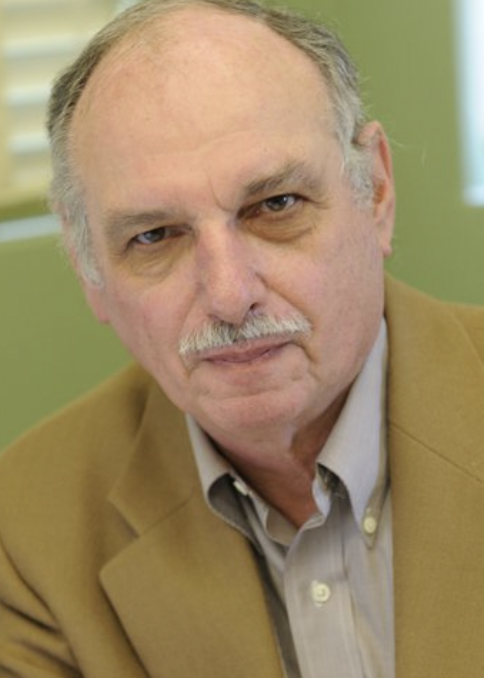 David Hitlin合作论文数Division of Physics Mathematics and Astronomy, California Institute of Technology1028
 Lucien Cremaldi合作论文数Department of Physics and Astronomy, University of Mississippi1024T. S. Mattison合作论文数1023G. Finocchiaro合作论文数1022
 Frank C. Porter合作论文数The Division of Physics, Mathematics and Astronomy, California Institute of Technology1019
 Gr Bonneaud合作论文数University of Paris1015
 A. V. Gritsan合作论文数Johns Hopkins University1015
 David Leith合作论文数Stanford Linear Accelerator Center1011George Lafferty合作论文数School of Physics and Astronomy, The University of Manchester1011
 Bill Lockman合作论文数Santa Cruz Institute for Particle Physics, Department of Physics, University of California, Santa Cruz1003
 Francesca Di Lodovico合作论文数Department of Physics, Faculty of Natural, Mathematical & Engineering Sciences, King’s College London1003
 Terry L. Schalk合作论文数Division of Physical & Biological Sciences, Department of Physics, University of California, Santa Cruz;Santa Cruz Institute for Particle Physics, University of California, Santa Cruz998Erwin Gabathuler合作论文数University of Liverpool996
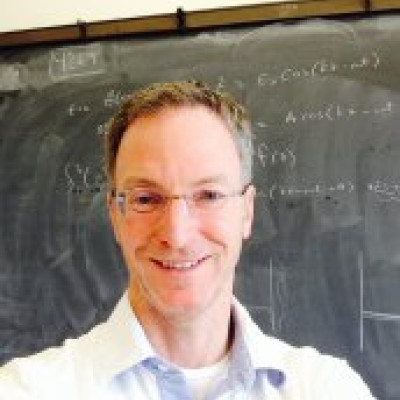 Carlo Dallapiccola合作论文数Department of Physics, College of Natural Sciences, University of Massachusetts Amherst995
 Concezio Bozzi合作论文数Istituto Nazionale di Fisica Nucleare Sezione di Ferrara986
 Adrian Bevan合作论文数School of Physical and Chemical Sciences, Queen Mary University of London;CERN985
 Andrew J. Lankford合作论文数Department of Physics & Astronomy, School of Physical Sciences, University of California, Irvine984
 Bruce Schumm合作论文数Physical & Biological Sciences Division, Physics Department, University of California, Santa Cruz;Santa Cruz Institute for Particle Physics, University of California, Santa Cruz982Gilbert Grosdidier合作论文数Laboratoire de l'Accélérateur Linéaire, Institut National de Physique Nucléaire et de Physique des Particules977Evgeny Solodov合作论文数977
 Fernando Palombo合作论文数Department of Physics, University of Milan976M. Verderi合作论文数974
 Christopher Hearty合作论文数Department of Physics & Astronomy, Faculty of Science, The University of British Columbia970O. Long合作论文数968G. Lynch合作论文数Lawrence Berkeley National Laboratory968J. Chauveau合作论文数967S. Prell合作论文数966
 Michel Davier合作论文数Université Paris-Saclay964
 Claudio Campagnari合作论文数Physics Department, University of California Santa Barbara;CERN962L. Piemontese合作论文数962
 Abraham Seiden合作论文数Santa Cruz Institute for Particle Physics, University of California, Santa Cruz;Department of Physics, University of California, Santa Cruz957
 Romulus Godang合作论文数Department of Physics, College of Arts and Sciences, University of South Alabama;University of Mississippi956
 Rolf Dubitzky合作论文数CARIAD955
 j a mckenna合作论文数University of British Columbia952
 Antimo Palano合作论文数University of Bari950
 Tim Adye合作论文数Particle Physics Department, Rutherford Appleton Laboratory948Am Eisner合作论文数947D. Bernard合作论文数945




