SBND is the near detector of the Short-Baseline Neutrino program at Fermilab. Its location near to the Booster Neutrino Beam source and relatively large mass will allow the study of neutrino interactions on argon with unprecedented statistics. This paper describes the expected performance of the SBND photon detection system, using a simulated sample of beam neutrinos and cosmogenic particles. Its design is a dual readout concept combining a system of 120 photomultiplier tubes, used for triggering, with a system of 192 X-ARAPUCA devices, located behind the anode wire planes. Furthermore, covering the cathode plane with highly-reflective panels coated with a wavelength-shifting compound recovers part of the light emitted towards the cathode, where no optical detectors exist. We show how this new design provides a high light yield and a more uniform detection efficiency, an excellent timing resolution and an independent 3D-position reconstruction using only the scintillation light. Finally, the whole reconstruction chain is applied to recover the temporal structure of the beam spill, which is resolved with a resolution on the order of nanoseconds.
The ProtoDUNE-SP detector is a single-phase liquid argon time projection chamber (LArTPC) that was constructed and operated in the CERN North Area at the end of the H4 beamline. This detector is a prototype for the first far detector module of the Deep Underground Neutrino Experiment (DUNE), which will be constructed at the Sandford Underground Research Facility (SURF) in Lead, South Dakota, USA. The ProtoDUNE-SP detector incorporates full-size components as designed for DUNE and has an active volume of 7× 6× 7.2 m^3. The H4 beam delivers incident particles with well-measured momenta and high-purity particle identification. ProtoDUNE-SP's successful operation between 2018 and 2020 demonstrates the effectiveness of the single-phase far detector design. This paper describes the design, construction, assembly and operation of the detector components.
The Deep Underground Neutrino Experiment (DUNE), a 40-kton underground liquid argon time projection chamber experiment, will be sensitive to the electron-neutrino flavor component of the burst of neutrinos expected from the next Galactic core-collapse supernova. Such an observation will bring unique insight into the astrophysics of core collapse as well as into the properties of neutrinos. The general capabilities of DUNE for neutrino detection in the relevant few- to few-tens-of-MeV neutrino energy range will be described. As an example, DUNE's ability to constrain the $\nu_e$ spectral parameters of the neutrino burst will be considered.
This report describes the conceptual design of the DUNE near detector
In liquid argon time projection chambers exposed to neutrino beams and running on or near surface levels, cosmic muons, and other cosmic particles are incident on the detectors while a single neutrino-induced event is being recorded. In practice, this means that data from surface liquid argon time projection chambers will be dominated by cosmic particles, both as a source of event triggers and as the majority of the particle count in true neutrino-triggered events. In this work, we demonstrate a novel application of deep learning techniques to remove these background particles by applying deep learning on full detector images from the SBND detector, the near detector in the Fermilab Short-Baseline Neutrino Program. We use this technique to identify, on a pixel-by-pixel level, whether recorded activity originated from cosmic particles or neutrino interactions.
The Deep Underground Neutrino Experiment (DUNE) will be a powerful tool for a variety of physics topics. The high-intensity proton beams provide a large neutrino flux, sampled by a near detector system consisting of a combination of capable precision detectors, and by the massive far detector system located deep underground. This configuration sets up DUNE as a machine for discovery, as it enables opportunities not only to perform precision neutrino measurements that may uncover deviations from the present three-flavor mixing paradigm, but also to discover new particles and unveil new interactions and symmetries beyond those predicted in the Standard Model (SM). Of the many potential beyond the Standard Model (BSM) topics DUNE will probe, this paper presents a selection of studies quantifying DUNE's sensitivities to sterile neutrino mixing, heavy neutral leptons, non-standard interactions, CPT symmetry violation, Lorentz invariance violation, neutrino trident production, dark matter from both beam induced and cosmogenic sources, baryon number violation, and other new physics topics that complement those at high-energy colliders and significantly extend the present reach.
We report an observation of new bottom baryons produced in p (cid:1) p collisions at the Tevatron. Using 1 : 1 fb (cid:2) 1 of data collected by the CDF II detector, we observe four (cid:2) 0 b (cid:1) (cid:3) resonances in the fully reconstructed decay mode (cid:2) 0 b ! (cid:2) (cid:4) c (cid:1) (cid:2) , where (cid:2) (cid:4) c ! pK (cid:2) (cid:1) (cid:4) . We interpret these states as the (cid:3) (cid:5)(cid:1)(cid:6)(cid:3) b baryons and measure the following masses: m (cid:3) (cid:4) b (cid:7) 5807 : 8 (cid:4) 2 : 0 (cid:2) 2 : 2 (cid:5) stat : (cid:6) (cid:3) 1 : 7 (cid:5) syst : (cid:6) MeV =c 2 , m (cid:3)
ColdADC is a low-noise 16-channel analog-to-digital converter ASIC designed for cold readout electronics of Liquid Argon Time Projection Chambers (LArTPCs) in the Deep Underground Neutrino Experiment (DUNE). ColdADC was specifically designed for operation at cryogenic temperatures (77 K–89 K). Cold electronics is considered to be an enabling technology for liquid argon detectors in neutrino experiments. The main function of the chip is to digitize signals from the 16-channel charge-sensitive amplifier designed at BNL (LArASIC) and send digitized signals to the data aggregator and serializer chip (COLDATA). ColdADC operates with a resolution of 12 bits and a sampling rate of 2 MS/s per channel. A complete characterization of prototype chips was conducted at cryogenic temperature, involving power consumption, noise and linearity performance. In the first DUNE Far-Detector module, 384000 data channels will be read out, corresponding to 24000 ColdADC chips. Therefore, systematic testing of ColdADC chips at cryogenic temperature is vital for the quality and reliability of DUNE Single-Phase modules. We have developed a Quality Control (QC) test stand that includes ColdADC evaluation and characterization at cryogenic temperature. The QC procedure was applied to a first batch of 33 chips, corresponding to 528 data channels. The obtained results meet all the required DUNE specifications for ColdADC. Moreover, the testing outcome allowed us to identify possibilities of performance optimization that are currently being addressed in the design of the next version of the chip. The Quality Control procedure is proved to be successful and will be a reference design for future large-batch production testing of final ColdADC ASICs.
The ProtoDUNE-SP detector is a large-scale prototype of the Single-Phase (SP) Liquid Argon Time Projection Chamber (LArTPC) design proposed for the Deep Underground Neutrino Experiment (DUNE). 15,360 LArTPC wires are instrumented with low electronic noise pre-amplifier and digitization ASICs integrated into Front End Motherboards (FEMBs) operating at cryogenic temperature within the cryostat. The large number of electronics channels and high performance specifications required a large-scale production electronics quality control effort, careful installation into Anode Plane Assemblies (APAs), and rigorous detector commissioning. This successful collaboration-wide effort achieved a working LArTPC electronics channel percentage of 99.7% (15,318 of 15,360 channels in total), whose operating performance exceeded expectations. We summarize the ProtoDUNE-SP cold electronics design and quality control, installation, and commissioning efforts that enabled this excellent electronics performance.
The ProtoDUNE-SP detector is a single-phase liquid argon time projection chamber with an active volume of 7.2× 6.1× 7.0 m3. It is installed at the CERN Neutrino Platform in a specially-constructed beam that delivers charged pions, kaons, protons, muons and electrons with momenta in the range 0.3 GeV/c to 7 GeV/c. Beam line instrumentation provides accurate momentum measurements and particle identification. The ProtoDUNE-SP detector is a prototype for the first far detector module of the Deep Underground Neutrino Experiment, and it incorporates full-size components as designed for that module. This paper describes the beam line, the time projection chamber, the photon detectors, the cosmic-ray tagger, the signal processing and particle reconstruction. It presents the first results on ProtoDUNE-SP's performance, including noise and gain measurements, dE/dx calibration for muons, protons, pions and electrons, drift electron lifetime measurements, and photon detector noise, signal sensitivity and time resolution measurements. The measured values meet or exceed the specifications for the DUNE far detector, in several cases by large margins. ProtoDUNE-SP's successful operation starting in 2018 and its production of large samples of high-quality data demonstrate the effectiveness of the single-phase far detector design.
The preponderance of matter over antimatter in the early universe, the dynamics of the supernovae that produced the heavy elements necessary for life, and whether protons eventually decay—these mysteries at the forefront of particle physics and astrophysics are key to understanding the early evolution of our universe, its current state, and its eventual fate. The Deep Underground Neutrino Experiment (DUNE) is an international world-class experiment dedicated to addressing these questions as it searches for leptonic charge-parity symmetry violation, stands ready to capture supernova neutrino bursts, and seeks to observe nucleon decay as a signature of a grand unified theory underlying the standard model. The DUNE far detector technical design report (TDR) describes the DUNE physics program and the technical designs of the single- and dual-phase DUNE liquid argon TPC far detector modules. This TDR is intended to justify the technical choices for the far detector that flow down from the high-level physics goals through requirements at all levels of the Project. Volume I contains an executive summary that introduces the DUNE science program, the far detector and the strategy for its modular designs, and the organization and management of the Project. The remainder of Volume I provides more detail on the science program that drives the choice of detector technologies and on the technologies themselves. It also introduces the designs for the DUNE near detector and the DUNE computing model, for which DUNE is planning design reports. Volume II of this TDR describes DUNE's physics program in detail. Volume III describes the technical coordination required for the far detector design, construction, installation, and integration, and its organizational structure. Volume IV describes the single-phase far detector technology. A planned Volume V will describe the dual-phase technology.
The preponderance of matter over antimatter in the early universe, the dynamics of the supernovae that produced the heavy elements necessary for life, and whether protons eventually decay—these mysteries at the forefront of particle physics and astrophysics are key to understanding the early evolution of our universe, its current state, and its eventual fate. The Deep Underground Neutrino Experiment (DUNE) is an international world-class experiment dedicated to addressing these questions as it searches for leptonic charge-parity symmetry violation, stands ready to capture supernova neutrino bursts, and seeks to observe nucleon decay as a signature of a grand unified theory underlying the standard model. The DUNE far detector technical design report (TDR) describes the DUNE physics program and the technical designs of the single- and dual-phase DUNE liquid argon TPC far detector modules. This TDR is intended to justify the technical choices for the far detector that flow down from the high-level physics goals through requirements at all levels of the Project. Volume I contains an executive summary that introduces the DUNE science program, the far detector and the strategy for its modular designs, and the organization and management of the Project. The remainder of Volume I provides more detail on the science program that drives the choice of detector technologies and on the technologies themselves. It also introduces the designs for the DUNE near detector and the DUNE computing model, for which DUNE is planning design reports. Volume II of this TDR describes DUNE's physics program in detail. Volume III describes the technical coordination required for the far detector design, construction, installation, and integration, and its organizational structure. Volume IV describes the single-phase far detector technology. A planned Volume V will describe the dual-phase technology.
The preponderance of matter over antimatter in the early universe, the dynamics of the supernovae that produced the heavy elements necessary for life, and whether protons eventually decay—these mysteries at the forefront of particle physics and astrophysics are key to understanding the early evolution of our universe, its current state, and its eventual fate. The Deep Underground Neutrino Experiment (DUNE) is an international world-class experiment dedicated to addressing these questions as it searches for leptonic charge-parity symmetry violation, stands ready to capture supernova neutrino bursts, and seeks to observe nucleon decay as a signature of a grand unified theory underlying the standard model. The DUNE far detector technical design report (TDR) describes the DUNE physics program and the technical designs of the single- and dual-phase DUNE liquid argon TPC far detector modules. Volume III of this TDR describes how the activities required to design, construct, fabricate, install, and commission the DUNE far detector modules are organized and managed. This volume details the organizational structures that will carry out and/or oversee the planned far detector activities safely, successfully, on time, and on budget. It presents overviews of the facilities, supporting infrastructure, and detectors for context, and it outlines the project-related functions and methodologies used by the DUNE technical coordination organization, focusing on the areas of integration engineering, technical reviews, quality assurance and control, and safety oversight. Because of its more advanced stage of development, functional examples presented in this volume focus primarily on the single-phase (SP) detector module.
The preponderance of matter over antimatter in the early universe, the dynamics of the supernovae that produced the heavy elements necessary for life, and whether protons eventually decay -- these mysteries at the forefront of particle physics and astrophysics are key to understanding the early evolution of our universe, its current state, and its eventual fate. DUNE is an international world-class experiment dedicated to addressing these questions as it searches for leptonic charge-parity symmetry violation, stands ready to capture supernova neutrino bursts, and seeks to observe nucleon decay as a signature of a grand unified theory underlying the standard model. The DUNE far detector technical design report (TDR) describes the DUNE physics program and the technical designs of the single- and dual-phase DUNE liquid argon TPC far detector modules. Volume II of this TDR, DUNE Physics, describes the array of identified scientific opportunities and key goals. Crucially, we also report our best current understanding of the capability of DUNE to realize these goals, along with the detailed arguments and investigations on which this understanding is based. This TDR volume documents the scientific basis underlying the conception and design of the LBNF/DUNE experimental configurations. As a result, the description of DUNE's experimental capabilities constitutes the bulk of the document. Key linkages between requirements for successful execution of the physics program and primary specifications of the experimental configurations are drawn and summarized. This document also serves a wider purpose as a statement on the scientific potential of DUNE as a central component within a global program of frontier theoretical and experimental particle physics research. Thus, the presentation also aims to serve as a resource for the particle physics community at large.
The preponderance of matter over antimatter in the early universe, the dynamics of the supernovae that produced the heavy elements necessary for life, and whether protons eventually decay—these mysteries at the forefront of particle physics and astrophysics are key to understanding the early evolution of our universe, its current state, and its eventual fate. DUNE is an international world-class experiment dedicated to addressing these questions as it searches for leptonic charge-parity symmetry violation, stands ready to capture supernova neutrino bursts, and seeks to observe nucleon decay as a signature of a grand unified theory underlying the standard model. Central to achieving DUNE's physics program is a far detector that combines the many tens-of-kiloton fiducial mass necessary for rare event searches with sub-centimeter spatial resolution in its ability to image those events, allowing identification of the physics signatures among the numerous backgrounds. In the single-phase liquid argon time-projection chamber (LArTPC) technology, ionization charges drift horizontally in the liquid argon under the influence of an electric field towards a vertical anode, where they are read out with fine granularity. A photon detection system supplements the TPC, directly enhancing physics capabilities for all three DUNE physics drivers and opening up prospects for further physics explorations. The DUNE far detector technical design report (TDR) describes the DUNE physics program and the technical designs of the single- and dual-phase DUNE liquid argon TPC far detector modules. Volume IV presents an overview of the basic operating principles of a single-phase LArTPC, followed by a description of the DUNE implementation. Each of the subsystems is described in detail, connecting the high-level design requirements and decisions to the overriding physics goals of DUNE.
This paper is based on a talk given at Computing in High Energy Physics in Adelaide, South Australia, Australia in November 2019. It is partially intended to explain the context of DUNE Computing for computing specialists. The Deep Underground Neutrino Experiment (DUNE) collaboration consists of over 180 institutions from 33 countries. The experiment is in preparation now, with commissioning of the first 10kT fiducial volume Liquid Argon TPC expected over the period 2025-2028 and a long data taking run with 4 modules expected from 2029 and beyond. An active prototyping program is already in place with a short test-beam run with a 700T, 15,360 channel prototype of single-phase readout at the Neutrino Platform at CERN in late 2018 and tests of a similar sized dual-phase detector scheduled for mid-2019. The 2018 test-beam run was a valuable live test of our computing model. The detector produced raw data at rates of up to 2GB/s. These data were stored at full rate on tape at CERN and Fermilab and replicated at sites in the UK and Czech Republic. In total 1.2 PB of raw data from beam and cosmic triggers were produced and reconstructed during the six week test-beam run. Baseline predictions for the full DUNE detector data, starting in the late 2020's are 30-60 PB of raw data per year. In contrast to traditional HEP computational problems, DUNE's Liquid Argon TPC data consist of simple but very large (many GB) 2D data objects which share many characteristics with astrophysical images. This presents opportunities to use advances in machine learning and pattern recognition as a frontier user of High Performance Computing facilities capable of massively parallel processing.
The Deep Underground Neutrino Experiment is a next-generation neutrino oscillation experiment that aims to measure CP-violation in the neutrino sector as part of a wider physics program. A deep learning approach based on a convolutional neural network has been developed to provide highly efficient and pure selections of electron neutrino and muon neutrino charged-current interactions. The electron neutrino (antineutrino) selection efficiency peaks at 90% (94%) and exceeds 85% (90%) for reconstructed neutrino energies between 2-5 GeV. The muon neutrino (antineutrino) event selection is found to have a maximum efficiency of 96% (97%) and exceeds 90% (95%) efficiency for reconstructed neutrino energies above 2 GeV. When considering all electron neutrino and antineutrino interactions as signal, a selection purity of 90% is achieved. These event selections are critical to maximize the sensitivity of the experiment to CP-violating effects.
The DUNE IDR describes the proposed physics program and technical designs of the DUNE Far Detector modules in preparation for the full TDR to be published in 2019. It is intended as an intermediate milestone on the path to a full TDR, justifying the technical choices that flow down from the high-level physics goals through requirements at all levels of the Project. These design choices will enable the DUNE experiment to make the ground-breaking discoveries that will help to answer fundamental physics questions. Volume 1 contains an executive summary that describes the general aims of this document. The remainder of this first volume provides a more detailed description of the DUNE physics program that drives the choice of detector technologies. It also includes concise outlines of two overarching systems that have not yet evolved to consortium structures: computing and calibration. Volumes 2 and 3 of this IDR describe, for the single-phase and dual-phase technologies, respectively, each detector module's subsystems, the technical coordination required for its design, construction, installation, and integration, and its organizational structure.
We present a novel application of Fiber Bragg Grating (FBG) sensors in the construction and characterisation of Micro Pattern Gaseous Detector (MPGD), with particular attention to the realisation of the largest triple (Gas electron Multiplier) GEM chambers so far operated, the GE1/1 chambers of the CMS experiment at LHC. The GE1/1 CMS project consists of 144 GEM chambers of about 0.5 m2 active area each, employing three GEM foils per chamber, to be installed in the forward region of the CMS endcap during the long shutdown of LHC in 2108-2019. The large active area of each GE1/1 chamber consists of GEM foils that are mechanically stretched in order to secure their flatness and the consequent uniform performance of the GE1/1 chamber across its whole active surface. So far FBGs have been used in high energy physics mainly as high precision positioning and re-positioning sensors and as low cost, easy to mount, low space consuming temperature sensors. FBGs are also commonly used for very precise strain measurements in material studies. In this work we present a novel use of FBGs as flatness and mechanical tensioning sensors applied to the wide GEM foils of the GE1/1 chambers. A network of FBG sensors have been used to determine the optimal mechanical tension applied and to characterise the mechanical tension that should be applied to the foils. We discuss the results of the test done on a full-sized GE1/1 final prototype, the studies done to fully characterise the GEM material, how this information was used to define a standard assembly procedure and possible future developments.
The CMS Collaboration plans to equip the very forward muon system with triple-GEM detectors that can withstand the environment of the High-Luminosity LHC. This project is at the final stages of R&D and moving to production. An unprecedented large area of several 100 m2 are to be instrumented with GEM detectors which will be produced in six different sites around the world. A common construction and quality control procedure is required to ensure the performance of each detector. The quality control steps will include optical inspection, cleaning and baking of all materials and parts used to build the detector, leakage current tests of the GEM foils, high voltage tests, gas leak tests of the chambers and monitoring pressure drop vs. time, gain calibration to know the optimal operation region of the detector, gain uniformity tests, and studying the efficiency, noise and tracking performance of the detectors in a cosmic stand using scintillators.
 K. Goulianos合作论文数605
 Tommaso Dorigo合作论文数Italian Institute for Nuclear Physics;University of Padova605K. Burkett合作论文数604
 Daniela Bortoletto合作论文数Department of Physics, University of Oxford600T. Kamon合作论文数599
 Dario Bisello合作论文数Department of Physics and Astronomy "Galileo Galilei", University of Padova597
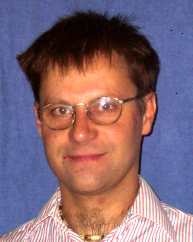 Pawel De Barbaro合作论文数Department of Physics and Astronomy, School of Arts and Sciences, University of Rochester;CERN597
 Kaori Maeshima合作论文数Fermi National Accelerator Laboratory596
 Frank Chlebana合作论文数CMS Department, Fermi National Accelerator Laboratory596
 Arie Bodek合作论文数Department of Physics and Astronomy, School of Arts & Sciences, University of Rochester595
 Giorgio Apollinari合作论文数Fermi National Accelerator Laboratory594B. Blumenfeld合作论文数594
 Matthew Herndon合作论文数Department of Physics, University of Wisconsin–Madison593
 Luc Demortier合作论文数Laboratory of Experimental High Energy Physics, The Rockefeller University591
 C. Bromberg合作论文数Michigan State University, USA591
 Jacobo Konigsberg合作论文数Institute for High Energy Physics and Astrophysics, University of Florida;Department of Physics, College of Liberal Arts and Sciences, University of Florida590
 Steven Errede合作论文数Department of Physics, The Grainger College of Engineering, University of Illinois Urbana-Champaign588
 Ben Kilminster合作论文数Physik-Institut, University of Zurich586K. Hatakeyama合作论文数585C. Grosso-Pilcher合作论文数583Alvin Laasanen合作论文数Purdue University581V. E. Barnes合作论文数581M. A. Ciocci合作论文数580James Bellinger合作论文数Department of Physics, University of Wisconsin–Madison578
 Michael S. Gold合作论文数Department of Physics and Astronomy, The University of New Mexico577P. Giannetti合作论文数INFN Sezione di Pisa577I. Gorelov合作论文数577
 Joseph Boudreau合作论文数Department of Physics and Astronomy, University of Pittsburgh577
 Fabio Happacher合作论文数Istituto Nazionale di Fisica Nucleare576
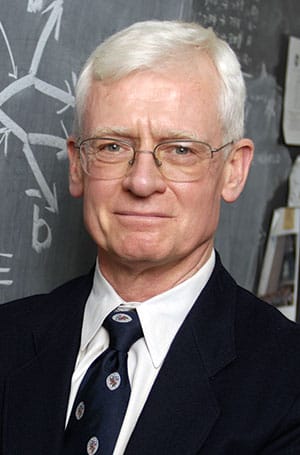 Bruce Barnett合作论文数William H. Miller III Department of Physics and Astronomy, Krieger School of Arts and Sciences, Johns Hopkins University576
 Melissa Franklin合作论文数Department of Physics, Harvard University575
 Dante Amidei合作论文数Department of Physics, College of Literature, Science, and the Arts, University of Michigan572
 Ray Culbertson合作论文数Fermi National Accelerator Laboratory572
 Joey W Huston合作论文数Department of Physics & Astronomy, College of Natural Science, Michigan State University572William David Dagenhart合作论文数Fermilab572
 Ting Miao合作论文数Neutrino Physics Division, Fermi National Accelerator Laboratory571
 Giorgio Chiarelli合作论文数Istituto Nazionale di Fisica Nucleare571R. Madrak合作论文数571
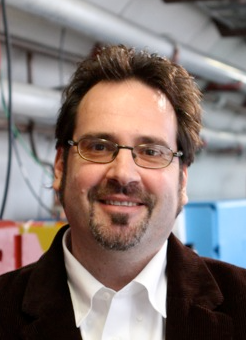 Mark C. Kruse合作论文数Department of Physics, Trinity College of Arts & Sciences, Duke University571
 Gianluca Introzzi合作论文数Department of Physics, University of Pavia571A. Lath合作论文数570
 Mark Lancaster合作论文数Particle Physics Group, Department of Physics and Astronomy, University of Manchester570
 Patrick Lukens合作论文数Particle Physics Division, Fermi National Accelerator Laboratory570M. Lindgren合作论文数569
 Julian Budagov合作论文数Joint Institute for Nuclear Research569A. Cerri合作论文数A.G. Clark569
 Anwar Bhatti合作论文数Department of Physics, College of Computer, Mathematical, & Natural Sciences, University of Maryland569D. Benjamin合作论文数568
 Thomas J Lecompte合作论文数SLAC National Accelerator Laboratory, Stanford University567




