We introduce Ego4D, a massive-scale egocentric video dataset and benchmark suite. It offers 3,670 hours of daily-life activity video spanning hundreds of scenarios (household, outdoor, workplace, leisure, etc.) captured by 931 unique camera wearers from 74 worldwide locations and 9 different countries. The approach to collection is designed to uphold rigorous privacy and ethics standards with consenting participants and robust de-identification procedures where relevant. Ego4D dramatically expands the volume of diverse egocentric video footage publicly available to the research community. Portions of the video are accompanied by audio, 3D meshes of the environment, eye gaze, stereo, and/or synchronized videos from multiple egocentric cameras at the same event. Furthermore, we present a host of new benchmark challenges centered around understanding the first-person visual experience in the past (querying an episodic memory), present (analyzing hand-object manipulation, audio-visual conversation, and social interactions), and future (forecasting activities). By publicly sharing this massive annotated dataset and benchmark suite, we aim to push the frontier of first-person perception. Project page: https://ego4d-data.org/
We empirically study autoregressive pre-training from videos. To perform our study, we construct a series of autoregressive video models, called Toto. We treat videos as sequences of visual tokens and train transformer models to autoregressively predict future tokens. Our models are pre-trained on a diverse dataset of videos and images comprising over 1 trillion visual tokens. We explore different architectural, training, and inference design choices. We evaluate the learned visual representations on a range of downstream tasks including image recognition, video classification, object tracking, and robotics. Our results demonstrate that, despite minimal inductive biases, autoregressive pre-training leads to competitive performance across all benchmarks. Finally, we find that scaling our video models results in similar scaling curves to those seen in language models, albeit with a different rate. More details at https://brjathu.github.io/toto/
We present an approach that can reconstruct hands in 3D from monocular input. Our approach for Hand Mesh Recovery, HaMeR, follows a fully transformer-based architecture and can analyze hands with significantly increased accuracy and robustness compared to previous work. The key to HaMeR's success lies in scaling up both the data used for training and the capacity of the deep network for hand reconstruction. For training data, we combine multiple datasets that contain 2D or 3D hand annotations. For the deep model, we use a large scale Vision Transformer architecture. Our final model consistently outperforms the previous baselines on popular 3D hand pose benchmarks. To further evaluate the effect of our design in non-controlled settings, we annotate existing in-the-wild datasets with 2D hand keypoint annotations. On this newly collected dataset of annotations, HInt, we demonstrate significant improvements over existing baselines. We make our code, data and models available on the project website: https://geopavlakos.github.io/hamer/.
The creation of large, diverse, high-quality robot manipulation datasets is an important stepping stone on the path toward more capable and robust robotic manipulation policies. However, creating such datasets is challenging: collecting robot manipulation data in diverse environments poses logistical and safety challenges and requires substantial investments in hardware and human labour. As a result, even the most general robot manipulation policies today are mostly trained on data collected in a small number of environments with limited scene and task diversity. In this work, we introduce DROID (Distributed Robot Interaction Dataset), a diverse robot manipulation dataset with 76k demonstration trajectories or 350 hours of interaction data, collected across 564 scenes and 84 tasks by 50 data collectors in North America, Asia, and Europe over the course of 12 months. We demonstrate that training with DROID leads to policies with higher performance and improved generalization ability. We open source the full dataset, policy learning code, and a detailed guide for reproducing our robot hardware setup.
We cast real-world humanoid control as a next token prediction problem, akin to predicting the next word in language. Our model is a causal transformer trained via autoregressive prediction of sensorimotor sequences. To account for the multi-modal nature of the data, we perform prediction in a modality-aligned way, and for each input token predict the next token from the same modality. This general formulation enables us to leverage data with missing modalities, such as videos without actions. We train our model on a dataset of sequences from prior neural network policies, model-based controllers, motion capture, and YouTube videos of humans. We show that our model enables a real humanoid robot to walk in San Francisco zero-shot. Our model can transfer to the real world even when trained on only 27 hours of walking data, and can generalize to commands not seen during training. These findings suggest a promising path toward learning challenging real-world control tasks by generative modeling of sensorimotor sequences.
Large, high-capacity models trained on diverse datasets have shown remarkable successes on efficiently tackling downstream applications. In domains from NLP to Computer Vision, this has led to a consolidation of pretrained models, with general pretrained backbones serving as a starting point for many applications. Can such a consolidation happen in robotics? Conventionally, robotic learning methods train a separate model for every application, every robot, and even every environment. Can we instead train "generalist" X-robot policy that can be adapted efficiently to new robots, tasks, and environments? In this paper, we provide datasets in standardized data formats and models to make it possible to explore this possibility in the context of robotic manipulation, alongside experimental results that provide an example of effective X-robot policies. We assemble a dataset from 22 different robots collected through a collaboration between 21 institutions, demonstrating 527 skills ( 160266 tasks). We show that a high-capacity model trained on this data, which we call RT-X, exhibits positive transfer and improves the capabilities of multiple robots by leveraging experience from other platforms. The project website is robotics-transformer-x.github.io.
Large, high-capacity models trained on diverse datasets have shown remarkable successes on efficiently tackling downstream applications. In domains from NLP to Computer Vision, this has led to a consolidation of pretrained models, with general pretrained backbones serving as a starting point for many applications. Can such a consolidation happen in robotics? Conventionally, robotic learning methods train a separate model for every application, every robot, and even every environment. Can we instead train ``generalist’’ cross-robot policy that can be adapted efficiently to new robots, tasks, and environments? In this paper, we provide datasets in standardized data formats and models to make it possible to explore this possibility in the context of robotic manipulation, alongside experimental results that provide an example of effective cross-robot policies. We assemble a dataset from 22 different robots collected through a collaboration between 21 institutions, demonstrating 527 skills (160266 tasks). We show that a high-capacity model trained on this data, which we call RT-X, exhibits positive transfer and improves the capabilities of multiple robots by leveraging experience from other platforms.
Large, high-capacity models trained on diverse datasets have shown remarkable successes on efficiently tackling downstream applications. In domains from NLP to Computer Vision, this has led to a consolidation of pretrained models, with general pretrained backbones serving as a starting point for many applications. Can such a consolidation happen in robotics? Conventionally, robotic learning methods train a separate model for every application, every robot, and even every environment. Can we instead train "generalist" X-robot policy that can be adapted efficiently to new robots, tasks, and environments? In this paper, we provide datasets in standardized data formats and models to make it possible to explore this possibility in the context of robotic manipulation, alongside experimental results that provide an example of effective X-robot policies. We assemble a dataset from 22 different robots collected through a collaboration between 21 institutions, demonstrating 527 skills (160266 tasks). We show that a high-capacity model trained on this data, which we call RT-X, exhibits positive transfer and improves the capabilities of multiple robots by leveraging experience from other platforms. The project website is robotics-transformer-x.github.io.
Humanoid robots can, in principle, use their legs to go almost anywhere. Developing controllers capable of traversing diverse terrains, however, remains a considerable challenge. Classical controllers are hard to generalize broadly while the learning-based methods have primarily focused on gentle terrains. Here, we present a learning-based approach for blind humanoid locomotion capable of traversing challenging natural and man-made terrain. Our method uses a transformer model to predict the next action based on the history of proprioceptive observations and actions. The model is first pre-trained on a dataset of flat-ground trajectories with sequence modeling, and then fine-tuned on uneven terrain using reinforcement learning. We evaluate our model on a real humanoid robot across a variety of terrains, including rough, deformable, and sloped surfaces. The model demonstrates robust performance, in-context adaptation, and emergent terrain representations. In real-world case studies, our humanoid robot successfully traversed over 4 miles of hiking trails in Berkeley and climbed some of the steepest streets in San Francisco.
Humanoid robots that can autonomously operate in diverse environments have the potential to help address labor shortages in factories, assist elderly at home, and colonize new planets. Although classical controllers for humanoid robots have shown impressive results in a number of settings, they are challenging to generalize and adapt to new environments. Here, we present a fully learning-based approach for real-world humanoid locomotion. Our controller is a causal transformer that takes the history of proprioceptive observations and actions as input and predicts the next action. We hypothesized that the observation-action history contains useful information about the world that a powerful transformer model can use to adapt its behavior in context, without updating its weights. We trained our model with large-scale model-free reinforcement learning on an ensemble of randomized environments in simulation and deployed it to the real-world zero-shot. Our controller could walk over various outdoor terrains, was robust to external disturbances, and could adapt in context.
We explore a data-driven approach for learning to optimize neural networks. We construct a dataset of neural network checkpoints and train a generative model on the parameters. In particular, our model is a conditional diffusion transformer that, given an initial input parameter vector and a prompted loss, error, or return, predicts the distribution over parameter updates that achieve the desired metric. At test time, it can optimize neural networks with unseen parameters for downstream tasks in just one update. We find that our approach successfully generates parameters for a wide range of loss prompts. Moreover, it can sample multimodal parameter solutions and has favorable scaling properties. We apply our method to different neural network architectures and tasks in supervised and reinforcement learning.
—Large, high-capacity models trained on diverse datasets have shown remarkable successes on efficiently tackling downstream applications. In domains from NLP to Computer Vision, this has led to a consolidation of pretrained models,
We present a self-supervised sensorimotor pre-training approach for robotics. Our model, called RPT, is a Transformer that operates on sequences of sensorimotor tokens. Given a sequence of camera images, proprioceptive robot states, and actions, we encode the sequence into tokens, mask out a subset, and train a model to predict the missing content from the rest. We hypothesize that if a robot can predict the masked-out content it will have acquired a good model of the physical world that can enable it to act. RPT is designed to operate on latent visual representations which makes prediction tractable, enables scaling to larger models, and allows fast inference on a real robot. To evaluate our approach, we collected a dataset of 20,000 real-world trajectories over 9 months using a combination of motion planning and grasping algorithms. We find that sensorimotor pre-training consistently outperforms training from scratch, has favorable scaling properties, and enables transfer across different tasks, environments, and robots.
We study the problem of imitating object interactions from Internet videos. This requires understanding the hand-object interactions in 4D, spatially in 3D and over time, which is challenging due to mutual hand-object occlusions. In this paper we make two main contributions: (1) a novel reconstruction technique RHOV (Reconstructing Hands and Objects from Videos), which reconstructs 4D trajectories of both the hand and the object using 2D image cues and temporal smoothness constraints; (2) a system for imitating object interactions in a physics simulator with reinforcement learning. We apply our reconstruction technique to 100 challenging Internet videos. We further show that we can successfully imitate a range of different object interactions in a physics simulator. Our object-centric approach is not limited to human-like end-effectors and can learn to imitate object interactions using different embodiments, like a robotic arm with a parallel jaw gripper.
In this work, we explore self-supervised visual pre-training on images from diverse, in-the-wild videos for real-world robotic tasks. Like prior work, our visual representations are pre-trained via a masked autoencoder (MAE), frozen, and then passed into a learnable control module. Unlike prior work, we show that the pre-trained representations are effective across a range of real-world robotic tasks and embodiments. We find that our encoder consistently outperforms CLIP (up to 75%), supervised ImageNet pre-training (up to 81%), and training from scratch (up to 81%). Finally, we train a 307M parameter vision transformer on a massive collection of 4.5M images from the Internet and egocentric videos, and demonstrate clearly the benefits of scaling visual pre-training for robot learning.
This paper shows that self-supervised visual pre-training from real-world images is effective for learning motor control tasks from pixels. We first train the visual representations by masked modeling of natural images. We then freeze the visual encoder and train neural network controllers on top with reinforcement learning. We do not perform any task-specific fine-tuning of the encoder; the same visual representations are used for all motor control tasks. To the best of our knowledge, this is the first self-supervised model to exploit real-world images at scale for motor control. To accelerate progress in learning from pixels, we contribute a benchmark suite of hand-designed tasks varying in movements, scenes, and robots. Without relying on labels, state-estimation, or expert demonstrations, we consistently outperform supervised encoders by up to 80% absolute success rate, sometimes even matching the oracle state performance. We also find that in-the-wild images, e.g., from YouTube or Egocentric videos, lead to better visual representations for various manipulation tasks than ImageNet images.
Modern model-free reinforcement learning methods have recently demonstrated impressive results on a number of problems. However, complex domains like dexterous manipulation remain a challenge due to the high sample complexity. To address this, current approaches employ expert demonstrations in the form of state-action pairs, which are difficult to obtain for real-world settings such as learning from videos. In this paper, we move toward a more realistic setting and explore state-only imitation learning. To tackle this setting, we train an inverse dynamics model and use it to predict actions for state-only demonstrations. The inverse dynamics model and the policy are trained jointly. Our method performs on par with state-action approaches and considerably outperforms RL alone. By not relying on expert actions, we are able to learn from demonstrations with different dynamics, morphologies, and objects. Videos available on the ${\text{project page}}$.
We study the problem of understanding hand-object interactions from 2D images in the wild. This requires reconstructing both the hand and the object in 3D, which is challenging because of the mutual occlusion between the hand and the object. In this paper we make two main contributions: (1) a novel reconstruction technique, RHO (Reconstructing Hands and Objects), which reconstructs 3D models of both the hand and the object leveraging the 2D image cues and 3D contact priors; (2) a dataset MOW (Manipulating Objects in the Wild) of 500 examples of hand-object interaction images that have been "3Dfied" with the help of the RHO technique. Overall our dataset contains 121 distinct object categories, with a much greater diversity of manipulation actions, than in previous datasets.
In this work, we present a new network design paradigm. Our goal is to help advance the understanding of network design and discover design principles that generalize across settings. Instead of focusing on designing individual network instances, we design network design spaces that parametrize populations of networks. The overall process is analogous to classic manual design of networks, but elevated to the design space level. Using our methodology we explore the structure aspect of network design and arrive at a low-dimensional design space consisting of simple, regular networks that we call RegNet. The core insight of the RegNet parametrization is surprisingly simple: widths and depths of good networks can be explained by a quantized linear function. We analyze the RegNet design space and arrive at interesting findings that do not match the current practice of network design. The RegNet design space provides simple and fast networks that work well across a wide range of flop regimes. Under comparable training settings and flops, the RegNet models outperform the popular EfficientNet models while being up to 5x faster on GPUs.
 Jitendra Malik合作论文数Department of Electrical Engineering and Computer Sciences, University of California, Berkeley17
 Trevor Darrell合作论文数Department of Electrical Engineering and Computer Science, University of California, Berkeley8
 Cheng Chi合作论文数Columbia Univ6
 Chelsea Finn合作论文数Department of Computer Science and Electrical Engineering, Stanford University;Physical Intelligence6
 Ken Goldberg合作论文数Industrial Engineering and Operations Research Department, College of Engineering, University of California, Berkeley;University of California, San Francisco6
 Dorsa Sadigh合作论文数Department of Electrical Engineering, Stanford University;Department of Computer Science, Stanford University;Google DeepMind6
 Shivin Dass合作论文数5
 Quan Vuong合作论文数University of California San Diego5
 Homer Walke合作论文数5
 pannag raghunath sanketi合作论文数Robotics at Google5
 Sergey Levine合作论文数Department of Electrical Engineering and Computer Sciences, University of California, Berkeley5
 Beomjoon Kim合作论文数Kim Jaechul Graduate School of AI, Korea Advanced Institute of Science and Technology;Humanoid Generalization Lab, Korea Advanced Institute of Science and Technology5
 Jiajun Wu (吴佳俊)合作论文数Computer Science Department, Stanford University5
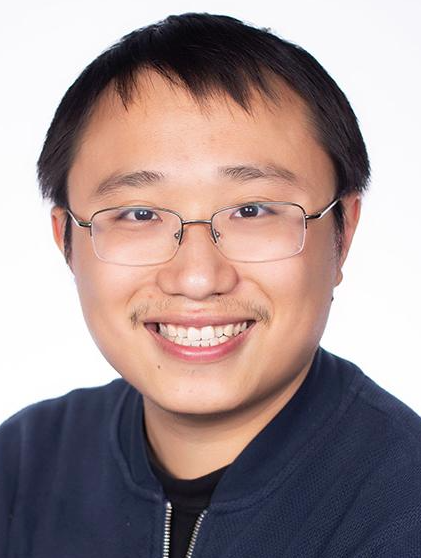 Xiaolong Wang (王小龙)合作论文数Department of Electrical and Computer Engineering, Jacobs School of Engineering, University of California, San Diego;Assured Robot Intelligence5
 Bewley, A.合作论文数Sch. of Electr. Eng. & Comput. Sci., Queensland Univ. of Technol.;c;Sch. of Electr. Eng. & Comput. Sci., Queensland Univ. of Technol.5
 Edward Johns合作论文数Department of Computing, Faculty of Engineering, Imperial College London5
 Deepak Pathak合作论文数The Robotics Institute, School of Computer Science, Carnegie Mellon University5
 Shuran Song合作论文数Robotics and Embodied Artificial Intelligence Lab, Stanford University;Department of Electrical Engineering, Stanford University5
 Hao-Shu Fang (方浩树)合作论文数Computer Science & Artificial Intelligence Laboratory, Massachusetts Institute of Technology5
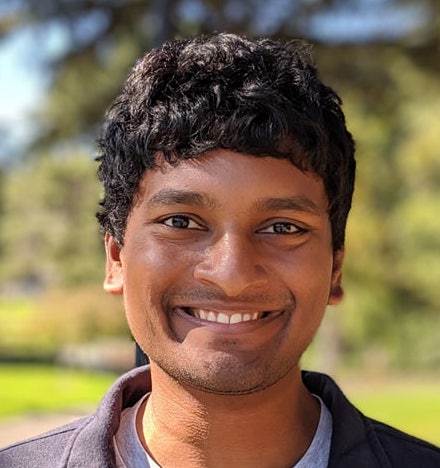 Lerrel Pinto合作论文数General Robotics & AI Lab, New York University;Meta Superintelligence Labs5
 Karl Pertsch合作论文数University of California, Berkeley;Stanford University;Physical Intelligence5
 Freek Stulp合作论文数Department of Cognitive Robotics, German Aerospace Center (DLR)5Yunliang Chen (Lawrence)合作论文数University of California, Berkeley5
 Youngwoon Lee合作论文数KAIST5
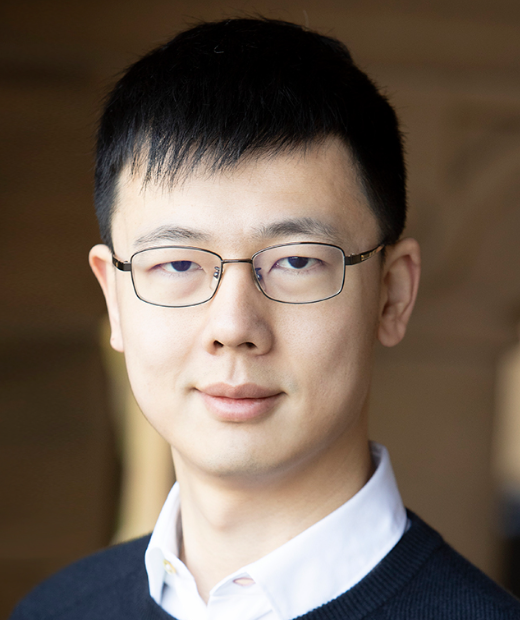 Yuke Zhu (朱玉可)合作论文数Department of Computer Science, College of Natural Sciences, The University of Texas at Austin;NVIDIA5Krishan Rana合作论文数4Oh Jihoon合作论文数4Charles Xu合作论文数4
 Soroush Nasiriany合作论文数Robot Perception and Learning Lab, The University of Texas at Austin4
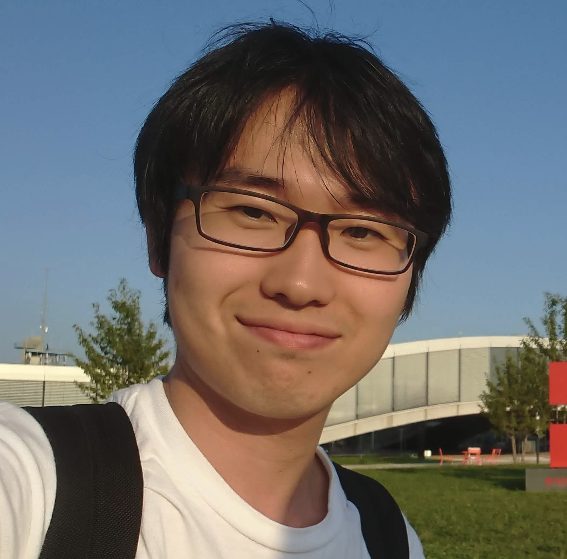 Kento Kawaharazuka (河原塚健人)合作论文数JSK Robotics Laboratory, Department of Mechano-Informatics, Graduate School of Information Science and Technology, The University of Tokyo;Next Generation Artificial Intelligence Research Center, The University of Tokyo4
 Suneel Belkhale合作论文数Stanford University4
 Anthony Brohan合作论文数Google Deepmind4Mohan Kumar Srirama合作论文数4
 Chuer Pan合作论文数Faculty of Applied Science & Engineering, University of Toronto4
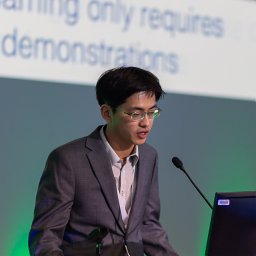 Yifeng Zhu合作论文数Department of Computer Science, The University of Texas4
 Antonin Raffin合作论文数German Aerospace Center (DLR), Institute of Robotics and Mechatronics, Wessling, 82234, Germany4Alexander Khazatsky合作论文数4
 Ayzaan Wahid合作论文数Google DeepMind4Abhishek Padalkar合作论文数Dept Comp Sci, Bonn Rhein Sieg Univ Appl Sci4
 Anikait Singh合作论文数Google DeepMind;Stanford University4
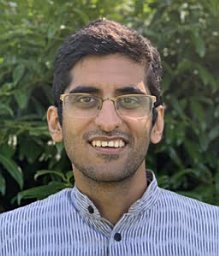 Gautam Salhotra合作论文数University of Southern California4Jonathan Yang合作论文数4
 Chenfeng Xu合作论文数Mechanical Systems Control Lab, University of California, Berkeley;NVIDIA4
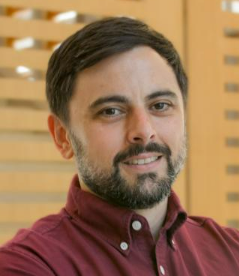 Roberto Martín-Martín合作论文数Department of Computer Science, College of Natural Sciences, The University of Texas at Austin4
 Chuyuan Fu合作论文数Google DeepMind4
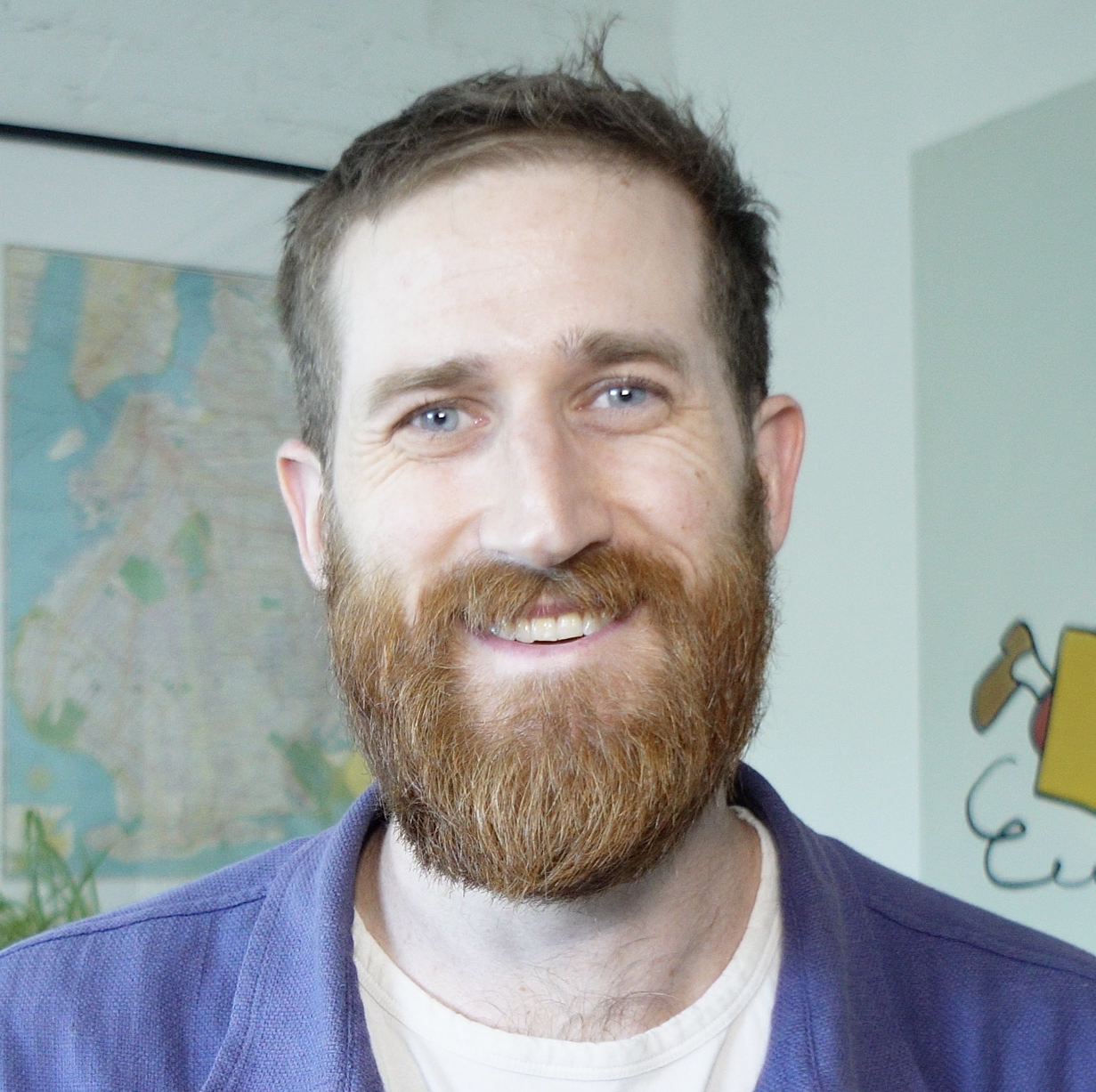 Brian Ichter合作论文数Google4
 Oier Mees合作论文数University of Freiburg4
 Hiroki Furuta (古田拓毅)合作论文数Department of Technology Management for Innovation, Graduate School of Engineering, The University of Tokyo;Matsuo-Iwasawa Lab, The University of Tokyo;Google DeepMind4
 Sudeep Dasari合作论文数Google DeepMind4




