This work presents an object-centric approach to learning vision-based manipulation skills from human videos. We investigate the problem of robot manipulation via imitation in the open-world setting, where a robot learns to manipulate novel objects from a single video demonstration. We introduce ORION, an algorithm that tackles the problem by extracting an object-centric manipulation plan as an Open-World Object Graph from a single RGB or RGB-D video, and then deriving a policy that conditions on the resulting plan. Our method enables the robot to learn from videos captured by daily mobile devices and generalize to deployment environments with varying visual backgrounds, camera angles, spatial layouts, and novel object instances. We systematically evaluate our method on both short-horizon and long-horizon tasks, using RGB-D and RGB-only demonstration videos. Across our real-world evaluations on varied tasks and demonstration modalities (RGB-D / RGB), we observe an average success rate of 74.4 project website .
Robotic reproduction of oil paintings using soft brushes and pigments requires force-sensitive control of deformable tools, prediction of brushstroke effects, and multi-step stroke planning, often without human step-by-step demonstrations or faithful simulators. Given only a sequence of target oil painting images, can a robot infer and execute the stroke trajectories, forces, and colors needed to reproduce it? We present IMPASTO, a robotic oil-painting system that integrates learned pixel dynamics models with model-based planning. The dynamics models predict canvas updates from image observations and parameterized stroke actions; a receding-horizon model predictive control optimizer then plans trajectories and forces, while a force-sensitive controller executes strokes on a 7-DoF robot arm. IMPASTO integrates low-level force control, learned dynamics models, and high-level closed-loop planning, learns solely from robot self-play, and approximates human artists' single-stroke datasets and multi-stroke artworks, outperforming baselines in reproduction accuracy. Project website and appendix: https://impasto-robopainting.github.io/.
Robot navigation in dynamic, human-centered environments requires socially-compliant decisions grounded in robust scene understanding. Recent Vision-Language Models (VLMs) exhibit promising capabilities such as object recognition, common-sense reasoning, and contextual understanding-capabilities that align with the nuanced requirements of social robot navigation. However, it remains unclear whether VLMs can accurately understand complex social navigation scenes (e.g., inferring the spatial-temporal relations among agents and human intentions), which is essential for safe and socially compliant robot navigation. While some recent works have explored the use of VLMs in social robot navigation, no existing work systematically evaluates their ability to meet these necessary conditions. In this paper, we introduce the Social Navigation Scene Understanding Benchmark (SocialNav-SUB), a Visual Question Answering (VQA) dataset and benchmark designed to evaluate VLMs for scene understanding in real-world social robot navigation scenarios. SocialNav-SUB provides a unified framework for evaluating VLMs against human and rule-based baselines across VQA tasks requiring spatial, spatiotemporal, and social reasoning in social robot navigation. Through experiments with state-of-the-art VLMs, we find that while the best-performing VLM achieves an encouraging probability of agreeing with human answers, it still underperforms simpler rule-based approach and human consensus baselines, indicating critical gaps in social scene understanding of current VLMs. Our benchmark sets the stage for further research on foundation models for social robot navigation, offering a framework to explore how VLMs can be tailored to meet real-world social robot navigation needs. An overview of this paper along with the code and data can be found at https://larg.github.io/socialnav-sub .
To operate at a building scale, service robots must perform long-horizon mobile manipulation tasks by navigating to different rooms, accessing multiple floors, and interacting with a wide and unseen range of everyday objects. We refer to these tasks as Building-wide Mobile Manipulation. To tackle these inherently long-horizon tasks, we introduce BUMBLE, a unified Vision-Language Model (VLM)-based framework integrating open-world RGB-D perception, a wide spectrum of gross-to-fine motor skills, and dual-layered memory. Our extensive evaluation (90+ hours) indicates that BUMBLE outperforms competitive baselines in long-horizon building-wide tasks that require sequencing up to 12 skills, spanning 15 minutes per trial. BUMBLE achieves 47.1% success rate averaged over 70 trials in different buildings, tasks, and scene layouts from various starting locations. Our user study shows 22% higher task satisfaction using our framework compared to state-of-the-art VLM-based mobile manipulation methods. Finally, we show the potential of using increasingly capable foundation models to improve the system performance further. For more information, see https://robin-lab.cs.utexas.edu/BUMBLE/
Developing robotic systems capable of robustly executing long-horizon manipulation tasks with human-level dexterity is challenging, as such tasks require both physical dexterity and seamless sequencing of manipulation skills while robustly handling environment variations. While imitation learning offers a promising approach, acquiring comprehensive datasets is resource-intensive. In this work, we propose a learning framework and system LODESTAR that automatically decomposes task demonstrations into semantically meaningful skills using off-the-shelf foundation models, and generates diverse synthetic demonstration datasets from a few human demos through reinforcement learning. These sim-augmented datasets enable robust skill training, with a Skill Routing Transformer policy effectively chaining the learned skills together to execute complex long-horizon manipulation tasks. Experimental evaluations on three challenging real-world long-horizon dexterous manipulation tasks demonstrate that our approach significantly improves task performance and robustness compared to previous baselines. Videos are available at lodestar-robot.github.io.
Task planning and motion planning are two of the most important problems in robotics, where task planning methods help robots achieve high-level goals and motion planning methods maintain low-level feasibility. Task and motion planning (TAMP) methods interleave the two processes of task planning and motion planning to ensure goal achievement and motion feasibility. Within the TAMP context, we are concerned with the mobile manipulation (MoMa) of multiple objects, where it is necessary to interleave actions for navigation and manipulation. In particular, we aim to compute where and how each object should be placed given underspecified goals, such as "set up dinner table with a fork, knife and plate." We leverage the rich common sense knowledge from large language models (LLMs), for example, about how tableware is organized, to facilitate both task-level and motion-level planning. In addition, we use computer vision methods to learn a strategy for selecting base positions to facilitate MoMa behaviors, where the base position corresponds to the robot's "footprint" and orientation in its operating space. Altogether, this article provides a principled TAMP framework for MoMa tasks that accounts for common sense about object rearrangement and is adaptive to novel situations that include many objects that need to be moved. We performed quantitative experiments in both real-world settings and simulated environments. We evaluated the success rate and efficiency in completing long-horizon object rearrangement tasks. While the robot completed 84.4% real-world object rearrangement trials, subjective human evaluations indicated that the robot's performance is still lower than experienced human waiters.
In-context imitation learning (ICIL) enables robots to learn tasks from prompts consisting of just a handful of demonstrations. By eliminating the need for parameter updates at deployment time, this paradigm supports few-shot adaptation to novel tasks. However, recent ICIL methods rely on Transformers, which have computational limitations and tend to underperform when handling longer prompts than those seen during training. In this work, we introduce RoboSSM, a scalable recipe for in-context imitation learning based on state-space models (SSM). Specifically, RoboSSM replaces Transformers with Longhorn – a state-of-the-art SSM that provides linear-time inference and strong extrapolation capabilities, making it well-suited for long-context prompts. We evaluate our approach on the LIBERO benchmark and compare it against strong Transformer-based ICIL baselines. Experiments show that RoboSSM extrapolates effectively to varying numbers of in-context demonstrations, yields high performance on unseen tasks, and remains robust in long-horizon scenarios. These results highlight the potential of SSMs as an efficient and scalable backbone for ICIL. Our code is available at https://github.com/youngjuY/RoboSSM.
This paper considers the problem of enabling robots to navigate dynamic environments while following instructions. The challenge lies in the combinatorial nature of instruction specifications: each instruction can include multiple specifications, and the number of possible specification combinations grows exponentially as the robot's skill set expands. For example, "overtake the pedestrian while staying on the right side of the road" consists of two specifications: "overtake the pedestrian" and "walk on the right side of the road." To tackle this challenge, we propose ComposableNav, based on the intuition that following an instruction involves independently satisfying its constituent specifications, each corresponding to a distinct motion primitive. Using diffusion models, ComposableNav learns each primitive separately, then composes them in parallel at deployment time to satisfy novel combinations of specifications unseen in training. Additionally, to avoid the onerous need for demonstrations of individual motion primitives, we propose a two-stage training procedure: (1) supervised pre-training to learn a base diffusion model for dynamic navigation, and (2) reinforcement learning fine-tuning that molds the base model into different motion primitives. Through simulation and real-world experiments, we show that ComposableNav enables robots to follow instructions by generating trajectories that satisfy diverse and unseen combinations of specifications, significantly outperforming both non-compositional VLM-based policies and costmap composing baselines. (2)
Humanoid robots, with their human-like embodiment, have the potential to integrate seamlessly into human environments. Critical to their coexistence and cooperation with humans is the ability to understand natural language communications and exhibit human-like behaviors. This work focuses on generating diverse whole-body motions for humanoid robots from language descriptions. We leverage human motion priors from extensive human motion datasets to initialize humanoid motions and employ the commonsense reasoning capabilities of Vision Language Models (VLMs) to edit and refine these motions. Our approach demonstrates the capability to produce natural, expressive, and text-aligned humanoid motions, validated through both simulated and real-world experiments. More videos can be found on our website https://ut-austin-rpl.github.io/Harmon/.
We introduce LOTUS, a continual imitation learning algorithm that empowers a physical robot to continuously and efficiently learn to solve new manipulation tasks throughout its lifespan. The core idea behind LOTUS is constructing an ever-growing skill library from a sequence of new tasks with a small number of human demonstrations. LOTUS starts with a continual skill discovery process using an open-vocabulary vision model, which extracts skills as recurring patterns presented in unsegmented demonstrations. Continual skill discovery updates existing skills to avoid catastrophic forgetting of previous tasks and adds new skills to solve novel tasks. LOTUS trains a meta-controller that flexibly composes various skills to tackle vision-based manipulation tasks in the lifelong learning process. Our comprehensive experiments show that LOTUS outperforms state-of-the-art baselines by over 11% in success rate, showing its superior knowledge transfer ability compared to prior methods. More results and videos can be found on the project website: https://ut-austin-rpl.github.io/Lotus/.
We study the problem of teaching humanoid robots manipulation skills by imitating from single video demonstrations. We introduce OKAMI, a method that generates a manipulation plan from a single RGB-D video and derives a policy for execution. At the heart of our approach is object-aware retargeting, which enables the humanoid robot to mimic the human motions in an RGB-D video while adjusting to different object locations during deployment. OKAMI uses open-world vision models to identify task-relevant objects and retarget the body motions and hand poses separately. Our experiments show that OKAMI achieves strong generalizations across varying visual and spatial conditions, outperforming the state-of-the-art baseline on open-world imitation from observation. Furthermore, OKAMI rollout trajectories are leveraged to train closed-loop visuomotor policies, which achieve an average success rate of 79.2% without the need for labor-intensive teleoperation. More videos can be found on our website https://ut-austin-rpl.github.io/OKAMI/.
Learning abstract state representations and knowledge is crucial for long-horizon robot planning. We present InterPreT, an LLM-powered framework for robots to learn symbolic predicates from language feedback of human non-experts during embodied interaction. The learned predicates provide relational abstractions of the environment state, facilitating the learning of symbolic operators that capture action preconditions and effects. By compiling the learned predicates and operators into a PDDL domain on-the-fly, InterPreT allows effective planning toward arbitrary in-domain goals using a PDDL planner. In both simulated and real-world robot manipulation domains, we demonstrate that InterPreT reliably uncovers the key predicates and operators governing the environment dynamics. Although learned from simple training tasks, these predicates and operators exhibit strong generalization to novel tasks with significantly higher complexity. In the most challenging generalization setting, InterPreT attains success rates of 73 and 40
Large, high-capacity models trained on diverse datasets have shown remarkable successes on efficiently tackling downstream applications. In domains from NLP to Computer Vision, this has led to a consolidation of pretrained models, with general pretrained backbones serving as a starting point for many applications. Can such a consolidation happen in robotics? Conventionally, robotic learning methods train a separate model for every application, every robot, and even every environment. Can we instead train "generalist" X-robot policy that can be adapted efficiently to new robots, tasks, and environments? In this paper, we provide datasets in standardized data formats and models to make it possible to explore this possibility in the context of robotic manipulation, alongside experimental results that provide an example of effective X-robot policies. We assemble a dataset from 22 different robots collected through a collaboration between 21 institutions, demonstrating 527 skills ( 160266 tasks). We show that a high-capacity model trained on this data, which we call RT-X, exhibits positive transfer and improves the capabilities of multiple robots by leveraging experience from other platforms. The project website is robotics-transformer-x.github.io.
Large, high-capacity models trained on diverse datasets have shown remarkable successes on efficiently tackling downstream applications. In domains from NLP to Computer Vision, this has led to a consolidation of pretrained models, with general pretrained backbones serving as a starting point for many applications. Can such a consolidation happen in robotics? Conventionally, robotic learning methods train a separate model for every application, every robot, and even every environment. Can we instead train ``generalist’’ cross-robot policy that can be adapted efficiently to new robots, tasks, and environments? In this paper, we provide datasets in standardized data formats and models to make it possible to explore this possibility in the context of robotic manipulation, alongside experimental results that provide an example of effective cross-robot policies. We assemble a dataset from 22 different robots collected through a collaboration between 21 institutions, demonstrating 527 skills (160266 tasks). We show that a high-capacity model trained on this data, which we call RT-X, exhibits positive transfer and improves the capabilities of multiple robots by leveraging experience from other platforms.
Large, high-capacity models trained on diverse datasets have shown remarkable successes on efficiently tackling downstream applications. In domains from NLP to Computer Vision, this has led to a consolidation of pretrained models, with general pretrained backbones serving as a starting point for many applications. Can such a consolidation happen in robotics? Conventionally, robotic learning methods train a separate model for every application, every robot, and even every environment. Can we instead train "generalist" X-robot policy that can be adapted efficiently to new robots, tasks, and environments? In this paper, we provide datasets in standardized data formats and models to make it possible to explore this possibility in the context of robotic manipulation, alongside experimental results that provide an example of effective X-robot policies. We assemble a dataset from 22 different robots collected through a collaboration between 21 institutions, demonstrating 527 skills (160266 tasks). We show that a high-capacity model trained on this data, which we call RT-X, exhibits positive transfer and improves the capabilities of multiple robots by leveraging experience from other platforms. The project website is robotics-transformer-x.github.io.
We tackle the problem of perceptive locomotion in dynamic environments. In this problem, a quadrupedal robot must exhibit robust and agile walking behaviors in response to environmental clutter and moving obstacles. We present a hierarchical learning framework, named PRELUDE, which decomposes the problem of perceptive locomotion into high-level decision-making to predict navigation commands and low-level gait generation to realize the target commands. In this framework, we train the high-level navigation controller with imitation learning on human demonstrations collected on a steerable cart and the low-level gait controller with reinforcement learning (RL). Therefore, our method can acquire complex navigation behaviors from human supervision and discover versatile gaits from trial and error. We demonstrate the effectiveness of our approach in simulation and with hardware experiments. Videos and code can be found at the project page: https://ut-austin-rpl.github.io/PRELUDE.
Lifelong learning offers a promising paradigm of building a generalist agent that learns and adapts over its lifespan. Unlike traditional lifelong learning problems in image and text domains, which primarily involve the transfer of declarative knowledge of entities and concepts, lifelong learning in decision-making (LLDM) also necessitates the transfer of procedural knowledge, such as actions and behaviors. To advance research in LLDM, we introduce LIBERO, a novel benchmark of lifelong learning for robot manipulation. Specifically, LIBERO highlights five key research topics in LLDM: 1) how to efficiently transfer declarative knowledge, procedural knowledge, or the mixture of both; 2) how to design effective policy architectures and 3) effective algorithms for LLDM; 4) the robustness of a lifelong learner with respect to task ordering; and 5) the effect of model pretraining for LLDM. We develop an extendible procedural generation pipeline that can in principle generate infinitely many tasks. For benchmarking purpose, we create four task suites (130 tasks in total) that we use to investigate the above-mentioned research topics. To support sample-efficient learning, we provide high-quality human-teleoperated demonstration data for all tasks. Our extensive experiments present several insightful or even unexpected discoveries: sequential finetuning outperforms existing lifelong learning methods in forward transfer, no single visual encoder architecture excels at all types of knowledge transfer, and naive supervised pretraining can hinder agents' performance in the subsequent LLDM. Check the website at https://libero-project.github.io for the code and the datasets.
—Large, high-capacity models trained on diverse datasets have shown remarkable successes on efficiently tackling downstream applications. In domains from NLP to Computer Vision, this has led to a consolidation of pretrained models,
We focus on the task of language-conditioned grasping in clutter, in which a robot is supposed to grasp the target object based on a language instruction. Previous works separately conduct visual grounding to localize the target object, and generate a grasp for that object. However, these works require object labels or visual attributes for grounding, which calls for handcrafted rules in planner and restricts the range of language instructions. In this paper, we propose to jointly model vision, language and action with object-centric representation. Our method is applicable under more flexible language instructions, and not limited by visual grounding error. Besides, by utilizing the powerful priors from the pre-trained multi-modal model and grasp model, sample efficiency is effectively improved and the sim2real problem is relived without additional data for transfer. A series of experiments carried out in simulation and real world indicate that our method can achieve better task success rate by less times of motion under more flexible language instructions. Moreover, our method is capable of generalizing better to scenarios with unseen objects and language instructions.
We introduce GROOT, an imitation learning method for learning robust policies with object-centric and 3D priors. GROOT builds policies that generalize beyond their initial training conditions for vision-based manipulation. It constructs object-centric 3D representations that are robust toward background changes and camera views and reason over these representations using a transformer-based policy. Furthermore, we introduce a segmentation correspondence model that allows policies to generalize to new objects at test time. Through comprehensive experiments, we validate the robustness of GROOT policies against perceptual variations in simulated and real-world environments. GROOT's performance excels in generalization over background changes, camera viewpoint shifts, and the presence of new object instances, whereas both state-of-the-art end-to-end learning methods and object proposal-based approaches fall short. We also extensively evaluate GROOT policies on real robots, where we demonstrate the efficacy under very wild changes in setup. More videos and model details can be found in the appendix and the project website: https://ut-austin-rpl.github.io/GROOT .
 Yuke Zhu (朱玉可)合作论文数Department of Computer Science, College of Natural Sciences, The University of Texas at Austin;NVIDIA22
 Peter Stone合作论文数Department of Computer Science, College of Natural Sciences, The University of Texas at Austin;Sony AI;Sony Research12
 Roberto Martín-Martín合作论文数Department of Computer Science, College of Natural Sciences, The University of Texas at Austin6
 Ruohan Zhang合作论文数Stanford Vision and Learning (SVL) Lab, Department of Computer Science, Stanford University6
 Jiajun Wu (吴佳俊)合作论文数Computer Science Department, Stanford University5
 Rutav Shah合作论文数The University of Texas at Austin5
 Ken Goldberg合作论文数Industrial Engineering and Operations Research Department, College of Engineering, University of California, Berkeley;University of California, San Francisco5
 Yunzhu Li合作论文数Columbia University5
 Krishan Rana合作论文数4Oh Jihoon合作论文数4
 Soroush Nasiriany合作论文数Robot Perception and Learning Lab, The University of Texas at Austin4
 Kento Kawaharazuka (河原塚健人)合作论文数JSK Robotics Laboratory, Department of Mechano-Informatics, Graduate School of Information Science and Technology, The University of Tokyo;Next Generation Artificial Intelligence Research Center, The University of Tokyo4Shivin Dass合作论文数4
 Chuer Pan合作论文数Faculty of Applied Science & Engineering, University of Toronto4
 Quan Vuong合作论文数University of California San Diego4
 Cheng Chi合作论文数Columbia Univ4
 pannag raghunath sanketi合作论文数Robotics at Google4
 Oier Mees合作论文数University of Freiburg4
 Sergey Levine合作论文数Department of Electrical Engineering and Computer Sciences, University of California, Berkeley4
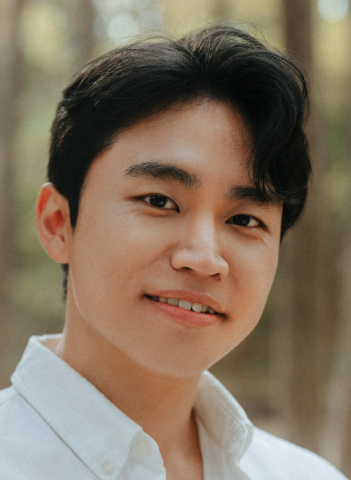 Beomjoon Kim合作论文数Kim Jaechul Graduate School of AI, Korea Advanced Institute of Science and Technology;Humanoid Generalization Lab, Korea Advanced Institute of Science and Technology4
 Xiaolong Wang (王小龙)合作论文数Department of Electrical and Computer Engineering, Jacobs School of Engineering, University of California, San Diego;Assured Robot Intelligence4
 Bewley, A.合作论文数Sch. of Electr. Eng. & Comput. Sci., Queensland Univ. of Technol.;c;Sch. of Electr. Eng. & Comput. Sci., Queensland Univ. of Technol.4
 Edward Johns合作论文数Department of Computing, Faculty of Engineering, Imperial College London4
 Deepak Pathak合作论文数The Robotics Institute, School of Computer Science, Carnegie Mellon University4
 Shuran Song合作论文数Robotics and Embodied Artificial Intelligence Lab, Stanford University;Department of Electrical Engineering, Stanford University4
 Chelsea Finn合作论文数Department of Computer Science and Electrical Engineering, Stanford University;Physical Intelligence4
 Hao-Shu Fang (方浩树)合作论文数Computer Science & Artificial Intelligence Laboratory, Massachusetts Institute of Technology4
 Lerrel Pinto合作论文数General Robotics & AI Lab, New York University;Meta Superintelligence Labs4
 Karl Pertsch合作论文数University of California, Berkeley;Stanford University;Physical Intelligence4
 Mingyu Ding (丁明宇)合作论文数UC Berkeley4
 Ilija Radosavovic合作论文数University of California, Berkeley4
 Gaurav Sukhatme合作论文数Thomas Lord Department of Computer Science, Viterbi School of Engineering, University of Southern California;Robotic Embedded Systems Laboratory, University of Southern California;Amazon4
 Freek Stulp合作论文数Department of Cognitive Robotics, German Aerospace Center (DLR)4Yunliang Chen (Lawrence)合作论文数University of California, Berkeley4
 Xuanlin (Simon) Li合作论文数Center for Visual Computing & Contextual Robotics Institute, University of California - San Diego4
 Bo Liu合作论文数Department of Computer Science, University of Texas at Austin4
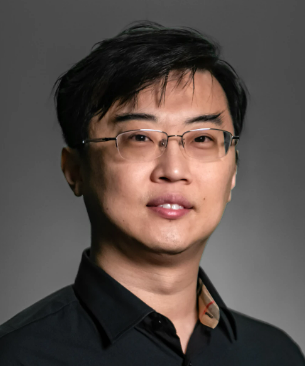 Hao Su (苏昊)合作论文数College of Intelligent Robotics and Advanced Manufacturing, Fudan University4
 Lionel Ott合作论文数Sevensense4
 Oliver Kroemer合作论文数Intelligent Autonomous Manipulation Lab, The Robotics Institute, School of Computer Science, Carnegie Mellon University4
 Takayuki Osa (長隆之)合作论文数Center for Advanced Intelligence Project, RIKEN4
 Youngwoon Lee合作论文数KAIST4
 Dorsa Sadigh合作论文数Department of Electrical Engineering, Stanford University;Department of Computer Science, Stanford University;Google DeepMind4
 Vincent Vanhoucke合作论文数Waymo4
 Karol Hausman合作论文数Physical Intelligence4Zichen Jeff Cui合作论文数3Yueh-Hua Wu合作论文数3Yifan Zhou合作论文数3Vidhi Jain合作论文数3Travis Armstrong合作论文数3




