In quantum purity amplification, one is given n copies of a noisy quantum state ρ∈ℂ^d × d and asked to prepare k copies of its principal eigenstate |v_d⟩. Several prior works have derived information-theoretically optimal algorithms for this problem, but the bounds they prove are only shown in the asymptotic regime as the number of samples n tends to infinity. In this paper, we establish the following nonasymptotic guarantee: if ρ's eigenvalues are sorted p_1 ≤⋯≤ p_d and p_d-1 < p_d, then n = O(k + k/δ·1-p_d/(p_d-p_d-1)^2) copies suffice to output a state with fidelity at least 1-δ with |v_d^⊗ k⟩. Our bound holds for arbitrary spectra, and is independent of the dimension d. In the case of depolarizing noise, our finite-sample guarantee matches the optimal asymptotic scaling. Our proof is based on the combinatorics of random Young diagrams.
We study the problem of testing low-degree phase states, namely m-qudit quantum states of the form q^-m/2∑_x ∈𝔽_q^m ω^f(x) |x>, where f is a degree-d polynomial. In contrast to the classical setting, where low-degree polynomials admit highly efficient classical testers, it is not known whether analogous quantum tests exist. We show that no such quantum low-degree test exists: any tester requires Ω(⌊ m/2⌋⌊ (d-1)/2 ⌋) copies to determine whether a given state is a degree-d phase state or is far from every such state. Our results follow from a general framework that relates quantum testing of codeword phase states to classical decoding properties of the dual code, which allows us to leverage known bounds on the tolerance of high-rate Reed–Muller codes to random errors.
A central challenge in quantum algorithms and cryptography is reasoning about algorithms with oracle access to a random group element (e.g. a random function, permutation, or unitary). Can we efficiently simulate such algorithms? Can we determine what they know after t queries? A classical tool for this is lazy sampling: the oracle does not commit to the full group element upfront, but rather samples partial information about it on the fly. We study a quantum analog of lazy sampling: compressed oracles (or recording oracles). These are quantum data structures that allow on-the-fly simulation for quantum queries, originally introduced by Zhandry (CRYPTO '19) for random functions, and generalized to unitaries by Ma-Huang (STOC '25) and permutations by Carolan (STOC '26), and used to great effect in security proofs and lower bounds due to their interpretability. We define and analyze a general-purpose and interpretable path-recording oracle, derived from first principles, that perfectly simulates random elements of any closed subgroup of U(N). Our oracle stores, in superposition, t input-output pairs, with updates described in terms of the commutant of the group's tensor power representation. This transparently records the information the algorithm has learned. Our oracle builds on recent work of Grinko-Yoshida (QIP '26), who gave a different general-purpose compressed oracle without clear interpretability. One interesting application of our path-recording is allowing direct comparisons between compressed oracles of different groups, giving a new technique for proving pseudorandomness results. For example, comparing S_N and U(N) yields what is arguably the simplest construction to date of pseudorandom unitaries: the product PC of a pseudorandom permutation and a random Clifford, improving on the prior PFC construction (Metger-Poremba-Sinha-Yuen, FOCS '24; Ma-Huang, STOC '25).
We study the error correcting properties of Haar random codes, in which a $K$-dimensional code space $\boldsymbol{C} \subseteq \mathbb{C}^N$ is chosen at random from the Haar distribution. Our main result is that Haar random codes can approximately correct errors up to the quantum Hamming bound, meaning that a set of $m$ Pauli errors can be approximately corrected so long as $mK \ll N$. This is the strongest bound known for any family of quantum error correcting codes (QECs), and continues a line of work showing that approximate QECs can significantly outperform exact QECs [LNCY97, CGS05, BGG24]. Our proof relies on a recent matrix concentration result of Bandeira, Boedihardjo, and van Handel.
The Unitary Synthesis Problem (Aaronson-Kuperberg 2007) asks whether any n-qubit unitary U can be implemented by an efficient quantum algorithm A augmented with an oracle that computes an arbitrary Boolean function f. In other words, can the task of implementing any unitary be efficiently reduced to the task of implementing any Boolean function? In this work, we prove a one-query lower bound for unitary synthesis. We show that there exist unitaries U such that no quantum polynomial-time oracle algorithm A^f can implement U, even approximately, if it only makes one (quantum) query to f. Our approach also has implications for quantum cryptography: we prove (relative to a random oracle) the existence of quantum cryptographic primitives that remain secure against all one-query adversaries A^f. Since such one-query algorithms can decide any language, solve any classical search problem, and even prepare any quantum state, our result suggests that implementing random unitaries and breaking quantum cryptography may be harder than all of these tasks. To prove this result, we formulate unitary synthesis as an efficient challenger-adversary game, which enables proving lower bounds by analyzing the maximum success probability of an adversary A^f. Our main technical insight is to identify a natural spectral relaxation of the one-query optimization problem, which we bound using tools from random matrix theory. We view our framework as a potential avenue to rule out polynomial-query unitary synthesis, and we state conjectures in this direction.
The Gaussian noise stability of a function $f:\mathbb{R}^n \to \{-1, 1\}$ is the expected value of $f(\boldsymbol{x}) \cdot f(\boldsymbol{y})$ over $\rho$-correlated Gaussian random variables $\boldsymbol{x}$ and $\boldsymbol{y}$. Borell's inequality states that for $-1 \leq \rho \leq 0$, this is minimized by the halfspace $f(x) = \mathrm{sign}(x_1)$. In this work, we generalize this result to hold for functions $f:\mathbb{R}^n \to S^{k-1}$ which output $k$-dimensional unit vectors. Our main conjecture, which we call the $\textit{vector-valued Borell's inequality}$, asserts that the expected value of $\langle f(\boldsymbol{x}), f(\boldsymbol{y})\rangle$ is minimized by the function $f(x) = x_{\leq k} / \Vert x_{\leq k} \Vert$, where $x_{\leq k} = (x_1, \ldots, x_k)$. We give several pieces of evidence in favor of this conjecture, including a proof that it does indeed hold in the special case of $n = k$. As an application of this conjecture, we show that it implies several hardness of approximation results for a special case of the local Hamiltonian problem related to the anti-ferromagnetic Heisenberg model known as Quantum Max-Cut. This can be viewed as a natural quantum analogue of the classical Max-Cut problem and has been proposed as a useful testbed for developing algorithms. We show the following, assuming our conjecture: (1) The integrality gap of the basic SDP is $0.498$, matching an existing rounding algorithm. Combined with existing results, this shows that the basic SDP does not achieve the optimal approximation ratio. (2) It is Unique Games-hard (UG-hard) to compute a $(0.956+\varepsilon)$-approximation to the value of the best product state, matching an existing approximation algorithm. (3) It is UG-hard to compute a $(0.956+\varepsilon)$-approximation to the value of the best (possibly entangled) state.
This work presents a RISC-V system-on-chip (SoC) with eight application cores containing programmable-precision vector accelerators. The SoC is built by using a generator-based design methodology, which enables the integration of open-source and project-specific building blocks to develop differentiated functionality. The digital component generators use Chisel, the analog component generators use the Berkeley Analog Generator (BAG), and the physical design flow is implemented with Hammer. The chip totals 125 M gates and is implemented in a 16-nm finFET process. The vector accelerator achieves peak energy efficiency per task of 209 half-precision, 92 single-precision, and 56 double-precision GFLOPs/W for a matrix multiplication kernel at 0.55 V and 339 MHz.
. These notes are intended for those students that would like to see the quickest route for the proof that the Connes Embedding Problem has a negative answer.
Devising schemes for testing the amount of entanglement in quantum systems has played a crucial role in quantum computing and information theory. Here, we study the problem of testing whether an unknown state $|\psi\rangle$ is a matrix product state (MPS) in the property testing model. MPS are a class of physically-relevant quantum states which arise in the study of quantum many-body systems. A quantum state $|\psi_{1,...,n}\rangle$ comprised of $n$ qudits is said to be an MPS of bond dimension $r$ if the reduced density matrix $\psi_{1,...,k}$ has rank $r$ for each $k \in \{1,...,n\}$. When $r=1$, this corresponds to the set of product states. For larger values of $r$, this yields a more expressive class of quantum states, which are allowed to possess limited amounts of entanglement. In the property testing model, one is given $m$ identical copies of $|\psi\rangle$, and the goal is to determine whether $|\psi\rangle$ is an MPS of bond dimension $r$ or whether $|\psi\rangle$ is far from all such states. For the case of product states, we study the product test, a simple two-copy test previously analyzed by Harrow and Montanaro (FOCS 2010), and a key ingredient in their proof that $\mathsf{QMA(2)}=\mathsf{QMA}(k)$ for $k \geq 2$. We give a new and simpler analysis of the product test which achieves an optimal bound for a wide range of parameters, answering open problems of Harrow and Montanaro (FOCS 2010) and Montanaro and de Wolf (2016). For the case of $r\geq 2$, we give an efficient algorithm for testing whether $|\psi\rangle$ is an MPS of bond dimension $r$ using $m = O(n r^2)$ copies, independent of the dimensions of the qudits, and we show that $\Omega(n^{1/2})$ copies are necessary for this task. This lower bound shows that a dependence on the number of qudits $n$ is necessary, in sharp contrast to the case of product states where a constant number of copies suffices.
Process technology scaling and hardware architecture specialization have vastly increased the need for chip design space exploration, while optimizing for power, performance, and area. Hammer is an open-source, reusable physical design (PD) flow generator that reduces design effort and increases portability by enforcing a separation among design-, tool-, and process technology-specific concerns with a modular software architecture. In this work, we outline Hammer's structure and highlight recent extensions that support both physical chip designers and hardware architects evaluating the merit and feasibility of their proposed designs. This is accomplished through the integration of more tools and process technologies---some open-source---and the designer-driven development of flow step generators. An evaluation of chip designs in process technologies ranging from 130nm down to 12nm across a series of RISC-V-based chips shows how Hammer-generated flows are reusable and enable efficient optimization for diverse applications.
Process technology scaling and hardware architecture specialization have vastly increased the need for chip design space exploration, while optimizing for power, performance, and area. Hammer is an open-source, reusable physical design (PD) flow generator that reduces design effort and increases portability by enforcing a separation among design-, tool-, and process technology-specific concerns with a modular software architecture. In this work, we outline Hammer's structure and highlight recent extensions that support both physical chip designers and hardware architects evaluating the merit and feasibility of their proposed designs. This is accomplished through the integration of more tools and process technologies-some open-source-and the designer-driven development of flow step generators. An evaluation of chip designs in process technologies ranging from 130nm down to 12nm across a series of RISC-V-based chips shows how Hammer-generated flows are reusable and enable efficient optimization for diverse applications.
A locally testable code is an error-correcting code that admits very efficient probabilistic tests of membership. Tensor codes provide a simple family of combinatorial constructions of locally testable codes that generalize the family of Reed-Muller codes. The natural test for tensor codes, the axis-parallel line vs. point test, plays an essential role in constructions of probabilistically checkable proofs. We analyze the axis-parallel line vs. point test as a two-prover game and show that the test is sound against quantum provers sharing entanglement. Our result implies the quantum-soundness of the low individual degree test, which is an essential component of the MIP* = RE theorem. Our proof also generalizes to the infinite-dimensional commuting-operator model of quantum provers.
We present a ring-oscillator-based sub-sampling phase-locked loop (PLL) using a generator-based design flow. A hybrid loop with a delta-sigma ($\Delta \Sigma$) modulator is applied to reduce the loop filter (LF) area and the control ripple. The generator automatically produces the ring oscillator and PLL to meet the provided specifications. The 10-GHz PLL instance implemented in 28-nm planar process achieves RMS jitter of}299.5 fs and power of 9.9 mW from a 1-V supply.
We show that the class MIP* of languages that can be decided by a classical verifier interacting with multiple all-powerful quantum provers sharing entanglement is equal to the class RE of recursively enumerable languages. Our proof builds upon the quantum low-degree test of (Natarajan and Vidick, FOCS 2018) and the classical low-individual degree test of (Ji, et al., 2020) by integrating recent developments from (Natarajan and Wright, FOCS 2019) and combining them with the recursive compression framework of (Fitzsimons et al., STOC 2019). An immediate byproduct of our result is that there is an efficient reduction from the Halting Problem to the problem of deciding whether a two-player nonlocal game has entangled value 1 or at most 1/2. Using a known connection, undecidability of the entangled value implies a negative answer to Tsirelson's problem: we show, by providing an explicit example, that the closure C_qa of the set of quantum tensor product correlations is strictly included in the set C_qc of quantum commuting correlations. Following work of (Fritz, Rev. Math. Phys. 2012) and (Junge et al., J. Math. Phys. 2011) our results provide a refutation of Connes' embedding conjecture from the theory of von Neumann algebras.
This work presents a 16mm2 heterogeneous RISC-V system-on-a-chip (SoC) composed of a high-performance out-of-order core, energy-efficient in-order core, data-parallel vector accelerator, and systolic array deep neural network (DNN) accelerator in low-power Intel 22FFL for general-purpose compute, DNN, and vector workloads. The heterogeneous RISC-V SoC is composed of fully open-source components, including a second-generation Berkeley Out-of-Order Machine (BOOM) with a non-speculative mode attached to a Hwacha vector accelerator, a Rocket in-order core attached to a Gemmini systolic array DNN accelerator, as well as a IMiB L2 cache and off-chip I/Os. Combined, the variety of heterogeneous compute allows for wide programmability while providing up to a 286x MOPS/W improvement or 282x MOPS improvement over the RISC-V in-order core.
Modern workloads, such as deep neural networks (DNNs), increasingly rely on dense arithmetic compute patterns that are ill-suited for general-purpose processors, leading to a rise in domain-specific compute accelerators [1]. Many of these workloads can benefit from varying precision during computation, e.g. different precisions among layers and between training and inference for DNNs has been shown to improve energy efficiency [2].
We present a bang-bang phase-locked loop (PLL) generator that encapsulates design methodologies for its circuit blocks and the complete PLL system. The generator is fully automated and parameterized, producing the layout and schematic based on process characterization and top-level specifications. Three 14GHz PLLs are instantiated in TSMC 16nm, GF 14nm and Intel 22nm technologies, demonstrating the process portability. The rapid generation time of less than four days enables fast PLL design and technology porting. The PLL design fabricated in TSMC 16nm shows RMS jitter of 565.4fs and power of 6.64mW from a 0.9V supply.
DNN accelerators are often developed and evaluated in isolation without considering the cross-stack, system-level effects in real-world environments. This makes it difficult to appreciate the impact of Systemon-Chip (SoC) resource contention, OS overheads, and programming-stack inefficiencies on overall performance/energy-efficiency. To address this challenge, we present Gemmini, an open-source, full-stack DNN accelerator generator. Gemmini generates a wide design-space of efficient ASIC accelerators from a flexible architectural template, together with flexible programming stacks and full SoCs with shared resources that capture system-level effects. Gemmini-generated accelerators have also been fabricated, delivering up to three orders-of-magnitude speedups over high-performance CPUs on various DNN benchmarks.
Continued improvement in computing efficiency requires functional specialization of hardware designs. Agile hardware design methodologies have been proposed to alleviate the increased design costs of custom silicon architectures, but their practice thus far has been accompanied with challenges in integration and validation of complex systems-on-a-chip (SoCs). We present the Chipyard framework, an integrated SoC design, simulation, and implementation environment for specialized compute systems. Chipyard includes configurable, composable, open-source, generator-based IP blocks that can be used across multiple stages of the hardware development flow while maintaining design intent and integration consistency. Through cloud-hosted FPGA accelerated simulation and rapid ASIC implementation, Chipyard enables continuous validation of physically realizable customized systems.
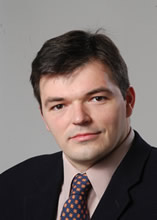 Borivoje Nikolic合作论文数Department of Electrical Engineering and Computer Sciences, University of California at Berkeley;Berkeley Wireless Research Center, University of California at Berkeley12
 Colin T. A. Schmidt合作论文数12
 Krste Asanovic合作论文数Graduate School, Computer Science Division, EECS Department, University of California, Berkeley9
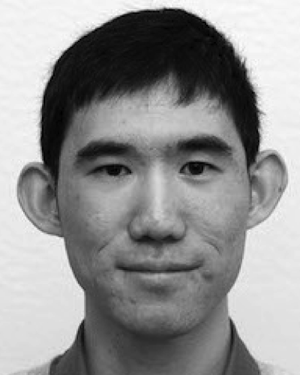 Albert Ou合作论文数6
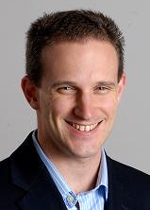 Elad Alon合作论文数Department of Electrical Engineering and Computer Sciences, University of California, Berkeley;Berkeley Wireless Research Center, University of California, Berkeley6
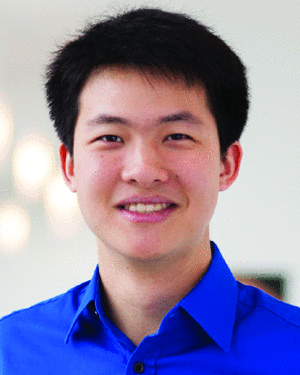 Harrison Liew合作论文数University of California at Berkeley5
 daniel grubb合作论文数5Alon Amid合作论文数University of California Berkeley5
 Zhongkai Wang合作论文数Univ Calif Berkeley, Berkeley, CA 94720 USA4
 Howard Mao合作论文数Department of Electrical and Computer Engineering, University of California, Davis4
 Thomas Vidick合作论文数École Polytechnique Fédérale de Lausanne;Department of Computer Science and Applied Mathematics, Weizmann Institute of Science4
 Yakun Sophia Shao合作论文数Department of Electrical Engineering and Computer Sciences, University of California, Berkeley4
 Jonathan Bachrach合作论文数JITx4
 Jerry Zhao合作论文数Google4
 Anand Natarajan合作论文数Department of Electrical Engineering and Computer Science, Massachusetts Institute of Technology3Abraham Gonzalez合作论文数University of California3
 Edward Wang合作论文数UC Berkeley#TAB#3
 Henry Yuen合作论文数Department of Computer Science, Columbia University/Departments of Computer Science and Mathematics, University of Toronto3
 Eric I-Chao Chang (張益肇)合作论文数AI + Health Startups3
 Woorham Bae合作论文数3
 Zhengfeng Ji (季铮锋)合作论文数Department of Computer Science and Technology, Tsinghua University3Fermi Ma合作论文数3
 Anita Flynn合作论文数2V Iyer合作论文数University of California at Berkeley2
 Zhaokai Liu合作论文数Univ Calif Berkeley, Berkeley, CA 94720 USA2
 Hasan Genc合作论文数University of California, Berkeley2
 Sean Huang合作论文数Univ Calif Berkeley, Berkeley, CA 94720 USA2
 Alex Lombardi合作论文数Department of Computer Science, Princeton University2
 Nathan Pemberton合作论文数University of California Berkeley2Albert Magyar合作论文数University of California2
 Sijun Du合作论文数Department of Microelectronics, Faculty of Electrical Engineering, Mathematics and Computer Science, Delft University of Technology2
 Ben Keller合作论文数2
 Minsoo Choi合作论文数2
 David Thomas Biancolin合作论文数SiFive2
 Stevo Bailey合作论文数2
 Vladimir Milovanovic合作论文数Faculty of Electrical Engineering, University of Belgrade2
 Brian C. Richards合作论文数Department of Electrical Engineering and Computer Sciences, University of California at Berkeley2
 Adam M. Izraelevitz合作论文数Cornell University2
 Nandish Mehta合作论文数Microelectronics Laboratory, Indian Institute of Science2
 Paul Rigge合作论文数University of California Berkeley2
 Sagar Karandikar合作论文数Computer Science Division, University of California, Berkeley2Jerry Chao合作论文数1Samuel Steffl合作论文数1Ameer Haj-Ali合作论文数1Ken-ichi Kawarabayashi合作论文数1Anton Sorokin合作论文数1Ramya Yarlagadda合作论文数1Seah Kim合作论文数Univ Calif Berkeley1Srinivasan Arunachalam合作论文数1




