Digital systems are growing in importance and computing hardware is growing more heterogeneous. Hardware design, however, remains laborious and expensive, in part due to the limitations of conventional hardware description languages (HDLs) like VHDL and Verilog. A longstanding research goal has been programming hardware like software, with high-level languages that can generate efficient hardware designs. This paper describes Kanagawa, a language that takes a new approach to combine the programmer productivity benefits of traditional High-Level Synthesis (HLS) approaches with the expressibility and hardware efficiency of Register-Transfer Level (RTL) design. The language's concise syntax, matched with a hardware design-friendly execution model, permits a relatively simple toolchain to map high-level code into efficient hardware implementations.
In this article, we survey existing academic and commercial efforts to provide Field-Programmable Gate Array (FPGA) acceleration in datacenters and the cloud. The goal is a critical review of existing systems and a discussion of their evolution from single workstations with PCI-attached FPGAs in the early days of reconfigurable computing to the integration of FPGA farms in large-scale computing infrastructures. From the lessons learned, we discuss the future of FPGAs in datacenters and the cloud and assess the challenges likely to be encountered along the way. The article explores current architectures and discusses scalability and abstractions supported by operating systems, middleware, and virtualization. Hardware and software security becomes critical when infrastructure is shared among tenants with disparate backgrounds. We review the vulnerabilities of current systems and possible attack scenarios and discuss mitigation strategies, some of which impact FPGA architecture and technology. The viability of these architectures for popular applications is reviewed, with a particular focus on deep learning and scientific computing. This work draws from workshop discussions, panel sessions including the participation of experts in the reconfigurable computing field, and private discussions among these experts. These interactions have harmonized the terminology, taxonomy, and the important topics covered in this manuscript.
Hardware accelerators have been used recently to augment the compute power of data centers to improve the performance of many applications, particularly to optimize latency sensitive applications. In fact, several commercial vendors offer FPGAs in their cloud platforms. This special issue of ACM Transactions on Reconfigurable Technology and Systems presents advanced research in using FPGAs in data centers. The articles present recent research in several topics including impact of terrestrial radiation; memory system optimization using FPGAs; use and management of network accessible FPGAs; virtualization and runtime resource management in using FPGAs; novel applications of FPGAs in data centers; FPGA IP cores for data center acceleration; latency, and performance tradeoffs in using FPGAs for acceleration; and communication optimization using FPGAs. In response to the call for papers, 21 papers were received. After a thorough review of these manuscripts following the ACM manuscript review guidelines, 13 papers were accepted. The papers are grouped into two issues. This issue includes 10 papers accepted for publication in this special issue. The article “Elastic-DF: Scaling Performance of DNN Inference in FPGA Clouds through Automatic Partitioning” by Petrica et al. presents an automatic partitioning technique to maximize the performance and scalability of FPGA-based pipeline dataflow DNN inference accelerators on computing infrastructures consisting of multi-die, network-connected FPGAs. The article “xDNN: Inference for Deep Convolutional Neural Network” by D’Alberto et al. presents an end-to-end system for deep-learning inference based on a family of specialized hardware processors synthesized on FPGAs and Convolution Neural Networks. The article “Hardware Acceleration of High-Performance Computational Flow Dynamics Using High-Bandwidth Memory-enabled Field-programmable Gate Arrays” by Nane et al. studies the potential of using FPGAs in computational flow dynamics in the context of rapid advances in reconfigurable hardware, such as the increase in on-chip memory size, increasing number of logic cells, and the integration of high-bandwidth memories on board. The article “BurstZ+: Eliminating the Communication Bottleneck of Scientific Computing Accelerators via Accelerated Compression” by Jun et al. presents an accelerator platform that eliminates the communication bottleneck between PCIe-attached scientific computing accelerators and their host servers via hardware-optimized compression. The article “Request, Coalesce, Serve, and Forget: Miss-Optimized Memory Systems for Bandwidth-Bound Cache-unfriendly Applications on FPGAs” by Asiatici et al. presents an efficient on-chip memory system for applications such as graph analytics to minimize the number of pipeline stalls. The article “NASCENT2: Generic Near-storage Sort Accelerator for Data Analytics on SmartSSD” by Salamat et al. presents an efficient algorithm for sorting of database tables via partitioning the data into multiple smaller sort operations.
Editor's notes: This article demonstrates how one can leak users' secrets on a shared field-programmable gate array system by exploiting the delay information of the underlying circuits. -Jeyavijayan "JV" Rajendran, Texas A&M University
In complex FPGA designs, implementations of algorithms and protocols from third-party sources are common. However, the monolithic nature of FPGAs means that all sub-circuits share common on-chip infrastructure, such as routing resources. This presents an attack vector for all FPGAs that contain designs from multiple vendors, especially for FPGAs used in multi-tenant cloud environments, or integrated into multi-core processors: hardware imperfections can be used to infer high-level state and break security guarantees. In this paper, we demonstrate how “long” routing wires present can be used to for covert communication between disconnected cores, or by a malicious core to exfiltrate secrets. The information leakage is measurable for both static and dynamic signals, and that it can be detected using small on-board circuits. In our prototype we achieved 6 kbps bandwidth and 99.9% accuracy, and a side channel which can recover signals kept constant for only 128 cycles, with an accuracy of more than 98.4 %.
This paper presents Always Encrypted, a recently released feature of Microsoft SQL Server that uses column granularity encryption to provide cryptographic data protection guarantees. Always Encrypted can be used to outsource database administration while keeping the data confidential from an administrator, including cloud operators. The first version of Always Encrypted was released in Azure SQL Database and as part of SQL Server 2016, and supported equality operations over deterministically encrypted columns. The second version, released as part of SQL Server 2019, uses an enclave running within a trusted execution environment to provide richer functionality that includes comparison and string pattern matching for an IND-CPA-secure (randomized) encryption scheme. We present the security, functionality, and design of Always Encrypted, and provide a performance evaluation using the TPC-C benchmark.
In complex FPGA designs, implementations of algorithms and protocols from third-party sources are common. However, the monolithic nature of FPGAs means that all sub-circuits share common on-chip infrastructure, such as routing resources. This presents an attack vector for all FPGAs that contain designs from multiple vendors, especially for FPGAs used in multi-tenant cloud environments, or integrated into multi-core processors. In this article, we show that “long” routing wires present a new source of information leakage on FPGAs, by influencing the delay of adjacent long wires. We show that the effect is measurable for both static and dynamic signals and that it can be detected using small on-board circuits. We characterize the channel in detail and show that it is measurable even when multiple competing circuits (including multiple long-wire transmitters) are present and can be replicated on different generations and families of Xilinx devices (Virtex 5, Virtex 6, Artix 7, and Spartan 7). We exploit the leakage to create a covert channel with 6kbps of bandwidth and 99.9% accuracy, and a side channel, which can recover signals kept constant for only 1.3sμs, with an accuracy of more than 98.4%. Finally, we propose countermeasures to reduce the impact of this leakage. 1
The simultaneous use of FPGAs by multiple tenants has recently been shown to potentially expose sensitive information without the victim's knowledge. For example, neighboring long wires in SRAM-based FPGAs have been shown to allow for clandestine data exfiltration. In this work, we explore distinct characteristics of this signal crosstalk that could be used to enhance or prevent information leakage. First, we develop a mechanism to characterize the crosstalk coupling that exists between neighboring wires at the femtosecond scale. Second, we show that it is possible to reverse engineer channel layouts by determining which pairs of routing resources/links in the channel exhibit coupling to each other even if this information is not provided by the FPGA vendor. To fully characterize these effects, we examine long wire coupling on different types of wires across three devices implemented in different technology nodes from 65 to 20 nm. We experimentally demonstrate that information leakage is apparent for all three FPGA families.
Presents the introductory welcome message from the conference proceedings. May include the conference officers' congratulations to all involved with the conference event and publication of the proceedings record.
Encrypted databases have been studied for more than 10 years and are quickly emerging as a critical technology for the cloud. The current state of the art is to use property-preserving encrypting techniques (e.g., deterministic encryption) to protect the confidentiality of the data and support query processing at the same time. Unfortunately, these techniques have many limitations. Recently, trusted computing platforms (e.g., Intel SGX) have emerged as an alternative to implement encrypted databases. This paper demonstrates some vulnerabilities and the limitations of this technology, but it also shows how to make best use of it in order to improve on confidentiality, functionality, and performance.
Field-Programmable Gate Arrays (FPGAs) are integrated circuits that implement reconfigurable hardware. They are used in modern systems, creating specialized, highly-optimized integrated circuits without the need to design and manufacture dedicated chips. As the capacity of FPGAs grows, it is increasingly common for designers to incorporate implementations of algorithms and protocols from a range of third-party sources. The monolithic nature of FPGAs means that all on-chip circuits, including third party black-box designs, must share common on-chip infrastructure, such as routing resources. In this paper, we observe that a "long" routing wire carrying a logical 1 reduces the propagation delay of other adjacent but unconnected long wires in the FPGA interconnect, thereby leaking information about its state. We exploit this effect and propose a communication channel that can be used for both covert transmissions between circuits, and for exfiltration of secrets from the chip. We show that the effect is measurable for both static and dynamic signals, and that it can be detected using very small on-board circuits. In our prototype, we are able to correctly infer the logical state of an adjacent long wire over 99% of the time, even without error correction, and for signals that are maintained for as little as 82us. Using a Manchester encoding scheme, our channel bandwidth is as high as 6kbps. We characterize the channel in detail and show that it is measurable even when multiple competing circuits are present and can be replicated on different generations and families of Xilinx devices (Virtex 5, Virtex 6, and Artix 7). Finally, we propose countermeasures that can be deployed by systems and tools designers to reduce the impact of this information leakage.
The 28th IEEE International Conference on Application-specific Systems, Architectures, and Processors returns to the United States, this time in Seattle, Washington. We welcome everyone to the Pacific Northwest's largest and most culturally-diverse city. Although the Seattle area is certainly a technology hub, we also hope that you will have a chance to enjoy the natural beauty and specialty cuisine of the area, from Puget Sound to the Cascade Mountains and beyond.
Verifying the integrity of outsourced data is a classic, well-studied problem. However current techniques have fundamental performance and concurrency limitations for update-heavy workloads. In this paper, we investigate the potential advantages of deferred and batched verification rather than the per-operation verification used in prior work. We present Concerto , a comprehensive key-value store designed around this idea. Using Concerto, we argue that deferred verification preserves the utility of online verification and improves concurrency resulting in orders-of-magnitude performance improvement. On standard benchmarks, the performance of Concerto is within a factor of two when compared to state-of-the-art key-value stores without integrity.
Soft processors are one way to raise the computational abstraction of FPGAs while keeping the advantages of reconfigurable hardware, such as adaptability, deterministic performance and high performance/watt. Software developers can quickly build, test and deploy applications using familiar tools while still leveraging important optimizations such as application-specific custom instructions. However, they also present unique debugging problems. For example, the higher-level programming abstraction runs contradictory to classical low-level debugging tools like logic analyzers. In this work we present a debugging framework for FPGA-based soft processors that enables step-by-step debugging at the level of all soft processor instructions, time-travel debugging, post-mortem memory dumps, and performance metrics. By using knowledge about the soft processor's internals, our framework can capture execution traces up to 60× more space-efficient than traditional embedded logic analyzers.
Field-Programmable Gate Arrays (FPGAs) are integrated circuits that implement reconfigurable hardware. They are used in modern systems as they are well-suited for creating specialized, highly-optimized integrated circuits without the need to design and manufacture dedicated chips. As the capacity of FPGAs grows, it is increasingly common for designers to incorporate implementations of algorithms and protocols from a range of third-party sources. The monolithic nature of FPGAs means that all on-chip circuits, including third party black-box designs, must share common on-chip infrastructure, such as routing resources. In this paper, we present a covert channel based on a previously unexplored source of information leakage that occurs between adjacent but unconnected, so called wires, on the FPGA chip. We observe that a long wire carrying a logical 1 reduces the delay of nearby wires and that the delay decreases linearly with the length of wires used. This effect leads to a covert channel that can be used for both covert communication between circuits, and for exfiltration of secrets from the chip. We show that the effect is measurable for both static and dynamic signals, and that it can be detected using very small on-board circuits. In our prototype, we are able to correctly infer the logical state of an adjacent long wire over 99% of the time, even without error correction, and for signals that are maintained for as little as $82\mu s$. Using a simple encoding scheme, our covert channel bandwidth is as high as 6kbps. We characterize the covert channel in detail and show that it can be replicated on different generations and families of devices (Virtex 5, Virtex 6, and Artix 7), with different configurations, and is measurable even when multiple competing circuits are present.
Cipherbase is a comprehensive database system that provides strong end-to-end data confidentiality through encryption. Cipherbase is based on a novel architecture that combines an industrial strength database engine (SQL Server) with lightweight processing over encrypted data that is performed in secure hardware. The overall architecture provides significant benefits over the state-of-the-art in terms of security, performance, and functionality. This paper presents a prototype of Cipherbase that uses FPGAs to provide secure processing and describes the system engineering details implemented to achieve competitive performance for transactional workloads. This includes hardware-software co-design issues (e.g. how to best offer parallelism), optimizations to hide the latency between the secure hardware and the main system, and techniques to cope with space inefficiencies. All these optimizations were carefully designed not to affect end-to-end data confidentiality. Our experiments with the TPC-C benchmark show that in the worst case when all data are strongly encrypted, Cipherbase achieves 40% of the throughput of plaintext SQL Server. In more realistic cases, if only critical data such as customer names are encrypted, the Cipherbase throughput is more than 90% of plaintext SQL Server.
 Ravi Ramamurthy合作论文数University of Wisconsin, Madison
Sponsor SIGMOD: ACM Special Interest Group on Management of Data16
Ravi Ramamurthy合作论文数University of Wisconsin, Madison
Sponsor SIGMOD: ACM Special Interest Group on Management of Data16 Arvind Arasu合作论文数Stealth Startup12
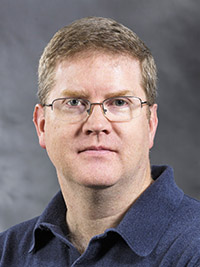 Scott Hauck合作论文数Department of Electrical & Computer Engineering, University of Washington12Ramarathnam Venkatesan合作论文数11Raghav Kaushik合作论文数11
 Donald Kossmann合作论文数Chargebacks9119
 Alessandro Forin合作论文数Microsoft Research7
 Ilias Giechaskiel合作论文数University of Oxford5Ray Bittner合作论文数5
 Manas Joglekar合作论文数OpenAI4
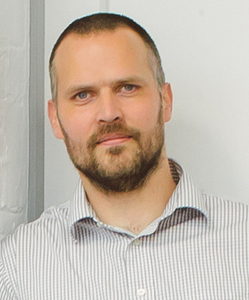 Kasper Rasmussen合作论文数Department of Computer Science, University of Oxford;Kellogg College, University of Oxford4
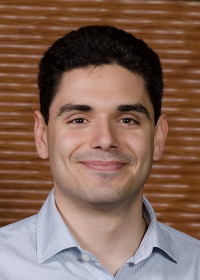 Spyros Blanas合作论文数Department of Computer Science and Engineering, College of Engineering, The Ohio State University3
 Prasang Upadhyaya合作论文数Dropbox3
 Akshay Sharma合作论文数Carrier Network Infrastructure group of Gartner Research3
 Gary C. T. Chow合作论文数2Jakub Szymaszek合作论文数Microsoft Azure and Microsoft Research, Redmond, WA, USA2
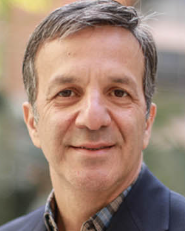 Majid Sarrafzadeh合作论文数eHealth Research Lab, Samueli School of Engineering, University of California, Los Angeles2
 Jason Oberg合作论文数University of California, San Diego2
 Kapil Vaswani合作论文数Microsoft Research Cambridge2
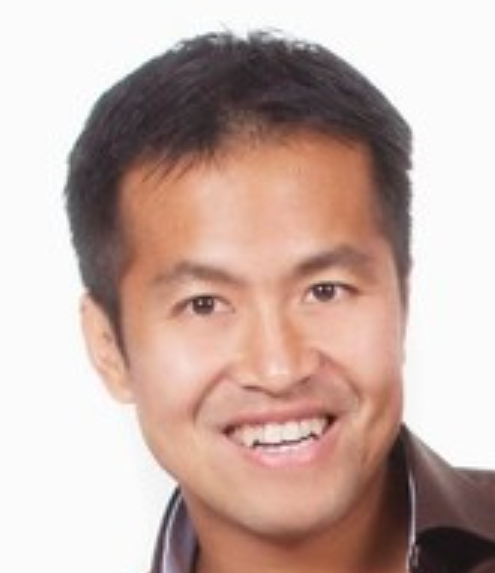 Maogang Wang合作论文数Xilinx;AMD2Xiaojian Yang合作论文数2
 ji Sun (孙吉)合作论文数2
 Panagiotis Antonopoulos合作论文数Microsoft Redmond2
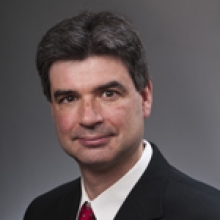 Russell Tessier合作论文数Department of Electrical and Computer Engineering, College of Engineering, University of Massachusetts2Evgeny Babin合作论文数1Rajas Karandikar合作论文数1David Cox合作论文数1roy peter dsouza合作论文数1Blake Pelton合作论文数1Jinwen XI (奚锦文)合作论文数1Chethan Ramesh合作论文数1Nitish Gupta合作论文数1spyridon blanas合作论文数1
 Rajat Jain合作论文数1Hafsah Shahzad合作论文数Boston University1
 Mohammad Ewais合作论文数Edward S Rogers Sr Dept Elect & Comp Engn, Univ Toronto1Jeffrey Trimmer合作论文数Microsoft Azure and Microsoft Research, Redmond, WA, USA1Nikolas Ogg合作论文数Microsoft Azure and Microsoft Research, Redmond, WA, USA1Kunal D. Singh合作论文数Microsoft Azure and Microsoft Research, Redmond, WA, USA1
 Juan Camilo Vega合作论文数Microsoft, Microsoft Corp1
 Rene Mueller合作论文数Almaden Research, IBM1
 George Provelengios合作论文数Univ Massachusetts, Dept Elect & Comp Engn, Amherst, MA 01003 USA1
 Joel Mandebi Mbongue合作论文数Univ Florida, Gainesville, FL 32611 USA1Shivukumar B. Patil合作论文数Univ Massachusetts, Dept Elect & Comp Engn, Amherst, MA 01003 USA1
 Suranga Handagala合作论文数Northeastern Univ, ECE Dept, Boston, MA 02115 USA1Ahmed Sanaullah合作论文数Boston Univ, Dept Elect & Comp Engn, Boston, MA 02215 USA1adam sapek合作论文数1
 Rehan Ahmed合作论文数Natl Univ Sci & Technol NUST, Islamabad, Pakistan1
 Katherine Compton合作论文数1




