Y. Qiang, J. Annand, J. Arrington, Ya.I. Azimov, W. Bertozzi, G. Cates, J. P. Chen, Seonho Choi, E. Chudakov, F. Cusanno, C.W. de Jager, M. Epstein, R.J. Feuerbach, F. Garibaldi, O. Gayou, R. Gilman, 6 J. Gomez, D.J. Hamilton, J.-O. Hansen, D.W. Higinbotham, T. Holmstrom, M. Iodice, X. Jiang, M. Jones, J. LeRose, R. Lindgren, N. Liyanage, D.J. Margaziotis, P. Markowitz, V. Mamyan, R. Michaels, Z.-E. Meziani, P. Monaghan, C. Muñoz-Camacho, V. Nelyubin, K. Paschke, E. Piasetzky, I. Rachek, P.E. Reimer, J. Reinhold, B. Reitz, R. Roche, A. Saha, A.J. Sarty, E. Schulte, A. Shahinyan, R. Sheyor, J. Singh, I.I. Strakovsky, R. Subedi, R. Suleiman, V. Sulkosky, B. Wojtsekhowski, and X. Zheng
The (2)H(e,e'p)n cross section at a momentum transfer of 3.5 (GeV/c)(2) was measured over a kinematical range that made it possible to study this reaction for a set of fixed missing momenta as a function of the neutron recoil angle θ(nq) and to extract missing momentum distributions for fixed values of θ(nq) up to 0.55 GeV/c. In the region of 35°≤θ(nq)≤45° recent calculations, which predict that final-state interactions are small, agree reasonably well with the experimental data. Therefore, these experimental reduced cross sections provide direct access to the high momentum component of the deuteron momentum distribution in exclusive deuteron electrodisintegration.
A set of three out-of-plane magnetic spectrometers (OOPS) has recently been deployed and commissioned at the Bates Linear Accelerator. Measurements of the 2 H(~ e; e 0 p)n reaction have been performed using an 800 MeV polarized electron beam and the OOPS to detect protons in coincidence with an electron spectrometer in kinematics of either quasielastic (QE) at Q 2 =0.22 (GeV/c) 2 or non{quasielastic (dip) at Q 2 =0.15 (GeV/c) 2. Two and three OOPS were positioned symmetrically along the direction of momentum transfer in pq=(45,135) and (0,90,180) conngurations, respectively, for a given set of pq values. This allowed simultaneous measurements of the longitudinal-transverse responses, f LT and f 0 LT , and the transverse-transverse response f TT at various central missing momenta ranging from 145 to 265 MeV/c. Here, preliminary results are presented and compared with vigorous model calculations. The data reveal strong eeects of relativity and nal-state interactions, as well as the two-body currents, which include the meson-exchange and iso-bar currents, in the deuteron electrodisintegration. An outlook of future OOPS programs is also discussed.
A high-resolution (sigma(instr.)=1.5 MeV) search for narrow states (Gamma < 10 MeV) with masses of M-x approximate to 1500-1850 MeV in ep -> e(')K(+)X,e(')K(-)X, and e(')pi X+ electroproduction at small angles and low Q(2) was performed. These states would be candidate partner states of the reported Theta(+)(1540) pentaquark. No statistically significant signal was observed in any of the channels at 90% C.L. Upper limits on forward production were determined to be between 0.8% and 4.9% of the Lambda(1520) production cross section, depending on the channel and the assumed mass and width of the state.
A high-resolution (σinstr.=1.5 MeV) search for narrow states (Γ<10 MeV) with masses of Mx≈1500–1850 MeV in ep→e′K+X,e′K−X, and e′π+X electroproduction at small angles and low Q2 was performed. These states would be candidate partner states of the reported Θ+(1540) pentaquark. No statistically significant signal was observed in any of the channels at 90% C.L. Upper limits on forward production were determined to be between 0.8% and 4.9% of the Λ(1520) production cross section, depending on the channel and the assumed mass and width of the state.Received 18 September 2006DOI:https://doi.org/10.1103/PhysRevC.75.055208©2007 American Physical Society
This is an updated proposal version for the conditionally approved E12-06-118 JLab Experiment. It was originally proposed in 2006 and reviewed by PAC30, which considered “the physics goals of this experiment as highlights of the 12 GeV physics program.” The condition for (full) approval imposed by PAC30 was a “Management review of the safety aspects of the Tritium target.” A review of a conceptual target design was conducted in June 2010, which found “no show stoppers” for further development of a low activity tritium target at Jefferson Lab. We propose to perform deep inelastic electron scattering off the H and He mirror nuclei with the 11 GeV upgraded beam of Jefferson Lab. The experiment will measure the EMC effect for H and He and determine the ratio of the neutron to proton inelastic structure functions, F n 2 /F p 2 , and the ratio of the down to up quark distributions in the nucleon, d/u, at medium and large Bjorken x. It will use a room-temperature, moderate-pressure H, He and deuterium gas target system, and the Hall A Super BigBite and one of the two High Resolution spectrometers. The required beam time is 42 days at a beam current of 24 μA. The F n 2 /F p 2 ratio will be extracted from the inelastic cross section ratio of the two nuclei by exploiting their mirror symmetry with a minimal theoretical correction. The F n 2 /F p 2 ratio is expected to be almost free of nuclear effects, which introduce a significant uncertainty in its extraction from deep inelastic scattering off the proton and deuteron. The results are expected to test perturbative and non-perturbative mechanisms of spin-flavor symmetry breaking in the nucleon, and constrain the structure function parametrizations needed for the interpretation of high energy hadron collider data. The precision of the expected data for the ratio of the EMC effects for H and He will offer a unique opportunity to test theoretical calculations of the EMC effect and will provide critical experimental input for the establishment of a unique canonical model for the explanation of its dynamical origin.
K.G. Fissum, 2, ∗ M. Liang, B.D. Anderson, K.A. Aniol, L. Auerbach, F.T. Baker, J. Berthot, W. Bertozzi, P.-Y. Bertin, L. Bimbot, W.U. Boeglin, E.J. Brash, V. Breton, H. Breuer, E. Burtin, J.R. Calarco, L.S. Cardman, G.D. Cates, 16 C. Cavata, C.C. Chang, J.-P. Chen, E. Cisbani, D.S. Dale, C.W. de Jager, R. De Leo, A. Deur, 16, 3 B. Diederich, P. Djawotho, J. Domingo, J.-E. Ducret, M.B. Epstein, L.A. Ewell, J.M. Finn, H. Fonvieille, B. Frois, S. Frullani, J. Gao, 23 F. Garibaldi, A. Gasparian, 24 S. Gilad, R. Gilman, 25 A. Glamazdin, C. Glashausser, J. Gomez, V. Gorbenko, T. Gorringe, F.W. Hersman, R. Holmes, M. Holtrop, N. d’Hose, C. Howell, G.M. Huber, C.E. Hyde-Wright, M. Iodice, 29 S. Jaminion, M.K. Jones, 3 K. Joo, † C. Jutier, 20 W. Kahl, S. Kato, J.J. Kelly, S. Kerhoas, M. Khandaker, M. Khayat, K. Kino, W. Korsch, L. Kramer, K.S. Kumar, 33 G. Kumbartzki, G. Laveissière, A. Leone, J.J. LeRose, L. Levchuk, R.A. Lindgren, N. Liyanage, 3, 16 G.J. Lolos, R.W. Lourie, 36 R. Madey, 3, 24 K. Maeda, S. Malov, D.M. Manley, D.J. Margaziotis, P. Markowitz, J. Martino, J.S. McCarthy, K. McCormick, 4, 25 J. McIntyre, R.L.J. van der Meer, 3 Z.-E. Meziani, R. Michaels, J. Mougey, S. Nanda, D. Neyret, E.A.J.M. Offermann, 36 Z. Papandreou, C.F. Perdrisat, R. Perrino, G.G. Petratos, S. Platchkov, R. Pomatsalyuk, D.L. Prout, V.A. Punjabi, T. Pussieux, G. Quéméner, 8, 37 R.D. Ransome, O. Ravel, Y. Roblin, 3 R. Roche, 20 D. Rowntree, G.A. Rutledge, ‡ P.M. Rutt, A. Saha, T. Saito, A.J. Sarty, 39 A. Serdarevic-Offermann, 3 T.P. Smith, A. Soldi, P. Sorokin, P. Souder, R. Suleiman, 1 J.A. Templon, § T. Terasawa, L. Todor, ¶ H. Tsubota, H. Ueno, P.E. Ulmer, G.M. Urciuoli, P. Vernin, S. van Verst, B. Vlahovic, 3 H. Voskanyan, J.W. Watson, L.B. Weinstein, K. Wijesooriya, 42, 28 B. Wojtsekhowski, D.G. Zainea, V. Zeps, J. Zhao, and Z.-L. Zhou
We present measurements of the recoil proton polarization for the H-1((gamma) over right arrow,(p) over right arrow)pi(0) reaction for theta(c.m.)(pi) = 60degrees-135degrees and for photon energies up to 4.1 GeV. These are the first data in this reaction for polarization transfer with circularly polarized photons. Various theoretical models are compared with the results. No evidence for hadron helicity conservation is observed. Models that employ factorization are not favored. It appears from the strong angular dependence of the induced polarization at photon energies of 2.5 and 3.1 GeV that a relatively high spin resonance or background amplitude might exist in this energy region.
We report on the design and performance of compact detector packages currently installed in the four magnetic out-of-plane spectrometers for electron scattering experiments at the MIT-Bates Linear Accelerator Center. The detector packages have been designed to meet the mechanical requirements arising from out-of-plane particle detection. They offer good trajectory and momentum reconstruction, particle identification and time-of-flight measurements for electrons, pions, protons, and deuterons with large momentum bites and in broad kinematical ranges and high luminosities. The detectors have so far been used with great success in out-of-plane measurements of 12C(e→,e′p), 2H(e→,e′p), virtual Compton scattering below pion threshold and in studies of the N→Δ transition in both exclusive reaction channels 1H(e→,e′p)π0 and 1H(e→,e′π+)n.
The first complete measurements of the angular distributions of the two-body deuteron photodisintegration differential cross section at photon energies above 1.6 GeV were performed at the Thomas Jefferson National Accelerator Facility. The results show a persistent forward-backward asymmetry up to E-gamma=2.4 GeV, the highest-energy measured in this experiment. The Hard Rescattering and the Quark-Gluon string models are in fair agreement with the results.
We have measured the proton recoil polarization in the {sup 4}He(polarized-e, e-prime, p){sup 3}H reaction at Q{sup 2} = 0.5, 1.0, 1.6, and 2.6 (GeV/c){sup 2}. The measured ratio of polarization transfer coefficients differs from a fully relativistic calculation, favoring the inclusion of a predicted medium modification of the proton form factors based on a quark-meson coupling model. In contrast, the measured induced polarizations agree reasonably well with the fully relativistic calculation indicating that the treatment of final-state interactions is under control.
We present measurements of the ratio of the proton elastic electromagnetic form factors, mu (p)G(Ep)/G(Mp). The Jefferson Lab Hall A Focal Plane Polarimeter was used to determine the longitudinal and transverse components of the recoil proton polarization in ep elastic scattering; the ratio of these polarization components is proportional to the ratio of the two for-in factors. These data reproduce the observation of Jones et al. [Phys, Rev. Lett. 84, 1398 (2000)], that the form factor ratio decreases significantly from unity above Q(2) = 1 GeV2.
We present measurements of the recoil proton polarization for the d(gamma-->,p-->)n reaction at straight theta(c.m.) = 90 degrees for photon energies up to 2.4 GeV. These are the first data in this reaction for polarization transfer with circularly polarized photons. The induced polarization p(y) vanishes above 1 GeV, contrary to meson-baryon model expectations, in which resonances lead to large polarizations. However, the polarization transfer Cx does not vanish above 1 GeV, inconsistent with hadron helicity conservation. Thus, we show that the scaling behavior observed in the d(gamma,p)n cross sections is not a result of perturbative QCD. These data should provide important tests of new nonperturbative calculations in the intermediate energy regime.
The first ((e) over right arrow ,e'(p) over right arrow) polarization transfer measurements on a nucleus heavier than deuterium have been carried out at Jefferson Laboratory. Transverse and longitudinal components of the polarization of protons ejected in the reaction O-16((e) over right arrow ,e'(p) over right arrow) were measured in quasielastic perpendicular kinematics at a Q(2) of 0.8 (GeV/c)(2). The data are in good agreement with state of the art calculations.
M. K. Jones,1 K. A. Aniol,7 F. T. Baker,4 J. Berthot,6 P. Y. Bertin,6 W. Bertozzi,22 A. Besson,6 L. Bimbot,26 W. U. Boeglin,10 E. J. Brash,5 D. Brown,21 J. R. Calarco,23 L. S. Cardman,30 C.-C. Chang,21 J.-P. Chen,30 E. Chudakov,30 S. Churchwell,8 E. Cisbani,15 D. S. Dale,18 R. De Leo,14 A. Deur,6,30 B. Diederich,25 J. J. Domingo,30 M. B. Epstein,7 L. A. Ewell,21 K. G. Fissum,22 A. Fleck,5 H. Fonvieille,6 S. Frullani,15 J. Gao,22 F. Garibaldi,15 A. Gasparian,13,18 G. Gerstner,1 S. Gilad,22 R. Gilman,2,30 A. Glamazdin,19 C. Glashausser,2 J. Gomez,30 V. Gorbenko,19 A. Green,33 J.-O. Hansen,30 C. R. Howell,8 G. M. Huber,5 M. Iodice,15 C. W. de Jager,30 S. Jaminion,6 X. Jiang,2 W. Kahl,28 J. J. Kelly,21 M. Khayat,17 L. H. Kramer,10 G. Kumbartzki,2 M. Kuss,30 E. Lakuriki,29 G. Lavessière,6 J. J. LeRose,30 M. Liang,30 R. A. Lindgren,32 N. Liyanage,22 G. J. Lolos,5 R. Macri,8 R. Madey,17 S. Malov,2 D. J. Margaziotis,7 P. Markowitz,10 K. McCormick,25 J. I. McIntyre,2 R. L. J. van der Meer,5 R. Michaels,30 B. D. Milbrath,9 J. Y. Mougey,12 S. K. Nanda,30 E. A. J. M. Offermann,30 Z. Papandreou,5 C. F. Perdrisat,1 G. G. Petratos,17 N. M. Piskunov,16 R. I. Pomatsalyuk,19 D. L. Prout,17 V. Punjabi,3 G. Quéméner,1,12 R. D. Ransome,2 B. A. Raue,10 Y. Roblin,6 R. Roche,11 G. Rutledge,1 P. M. Rutt,30 A. Saha,30 T. Saito,31 A. J. Sarty,11 T. P. Smith,23 P. Sorokin,19 S. Strauch,2 R. Suleiman,17 K. Takahashi,31 J. A. Templon,4 L. Todor,25 P. E. Ulmer,25 G. M. Urciuoli,15 P. Vernin,27 B. Vlahovic,24 H. Voskanyan,34 K. Wijesooriya,1 B. B. Wojtsekhowski,30 R. J. Woo,20 F. Xiong,22 G. D. Zainea,5 and Z.-L. Zhou22
The first (→e,e′→p) polarization transfer measurements on a nucleus heavier than deuterium have been carried out at Jefferson Laboratory. Transverse and longitudinal components of the polarization of protons ejected in the reaction 16O(→e,e′→p) were measured in quasielastic perpendicular kinematics at a Q2 of 0.8 (GeV/c)2. The data are in good agreement with state of the art calculations.
The difference between the neutron radius Rn of a heavy nucleus and the proton radius Rp is believed to be several percent. This neutron skin has proven to be elusive to pin down experimentally in a rigorous fashion. The proposed Lead Radius Experiment PREX will measure the parity-violating electroweak asymmetry in the elastic scattering of polarized electrons from Pb at an energy of 850 MeV and a scattering angle of 6. Since the Z0 boson couples mainly to neutrons, this asymmetry provides a clean measurement of Rn with a projected experimental precision of ±1 %. In addition to being a fundamental test of nuclear theory, a precise measurement of Rn pins down the density dependence of the symmetry energy of neutron rich nuclear matter which has impacts on neutron star structure, heavy ion collisions, and atomic parity violation experiments.
HAL is a multi-disciplinary open access archive for the deposit and dissemination of scientific research documents, whether they are published or not. The documents may come from teaching and research institutions in France or abroad, or from public or private research centers. L’archive ouverte pluridisciplinaire HAL, est destinée au dépôt et à la diffusion de documents scientifiques de niveau recherche, publiés ou non, émanant des établissements d’enseignement et de recherche français ou étrangers, des laboratoires publics ou privés. Measurements of the deuteron elastic structure function A(Q) for 0.7 ≤ Q ≤ 6.0 (GeV/c) at Jefferson Laboratory L.C. Alexa, B.D. Anderson, K.A. Aniol, K. Arundell, L. Auerbach, F.T. Baker, J. Berthot, P.Y. Bertin, W. Bertozzi, L. Bimbot, et al.
Abstract In order to test modern theories of two-nucleon bound and scattering states, we have measured the spin polarization of ejectile protons in the electrodisintegration reaction d( e → ,e′ p → )n . Compared with spin-averaged observations, these observables offer the potential of enhanced sensitivity to details of the reaction process. The experiment was carried out in quasielastic kinematics ( q μ q μ =−2m p ω=−0.38 GeV2/c2). Protons were detected at two angles corresponding to neutron recoil momenta pr of 0 and 100 MeV/c. Full nonrelativistic calculations of the polarization transfer components sl and st, including leading order relativistic contributions, describe our measurements well, but calculations of the induced polarization sn at pr=100 MeV/c underpredict the experimental result.
 Demetrius Margaziotis合作论文数California State University29A Saha合作论文数18
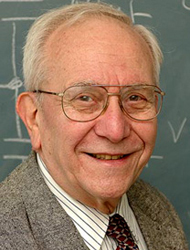 William Bertozzi合作论文数Massachusetts Institute of Technology18J. LeRose合作论文数16Michaels R合作论文数16Franco Garibaldi合作论文数16Bogdan Wojtsekhowski合作论文数Division of Physics, Jefferson Lab15
 Konrad Aniol合作论文数Department of Physics and Astronomy, College of Natural & Social Sciences, California State University15
 Pete Markowitz合作论文数Department of Physics, Florida International University;The Honors College, Florida International University14
 Kees de Jager合作论文数Jefferson Lab;University of Virginia14Nilanga Liyanage合作论文数Massachusetts Institute of Technology14R. Gilman合作论文数14R. Roche合作论文数13V. Punjabi合作论文数13S. Gilad合作论文数13
 Salvatore Frullani合作论文数13R. Suleiman合作论文数12R Lindgren合作论文数Univ Virginia, Charlottesville, VA 22904 USA12J-P Chen合作论文数Thomas Jefferson National Accelerator Facility, Newport News, Virginia 23606, USA.12
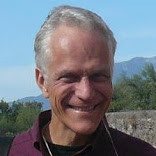 Eugene Chudakov合作论文数Jefferson Lab12
 Jhonatan Gomez合作论文数12A. Sarty合作论文数11C. Glashausser合作论文数11
 Guido Maria Urciuoli合作论文数Istituto Nazionale di Fisica Nucleare11J. Calarco合作论文数10D. S. Dale合作论文数10S. Malov合作论文数10
 Mauro Iodice合作论文数Istituto Nazionale di Fisica Nucleare10
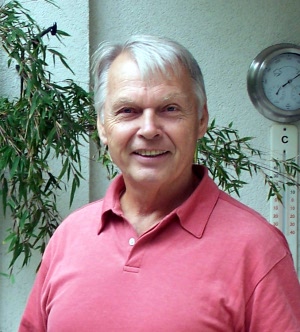 Gerfried Jürgen Kumbartzki合作论文数Rutgers, The State University of New Jersey10K. Mccormick合作论文数10
 K. Wijesooriya合作论文数10E. Brash合作论文数Christopher Newport University10Charles F Perdrisat合作论文数10l todor合作论文数9O. Gayou合作论文数9R. I. Pomatsalyuk合作论文数9P. Ulmer合作论文数9
 Kevin Fissum合作论文数University of Lund9Louis Bimbot合作论文数Institut de Physique Nucléaire d’Orsay (IPNO), Université Paris-Sud9
 Werner U. Boeglin合作论文数Department of Physics, College of Arts, Sciences & Education, Florida International University9V. Gorbenko合作论文数8K. Joo合作论文数8
 Mark Kevin Jones合作论文数Division of Physics, Thomas Jefferson National Accelerator Facility8
 Minrui Liang合作论文数8
 Zein-Eddine Meziani合作论文数Physics Division, Argonne National Laboratory, U.S. Department of Energy Office of Science8P. E. Ulmer合作论文数8
 Lawrence Weinstein合作论文数Department of Physics, Old Dominion University8K. Dow合作论文数8
 Peter Bosted合作论文数University of Massachusetts8




