Tracking detectors are of vital importance for collider-based high energy physics (HEP) experiments. The primary purpose of tracking detectors is the precise reconstruction of charged particle trajectories and the reconstruction of secondary vertices. The performance requirements from the community posed by the future collider experiments require an evolution of tracking systems, necessitating the development of new techniques, materials and technologies in order to fully exploit their physics potential. In this article we summarize the discussions and conclusions of the 2022 Snowmass Instrumentation Frontier subgroup on Solid State and Tracking Detectors (Snowmass IF03).
A future Higgs Factory will provide improved precision on measurements of Higgs couplings beyond those obtained by the LHC, and will enable a broad range of investigations across the fields of fundamental physics, including the mechanism of electroweak symmetry breaking, the origin of the masses and mixing of fundamental particles, the predominance of matter over antimatter, and the nature of dark matter. Future colliders will measure Higgs couplings to a few per cent, giving a window to beyond the Standard Model (BSM) physics in the 1-10 TeV range. In addition, they will make precise measurements of the Higgs width, and characterize the Higgs self-coupling. This report details the work of the EF01 and EF02 working groups for the Snowmass 2021 study.
The FASER experiment is a new small and inexpensive experiment that is placed 480 meters downstream of the ATLAS experiment at the CERN LHC. FASER is designed to capture decays of new long-lived particles, produced outside of the ATLAS detector acceptance. These rare particles can decay in the FASER detector together with about 500–1000 Hz of other particles originating from the ATLAS interaction point. A very high efficiency trigger and data acquisition system is required to ensure that the physics events of interest will be recorded. This paper describes the trigger and data acquisition system of the FASER experiment and presents performance results of the system acquired during initial commissioning.
We present a portable calibration pulser system applied to radio antennas in order to detect ultra-high energy cosmic rays and neutrinos. The system consists of a solid-state high-voltage impulse generator, a digital attenuator, a wide band (150-350 MHz) bi-cone antenna, and a differential GPS. Taking an advantage of light weight of each component (less than 1.4 kg), we developed an airborne calibration system by attaching them on a commercial drone. This system will be used for TAROGE experiment in high mountains as well as in Antarctica. We will report on its design, construction, performance, and potential applications for future radio experiments.
This paper presents a search for direct top squark pair production in events with missing transverse momentum plus either a pair of jets consistent with Standard Model Higgs boson decay into b-quarks or a same-flavour opposite-sign dilepton pair with an invariant mass consistent with a Z boson. The analysis is performed using the proton–proton collision data at \n$$\\sqrt{s}=13$$\n\n TeV collected with the ATLAS detector during the LHC Run-2, corresponding to an integrated luminosity of 139 fb\n$$^{-1}$$\n\n. No excess is observed in the data above the Standard Model predictions. The results are interpreted in simplified models featuring direct production of pairs of either the lighter top squark (\n$$\\tilde{t}_1$$\n\n) or the heavier top squark (\n$$\\tilde{t}_2$$\n\n), excluding at 95% confidence level \n$$\\tilde{t}_1$$\n\n and \n$$\\tilde{t}_2$$\n\n masses up to about 1220 and 875 GeV, respectively.
The Antarctic Impulsive Transient Antenna (ANITA) is a NASA long-duration balloon experiment with the primary goal of detecting ultra-high-energy (>1018eV) neutrinos via the Askaryan Effect. The fourth ANITA mission, ANITA-IV, recently flew from Dec 2 to Dec 29, 2016. For the first time, the Tunable Universal Filter Frontend (TUFF) boards were deployed for mitigation of narrow-band, anthropogenic noise with tunable, switchable notch filters. The TUFF boards also performed second-stage amplification by approximately 45 dB to boost the ∼μV-level radio frequency (RF) signals to ∼ mV-level for digitization, and supplied power via bias tees to the first-stage, antenna-mounted amplifiers. The other major change in signal processing in ANITA-IV is the resurrection of the 90° hybrids deployed previously in ANITA-I, in the trigger system, although in this paper we focus on the TUFF boards. During the ANITA-IV mission, the TUFF boards were successfully operated throughout the flight. They contributed to a factor of 2.8 higher total instrument livetime on average in ANITA-IV compared to ANITA-III due to reduction of narrow-band, anthropogenic noise before a trigger decision is made.
A search for new charged massive gauge bosons, W′, is performed with the ATLAS detector at the LHC. Data were collected in proton–proton collisions at a center-of-mass energy of s=13 TeV and correspond to an integrated luminosity of 36.1 fb−1. This analysis searches for W′ bosons in the W′→tb¯ decay channel in final states with an electron or muon plus jets. The search covers resonance masses between 0.5 and 5.0 TeV and considers right-handed W′ bosons. No significant deviation from the Standard Model (SM) expectation is observed and upper limits are set on the W′→tb¯ cross section times branching ratio and the W′ boson effective couplings as a function of the W′ boson mass. For right-handed W′ bosons with coupling to the SM particles equal to the SM weak coupling constant, masses below 3.15 TeV are excluded at the 95% confidence level. This search is also combined with a previously published ATLAS result for W′→tb¯ in the fully hadronic final state. Using the combined searches, right-handed W′ bosons with masses below 3.25 TeV are excluded at the 95% confidence level. © 2018 The Author(s)
A measurement of production cross sections of the Higgs boson in proton-proton collisions is presentedin the H → ττ decay channel. The analysis is performed using 36.1 fb−1 of data recorded by the ATLASexperiment at the Large Hadron Collider at a center-of-mass energy of ffiffis p ¼ 13 TeV. All combinations ofleptonic (τ → lvv¯ with l ¼ e; μ) and hadronic (τ → hadrons v) τ decays are considered. The H → ττsignal over the expected background from other Standard Model processes is established with an observed(expected) significance of 4.4 (4.1) standard deviations. Combined with results obtained using data taken at7 and 8 TeV center-of-mass energies, the observed (expected) significance amounts to 6.4 (5.4) standarddeviations and constitutes an observation of H → ττ decays. Using the data taken at ffiffis p ¼ 13 TeV, thetotal cross section in the H → ττ decay channel is measured to be 3.77þ0.60 −0.59 ðstatÞ þ0.87 −0.74 ðsystÞ pb, for aHiggs boson of mass 125 GeV assuming the relative contributions of its production modes aspredicted by the Standard Model. Total cross sections in the H → ττ decay channel are determinedseparately for vector-boson-fusion production and gluon-gluon-fusion production to be σVBFH→ττ ¼ 0.280.09 ðstatÞ þ0.11 −0.09 ðsystÞ pb and σggFH→ττ ¼ 3.1 1.0 ðstatÞ þ1.6 −1.3 ðsystÞ pb, respectively. Similarly, results of a fitare reported in the framework of simplified template cross sections. All measurements are in agreementwith Standard Model expectations.
A search for pair production of the supersymmetric partners of the Higgs boson (higgsinos ˜H) in gauge-mediated scenarios is reported. Each higgsino is assumed to decay to a Higgs boson and a gravitino. Two complementary analyses, targeting high- and low-mass signals, are performed to maximize sensitivity. The two analyses utilize LHC pp collision data at a center-of-mass energy √s=13 TeV, the former with an integrated luminosity of 36.1 fb−1 and the latter with 24.3 fb−1, collected with the ATLAS detector in 2015 and 2016. The search is performed in events containing missing transverse momentum and several energetic jets, at least three of which must be identified as b-quark jets. No significant excess is found above the predicted background. Limits on the cross section are set as a function of the mass of the ˜H in simplified models assuming production via mass-degenerate higgsinos decaying to a Higgs boson and a gravitino. Higgsinos with masses between 130 and 230 GeV and between 290 and 880 GeV are excluded at the 95% confidence level. Interpretations of the limits in terms of the branching ratio of the higgsino to a Z boson or a Higgs boson are also presented, and a 45% branching ratio to a Higgs boson is excluded for m˜H≈400 GeV.
We describe a measurement of the top quark mass from events produced in pp collisions at a center-of-mass energy of 1.96 TeV, using the Collider Detector at Fermilab. We identify tt ̄ candidates where both W bosons from the top quarks decay into leptons (eν, μν, or τν) from a data sample of 360 pb−1. The top quark mass is reconstructed in each event separately by three different methods, which draw upon simulated distributions of the neutrino pseudorapidity, tt longitudinal momentum, or neutrino azimuthal angle in order to extract probability distributions for the top quark mass. For each method, representative mass distributions, or templates, are constructed from simulated samples of signal and background events, and parametrized to form continuous probability density functions. A likelihood fit incorporating these parametrized templates is then performed on the data sample masses in order to derive a final top quark mass. Combining the three template methods, taking into account correlations in their statistical and systematic uncertainties, results in a top quark mass measurement of [...] CDF Collaboration, CAMPANELLI, Mario (Collab.), et al. Measurement of the top quark mass using template methods on dilepton events in pp collisions at s√=1.96 TeV. Physical Review. D, 2006, vol. 73, no. 11, p. 112006 DOI : 10.1103/PhysRevD.73.112006
 S. M. Farrington合作论文数108Sandro De Cecco合作论文数108A. Cerri合作论文数A.G. Clark108
 Joseph Boudreau合作论文数Department of Physics and Astronomy, University of Pittsburgh107
 Joey W Huston合作论文数Department of Physics & Astronomy, College of Natural Science, Michigan State University107
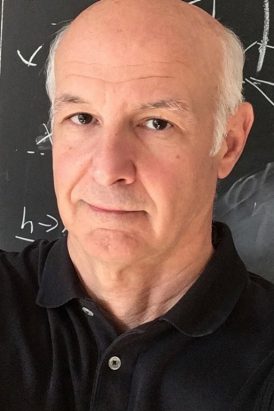 Dante Amidei合作论文数Department of Physics, College of Literature, Science, and the Arts, University of Michigan106
 Alberto Annovi合作论文数INFN106
 Ashutosh V. Kotwal合作论文数Department of Physics, Trinity College of Arts & Sciences, Duke University106
 Alison Lister合作论文数Department of Physics & Astronomy, Faculty of Science, The University of British Columbia105
 Lucio Cerrito合作论文数Dipartimento di Fisica, Università degli studi di Tor Vergata105
 Melissa Franklin合作论文数Department of Physics, Harvard University103
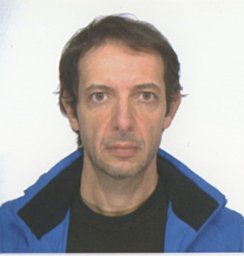 S. Giagu合作论文数INFN Sezione di Roma, Sapienza University103D. Benjamin合作论文数103
 Satyajit Behari合作论文数Univar Solutions103
 Ben Brau合作论文数Department of Physics, College of Natural Sciences, University of Massachusetts Amherst101
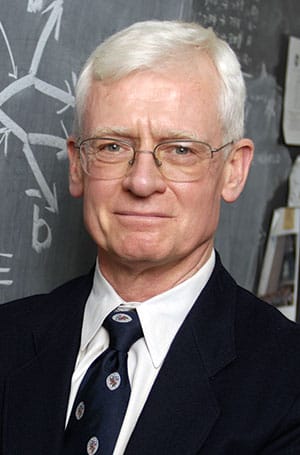 Bruce Barnett合作论文数William H. Miller III Department of Physics and Astronomy, Krieger School of Arts and Sciences, Johns Hopkins University101Andrea Bocci合作论文数CERN100
 Steven Errede合作论文数Department of Physics, The Grainger College of Engineering, University of Illinois Urbana-Champaign100
 Roman Lysák合作论文数Department of Experimental Particle Physics, Division of Elementary Particle Physics, Institute of Physics of the Czech Academy of Sciences99
 Paolo Mastrandrea合作论文数Sezione di Pisa, INFN;CERN99
 Sebastian Grinstein合作论文数Institució Catalana de Recerca i Estudis Avançats;Institut de Fisica d'Altes Energies;Baretek Barcelona Detector Technologies SL98I. Gorelov合作论文数98
 Thomas J Lecompte合作论文数SLAC National Accelerator Laboratory, Stanford University97
 Giorgio Chiarelli合作论文数Istituto Nazionale di Fisica Nucleare95Carl Haber合作论文数Physics Division, Lawrence Berkeley National Laboratory94C. Blocker合作论文数94
 Daniela Bortoletto合作论文数Department of Physics, University of Oxford93M. A. Ciocci合作论文数92
 Suen Hou (侯書雲)合作论文数Institute of Physics, Academia Sinica92
 Julien Donini合作论文数Laboratoire de Physique de Clermont Auvergne, Institut National De Physique Nucléaire Et De Physique Des Particules, CNRS;Université Clermont Auvergne91
 Peter J. Bussey合作论文数School of Physics & Astronomy, University of Glasgow90
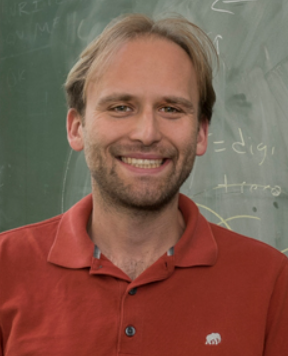 John Adelman合作论文数Department of Physics, Northern Illinois University90
 C. Bromberg合作论文数Michigan State University, USA90J. Antos合作论文数89
 Chris Hays合作论文数Department of Physics, University of Oxford89
 Florencia Canelli合作论文数Physik-Institut, University of Zurich;Department of Physics, University of Zürich87
 Deepak Kar合作论文数School of Physics, University of Witwatersrand85M. D'Onofrio合作论文数Univ Liverpool84R. E. Blair合作论文数University of Bologna83
 Alfred T. Goshaw合作论文数Department of Physics, Trinity College of Arts & Sciences, Duke University83S. Leone合作论文数83N. Kimura合作论文数82
 Mario Paolo Giordani合作论文数Dipartimento Politecnico di Ingegneria e Architettura, Università degli Studi di Udine82P. Giannetti合作论文数INFN Sezione di Pisa82
 Gianluca Introzzi合作论文数Department of Physics, University of Pavia82
 Massimo Casarsa合作论文数Istituto Nazionale di Fisica Nucleare81
 Andrey Korytov合作论文数Institute for High Energy Physics and Astrophysics, Department of Physics, College of Liberal Arts and Sciences, University of Florida;European Center for Nuclear Research;Fermilab81
 Arie Bodek合作论文数Department of Physics and Astronomy, School of Arts & Sciences, University of Rochester81
 Mark C. Kruse合作论文数Department of Physics, Trinity College of Arts & Sciences, Duke University81




