The BaBar detector operated successfully at the PEP-II asymmetric e+e− collider at the SLAC National Accelerator Laboratory from 1999 to 2008. This report covers upgrades, operation, and performance of the collider and the detector systems, as well as the trigger, online and offline computing, and aspects of event reconstruction since the beginning of data taking.
AbstractA search is made for charged Higgs bosons predicted by Two-Higgs-Doublet extensions of the Standard Model (2HDM) using electron-positron collision data collected by the OPAL experiment at $\sqrt{s}=189\mbox{--}209\ \mbox{GeV}$, corresponding to an integrated luminosity of approximately 600 pb−1. Charged Higgs bosons are assumed to be pair-produced and to decay into $\mathrm{q} \bar{\mathrm{q}}$, τντ or AW±. No signal is observed. Model-independent limits on the charged Higgs-boson production cross section are derived by combining these results with previous searches at lower energies. Under the assumption $\mathrm{BR} (\mathrm{H}^{\pm} \to \tau\nu_{\tau}) + \mathrm{BR} (\mathrm{H}^{\pm} \to \mathrm{q} \bar{\mathrm{q}}) = 1$, motivated by general 2HDM type II models, excluded areas on the $[m_{\mathrm{H}^{\pm}} , \mathrm{BR} (\mathrm {H}^{\pm} \to \tau\nu_{\tau})]$ plane are presented and charged Higgs bosons are excluded up to a mass of 76.3 GeV at 95 % confidence level, independent of the branching ratio BR(H±→τντ). A scan of the 2HDM type I model parameter space is performed and limits on the Higgs-boson masses $m_{\mathrm{H}^{\pm}}$ and mA are presented for different choices of tanβ.
search is made for charged Higgs bosons predicted by Two-Higgs-Doublet extensions of the Standard Model (2HDM) using electron-positron collision data collected by the OPAL experiment at √(s)=189209 , corresponding to an integrated luminosity of approximately 600 pb −1 . Charged Higgs bosons are assumed to be pair-produced and to decay into qq̅ , τν τ or AW ± . No signal is observed. Model-independent limits on the charged Higgs-boson production cross section are derived by combining these results with previous searches at lower energies. Under the assumption BR (H^±→τν_τ) + BR (H^±→qq̅) = 1 , motivated by general 2HDM type II models, excluded areas on the [m_H^± , BR (H^±→τν_τ)] plane are presented and charged Higgs bosons are excluded up to a mass of 76.3 GeV at 95
Hadronic event shape distributions from e + e − annihilation measured by the OPAL experiment at centre-of-mass energies between 91 GeV and 209 GeV are used to determine the strong coupling α S . The results are based on QCD predictions complete to the next-to-next-to-leading order (NNLO), and on NNLO calculations matched to the resummed next-to-leading-log-approximation terms (NNLO + NLLA). The combined NNLO result from all variables and centre-of-mass energies is while the combined NNLO + NLLA result is The completeness of the NNLO and NNLO + NLLA results with respect to missing higher order contributions, studied by varying the renormalization scale, is improved compared to previous results based on NLO or NLO + NLLA predictions only. The observed energy dependence of α S agrees with the QCD prediction of asymptotic freedom and excludes the absence of running.
Hadronic event shape distributions from e(+)e(-) annihilation measured by the OPAL experiment at centre-of-mass energies between 91 GeV and 209 GeV are used to determine the strong coupling alpha(S). The results are based on QCD predictions complete to the next-to-next-to-leading order (NNLO), and on NNLO calculations matched to the re-summed next-to-leading-log-approximation terms (NNLO+NLLA). The combined NNLO result from all variables and centre-of-mass energies isalpha(S)(m(Z0)) = 0.1201 +/- 0.0008 (stat.) +/- 0.0013(exp.) +/- 0.0010(had.) +/- 0.0024(theo.)while the combined NNLO + NLLA result isalpha(S)(m(Z0)) = 0.1189 +/- 0.0008(stat.) +/- 0.0016(exp.) +/- 0.0010(had.) +/- 0.0036(theo.)The completeness of the NNLO and NNLO + NLLA results with respect to missing higher order contributions, studied by varying the renormalization scale, is improved compared to previous results based on NLO or NLO + NLLA predictions only. The observed energy dependence of alpha(S) agrees with the QCD prediction of asymptotic freedom and excludes the absence of running.
A search is performed for Higgs bosons decaying into invisible final states, produced in association with a Z(0) boson in e(+)e(-) collisions at energies between 183 and 209 GeV. The search is based on data samples collected by the OPAL detector at LEP corresponding to an integrated luminosity of about 660 pb(-1). The analysis aims to select events containing the hadronic decay products of the Z(0) boson and large missing momentum, as expected from Higgs boson decay into a pair of stable weakly interacting neutral particles, such as the lightest neutralino in the Minimal Supersymmetric Standard Model. The same analysis is applied to a search for nearly invisible Higgs boson cascade decays into stable weakly interacting neutral particles. No excess over the expected background from Standard Model processes is observed. Limits on the production of invisibly decaying Higgs bosons produced in association with a Z(0) boson are derived. Assuming a branching ratio BR(h(0) -> invisible) = 1, a lower limit of 108.2 GeV is placed on the Higgs boson mass at the 95% confidence level. Limits on the production of nearly invisibly decaying Higgs bosons are also obtained. (C) 2009 Elsevier B.V. All rights reserved.
A search is performed for Higgs bosons decaying into invisible final states, produced in association with a Z0 boson in e+e− collisions at energies between 183 and 209 GeV. The search is based on data samples collected by the OPAL detector at LEP corresponding to an integrated luminosity of about 660 pb−1. The analysis aims to select events containing the hadronic decay products of the Z0 boson and large missing momentum, as expected from Higgs boson decay into a pair of stable weakly interacting neutral particles, such as the lightest neutralino in the Minimal Supersymmetric Standard Model. The same analysis is applied to a search for nearly invisible Higgs boson cascade decays into stable weakly interacting neutral particles. No excess over the expected background from Standard Model processes is observed. Limits on the production of invisibly decaying Higgs bosons produced in association with a Z0 boson are derived. Assuming a branching ratio BR(h0→invisible)=1, a lower limit of 108.2 GeV is placed on the Higgs boson mass at the 95% confidence level. Limits on the production of nearly invisibly decaying Higgs bosons are also obtained.
Data collected around sqrt{s}=91 GeV by the OPAL experiment at the LEP e+e- collider are used to study the mechanism of baryon formation. As the signature, the fraction of Sigma-hyperons whose baryon number is compensated by the production of a Sigma-, Lambda or Xi- antihyperon is determined. The method relies entirely on quantum number correlations of the baryons, and not rapidity correlations, making it more model independent than previous studies. The diquark fragmentation model without the popcorn mechanism is strongly disfavored with a significance of 3.8 standard deviations including systematic uncertainties. It is shown that previous studies of the popcorn mechanism are not conclusive if parameter uncertainties are considered.
We present partial branching fractions for inclusive charmless semileptonic $B$ decays $\overline{B}\ensuremath{\rightarrow}{X}_{u}\ensuremath{\ell}\overline{\ensuremath{\nu}}$, and the determination of the Cabibbo-Kobayashi-Maskawa matrix element $|{V}_{ub}|$. The analysis is based on a sample of $383\ifmmode\times\else\texttimes\fi{}{10}^{6}$ $\ensuremath{\Upsilon}(4S)$ decays into $B\overline{B}$ pairs collected with the BABAR detector at the SLAC PEP-II ${e}^{+}{e}^{\ensuremath{-}}$ storage rings. We select events using the invariant mass ${M}_{X}$ of the hadronic system, the invariant mass squared, ${q}^{2}$, of the lepton and neutrino pair, the kinematic variable ${P}_{+}$, or one of their combinations. We then determine partial branching fractions in limited regions of phase space: $\ensuremath{\Delta}\mathcal{B}=(1.18\ifmmode\pm\else\textpm\fi{}{0.09}_{\mathrm{stat}}\ifmmode\pm\else\textpm\fi{}{0.07}_{\mathrm{syst}}\ifmmode\pm\else\textpm\fi{}{0.01}_{\mathrm{theor}})\ifmmode\times\else\texttimes\fi{}{10}^{\ensuremath{-}3}$ (${M}_{X}<1.55\text{ }\text{ }\mathrm{GeV}/{c}^{2}$), $\ensuremath{\Delta}\mathcal{B}=(0.95\ifmmode\pm\else\textpm\fi{}{0.10}_{\mathrm{stat}}\ifmmode\pm\else\textpm\fi{}{0.08}_{\mathrm{syst}}\ifmmode\pm\else\textpm\fi{}{0.01}_{\mathrm{theor}})\ifmmode\times\else\texttimes\fi{}{10}^{\ensuremath{-}3}$ (${P}_{+}<0.66\text{ }\text{ }\mathrm{GeV}/c$), and $\ensuremath{\Delta}\mathcal{B}=(0.81\ifmmode\pm\else\textpm\fi{}{0.08}_{\mathrm{stat}}\ifmmode\pm\else\textpm\fi{}{0.07}_{\mathrm{syst}}\ifmmode\pm\else\textpm\fi{}{0.02}_{\mathrm{theor}})\ifmmode\times\else\texttimes\fi{}{10}^{\ensuremath{-}3}$ (${M}_{X}<1.7\text{ }\text{ }\mathrm{GeV}/{c}^{2}$, ${q}^{2}>8\text{ }\text{ }{\mathrm{GeV}}^{2}/{c}^{4}$). Corresponding values of $|{V}_{ub}|$ are extracted using several theoretical calculations.
We present a combined measurement of the Cabibbo-Kobayashi-Maskawa matrix element vertical bar V-cb vertical bar and of the parameters rho(2), R-1(1), and R-2(1), which fully characterize the form factors for the B-0 -> D*(-)center dot(+)nu(center dot) decay in the framework of heavy-quark effective field theory. The results, based on a selected sample of about 52 800 B-0 -> D*(-)center dot(+)nu(center dot) decays, recorded by the BABAR detector, are rho(2)=1.157 +/- 0.094 +/- 0.027, R-1(1)=1.327 +/- 0.131 +/- 0.043, R-2(1)=0.859 +/- 0.077 +/- 0.021, and F(1)vertical bar V-cb vertical bar=(34.7 +/- 0.4 +/- 1.0)x10(-3). The first error is the statistical and the second is the systematic uncertainty. Combining these measurements with the previous BABAR measurement of the form factors, which employs a different fit technique on a partial sample of the data, we improve the statistical precision of the result, rho(2)=1.191 +/- 0.048 +/- 0.028, R-1(1)=1.429 +/- 0.061 +/- 0.044, R-2(1)=0.827 +/- 0.038 +/- 0.022, and F(1)vertical bar V-cb vertical bar=(34.4 +/- 0.3 +/- 1.1)x10(-3). Using lattice calculations for the axial form factor F(1), we extract vertical bar V-cb vertical bar=(37.4 +/- 0.3 +/- 1.2 +/-(1.2)(1.4))x10(-3), where the third error is due to the uncertainty in F(1). We also present a measurement of the exclusive branching fraction, B=(4.69 +/- 0.04 +/- 0.34)%.
We present a study of excited charm-strange baryon states produced in e(+)e(-) annihilations at or near a center-of-mass energy of 10.58 GeV, in a data sample with an integrated luminosity of 384 fb(-1) recorded with the BABAR detector at the PEP-II e(+)e(-) storage rings at the Stanford Linear Accelerator Center. We study strong decays of charm-strange baryons to Lambda K-+(c)S(0), Lambda K-+(c)-, Lambda K-+(c)-pi(+), Lambda K-+(c)S(0)pi(-), Lambda K-+(c)S(0)pi(-)pi(+), and Lambda K-+(c)-pi(+)pi(-). This study confirms the existence of the states Xi(c)(2980)(+), Xi(c)(3077)(+), and Xi(c)(3077)(0), with a more accurate determination of the Xi(c)(2980)(+) mass and width. We also present evidence for two new states, Xi(c)(3055)(+) and Xi(c)(3123)(+), decaying through the intermediate-resonant modes Sigma(c)(2455)K-++(-) and Sigma(c)(2520)K-++(-), respectively. For each of these baryons, we measure the yield in each final state, determine the statistical significance, and calculate the product of the production cross section and branching fractions. We also measure the masses and widths of these excited charm-strange baryons.
Inclusive jet production (e(+)e(-) -> e(+)e(-) + jet + X) is studied in collisions of quasi-real photons radiated by the LEP beams at e(+)e(-) centre-of-mass energies root s(ee) from 189 to 209 GeV. Jets are reconstructed using the k(perpendicular to) jet algorithm. The inclusive differential cross-section is measured as a function of the jet transverse momentum, p(T)(jet), in the range 5 < p(T)(jet) < 40 GeV for pseudo-rapidities, eta(jet), in the range - 1.5 < eta(jet) < 1.5. The results are compared to predictions of perturbative QCD in next-to-leading order in the strong coupling constant. (c) 2007 Elsevier B.V. All rights reserved.
We present a search for B decays to a charged scalar meson a(0)(+) and a pi(0) where the a(0)(+) decays to an eta meson and a pi(+). The analysis was performed on a data sample consisting of 383x10(6) B (B) over bar pairs collected with the BABAR detector at the PEP-II asymmetric-energy B Factory at SLAC. We find no significant signal and set an upper limit on the product branching fraction B(B+-> a(0)(+)pi(0))xB(a(0)(+)->eta pi(+)) of 1.4x10(-6) at the 90% confidence level.
Using a data sample corresponding to an integrated luminosity of 342 fb(-1) collected with the BABAR detector at the SLAC PEP-II electron-positron storage ring operating at a center-of-mass energy near 10.58 GeV, we measure B(tau(-)--> pi(-)pi(-)pi+nu(tau)(ex.K(S0))=(8.83+/-0.01+/-0.13)%, B(tau(-) -->K(-)pi(-)pi+nu tau(ex.K(S0))=(0.273+/-0.002+/-0.009)%, B(tau(-) -->K(-)pi(-)K+nu tau)=(0.1346+/-0.0010+/-0.0036)%, and B(tau(-) -->K(-)K(-)K+nu tau)=(1.58+/-0.13+/-0.12)x10;{-5}, where the uncertainties are statistical and systematic, respectively. These include significant improvements over previous measurements and a first measurement of B(tau(-) -->K(-)K(-)K+nu tau) in which no resonance structure is assumed. We also report a first measurement of B(tau(-) -->var phi(-)nu tau)=(3.42+/-0.55+/-0.25)x10(-5), a new measurement of B(tau(-) -->var phi K(-)nu tau)=(3.39+/-0.20+/-0.28)x10(-5) and a first upper limit on B(tau(-) -->K(-)K(-)K+nu tau(ex.var phi)).
A search is performed for Higgs bosons decaying into invisible final states, produced in association with a Z boson in ee collisions at energies between 183 and 209 GeV. The search is based on data samples collected by the OPAL detector at LEP corresponding to an integrated luminosity of about 660 pb. The analysis aims to select events containing the hadronic decay products of the Z boson and large missing momentum, as expected from Higgs boson decay into a pair of stable weakly interacting neutral particles, such as the lightest neutralino in the Minimal Supersymmetric Standard Model. The same analysis is applied to a search for nearly invisible Higgs boson cascade decays into stable weakly interacting neutral particles. No excess over the expected background from Standard Model processes is observed. Limits on the production of invisibly decaying Higgs bosons produced in association with a Z boson are derived. Assuming a branching ratio BR(h → invisible) = 1, a lower limit of 108.2 GeV is placed on the Higgs boson mass at the 95% confidence level. Limits on the production of nearly invisibly decaying Higgs bosons are also obtained. (Submitted to Physics Letters B) The OPAL Collaboration G. Abbiendi, C. Ainsley, P.F. Åkesson, G. Alexander, G. Anagnostou, K.J. Anderson, S. Asai, D. Axen, I. Bailey, E. Barberio, T. Barillari, R.J. Barlow, R.J. Batley, P. Bechtle, T. Behnke, K.W. Bell, P.J. Bell, G. Bella, A. Bellerive, G. Benelli, S. Bethke, O. Biebel, O. Boeriu, P. Bock, M. Boutemeur, S. Braibant, R.M. Brown, H.J. Burckhart, S. Campana, P. Capiluppi, R.K. Carnegie, A.A. Carter, J.R. Carter, C.Y. Chang, D.G. Charlton, C. Ciocca, A. Csilling, M. Cuffiani, S. Dado, A. De Roeck, E.A. De Wolf, K. Desch, B. Dienes, J. Dubbert, E. Duchovni, G. Duckeck, I.P. Duerdoth, E. Etzion, F. Fabbri, P. Ferrari, F. Fiedler, I. Fleck, M. Ford, A. Frey, P. Gagnon, J.W. Gary, C. Geich-Gimbel, G. Giacomelli, P. Giacomelli, M. Giunta, J. Goldberg, E. Gross, J. Grunhaus, M. Gruwé, A. Gupta, C. Hajdu, M. Hamann, G.G. Hanson, A. Harel, M. Hauschild, C.M. Hawkes, R. Hawkings, G. Herten, R.D. Heuer, J.C. Hill, D. Horváth, P. Igo-Kemenes, K. Ishii, H. Jeremie, P. Jovanovic, T.R. Junk, J. Kanzaki, D. Karlen, K. Kawagoe, T. Kawamoto, R.K. Keeler, R.G. Kellogg, B.W. Kennedy, S. Kluth, T. Kobayashi, M. Kobel, S. Komamiya, T. Krämer, A. Krasznahorkay Jr., P. Krieger, J. von Krogh, T. Kuhl, M. Kupper, G.D. Lafferty, H. Landsman, D. Lanske, D. Lellouch, J. Letts, L. Levinson, J. Lillich, S.L. Lloyd, F.K. Loebinger, J. Lu, A. Ludwig, J. Ludwig, W. Mader, S. Marcellini, A.J. Martin, T. Mashimo, P. Mättig, J. McKenna, R.A. McPherson, F. Meijers, W. Menges, F.S. Merritt, H. Mes, N. Meyer, A. Michelini, S. Mihara, G. Mikenberg, D.J. Miller, W. Mohr, T. Mori, A. Mutter, K. Nagai, I. Nakamura, H. Nanjo, H.A. Neal, S.W. O’Neale, A. Oh, M.J. Oreglia, S. Orito, C. Pahl, G. Pásztor, J.R. Pater, J.E. Pilcher, J. Pinfold, D.E. Plane, O. Pooth, M. Przybycień, A. Quadt, K. Rabbertz, C. Rembser, P. Renkel, J.M. Roney, A.M. Rossi, Y. Rozen, K. Runge, K. Sachs, T. Saeki, E.K.G. Sarkisyan , A.D. Schaile, O. Schaile, P. Scharff-Hansen, J. Schieck, T. Schörner-Sadenius , M. Schröder, M. Schumacher, R. Seuster , T.G. Shears, B.C. Shen, P. Sherwood, A. Skuja, A.M. Smith, R. Sobie, S. Söldner-Rembold, F. Spano, A. Stahl, D. Strom, R. Ströhmer, S. Tarem, M. Tasevsky, R. Teuscher, M.A. Thomson, E. Torrence, D. Toya, I. Trigger, Z. Trócsányi, E. Tsur, M.F. Turner-Watson, I. Ueda, B. Ujvári, C.F. Vollmer, P. Vannerem, R. Vértesi, M. Verzocchi, H. Voss, J. Vossebeld, C.P. Ward, D.R. Ward, P.M. Watkins, A.T. Watson, N.K. Watson, P.S. Wells, T. Wengler, N. Wermes, G.W. Wilson, J.A. Wilson, G. Wolf, T.R. Wyatt, S. Yamashita, D. Zer-Zion, L. Zivkovic School of Physics and Astronomy, University of Birmingham, Birmingham B15 2TT, UK Dipartimento di Fisica dell’ Università di Bologna and INFN, I-40126 Bologna, Italy Physikalisches Institut, Universität Bonn, D-53115 Bonn, Germany Department of Physics, University of California, Riverside CA 92521, USA Cavendish Laboratory, Cambridge CB3 0HE, UK Ottawa-Carleton Institute for Physics, Department of Physics, Carleton University, Ottawa, Ontario K1S 5B6, Canada
Using a data sample corresponding to an integrated luminosity of 342 fb−1 collected with the BABAR detector at the SLAC PEP-II electron-positron storage ring operating at a center-of-mass energy near 10.58 GeV, we measure B(τ−→π−π−π+ντ(ex.KS0))=(8.83±0.01±0.13)%, B(τ−→K−π−π+ντ(ex.KS0))=(0.273±0.002±0.009)%, B(τ−→K−π−K+ντ)=(0.1346±0.0010±0.0036)%, and B(τ−→K−K−K+ντ)=(1.58±0.13±0.12)×10−5, where the uncertainties are statistical and systematic, respectively. These include significant improvements over previous measurements and a first measurement of B(τ−→K−K−K+ντ) in which no resonance structure is assumed. We also report a first measurement of B(τ−→ϕπ−ντ)=(3.42±0.55±0.25)×10−5, a new measurement of B(τ−→ϕK−ντ)=(3.39±0.20±0.28)×10−5 and a first upper limit on B(τ−→K−K−K+ντ(ex.ϕ)).Received 19 July 2007DOI:https://doi.org/10.1103/PhysRevLett.100.011801©2008 American Physical Society
The τ− → μ−ν̄μντ branching ratio has been measured using data collected from 1990 to 1995 by the OPAL detector at the LEP collider. The resulting value of B(τ− → μ−ν̄μντ ) = 0.1734 ± 0.0009(stat) ± 0.0006(syst) has been used in conjunction with other OPAL measurements to test lepton universality, yielding the coupling constant ratios gμ/ge = 1.0005± 0.0044 and gτ/ge = 1.0031± 0.0048, in good agreement with the Standard Model prediction of unity. A value for the Michel parameter η = 0.004 ± 0.037 has also been determined and used to find a limit for the mass of the charged Higgs boson, mH± > 1.28 tan β, in the Minimal Supersymmetric Standard Model. (To be submitted to Physics Letters B) The OPAL Collaboration G. Abbiendi2, C.Ainsley5, P.F. Åkesson3, G. Alexander22, J. Allison16, P.Amaral9, G. Anagnostou1, K.J.Anderson9, S.Arcelli2, S.Asai23, D. Axen27, G. Azuelos18,a, I. Bailey26, E.Barberio8,p, R.J. Barlow16, R.J. Batley5, P.Bechtle25 , T.Behnke25, K.W. Bell20, P.J. Bell1, G.Bella22, A. Bellerive6, G. Benelli4, S. Bethke32, O.Biebel31, I.J. Bloodworth1, O.Boeriu10, P.Bock11, D. Bonacorsi2, M. Boutemeur31, S. Braibant8, L. Brigliadori2, R.M. Brown20, K.Buesser25, H.J. Burckhart8, S. Campana4, R.K.Carnegie6, B. Caron28, A.A. Carter13, J.R.Carter5, C.Y. Chang17, D.G. Charlton1,b, A.Csilling8,g, M. Cuffiani2, S.Dado21, S.Dallison16, A.De Roeck8, E.A. De Wolf8,s, K.Desch25, B. Dienes30, M.Donkers6, J.Dubbert31, E.Duchovni24, G.Duckeck31 , I.P. Duerdoth16, E. Elfgren18, E. Etzion22, F. Fabbri2, L. Feld10, P. Ferrari8, F. Fiedler31, I. Fleck10, M. Ford5, A. Frey8, A. Fürtjes8, P.Gagnon12, J.W. Gary4, G. Gaycken25, C.Geich-Gimbel3, G. Giacomelli2, P.Giacomelli2 , M. Giunta4, J.Goldberg21, E. Gross24, J.Grunhaus22, M.Gruwé8, P.O. Günther3, A.Gupta9, C.Hajdu29, M. Hamann25, G.G. Hanson4, K.Harder25, A. Harel21, M. Harin-Dirac4, M. Hauschild8, J.Hauschildt25, C.M.Hawkes1, R.Hawkings8, R.J. Hemingway6, C.Hensel25, G. Herten10, R.D. Heuer25, J.C.Hill5, K.Hoffman9, R.J. Homer1, D. Horváth29,c, R. Howard27, P. Igo-Kemenes11, K. Ishii23, H. Jeremie18, P. Jovanovic1, T.R. Junk6, N. Kanaya26, J.Kanzaki23, G.Karapetian18, D. Karlen6, V.Kartvelishvili16, K.Kawagoe23, T.Kawamoto23, R.K.Keeler26, R.G. Kellogg17, B.W. Kennedy20, D.H. Kim19, K.Klein11,t, A. Klier24, S.Kluth32, T.Kobayashi23, M. Kobel3, S.Komamiya23, L.Kormos26, T.Krämer25, T.Kress4, P.Krieger6,l, J. von Krogh11, D. Krop12, K.Kruger8, T.Kuhl25, M. Kupper24, G.D. Lafferty16, H. Landsman21, D. Lanske14, J.G. Layter4, A. Leins31, D. Lellouch24, J. Letts, L. Levinson24, J. Lillich10, S.L. Lloyd13, F.K. Loebinger16, J. Lu27, J. Ludwig10, A.Macpherson28,i, W. Mader3, S.Marcellini2, T.E.Marchant16, A.J.Martin13, J.P. Martin18, G.Masetti2, T.Mashimo23, P. Mättig, W.J. McDonald28, J.McKenna27, T.J. McMahon1, R.A.McPherson26, F. Meijers8, P. Mendez-Lorenzo31, W. Menges25, F.S. Merritt9, H.Mes6,a, A. Michelini2, S.Mihara23, G. Mikenberg24, D.J. Miller15, S.Moed21, W.Mohr10, T.Mori23, A.Mutter10, K.Nagai13, I. Nakamura23, H.A. Neal33, R. Nisius32, S.W.O’Neale1, A. Oh8, A.Okpara11, M.J. Oreglia9, S.Orito23, C. Pahl32, G.Pásztor4,g, J.R.Pater16, G.N. Patrick20, J.E. Pilcher9, J. Pinfold28, D.E. Plane8, B. Poli2, J. Polok8, O.Pooth14, M. Przybycień8,n, A. Quadt3, K. Rabbertz8,r, C.Rembser8, P. Renkel24, H.Rick4, J.M. Roney26, S.Rosati3, Y. Rozen21, K. Runge10, K. Sachs6, T. Saeki23, O. Sahr31, E.K.G. Sarkisyan8,j , A.D. Schaile31, O. Schaile31, P. Scharff-Hansen8, J. Schieck32, T. Schörner-Sadenius8, M. Schröder8, M. Schumacher3, C. Schwick8, W.G. Scott20, R. Seuster14,f , T.G. Shears8,h, B.C. Shen4, P. Sherwood15, G. Siroli2, A. Skuja17, A.M. Smith8, R. Sobie26, S. Söldner-Rembold10,d, F. Spano9, A. Stahl3, K. Stephens16, D. Strom19, R. Ströhmer31, S. Tarem21, M.Tasevsky8, R.J.Taylor15, R.Teuscher9, M.A. Thomson5, E.Torrence19, D. Toya23, P. Tran4, T.Trefzger31, A. Tricoli2, I. Trigger8, Z.Trócsányi30,e, E.Tsur22, M.F. Turner-Watson1, I. Ueda23, B. Ujvári30,e, B. Vachon26, C.F. Vollmer31, P.Vannerem10, M. Verzocchi17, H. Voss8,q, J.Vossebeld8,h, D.Waller6, C.P. Ward5, D.R. Ward5, P.M. Watkins1, A.T.Watson1, N.K.Watson1, P.S.Wells8, T.Wengler8, N. Wermes3, D. Wetterling11 G.W. Wilson16,k, J.A. Wilson1, G. Wolf24, T.R.Wyatt16, S.Yamashita23, D. Zer-Zion4, L. Zivkovic24 1School of Physics and Astronomy, University of Birmingham, Birmingham B15 2TT, UK 2Dipartimento di Fisica dell’ Università di Bologna and INFN, I-40126 Bologna, Italy 3Physikalisches Institut, Universität Bonn, D-53115 Bonn, Germany 4Department of Physics, University of California, Riverside CA 92521, USA 5Cavendish Laboratory, Cambridge CB3 0HE, UK 6Ottawa-Carleton Institute for Physics, Department of Physics, Carleton University, Ottawa, Ontario K1S
B. Aubert, M. Bona, D. Boutigny, Y. Karyotakis, J. P. Lees, V. Poireau, X. Prudent, V. Tisserand, A. Zghiche, J. Garra Tico, E. Grauges, L. Lopez, A. Palano, M. Pappagallo, G. Eigen, B. Stugu, L. Sun, G. S. Abrams, M. Battaglia, D. N. Brown, J. Button-Shafer, R. N. Cahn, Y. Groysman, R. G. Jacobsen, J. A. Kadyk, L. T. Kerth, Yu. G. Kolomensky, G. Kukartsev, D. Lopes Pegna, G. Lynch, L. M. Mir, T. J. Orimoto, I. L. Osipenkov, M. T. Ronan,* K. Tackmann, T. Tanabe, W. A. Wenzel, P. del Amo Sanchez, C. M. Hawkes, A. T. Watson, T. Held, H. Koch, M. Pelizaeus, T. Schroeder, M. Steinke, D. Walker, D. J. Asgeirsson, T. Cuhadar-Donszelmann, B. G. Fulsom, C. Hearty, T. S. Mattison, J. A. McKenna, M. Barrett, A. Khan, M. Saleem, L. Teodorescu, V. E. Blinov, A. D. Bukin, V. P. Druzhinin, V. B. Golubev, A. P. Onuchin, S. I. Serednyakov, Yu. I. Skovpen, E. P. Solodov, K. Yu. Todyshev, M. Bondioli, S. Curry, I. Eschrich, D. Kirkby, A. J. Lankford, P. Lund, M. Mandelkern, E. C. Martin, D. P. Stoker, S. Abachi, C. Buchanan, S. D. Foulkes, J. W. Gary, F. Liu, O. Long, B. C. Shen, L. Zhang, H. P. Paar, S. Rahatlou, V. Sharma, J. W. Berryhill, C. Campagnari, A. Cunha, B. Dahmes, T. M. Hong, D. Kovalskyi, J. D. Richman, T. W. Beck, A. M. Eisner, C. J. Flacco, C. A. Heusch, J. Kroseberg, W. S. Lockman, T. Schalk, B. A. Schumm, A. Seiden, M. G. Wilson, L. O. Winstrom, E. Chen, C. H. Cheng, F. Fang, D. G. Hitlin, I. Narsky, T. Piatenko, F. C. Porter, R. Andreassen, G. Mancinelli, B. T. Meadows, K. Mishra, M. D. Sokoloff, F. Blanc, P. C. Bloom, S. Chen, W. T. Ford, J. F. Hirschauer, A. Kreisel, M. Nagel, U. Nauenberg, A. Olivas, J. G. Smith, K. A. Ulmer, S. R. Wagner, J. Zhang, A. M. Gabareen, A. Soffer, W. H. Toki, R. J. Wilson, F. Winklmeier, D. D. Altenburg, E. Feltresi, A. Hauke, H. Jasper, J. Merkel, A. Petzold, B. Spaan, K. Wacker, V. Klose, M. J. Kobel, H. M. Lacker, W. F. Mader, R. Nogowski, J. Schubert, K. R. Schubert, R. Schwierz, J. E. Sundermann, A. Volk, D. Bernard, G. R. Bonneaud, E. Latour, V. Lombardo, Ch. Thiebaux, M. Verderi, P. J. Clark, W. Gradl, F. Muheim, S. Playfer, A. I. Robertson, J. E. Watson, Y. Xie, M. Andreotti, D. Bettoni, C. Bozzi, R. Calabrese, A. Cecchi, G. Cibinetto, P. Franchini, E. Luppi, M. Negrini, A. Petrella, L. Piemontese, E. Prencipe, V. Santoro, F. Anulli, R. Baldini-Ferroli, A. Calcaterra, R. de Sangro, G. Finocchiaro, S. Pacetti, P. Patteri, I. M. Peruzzi, M. Piccolo, M. Rama, A. Zallo, A. Buzzo, R. Contri, M. Lo Vetere, M. M. Macri, M. R. Monge, S. Passaggio, C. Patrignani, E. Robutti, A. Santroni, S. Tosi, K. S. Chaisanguanthum, M. Morii, J. Wu, R. S. Dubitzky, J. Marks, S. Schenk, U. Uwer, D. J. Bard, P. D. Dauncey, R. L. Flack, J. A. Nash, W. Panduro Vazquez, M. Tibbetts, P. K. Behera, X. Chai, M. J. Charles, U. Mallik, V. Ziegler, J. Cochran, H. B. Crawley, L. Dong, V. Eyges, W. T. Meyer, S. Prell, E. I. Rosenberg, A. E. Rubin, Y. Y. Gao, A. V. Gritsan, Z. J. Guo, C. K. Lae, A. G. Denig, M. Fritsch, G. Schott, N. Arnaud, J. Béquilleux, A. D’Orazio, M. Davier, G. Grosdidier, A. Höcker, V. Lepeltier, F. Le Diberder, A. M. Lutz, S. Pruvot, S. Rodier, P. Roudeau, M. H. Schune, J. Serrano, V. Sordini, A. Stocchi, W. F. Wang, G. Wormser, D. J. Lange, D. M. Wright, I. Bingham, J. P. Burke, C. A. Chavez, I. J. Forster, J. R. Fry, E. Gabathuler, R. Gamet, D. E. Hutchcroft, D. J. Payne, K. C. Schofield, C. Touramanis, A. J. Bevan, K. A. George, F. Di Lodovico, W. Menges, R. Sacco, G. Cowan, H. U. Flaecher, D. A. Hopkins, S. Paramesvaran, F. Salvatore, A. C. Wren, D. N. Brown, C. L. Davis, J. Allison, N. R. Barlow, R. J. Barlow, Y. M. Chia, C. L. Edgar, G. D. Lafferty, T. J. West, J. I. Yi, J. Anderson, C. Chen, A. Jawahery, D. A. Roberts, G. Simi, J. M. Tuggle, G. Blaylock, C. Dallapiccola, S. S. Hertzbach, X. Li, T. B. Moore, E. Salvati, S. Saremi, R. Cowan, D. Dujmic, P. H. Fisher, K. Koeneke, G. Sciolla, S. J. Sekula, M. Spitznagel, F. Taylor, R. K. Yamamoto, M. Zhao, Y. Zheng, S. E. Mclachlin,* P. M. Patel, S. H. Robertson, A. Lazzaro, F. Palombo, J. M. Bauer, L. Cremaldi, V. Eschenburg, R. Godang, R. Kroeger, D. A. Sanders, D. J. Summers, H. W. Zhao, S. Brunet, D. Côté, M. Simard, P. Taras, F. B. Viaud, H. Nicholson, G. De Nardo, F. Fabozzi,51,x L. Lista, D. Monorchio, C. Sciacca, M. A. Baak, G. Raven, H. L. Snoek, C. P. Jessop, K. J. Knoepfel, J. M. LoSecco, G. Benelli, L. A. Corwin, K. Honscheid, H. Kagan, R. Kass, J. P. Morris, A. M. Rahimi, J. J. Regensburger, Q. K. Wong, N. L. Blount, J. Brau, R. Frey, O. Igonkina, J. A. Kolb, M. Lu, R. Rahmat, N. B. Sinev, D. Strom, J. Strube, E. Torrence, N. Gagliardi, A. Gaz, M. Margoni, M. Morandin, A. Pompili, M. Posocco, M. Rotondo, F. Simonetto, R. Stroili, C. Voci, E. Ben-Haim, H. Briand, G. Calderini, J. Chauveau, P. David, L. Del Buono, Ch. de la Vaissière, O. Hamon, Ph. Leruste, J. Malclès, J. Ocariz, A. Perez, J. Prendki, L. Gladney, M. Biasini, R. Covarelli, PRL 101, 091801 (2008) P H Y S I C A L R E V I E W L E T T E R S week ending 29 AUGUST 2008
We present results of a search for the decays $B^0 \to \ell^+\ell^-\gamma$ ($\ell=e$, $\mu$). The search is performed using $320\times 10^{6}$ $B\bar{B}$ pairs collected at the $\Upsilon(4S)$ resonance with the BABAR detector at the PEP-II $B$ Factory at SLAC. We find no significant signal and set the following branching fraction upper limits at the 90% confidence level: $\mathcal{B}(B^0\to e^+e^-\gamma)<1.2\times 10^{-7}$ and $\mathcal{B}(B^0\to \mu^+\mu^-\gamma)<1.5\times 10^{-7}$.
We report on our search for decays proceeding via a tree-level b-->c quark transition in which a gluon radiates into an ss[over ] pair. We present observations of the decays B;{-}-->D_{s};{+}K;{-}pi;{-} and B[over ];{0}-->D_{s};{+}K_{S};{0}pi;{-} and evidence for B;{-}-->D_{s};{+}K;{-}K;{-} and set upper limits on the branching fractions for B[over ];{0}-->D_{s};{+}K_{S};{0}pi;{-} and B;{-}-->D_{s};{+}K;{-}K;{-} using 383x10;{6} Upsilon(4S)-->BB[over ] events collected by the BABAR detector at SLAC. We present evidence that the invariant mass distributions of D_{s};{+}K;{-} pairs from B;{-}-->D_{s};{+}K;{-}pi;{-} decays are inconsistent with the phase-space model, suggesting the presence of charm resonances lying below the D_{s};{+}K;{-} threshold.
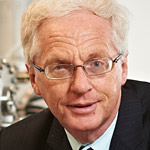 Roger Barlow合作论文数School of Computing and Engineering, University of Huddersfield274
 George Lafferty合作论文数School of Physics and Astronomy, The University of Manchester273G. Benelli合作论文数266J.W. Gary合作论文数261
 Alan Watson合作论文数School of Physics and Astronomy, College of Engineering and Physical Sciences, University of Birmingham258
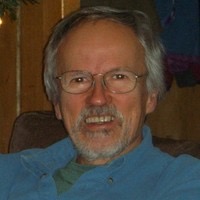 J. Allison合作论文数Geant4 Associates International Ltd251
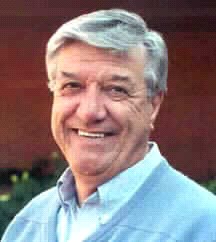 David Leith合作论文数Stanford Linear Accelerator Center249B.C. Shen合作论文数237W. Mader合作论文数236
 Eric Torrence合作论文数Institute for Fundamental Science, Department of Physics, College of Arts and Sciences, University of Oregon226
 Chris Hawkes合作论文数School of Physics and Astronomy, University of Birmingham226
 Rolf Dubitzky合作论文数CARIAD218
 Dmytro Kovalskyi合作论文数Massachusetts Institute of Technology216C. J. Flacco合作论文数216
 Ingrid Ofte合作论文数Anello Photonics216F. Salvatore合作论文数University of Pavia and INFN, Pavia, Italy216
 David Kirkby合作论文数Dept Phys & Astron, Univ Calif Irvine215A. Cunha合作论文数214
 Enrico Feltresi合作论文数Pietro Fiorentini Spa214
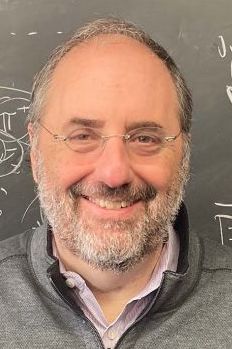 Claudio Campagnari合作论文数Physics Department, University of California Santa Barbara;CERN214
 Francesca Di Lodovico合作论文数Department of Physics, Faculty of Natural, Mathematical & Engineering Sciences, King’s College London214
 Mario Bondioli合作论文数Bloomberg LP214L. Piemontese合作论文数214Marc Pelizäus合作论文数University of Hawaii214B. Dahmes合作论文数213M. Steinke合作论文数213R.Gamet合作论文数Department of Physics, Oliver Lodge Laboratory, University of Liverpool213Evgeny Solodov合作论文数213M. Spitznagel合作论文数213
 James Cochran合作论文数Department of Physics and Astronomy, College of Liberal Arts and Sciences, Iowa State University212G. Kukartsev合作论文数212S. D. Foulkes合作论文数212S. Saremi合作论文数212
 Carlo Dallapiccola合作论文数Department of Physics, College of Natural Sciences, University of Massachusetts Amherst212
 Andreas Petzold合作论文数Scientific Data Management Department, Scientific Computing Center, Karlsruhe Institute of Technology212
 Eson Chen合作论文数212P. Lund合作论文数212Amedeo Buzzo合作论文数212Y. Groysman合作论文数212T. Held合作论文数211H. Nicholson合作论文数211Gilbert Grosdidier合作论文数Laboratoire de l'Accélérateur Linéaire, Institut National de Physique Nucléaire et de Physique des Particules211
 Lucien Cremaldi合作论文数Department of Physics and Astronomy, University of Mississippi211N. Arnaud合作论文数211John Kadyk合作论文数211Serednyakov Sergey Ivanovich合作论文数Budker Institute of Nuclear Physics, Siberian Division, Russian Academy of Sciences211
 Masahiro Morii合作论文数Department of Physics, Harvard University211
 Shahram Rahatlou合作论文数Physics Department, Sapienza Università di Roma;Istituto Nazionale di Fisica Nucleare;European Organization for Nuclear Research211
 Frank C. Porter合作论文数The Division of Physics, Mathematics and Astronomy, California Institute of Technology209




