We present a measurement of the W boson mass in W-->e(nu) decays using 1 fb-1 of data collected with the D0 detector during Run II of the Fermilab Tevatron collider. With a sample of 499830 W-->e(nu) candidate events, we measure M(W)=80.401+/-0.043 GeV. This is the most precise measurement from a single experiment.
We report an observation of new bottom baryons produced in p (cid:1) p collisions at the Tevatron. Using 1 : 1 fb (cid:2) 1 of data collected by the CDF II detector, we observe four (cid:2) 0 b (cid:1) (cid:3) resonances in the fully reconstructed decay mode (cid:2) 0 b ! (cid:2) (cid:4) c (cid:1) (cid:2) , where (cid:2) (cid:4) c ! pK (cid:2) (cid:1) (cid:4) . We interpret these states as the (cid:3) (cid:5)(cid:1)(cid:6)(cid:3) b baryons and measure the following masses: m (cid:3) (cid:4) b (cid:7) 5807 : 8 (cid:4) 2 : 0 (cid:2) 2 : 2 (cid:5) stat : (cid:6) (cid:3) 1 : 7 (cid:5) syst : (cid:6) MeV =c 2 , m (cid:3)
We describe a measurement of the top quark mass from events produced in pp collisions at a center-of-mass energy of 1.96 TeV, using the Collider Detector at Fermilab. We identify tt ̄ candidates where both W bosons from the top quarks decay into leptons (eν, μν, or τν) from a data sample of 360 pb−1. The top quark mass is reconstructed in each event separately by three different methods, which draw upon simulated distributions of the neutrino pseudorapidity, tt longitudinal momentum, or neutrino azimuthal angle in order to extract probability distributions for the top quark mass. For each method, representative mass distributions, or templates, are constructed from simulated samples of signal and background events, and parametrized to form continuous probability density functions. A likelihood fit incorporating these parametrized templates is then performed on the data sample masses in order to derive a final top quark mass. Combining the three template methods, taking into account correlations in their statistical and systematic uncertainties, results in a top quark mass measurement of [...] CDF Collaboration, CAMPANELLI, Mario (Collab.), et al. Measurement of the top quark mass using template methods on dilepton events in pp collisions at s√=1.96 TeV. Physical Review. D, 2006, vol. 73, no. 11, p. 112006 DOI : 10.1103/PhysRevD.73.112006
A search for the direct production of Higgs bosons in the di-tau decay mode is performed with 86.3±3.5 pb−1 of data collected with the Collider Detector at Fermilab during the 1994–1995 data taking period of the Tevatron. We search for events where one tau decays to an electron plus neutrinos and the other tau decays hadronically. We perform a counting experiment and set limits on the cross section for supersymmetric Higgs boson production where tanβ is large and mA is small. For a benchmark parameter space point where mA0=100 GeV/c2 and tanβ=50, we limit the production cross section multiplied by the branching ratio to be less than 77.9 pb at the 95% confidence level compared to the theoretically predicted value of 11.0 pb. This is the first search for Higgs bosons decaying to tau pairs at a hadron collider. CDF Collaboration, CLARK, Allan Geoffrey (Collab.), D'ONOFRIO, Monica (Collab.), WU, Xin (Collab.). Search for supersymmetric Higgs bosons in the di-tau decay mode in pp collisions at s√=1.8 TeV. Physical Review. D, 2005, vol. 72, no. 07, p. 072004 DOI : 10.1103/PhysRevD.72.072004
G. Bonvicini, D. Cinabro, M. Dubrovin, A. Lincoln, P. Naik, J. Rademacker, D. M. Asner, K. W. Edwards, J. Reed, R. A. Briere, T. Ferguson, G. Tatishvili, H. Vogel, M. E. Watkins, J. L. Rosner, J. P. Alexander, D. G. Cassel, J. E. Duboscq, R. Ehrlich, L. Fields, L. Gibbons, R. Gray, S. W. Gray, D. L. Hartill, B. K. Heltsley, D. Hertz, J. M. Hunt, J. Kandaswamy, D. L. Kreinick, V. E. Kuznetsov, J. Ledoux, H. Mahlke-Kruger, D. Mohapatra, P. U. E. Onyisi, J. R. Patterson, D. Peterson, D. Riley, A. Ryd, A. J. Sadoff, X. Shi, S. Stroiney, W. M. Sun, T. Wilksen, S. B. Athar, R. Patel, J. Yelton, P. Rubin, B. I. Eisenstein, I. Karliner, S. Mehrabyan, N. Lowrey, M. Selen, E. J. White, J. Wiss, R. E. Mitchell, M. R. Shepherd, D. Besson, T. K. Pedlar, D. Cronin-Hennessy, K. Y. Gao, J. Hietala, Y. Kubota, T. Klein, B. W. Lang, R. Poling, A. W. Scott, P. Zweber, S. Dobbs, Z. Metreveli, K. K. Seth, A. Tomaradze, J. Libby, A. Powell, G. Wilkinson, K. M. Ecklund, W. Love, V. Savinov, A. Lopez, H. Mendez, J. Ramirez, J. Y. Ge, D. H. Miller, I. P. J. Shipsey, B. Xin, G. S. Adams, M. Anderson, J. P. Cummings, I. Danko, D. Hu, B. Moziak, J. Napolitano, Q. He, J. Insler, H. Muramatsu, C. S. Park, E. H. Thorndike, F. Yang, M. Artuso, S. Blusk, S. Khalil, J. Li, R. Mountain, S. Nisar, K. Randrianarivony, N. Sultana, T. Skwarnicki, S. Stone, J. C. Wang, and L. M. Zhang
We have performed a search for radiative b-hadron decays using events produced in pp̄ collisions at √ s = 1.8 TeV and collected by the Collider Detector at Fermilab. The decays we considered were B 0 d → K ∗0 (→ K−π+)γ, B 0 s → φ(→ K+K−)γ, Λb → Λ(→ pπ)γ, and their charge conjugates. Two independent methods to identify photons from such decays were employed. In the first method, the photon was detected in the electromagnetic calorimeter. In the second method, the photon was identified by an electron-positron pair produced through the external photon conversion before the tracking detector volume. By combining the two methods we obtain upper limits on the branching fractions for the B 0 d, B 0 s, and Λ 0 b radiative decays, which, at the 95% confidence level, are found to be B(B0d → K ∗0 γ) < 1.4 × 10⁻⁴, B(B0s → φγ) < 1.6 × 10⁻⁴, and B(Λb → Λγ) < 1.9 × 10⁻³. PACS numbers: 14.40.Nd, 14.20.Mr Typeset using REVTEX
The discovery of hyperon polarization at high energy' gives insight into the dynamics of baryon interactions and also furnishes a method for precise measurements of hyperon moments which, in turn, test composite models of baryon structure. This Letter reports a new me3,4 + ea surement of the X magnetic moment, and the polarization of inclusively produced X+ hyperons. Our moment divers by more than three standard deviations from a recent measurement of comparable precision. The polarization of Z+ hyperons was measured by the asymmetry of the angular distribution in X+ pz . The magnetic moment of the Z+ was determined by precession of the spin in a magnetic field. The experiment was performed in the M2 beam line at Fermilab. The apparatus (Fig. 1) and data taking were described elsewh 67 here. The 400-GeV/c proton beam was directed onto a Be target at angles of +5 or —5 mrad with respect to the Z, + direction. A 5.3-m-long collimator in a 1.24-T downward field defined a 10-rnrad curved channel for the g+ ibeam. The coordinate system at production has +z along the Z+ momentum, +y upwards, and x =y&z. The decay chain Z+ pz, z 2y was detected by a wire-chamber spectrometer and a lead-glass array (PbG). The trigger required a charged particle in the spectrometer (S~ C4 PC), and at least one y in the lead glass (T PbG). Two radiation lengths of lead were placed before C5 above and below the M3 aperture to shower wide-angle y's for position determination in C5. Event categories were based on the amount of information present. Gamma categories were events with only one y in PbG and the other undetected, one y in PbG and position data on the other in C5, or both y's in PbG. Charged-track data fell in two categories: 60% Ml 40O Gev PROTONS S2 C1 C2 C3 C4 M3 Cs@ C7 LEAD GLASS
We report a search for single top quark production with the CDF II detector using 2.1 fb-1 of integrated luminosity of pbar p collisions at sqrt{s}=1.96 TeV. The data selected consist of events characterized by large energy imbalance in the transverse plane and hadronic jets, and no identified electrons and muons, so the sample is enriched in W -> tau nu decays. In order to suppress backgrounds, additional kinematic and topological requirements are imposed through a neural network, and at least one of the jets must be identified as a b-quark jet. We measure an excess of signal-like events in agreement with the standard model prediction, but inconsistent with a model without single top quark production by 2.1 standard deviations (sigma), with a median expected sensitivity of 1.4 sigma. Assuming a top quark mass of 175 GeV/c2 and ascribing the excess to single top quark production, the cross section is measured to be 4.9+2.5-2.2(stat+syst)pb, consistent with measurements performed in independent datasets and with the standard model prediction.
We present a measurement of the ratio of the t (t) over bar production cross section via gluon-gluon fusion to the total t (t) over bar production cross section in p (p) over bar collisions at root s = 1.96 Tev at the Tevatron. Using a data sample with an integrated luminosity of 955 pb(-1) recorded by the CDF II detector at Fermilab, we select events based on the t (t) over bar decay to lepton + jets. Using an artificial neural network technique we discriminate between t (t) over bar events produced via q (q) over bar annihilation and gg fusion, and find G(f) = sigma(gg -> t (t) over bar/sigma(p (p) over bar -> t (t) over bar) < 0.33 at the 68% confidence level. This result is combined with a previous measurement to obtain the most stringent measurement of this quantity by CDF to date, G(f) = 0.07(-0.07)(+0.15).
We thank the Fermilab staff and the technical staffs of the participating institutions for their vital contributions. This work was supported by the U.S. Department of Energy and National Science Foundation; the Italian Istituto Nazionale di Fisica Nucleare; the Ministry of Education, Culture, Sports, Science and Technology of Japan; the Natural Sciences and Engineering Research Council of Canada; the National Science Council of the Republic of China; the Swiss National Science Foundation; the A.P. Sloan Foundation; the Bundesministerium fur Bildung und Forschung, Germany; the Korean Science and Engineering Foundation and the Korean Research Foundation; the Science and Technology Facilities Council and the Royal Society, UK; the Institut National de Physique Nucleaire et Physique des Particules/CNRS; the Russian Foundation for Basic Research; the Comision Interministerial de Ciencia y Tecnologia, Spain; the European Community’s Human Potential Programme; the Slovak RD and the Academy of Finland.
Models of maximal flavor violation (MxFV) in elementary particle physics may contain at least one new scalar SU(2) doublet field Phi(FV)=(eta(0),eta(+)) that couples the first and third generation quarks (q_(1), q_(3)) via a Lagrangian term L(FV)=xi(13)Phi(FV)q(1)q(3). These models have a distinctive signature of same-charge top-quark pairs and evade flavor-changing limits from meson mixing measurements. Data corresponding to 2 fb(-1) collected by the Collider Dectector at Fermilab II detector in pp[over ] collisions at sqrt[s]=1.96 TeV are analyzed for evidence of the MxFV signature. For a neutral scalar eta(0) with m_(eta;(0))=200 GeV/c(2) and coupling xi(13)=1, approximately 11 signal events are expected over a background of 2.1+/-1.8 events. Three events are observed in the data, consistent with background expectations, and limits are set on the coupling xi(13) for m(eta(0)=180-300 GeV/c(2).
We present the first direct experimental bound on the total decay width of the top quark, Gamma(t), using 955 pb(-1) of the Tevatron's pp collisions recorded by the Collider Detector at Fermilab. We identify 253 top-antitop pair candidate events. The distribution of reconstructed top quark mass from these events is fitted to templates representing different values of the top quark width. Using a confidence interval based on likelihood-ratio ordering, we extract an upper limit at 95% C.L. of Gamma(t)<13.1 GeV for an assumed top quark mass of 175 GeV/c(2).
We report a measurement of the top-quark mass M_{t} in the dilepton decay channel tt[over ] --> bl;{'+} nu_{l};{'}b[over ]l;{-}nu[over ]_{l}. Events are selected with a neural network which has been directly optimized for statistical precision in top-quark mass using neuroevolution, a technique modeled on biological evolution. The top-quark mass is extracted from per-event probability densities that are formed by the convolution of leading order matrix elements and detector resolution functions. The joint probability is the product of the probability densities from 344 candidate events in 2.0 fb;{-1} of pp[over ] collisions collected with the CDF II detector, yielding a measurement of M_{t} = 171.2 +/- 2.7(stat) +/- 2.9(syst) GeV / c;{2}.
A combined mass and particle identification fit is used to make the first observation of the decay ${\overline{B}}_{s}^{0}\ensuremath{\rightarrow}{D}_{s}^{\ifmmode\pm\else\textpm\fi{}}{K}^{\ensuremath{\mp}}$ and measure the branching fraction of ${\overline{B}}_{s}^{0}\ensuremath{\rightarrow}{D}_{s}^{\ifmmode\pm\else\textpm\fi{}}{K}^{\ensuremath{\mp}}$ relative to ${\overline{B}}_{s}^{0}\ensuremath{\rightarrow}{D}_{s}^{+}{\ensuremath{\pi}}^{\ensuremath{-}}$. This analysis uses $1.2\text{ }\text{ }{\mathrm{fb}}^{\ensuremath{-}1}$ integrated luminosity of $p\overline{p}$ collisions at $\sqrt{s}=1.96\text{ }\text{ }\mathrm{TeV}$ collected with the CDF II detector at the Fermilab Tevatron collider. We observe a ${\overline{B}}_{s}^{0}\ensuremath{\rightarrow}{D}_{s}^{\ifmmode\pm\else\textpm\fi{}}{K}^{\ensuremath{\mp}}$ signal with a statistical significance of $8.1\ensuremath{\sigma}$ and measure $\mathcal{B}({\overline{B}}_{s}^{0}\ensuremath{\rightarrow}{D}_{s}^{\ifmmode\pm\else\textpm\fi{}}{K}^{\ensuremath{\mp}})/\mathcal{B}({\overline{B}}_{s}^{0}\ensuremath{\rightarrow}{D}_{s}^{+}{\ensuremath{\pi}}^{\ensuremath{-}})=0.097\ifmmode\pm\else\textpm\fi{}0.018(\mathrm{stat})\ifmmode\pm\else\textpm\fi{}0.009(\mathrm{syst})$.
 K. Goulianos合作论文数604
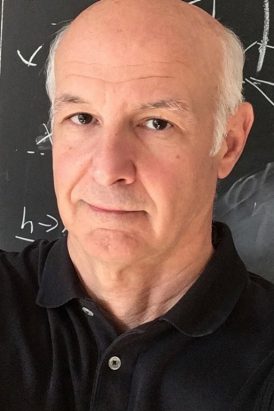 Dante Amidei合作论文数Department of Physics, College of Literature, Science, and the Arts, University of Michigan598
 Morris Binkley合作论文数Collider Detector Facility Department, Fermi National Accelerator Laboratory598
 Lee G. Pondrom合作论文数Department of Physics, University of Wisconsin–Madison598
 Giorgio Chiarelli合作论文数Istituto Nazionale di Fisica Nucleare595C. Grosso-Pilcher合作论文数593
 Steven Errede合作论文数Department of Physics, The Grainger College of Engineering, University of Illinois Urbana-Champaign593Alvin Laasanen合作论文数Purdue University592
 Melissa Franklin合作论文数Department of Physics, Harvard University592P. Giannetti合作论文数INFN Sezione di Pisa591
 Giorgio Apollinari合作论文数Fermi National Accelerator Laboratory590C. Blocker合作论文数589Carl Haber合作论文数Physics Division, Lawrence Berkeley National Laboratory584Andrew Beretvas合作论文数583
 Luc Demortier合作论文数Laboratory of Experimental High Energy Physics, The Rockefeller University583
 Robert Kephart合作论文数Fermi National Accelerator Laboratory582Franco Bedeschi合作论文数Istituto Nazionale di Fisica Nucleare Sezione di Pisa581
 Michael S. Gold合作论文数Department of Physics and Astronomy, The University of New Mexico577M. A. Ciocci合作论文数574G. Bellettini合作论文数563
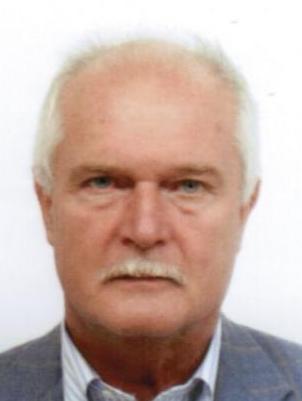 Dario Bisello合作论文数Department of Physics and Astronomy "Galileo Galilei", University of Padova563
 Arie Bodek合作论文数Department of Physics and Astronomy, School of Arts & Sciences, University of Rochester563
 Patrick Lukens合作论文数Particle Physics Division, Fermi National Accelerator Laboratory561
 Jacobo Konigsberg合作论文数Institute for High Energy Physics and Astrophysics, University of Florida;Department of Physics, College of Liberal Arts and Sciences, University of Florida557
 Pawel De Barbaro合作论文数Department of Physics and Astronomy, School of Arts and Sciences, University of Rochester;CERN556S. Leone合作论文数553G. Busetto合作论文数Universita degli Studi549
 Nicola Bacchetta合作论文数Fermi National Accelerator Laboratory;European Organization for Nuclear Research549Michele Loreti合作论文数545
 Duncan Carlsmith合作论文数Department of Physics, College of Letters & Science, University of Wisconsin-Madison545
 Gerry Bauer合作论文数Massachusetts Institute of Technology544
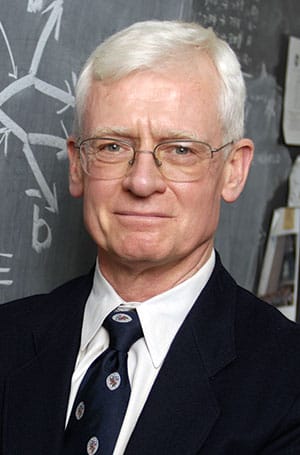 Bruce Barnett合作论文数William H. Miller III Department of Physics and Astronomy, Krieger School of Arts and Sciences, Johns Hopkins University540V. E. Barnes合作论文数535
 Daniela Bortoletto合作论文数Department of Physics, University of Oxford534M. Lindgren合作论文数532
 Kaori Maeshima合作论文数Fermi National Accelerator Laboratory532
 Karen Byrum合作论文数Argonne National Laboratory;Kavli Institute for Cosmological Physics, University of Chicago530
 Joey W Huston合作论文数Department of Physics & Astronomy, College of Natural Science, Michigan State University529D. Lucchesi合作论文数524
 C. Bromberg合作论文数Michigan State University, USA522
 Robert Harris合作论文数Fermi National Accelerator Laboratory520
 Anwar Bhatti合作论文数Department of Physics, College of Computer, Mathematical, & Natural Sciences, University of Maryland516R. E. Blair合作论文数University of Bologna507
 Paul Derwent合作论文数RF Department, Fermilab507James Bellinger合作论文数Department of Physics, University of Wisconsin–Madison507Af Garfinkel合作论文数506F. Rimondi合作论文数504T. Kamon合作论文数503
 John S. Conway合作论文数Department of Physics and Astronomy, University of California, Davis503




