新《专利法》确立了药品专利纠纷早期解决机制,其中专利声明通知制度作为该机制的配套制度,是推动实现各方利益平衡的重要手段.本文通过梳理《药品专利纠纷早期解决机制实施办法(试行)》中仿制药专利声明通知制度相关规定,并简要分析首例药品专利链接诉讼案,总结出仿制药专利声明通知制度目前在不当通知行为法律责任的有效规范与专利权人知情权的救济机制两方面存在的不足,提出制定有效的法律责任规范及建立专利权人知情权救济机制的完善建议,以期提高仿制药专利声明通知制度的整体可操作性.
患方请求卫生行政机关解决其与医方的纠纷时,常有后者不予答复、拒绝履行和拖延履行等不作为的情形,但针对其不作为而设计的法律救济机制却在运行中存在诸多问题:在行政复议机制中,复议机构的中立性不足、复议人员的专业性欠缺、复议审查的程序性约束低;在行政诉讼机制中,行政判决对患方的救济力度弱、执行难.鉴此,应在行政复议机制中,设立卫生行政复议委员会,引入医学、法学专业人员参与复议工作,采用听取意见、调查等非书面审查为主的审查方式,以增强卫生行政复议的独立性、专业性和程序正义;在行政诉讼机制中针对不作为的不同情形进行裁判,并通过多种方式解决执行难的问题.
随着互联网时代的发展,网络卫生领域的法律问题不断涌现随之已逐渐具有独特的次生领域法之特性,并具有坚实理论基础、规则基础和理念基础的网络卫生法学并勃兴,使得该学科的科研教学活动也渐趋热络;但由于其仍尚处于起步和探索阶段,有必要实施针对性的改进策略,包括在宏观层面明确其基本定位其特性,在微观层面采取增加资源投入、深化研究内容、拓展研究视野、增设专门课程或培养方向、加强多学科教学融合、加强与国外卫生法学强校的交流合作等措施,以提高互联网时代卫生法学的科研和教学水平.
中药追溯作为中药安全治理体系的重要组成部分具有不可替代的作用和功能.通过梳理中药追溯法律规制现状,发现目前中药追溯法律规制存在主体责任不明确、监管部门职责交叉、追溯法律制度不够完善等问题.应从明确中药追溯主体责任、明晰监管部门职责、完善追溯法律制度等方面加以完善.
Legal clinic education originating in the United States, aims at educating students on legal practical skills, and plays an positive role in cultivating students' ability of integrating theory with practice and training their various practical vocational skills. The present Chinese training mode of health law specialty does not perform very well in training students' practical ability, while legal clinic education can better make up for some deficiencies. Therefore, this paper learns from the experience of American universities in their legal clinic education, such as the particular division of specialties, the development of outside-school clinics, taking pre-training seriously, and the unique evaluation mechanism. Correspondingly, we explore to construct a set of reasonable legal clinic education system in health law specialty, including the orientation of legal clinics, the double training system inside and outside school, the construction of teaching staff and the establishment of evaluation mechanism.
营养医师是临床上为住院患者开展营养咨询、诊断、监测、调配饮食并协助临床疾病治疗的营养科在职医师.营养医师作为“医师”本应拥有营养药品处方权,但实践中由于营养医师的类型不同,导致了相应处方权范围的差异.为更好地服务临床,建议设置过渡期、严格营养医师转岗条件,修改临床营养师考试内容,在临床医学和中医学下开设营养学专业.
互联网医疗是互联网在医疗行业的新应用,其中包括了以互联网为载体和技术手段的健康教育、医疗信息查询、电子健康档案、疾病风险评估、在线疾病咨询、电子处方、远程会诊、远程治疗和康复等多种形式的医疗健康服务.互联网医疗,代表了医疗行业新的发展方向,有利于解决中国医疗资源不平衡和人们日益增加的医疗健康需求之间的矛盾,其出现对人类医疗事业的发展与进步有着举足轻重的意义.然而,在当今互联网医疗发展初期,仍存在着许多新型法律困境需要解决,例如互联网患者权益保护、患者隐私权保护、医疗纠纷等,这就要求卫生监督执法机关找准定位,分析要点,审时度势,疏堵结合,为互联网医疗的健康发展奠定基础.
我国现有的等同原则在适用于中药复方专利侵权认定时存在一定的困难,无法很好地指导司法实践.对此,本文以专利法基本理论为基础,结合中药复方的特殊性,从技术特征的确定划分和等同原则的判断标准两个方面,对中药复方专利侵权认定中的等同原则提出较为细致的适用规则.此外,本文还提出了其他两个应当考量的因素,即等同原则的价值宗旨和被诉侵权人的主观状态.
本文通过整理《侵权责任法》实施后北京市医疗损害诉讼案件中的精神损害赔偿的数额情况,从诉讼请求与实际裁判的精神损害赔偿数额和人均可支配收入的变化角度,分析精神损害赔偿数额的变化趋势.从医院责任、伤残等级方面分析决定精神损害赔偿的主要因素,发现当前司法裁判精神损害赔偿数额偏低且确定赔偿数额的方式过于简单,进而探讨对精神损害赔偿数额进行量化的方法,深化法制建设的内涵,切实保护当事人权益.
Moot Court practice teaching is an important part of the teaching of medical and health law. Based on several years of university students' participating in moot court competition, and combined with the personal experience of the instructors and the participating students, we summed up our inexperience of medical law moot court practice teaching, and put forward feasible suggestions to professional Moot Court simulation practice teaching reform of Health Law in order to effectively improve the medical and health professional moot court practice teaching, thus implementing the "law to strengthen the students practical skills training"teaching objectives.
目前我国道地药材地理标志保护体系实行三轨制并存的保护模式,极易导致同一道地药材上几种地理标志之间的权利冲突.同时,由于三种保护制度各自存在弊端,我们无法通过简单的保留一种制度、取消其他两种来解决问题.对此,本文参考借鉴国外先进的立法经验,提出应将现行的三轨制保护模式整合成一套体系化的、完善的道地药材地理标志保护制度,并从保护模式的选择和制度内容的完善两个层面提出了具体建议.
卫生法学作为一个新兴的跨学科专业,具有极强的交叉性、专业性与实践性,是我国法律人才培养体系中的重要组成部分,近年来已得到医学与法学教育界的高度重视.对卫生法律人才的培养必须坚持以提高学生解决医疗纠纷案件的实践能力为方向,以获得应用型、复合型法律职业人才为最终目标.但是,目前的卫生法律人才培养体系仍存在诸多无法回避的问题,如:培养目标与定位不明确,学生实践能力匮乏以及课程设置与教学内容不尽合理等.有学者提出通过整合教育资源实现卫生法律人才培养模式的创新[1],也有学者针对当前医学院校卫生法学专业课程设置的不合理性,提出了完善卫生法学课程设置的对策[2].但是,就改革的难度来看,培养模式的创新与课程设置的改革绝非一朝一夕能够完成的;就改革的效果来看,培养模式与课程设置的调整在短期内都还难以取得突出成效,且容易受到多种不确定因素的制约.
Traditional TCM knowledge is not only Chinese traditional culture and medical resources,but also the commercial resources with enormous economic values.It's the consensus that TCM knowledge should be protected by legislation among scholars in.the industry.During the process of law making of TCM knowledge protection,legislative techniques should follow such principles as effective coherence with the existing laws,innovation of regulations,and combination of laws at higher and lower levels.Legislative content should follow such principles as combination of protection and exploitation,classified right confirmation,value realization,national interest,and government leading.Legislative process should follow such principles as taking the easiest the first,coordinating and cooperating.Only by this way,the systematic construction of protection law on TCM knowledge could be achieved.
In order to safeguard the legitimate rights and interests of people with mental disorders for the purpose of legislation , after 27years ’ repeated as appropriate , Mental Health Act finally introduced to fill the gaps in the legislation in the field of mental health , as well as the protection of human rights enshrined in the law.The principle of voluntary hospitalization has been established , supplemented by compulsory hospitalization.The occurrence of " been treated as mental patient " reduced.But objection mechanism to compulsory hospitalization is not conducive to safeguarding the rights of people with mental disorders.Draw on the basis of compulsory hospitalization of mental disorders opposition system in other countries and combined with China's national conditions , this article discussed in aspect of opposition subject , opposition department and opposition procedure in order to improve compulsory hospitalization opposition mechanism.
There exist many problems in China's medical notary system,such as legislation absence,legal nature uncertainty of notary institution,the notary lack compound talents,unfair undertaking medical risks,medical practices lack supervision,and the credit system imperfection.Aiming at these problems,the paper offers proposals to build our medical notary system from improving legislation system,clarifying legal status of the notarization institutions and the notary,standardizing medical notary procedure,enhancing the notary specialization and construction and improving the medical notary compensation insurance system.
随着医药科技的发展,中药的巨大商业价值越来越得到投资者的重视.中药传统复方也就逐渐成为了我国的宝贵资源.但是,我国对中药传统复方的法律保护严重欠缺,相应法律制度的缺失给国家带来了巨大经济损失.应该建立中药传统复方的国家所有权制度,并在国家所有权的基础上建立中药传统复方的知识产权保护制度.
中国本土中药药企成长良好且拥有众多资源优势,成为外资企业跨国并购的目标。中药秘方配方等商业秘密或知识被外资控制,市场定价权和格局重新洗牌,直接影响到中药产业的经济安全,因此,构建和完善"外资并购中药企业产业安全法律审查制度"刻不容缓。
The way to dealing the contravention between clinical teaching and protecting patient’s privacy rights, is normativly embodying the will of the patient during the benefit transfer, and asking and using the the patient’s privacy by informing consent in clinic teaching practice. Meantime, there should be a limitation of the patient’s privacy rights, which should be excluded in some special situation.
The research group uses the advantage of teaching and research background of traditional Chinese pharmacology to explore the diverse teaching modes of pharmacy administration,which match the features of the specialty of traditional Chinese pharmacology,in order to lay the foundation for the training of the interdisciplinary talents who are proficient in both professional knowledge of traditional Chinese pharmacology and management.
中医药传统知识保护研究已有不少论著,专家和学者提出了各种合理化建议,但是总体上没有跳出利用传统知识产权制度保护中医药的圈子。实际上,中医药知识产权法律保护的关键在于如何使得中医药能在市场经济条件下得到保护和发展。从中医药传统知识的产权理论、国内法与国际法关系、被动保护与主动制裁角度研究中医药传统知识保护能给我们带来新的发现和启示。
 MeiHong Wang (王梅红)合作论文数6
 Shaoqing Ma (马韶青)合作论文数School of Humanities, Beijing University of Chinese Medicine5JiWang Zhang (张继旺)合作论文数4
 Jing Zhang (张静)合作论文数School of Humanities, Beijing University of Chinese Medicine4
 Silun Guo (郭斯伦)合作论文数School of Humanities, Beijing University of Chinese Medicine4Juan Li (李娟)合作论文数3Jun He (何君)合作论文数3
 Fengzhu Yang (杨逢柱)合作论文数School of Humanities, Beijing University of Chinese Medicine3Mingxiu Yu (于明秀)合作论文数2
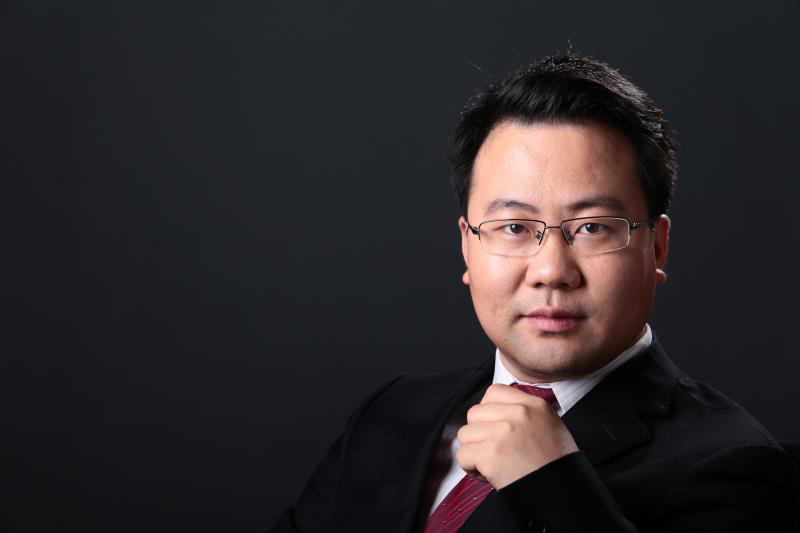 Yong Deng (邓勇)合作论文数School of Humanities, Beijing University of Chinese Medicine2
 Runsheng Li (李润生)合作论文数School of Humanities, Beijing University of Chinese Medicine2
 Han Wang (王涵)合作论文数School of Chinese Materia Medica, Beijing University of Chinese Medicine1Hanlin Xing (邢翰林)合作论文数1Yuanyin Yan (颜渊胤)合作论文数1AiZhen Fu (付爱珍)合作论文数1LiWei Han (韩立炜)合作论文数1QingQing Liu (刘晴晴)合作论文数1JinJing Wu (吴瑾菁)合作论文数1
 Zenghui Huo (霍增辉)合作论文数School of Humanities, Beijing University of Chinese Medicine1Zhemin Xu (徐哲慜)合作论文数1Qingping Liu (刘清萍)合作论文数1Zhang Yupeng (张玉鹏)合作论文数1
 Dan Zhao (赵丹)合作论文数School of Humanities, Beijing University of Chinese Medicine1




