Objectives This meta-analysis aimed to systematically evaluate the efficacy of acupuncture in treating postsurgical gastroparesis syndrome (PGS) after thoracic or abdominal surgery. Design Systematic review and meta-analysis. Data sources Twelve databases (PubMed, Embase, Cochrane Library Cochrane Central Register of Controlled Trials (CENTRAL), Medline (Ovid) (from 1946), Web of Science, EBSCO, Scopus, Open Grey, China National Knowledge Infrastructure (CNKI), Wanfang Database, Chinese Scientific Journals Database (VIP) and China Biology Medicine disc (CBM)) and three registration websites (WHO International Clinical Trials Registry Platform (ICTRP), ClinicalTrials.gov, and Chinese Clinical Trial Registry (ChiCTR)) were searched from the inception to September 2022, and citations of the included literature were screened. Eligibility criteria All randomised controlled trials addressing invasive acupuncture for PGS. Data extraction and synthesis Key information on the included studies was extracted by two reviewers independently. Risk ratio (RR) with 95% CI was used for categorical data, and mean difference with 95% CI for continuous data. The quality of evidence was assessed using Grading of Recommendations Assessment, Development and Evaluation. Outcomes were conducted with trial sequential analysis (TSA). Results Fifteen studies with 759 patients met the inclusion criteria. Subgroup analyses revealed that compared with the drug group, the drug and acupuncture group had a greater positive effect on the total effective rate (TER) (nine trials, n=427; RR=1.20; 95% CI 1.08 to 1.32; P-heterogeneity=0.20, I 2 =28%, p=0.0004) and the recovery rate (RCR) (six trials, n = 294; RR = 1.61; 95% CI 1.30 to 1.98; P-heterogeneity=0.29, I 2 =19%, p<0.0001) of PGS after abdominal surgery. However, acupuncture showed no significant advantages in terms of the TER after thoracic surgery (one trial, p=0.13) or thoracic/abdominal surgery-related PGS (two trials, n = 115; RR=1.18; 95% CI 0.89 to 1.57; P-heterogeneity=0.08, I 2 =67%, p=0.24) and the RCR after thoracic/abdominal surgery (two trials, n=115; RR=1.40; 95% CI 0.97 to 2.01; P-heterogeneity=0.96, I 2 =0%, p=0.07). The quality of evidence for TER and RCR was moderate certainty. Only one study reported an acupuncture-related adverse event, in the form of mild local subcutaneous haemorrhage and pain that recovered spontaneously. TSA indicated that outcomes reached a necessary effect size except for clinical symptom score. Conclusion Based on subgroup analysis, compared with the drug treatment, acupuncture combined drug has significant advantages in the treatment of PGS associated with abdominal surgery, but not with thoracic surgery. PROSPERO registration number CRD42022299189.
肺结节是临床常见的肺部疾病,起病隐匿,多无临床症状,而且少部分肺结节是恶性结节,早期明确诊断,积极接受中西医干预措施有重要价值.肺结节诊断主要依赖电子计算机断层扫描(computed tomography,CT).人工智能(artificial intelligence,AI)在肺结节影像诊断中的应用日益普遍.西医治疗肺结节以定期随访为主,高风险者可外科手术治疗.中医药治疗肺结节有一定优势,治疗时当把握气滞、痰湿、瘀阻的核心病机,并从肺结节大小、形态变化以及病人生活质量等多方面进行综合疗效评价.
目的 挖掘分析中医治疗非小细胞肺癌EGFR-TKIs相关腹泻的用药规律.方法 检索中国知网数据库、万方数据知识服务平台及维普中文期刊服务平台,收集、筛选相关文献,应用古今医案云平台V2.2.3版,对中医证候、中药频次、四气、五味、归经等进行分类统计,分析配伍规律,并进行聚类分析.结果 中医证候频次最高的是气阴两虚证;中药使用频次最高的是黄芪,其次为白术与茯苓;用药以性平、味甘、归脾胃肺经的中药为主;得到六对频次及可靠度均较高的药物组合,层次聚类分析得到两大类共4组药物,均以益气养阴,健脾化痰为主要功效.结论 非小细胞肺癌EGFR-TKIs相关腹泻以气阴两虚、脾弱痰蕴为病机特点,常见中医证候为气阴两虚证,治疗以益气养阴,健脾化痰为主,用药以性平、味甘、脾胃肺经药物为主.
恶性肿瘤是严重危害人类生命及健康的重大疾病,目前是导致死亡的主要病因.扶正培本法是中医治疗恶性肿瘤的重要治则之一,在肿瘤治疗中占有重要地位.郝迎旭教授从事临床工作35年,采用中西医结合方法治疗肿瘤,常用扶正培本法,并结合术后、放疗、化疗以及靶向治疗肿瘤的不同阶段,采用相应的扶正法,取得效果突出.
目前,恶性肿瘤已成为严重威胁人类健康的常见病及高发病.最新的统计数据显示,我国每年新发癌症患者约430万例,死亡约280万例,肺癌、胃癌、食管癌、肝癌、结直肠癌及女性乳腺癌的发病率名列前茅.肿瘤患者往往病情重、症状多、痛苦大、疗效差、生存期短,生活质量差,因此人们常常谈“癌”色变.那么,面对肿瘤,有什么方法可以有效地对抗它、减轻痛苦、提高生存质量并延长寿命呢?
Background Chinese cancer patients often use Traditional Chinese Medicine (TCM) herbal medicine during or after active cancer treatments. However, little is known about how TCM herbal medicine impacts cancer outcomes. This study aimed to evaluate the association between TCM herbal therapy and survival outcomes in patients with stage II or III colorectal cancer. Methods We conducted an eight-center prospective cohort study in China among patients who had undergone radical resection for stage II and III colorectal cancer. All patients received comprehensive conventional treatments according to National Comprehensive Cancer Network (NCCN) guidelines, and follow-up visits were conducted over five years. We defined high exposure as a patient's use of TCM individualized herbs for more than one year, ascertained via clinical interviews. The primary outcome was disease-free survival (DFS), with overall survival (OS) as a secondary outcome. Results Between April 2007 and February 2009, we enrolled 312 patients into the cohort; 166 (53.2%) met the definition of high exposure to TCM herbs. Adjusting for covariates, high exposure to TCM was associated with both better DFS (hazard ratio [HR] = 0.62, 95% confidence interval [CI] = 0.39 to 0.98) and OS (HR = 0.31, 95% CI = 0.14 to 0.68). In subgroup exploratory analysis, the effects demonstrated that the differences in outcomes were statistically significant in patients who had received chemotherapy. Conclusion Longer duration of TCM herbal use is associated with improved survival outcomes in stage II and III colorectal cancer patients in China. More research is needed to evaluate the effects and underlying mechanisms of herbal medicine on colorectal cancer outcomes.
驱邪不伤正 化痰祛湿,软坚散结 化痰祛湿法多合并其他治疗肿瘤的法则如豁痰、解毒、祛瘀、散结等及健脾、宣肺、固肾等扶正之法联合应用.痰湿为人体内的病理产物,又是致病原因.许多肿瘤都与痰湿凝聚有关.通过化痰祛湿法,不但可以减轻症状,某些肿瘤还可以得到有效控制.现代实验研究及药物筛选证明,某些化痰、祛痰药本身就有抗肿瘤作用,如化痰药半夏、天南星等.肿瘤质硬如石者称坚,质软者称结,使硬块消散的治法称为软坚散结法.临床上应用化痰祛湿法往往配合软坚散结法.软坚散结法治疗肿瘤,能有效地杀灭癌细胞,从而提高抗肿瘤有效率;配合放疗、化疗、介入治疗等提高疗效.临床上以颅脑肿瘤、甲状腺肿瘤、中晚期食管癌、胃癌、肺癌、恶性淋巴瘤、前列腺癌应用此法为多.
目的:调查北京市朝阳区平房乡辖区内肿瘤患者的健康状况及在社区康复中中医健康管理现况与需求度,为提供更具可行性的肿瘤社区中医健康管理服务和设计肿瘤患者社区中医健康管理流程提供理论依据.方法:对2015年北京市平房社区卫生服务中心辖区内的155例肿瘤患者进行问卷调查.结果:本次调查有效回收率为95.4%,39%的患者已主动选择中医就诊;51%的患者愿意接受肿瘤社区中医健康管理,有26%的患者表示愿意接受社区医生的中医辅助治疗.患者对饮食调养、养生功法锻炼、适宜技术辅助治疗、穴位按摩和心理疏导等中医健康管理服务项目需求度较高.结论:平房乡肿瘤患者对中医健康管理有一定的需求且需求有多样化的特点,但对肿瘤的中医治疗方法与作用及社区中医肿瘤健康管理服务认识不高.相信在我们进一步完善和健全中医慢病健康管理工作,并制定相应的管理流程后,将为社区的肿瘤患者提供更加优质、有效的中医服务.
恶性肿瘤已被广泛认为是严重危害人类健康的主要疾病之一,且发病率在逐渐上升.中医药是治疗肿瘤的重要手段之一,这不仅是由于中医药是中华民族数千年与疾病斗争的支柱,而且即使是在现代医学突飞猛进的今天,中医药的深入研究以及在全世界的传播也达到了空前的程度.中医药在肿瘤临床治疗中占有重要地位,而且越来越受到广泛重视.
[Objective] To observe the efficacy and safety of Jianpi Sanjie pill for the patients with spleen deficiency syndrome after chemotherapy.[Methods] Forty patients with syndromes of spleen deficiency after chemotherapy were enrolled.At the end of the chemotherapy cycle,they began to take the pills for 2 weeks.At 3rd,7th,10th,14th days,the syndrome scores,tongue,pulse and some examining index,such as liver and kidney function were recorded to evaluate the toxicity of the medicine.2 weeks later,we appreciated the whole efficacy.[Results] The general scores after treatment had more significant differences in patients with the syndromes of spleen deficiency after the chemotherapy than pre-treatment(P0.05).[Conclusion] The pills may be effective for the spleen deficiency syndrome after the chemotherapy.The medicine can protect patients against the enteric side-effects of the treatment and improve the life quality.It can be helpful to recover from the chemotherapy.
OBJECTIVE: To explore the regulation on cytokines Th1/Th2 of Shenqi Fuzheng injection,and observe its effect on survival time and its possible mechanism.METHODS: Tumor bearing Wistar rats were given Shenqi Fuzheng injection and cisplatin respectively,and the model group and normal rats were taken as the control groups.Th1,Th2 and Th1/Th2 were tested by flow cytometry and the contents of IFN-γ and IL-4 in peripheral blood were tested by ELISA.RESULTS: Th1/ Th2 of the Shenqi Fuzheng injection group and cisplatin group increased greatly,P0.01,but that in the cisplatin group still decreased significantly compared with the normal group,P0.05.IL-4 of the Shenqi Fuzheng injection group decreased significantly compared with the model group and cisplatin group(P0.01),but IFN-γ increased greatly,P0.01.The survival time of the Shenqi Fuzheng injection group prolonged significantly compared with the model group and cisplatin group,P0.01.CONCLUSIONS: Shenqi Fuzheng injection can increase Th1 cytokines and decrease Th2 cytodines,make Th2 shift to Th1.This might be one of the mechanisms of Shenqi Fuzheng injection prolonging the survival time of the tumor bearing rats.
放射治疗是治疗恶性肿瘤的常用治疗方法之一,其不良反应常使患者难以忍受,出现口干咽燥,神疲乏力、食欲差、腹胀、恶心等症状,还会造成血象下降,影响放疗的正常进行.为减轻不良反应,中国中医研究院广安门医院研究了"养阴生血饮",具有养阴清热,益气生血的功效.养阴生血饮中含有生地黄、生黄芪、当归、石斛、川芎,已有研究证实这些药具有放射增敏作用[1].笔者进行了404例癌症患者的临床观察研究,报道如下.
<正>患者女性,31岁。因乳糜性胸水反复发作无法控制,于2006年5月23日入我院治疗。患者于2002年9月行腹部MRI检查后,发现腹膜后巨大占位性病变(图1见插页),无法手术切除,自行服用中药。2003年1月,肺CT发现双肺弥漫性间质性病变。2004年4月腹盆腔CT示:腹腔积液,团块大小约4cm×9.5cm×22cm,腔静脉旁见数枚结节样影,胸腔积液。中药调方继服。2005年11月,患者出现胸闷,紫绀。当地医院予以胸腔穿刺引流胸水,每日引流乳糜样胸水约1500ml,共引流约10000ml。
肿瘤已成为我国老年人中最为常见的疾病之一,目前我国60岁以上的老年人已有1.1亿多人,占全国人口的10%以上,多数病人的病情已属中晚期,病情重,症状多,痛苦大,疗效差.本文主要介绍了老年人为什么容易患肿瘤,老年人容易患哪些肿瘤,中西医结合治疗肿瘤的主要途径,以及如何合理用中西医结合综合治疗肿瘤.
Adipose tissue is no longer the storage organ of adipose,but an active endocrine organ.The serum concentration of adiponectin is inversely associated with the fat volume.Adiponectin appears to be connected with not only glucose and lipid metabolism,but also with various types of cancers as well.Accumulating clinical and foundermental evidences indicate that many cancer patients get a low serum adiponectin concentration and tumor cells express adiponectin receptors.So there may be many ways to induce tumor,such as binding to adiponectin receptors to activate the signalling cascade downstream,direct action on tumor cells,antiangiogenesis,inducing tumor cell apoptosis and many other mechanisms to regulate cell proliferation.Studies of adiponectin biology can provide new insights into the association of obesity with cancer risk.
4月15~21日,是全国肿瘤防治宣传周。恶性肿瘤是现在威胁人类健康与生命的重大疾病之一。远离癌症最好的办法,就是防患于未然。恶性肿瘤是严重危害人类健康的重大疾病之一,我国每年约有150余万人被其夺去生命,已诊断的癌症患者常年保持在200万人以上。我国对癌症的防治研究工作已经取得了很大的进展,北京、天津、
肿瘤的中医常用治法主要有以下几种:扶正培本类治法、清热解毒法、活血化瘀法、软坚散结法、化痰祛湿法、以毒攻毒法等[1].本文就这几种常见中医治法在临床上的应用情况作一简要概述.
患者男性,50岁.主诉"皮肤粘膜黄染2周,体重下降"于2004年1月29日入院.经生化、腹部CT、B超等检查诊断为"梗阻性黄疸"、"胰头占位"、"Ⅱ型糖尿病".于2004年3月3日行腹部手术探查,术中见胰头部4cm×5cm大小肿物,质硬,肠系膜根部可触及数枚肿大淋巴结,肿物侵及胰腺钩状部与肠系膜血管.
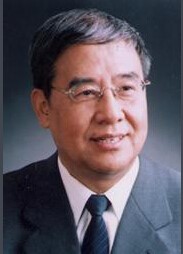 Peiwen Li (李佩文)合作论文数Third Affiliated Hospital, Beijing University of Chinese Medicine11
 Daizhao Zhang (张代钊)合作论文数北京中日友好医院中西医结合肿瘤内科10
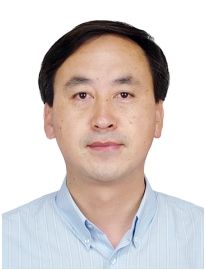 Liqun Jia (贾立群)合作论文数Department of medical oncology, integrated traditional Chinese and Western Medicine, China-Japan Friendship Hospital7
 Huijuan Cui (崔慧娟)合作论文数China-Japan Friendship Hospital;Beijing University of Chinese Medicine5
 GuangRong Cai (蔡广荣)合作论文数4LiLi Yu (于莉莉)合作论文数4
 Jinchang Huang (黄金昶)合作论文数Third Affiliated Hospital, Beijing University of Chinese Medicine4
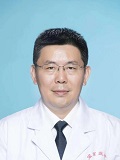 Shijie Zhu (朱世杰)合作论文数Wang Jing Hospital of CACMS4Zhenjia Fan (范振佳)合作论文数3Kai-Peng Li合作论文数3
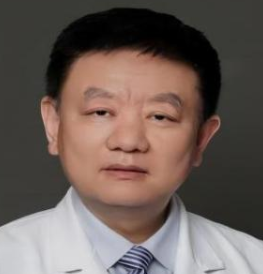 Zhiqiang Cheng (程志强)合作论文数China-Japan Friendship Hospital;Beijing University of Chinese Medicine;Capital Medical University3
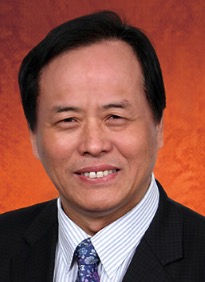 Xiaolin Tong (仝小林)合作论文数Guang'anmen Hospital, China Academy of Chinese Medical Sciences3Huifeng Zhou (周慧锋)合作论文数2Wei Zhao (赵炜)合作论文数2
 Jun Duan (段军)合作论文数China-Japan Friendship Hospital2Fang Wang (王芳)合作论文数2
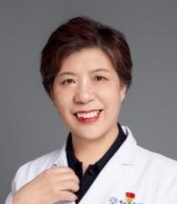 Donggui Wan (万冬桂)合作论文数Cchina-Japan Friendship Hospital;Beijing University of Chinese Medicine2
 Xue Li (李学)合作论文数北京中日友好医院中西医结合肿瘤内科2
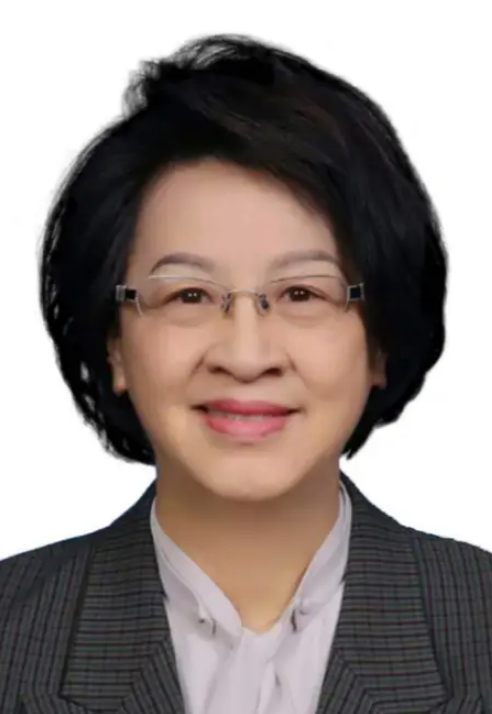 Yufei Yang (杨宇飞)合作论文数Xiyuan Hospital of China Academy of Chinese Medical Sciences2Yuewen Gong合作论文数Liver Diseases Unit;University of Manitoba;Health Sciences Centre;Health Sciences Centre, University of Manitoba2CHEN Xiao-guang (陈晓光)合作论文数1G Yu (余桂清)合作论文数1Feng-Ian Xi合作论文数1xiurong dong (董秀荣)合作论文数1xiuping du (杜秀平)合作论文数1Ying Zhang合作论文数1liping jiao (焦丽平)合作论文数1Lingyun Sun合作论文数Department of Medical Oncology, Chinese Academy of Sciences1Yun Xu合作论文数1Lili Yu合作论文数1jidong zhang (张继东)合作论文数1Chunmei Feng (冯春梅)合作论文数1Xuewei Qi合作论文数1Yuxiang Wan合作论文数1bin zhang (张斌)合作论文数1yuan li (李圆)合作论文数1YuQin Qiu (邱钰芹)合作论文数1ChuanJin Hua (华传金)合作论文数1XiaoQin Wu (武晓勤)合作论文数1PeiYu Zhang (张培宇)合作论文数1Tao Zhao (赵韬)合作论文数1ZhiYuan Zhang (张志远)合作论文数1GuiZhi Sun (孙桂芝)合作论文数1Yuan Li (李园)合作论文数1Jing Huang (黄静)合作论文数1Ning Liu (刘宁)合作论文数1
 Haizhong Jia (贾海忠)合作论文数China-Japan Friendship Hospital1
 Jinxi Zhao (赵进喜)合作论文数Dongzhimen Hospital, Beijing University of Chinese Medicine1
 Hongsheng Lin (林洪生)合作论文数Guang'anmen Hospital, China Academy of Chinese Medical Sciences1




