Twisted multilayers of two-dimensional materials attract widespread research interest due to their intriguing electronic and optical properties related to their chiral symmetry breaking and moir & eacute; effects. The two-dimensional transition metal dichalcogenide MoSe2 is a particularly promising material for twisted multilayers, capable of sustaining moir & eacute; excitons. Here, we report on a rational bottom-up synthesis approach for twisted MoSe2 flakes by chemical vapor transport (CVT). Screw dislocation-driven growth was forced by surface-fused SiO2 nanoparticles on the substrates that serve as potential nucleation points in low supersaturation condition. Thus, crystal growth by in-situ CVT under addition of MoCl5 leads to bulk 2H-MoSe2 in a temperature gradient from 900 to 820 degrees C with a dwell time of 96 h. Hexagonally shaped 2H-MoSe2 flakes were grown from 710 to 685 degrees C with a dwell time of 30 min on SiO2@Al2O3(0001) substrates. Electron backscatter diffraction as well as electron microscopy reveals the screw dislocation-driven growth of triangular 3R-MoSe2 with individual step heights between 0.9 and 2.9 nm on SiO2@Si(100) under the same conditions. Finally, twisted MoSe2 flakes exhibiting a twist angle of 19 degrees with respect to the [010] zone axis could be synthesized.
Superconductivity in cuprates emerges out of a complex normal state that hosts density waves, pseudogap physics, and strange metal properties. Here, we access this normal state by synchronizing free-electron laser x-rays with high-magnetic-field pulses up to 44 T. We observe a linear increase in charge order amplitude and correlation length that persists far above the vortex melting transition. This behavior is incompatible with standard phase competition between charge order and superconductivity. By means of conventional hard x-ray diffraction and magnetostriction, we show that applied fields also enhance monoclinic lattice distortions. However, this magnetoelastic response is weaker and an epiphenomenon of the stripe order enhancement. Combined with recent observations of field-linear spin freezing, our results point to a direct coupling between magnetic field and the spin component of stripe order in the high-field normal state – a mechanism independent of superconductivity suppression that has so far remained hidden from scattering probes.
We report a rich anisotropic magnetic phase diagram of Na3Co2SbO6, a previously proposed cobaltate Kitaev candidate, based on field- and temperature-dependent magnetization, specific heat, and magnetocaloric effect studies. At low temperatures, our experiments uncover a low-lying jeff = 12 state with an antiferromagnetic (AFM) ground state and pronounced in-plane versus out-of-plane anisotropy. The experimentally identified magnetic phases are theoretically characterized through classical Monte Carlo simulations within an extended Kitaev-Heisenberg model with additional ring exchange interactions. The resulting phase diagram reveals a variety of exotic field-induced magnetic phases, including double-q, 31 -AFM, zigzag, and vortex phases.
Multiferroic domain walls in functional oxides exhibit properties distinct from the bulk and are increasingly exploited as active elements in nanoelectronic and photonic devices. Deterministic control of domain populations has typically remained limited to local control, or removal with temperature. Here we demonstrate continuous, reversible manipulation of the ferroelastic domain structure in single-crystal LaAlO_3 using in-situ uniaxial strain. Combining atomic force microscopy, X-ray diffraction, and Raman spectroscopy with first-principles calculations we map the complete microscopic evolution of the twin domain population through the strain-driven transition from the rhombohedral R3̅c ground state toward the predicted orthorhombic Fmmm phase. Applied strains below 0.5% produce pronounced surface flattening and large-scale domain reorganisation, establishing uniaxial strain as a technically accessible control parameter for ferroelastic domain engineering. These results open a route to active, real-time programming of domain architectures in LaAlO_3-based heterostructures, with implications for strain-tunable superconducting interfaces, nanoscale phonon-polariton optics, and ultrafast lattice control.
The Weyl semimetal γ-PtBi_2 has been shown to be one of the most promising novel materials, recently proposed as a topological i-wave superconductor. A crucial requirement for observing this physics is the absence of inversion symmetry in its trigonal P31m crystal structure. Centrosymmetry has been reported to be readily restored in the P3m1 structure upon electron doping, partially substituting Bi with as little as 2
Uniaxial stress is a promising method to tune magnetic frustration, allowing its effects to be studied in a precise way. In this work, uniaxial stress is applied to the triangular-lattice antiferromagnet PdCrO2. The Cr-Cr magnetic interaction is very sensitive to interatomic separation, so laboratory-achievable stress can induce substantial changes in magnetic structure. Results from three types of measurement are presented: x-ray diffraction, the stress-strain relationship, and neutron diffraction. The combined data show that the elastic moduli of PdCrO2are strongly affected by stress-induced changes in magnetic structure. A new, first-order stress-induced magnetic transition is observed, at which the lattice constant shrinks by 0.21%. The lattice stiffens dramatically across this transition: the Young's modulus increases by≈80GPa, and the Poisson ratio falls from≈1to≈0.4. This stiffening indicates that the magnetic order 'locks,' that is, becomes insensitive to lattice strain. This locking might occur because the new stress-induced magnetic order nests the Fermi surface of the Pd sheets. Other frustrated magnets, including candidate spin liquids, may show similarly strong coupling between magnetic and elastic degrees of freedom.
The kagome metals AV3Sb5 (A = K, Rb, Cs) provide a unique platform to investigate the physics of interacting electrons, a central challenge in condensed matter physics. A key obstacle in unraveling their correlated behavior is to determine which structural and electronic degrees of freedom are involved and how they couple. Here, we address this important issue with a novel approach, namely by exploring the strain dependence of electronic superlattices (SL) in CsV3Sb5. Using high-resolution x-ray diffraction, we track the detwinning of the 2 × 2 × 4 electronic crystal and uncover a gigantic strain response of its domains. We further show that the detwinned 2 × 2 × 4 phase exhibits an intrinsic double-q modulation and strong mode coupling. Density functional theory reveals that the structural 2 × 2 × 4 modulation couples strongly to the V 3d-orbitals, naturally explaining its pronounced strain response. In contrast, the 2 × 2 × 2 phase at lower temperatures remains essentially unaffected by small uniaxial strain. This dichotomy points to fundamental differences in the symmetry breaking and stabilization mechanisms of the two electronic orders. More specifically, our results provide evidence for the active role of orbital degrees of freedom, which can realize distinct, complex ordering patterns driven by competing interactions.
Creation of chirality through screw dislocation-driven growth for highly crystalline nano-WSe 2 by chemical vapor transport based on thermodynamic simulations.
We present a high-resolution single crystal x-ray diffraction study of kagome superconductor CsV_{3}Sb_{5}, exploring its response to variations in pressure and temperature. We discover that at low temperatures, the structural modulations of the electronic superlattice, commonly associated with charge-density-wave order, undergo a transformation around p∼0.7 GPa from the familiar 2×2 pattern to a long-range-ordered modulation at wave vector q=(0,3/8,1/2). Our observations align with inferred changes in the charge-density-wave pattern from prior transport and nuclear-magnetic-resonance studies, providing new insights into these transitions. Interestingly, the pressure-induced variations in the electronic superlattice correlate with two peaks in the superconducting transition temperature as pressure changes, hinting that fluctuations within the electronic superlattice could be key to stabilizing superconductivity. However, our findings contrast with the minimal pressure dependency anticipated by ab initio calculations of the electronic structure. They also challenge prevailing scenarios based on a Peierls-like nesting mechanism involving Van Hove singularities.
Understanding the interplay between charge, nematic, and structural ordering tendencies in cuprate superconductors is critical to unraveling their complex phase diagram. Using pump-probe time-resolved resonant x-ray scattering on the (0 0 1) Bragg peak at the Cu $L_3$ and O $K$ resonances, we investigate non-equilibrium dynamics of $Q_a = Q_b = 0$ nematic order and its association with both charge density wave (CDW) order and lattice dynamics in La$_{1.65}$Eu$_{0.2}$Sr$_{0.15}$CuO$_4$. The orbital selectivity of the resonant x-ray scattering cross-section allows nematicity dynamics associated with the planar O 2$p$ and Cu 3$d$ states to be distinguished from the response of anisotropic lattice distortions. A direct time-domain comparison of CDW translational-symmetry breaking and nematic rotational-symmetry breaking reveals that these broken symmetries remain closely linked in the photoexcited state, consistent with the stability of CDW topological defects in the investigated pump fluence regime.
In the quest for 2D conducting materials with high ferromagnetic ordering temperature the new family of the layered FenGeTe2 compounds, especially the near-room-temperature ferromagnet Fe4GeTe2, receives a significant attention. Fe4GeTe2 features a peculiar spin reorientation transition at T-SR approximate to 110 K suggesting a non-trivial temperature evolution of the magnetic anisotropy (MA)-one of the main contributors to the stabilization of the magnetic order in the low-dimensional systems. An electron spin resonance (ESR) spectroscopic study reported here provides quantitative insights into the unusual magnetic anisotropy of Fe4GeTe2. At high temperatures the total MA is mostly given by the demagnetization effect with a small contribution of the counteracting intrinsic magnetic anisotropy of an easy-axis type, whose growth below a characteristic temperature T-shape approximate to 150 K renders the sample seemingly isotropic at T-SR. Below one further temperature T-d approximate to 50 K the intrinsic MA becomes even more complex. Importantly, all the characteristic temperatures found in the ESR experiment match those observed in transport measurements, suggesting an inherent coupling between magnetic and electronic degrees of freedom in Fe4GeTe2. This finding together with the observed signatures of the intrinsic two-dimensionality should facilitate optimization routes for the use of Fe4GeTe2 in the magneto-electronic devices, potentially even in the monolayer limit.
AbstractThe layered material α-RuCl3 is a promising candidate to realize the Kitaev quantum spin liquid (QSL) state. However, at ambient pressure, deviations from the perfect Kitaev geometry prevent the existence of the QSL state at low temperatures. Here we present the discovery of a pressure-induced high-symmetry phase in α-RuCl3, which creates close to ideal conditions for the emergence of a QSL. Employing a novel approach based on Bragg and diffuse scattering of synchrotron radiation, we reveal a pressure-induced reorganization of the RuCl3-layers. Most importantly, this reorganization affects the structure of the layers themselves, which acquire a high trigonal symmetry. For this trigonal phase the largest ratio between the Kitaev (K) and the Heisenberg exchange (J) ever encountered is found: K/J = 124. Additionally, we demonstrate that this phase can also be stabilized by a slight biaxial pressure. This not only resolves the conflicting reports of low-temperature structures in the literature, but also facilitates the investigation of the high-symmetry phase and its potential QSL using a range of experimental techniques.
Atomic layer deposition (ALD) is an effective technique for depositing thin films with precise control of layer thickness and functional properties. In this work, Sb2Te3-Sb2Se3 nanostructures were synthesized using thermal ALD. A decrease in the Sb2Te3 layer thickness led to the emergence of distinct peaks from the Laue rings, indicative of a highly textured film structure with optimized crystallinity. Density functional theory simulations revealed that carrier redistribution occurs at the interface to establish charge equilibrium. By carefully optimizing the layer thicknesses, we achieved an obvious enhancement in the Seebeck coefficient, reaching a peak figure of merit (zT) value of 0.38 at room temperature. These investigations not only provide strong evidence for the potential of ALD manipulation to improve the electrical performance of metal chalcogenides but also offer valuable insights into achieving high performance in two-dimensional materials.
Superlattice Structures In article number 2306350, Jun Yang, Kornelius Nielsch, and co-workers report the thermoelectric performance of SbOx/Sb2Te3 multilayers synthesized via atomic layer deposition. The SbOx layers act as a potential barrier to filter out the low-energy charge carriers. A remarkable power factor of 520.8 μW m−1 K−2 and low thermal conductivity of 0.4 W m−1 K−1 were obtained.
Nanoscale superlattice (SL) structures have proven to be effective in enhancing the thermoelectric (TE) properties of thin films. Herein, the main phase of antimony telluride (Sb2 Te3 ) thin film with sub-nanometer layers of antimony oxide (SbOx ) is synthesized via atomic layer deposition (ALD) at a low temperature of 80 °C. The SL structure is tailored by varying the cycle numbers of Sb2 Te3 and SbOx . A remarkable power factor of 520.8 µW m-1 K-2 is attained at room temperature when the cycle ratio of SbOx and Sb2 Te3 is set at 1:1000 (i.e., SO:ST = 1:1000), corresponding to the highest electrical conductivity of 339.8 S cm-1 . The results indicate that at the largest thickness, corresponding to ten ALD cycles, the SbOx layers act as a potential barrier that filters out the low-energy charge carriers from contributing to the overall electrical conductivity. In addition to enhancing the scattering of the mid-to-long-wavelength at the SbOx /Sb2 Te3 interface, the presence of the SbOx sub-layer induces the confinement effect and strain forces in the Sb2 Te3 thin film, thereby effectively enhancing the Seebeck coefficient and reducing the thermal conductivity. These findings provide a new perspective on the design of SL-structured TE materials and devices.
Maximizing the ratio between Kitaev and residual Heisenberg interactions is a major goal in nowadays research on Kitaev-Heisenberg quantum magnets. Here we investigate Kitaev-Heisenberg exchange in a recently discovered crystalline phase of RuCl_3 under presure – it displays unusually high symmetry, with only one type of Ru-Ru links, and uniform Ru-Cl-Ru bond angles of ≈93^∘. By quantum chemical calculations in this particular honeycomb-lattice setting we find a very small J, which yields a K/J ratio as large as ∼100. Interestingly, we also find that this is associated with vanishingly small d-shell trigonal splittings, i. e., minimal departure from ideal j_eff=1/2 moments. This reconfirms RuCl_3 as a most promising platform for materializing the much sought-after Kitaev spin-liquid phase and stimulates further experiments under strain and pressure.
A series of hybrid organic–inorganic perovskites, based on naphthalene ammonium cations have been investigated. All materials exhibit edge- or face-sharing 1D chain structures and broadband light emission arising from the self-trapped excitons.
Maximization of the ratio between Kitaev and residual Heisenberg interactions is a major goal in the current research on Kitaev-Heisenberg magnets. Here we investigate Kitaev-Heisenberg exchange in a recently discovered crystalline phase of $\ensuremath{\alpha}\text{\ensuremath{-}}{\mathrm{RuCl}}_{3}$ under pressure---it displays unusually high symmetry, with only one type of Ru-Ru links and uniform Ru-Cl-Ru bond angles of $\ensuremath{\approx}{93}^{\ensuremath{\circ}}$. Using quantum chemical calculations, we find a very small nearest-neighbor Heisenberg $J$, which yields a $K/J$ ratio between Kitaev and Heisenberg exchange as large as $\ensuremath{\sim}100$. We also find that this is associated with vanishingly small $d$-shell trigonal splittings, i.e., minimal departure from ideal ${j}_{\mathrm{eff}}=1/2$ moments. This reconfirms ${\mathrm{RuCl}}_{3}$ as a most promising platform for materializing the much sought-after Kitaev spin-liquid phase and should stimulate further experiments under strain and pressure.
Maximization of the ratio between Kitaev and residual Heisenberg interactions is a major goal in the current research on Kitaev-Heisenberg magnets. Here we investigate Kitaev-Heisenberg exchange in a recently discovered crystalline phase of alpha-RuCl3 under pressure-it displays unusually high symmetry, with only one type of Ru-Ru links and uniform Ru-Cl-Ru bond angles of approximate to 93 degrees. Using quantum chemical calculations, we find a very small nearest-neighbor Heisenberg J, which yields a K/J ratio between Kitaev and Heisenberg exchange as large as -100. We also find that this is associated with vanishingly small d-shell trigonal splittings, i.e., minimal departure from ideal jeff =1/2 moments. This reconfirms RuCl3 as a most promising platform for materializing the much sought-after Kitaev spin-liquid phase and should stimulate further experiments under strain and pressure.
 Bernd Büchner合作论文数Institute of Complex Materials, Leibniz Institute for Solid State and Materials Research Dresden;Institute of Solid State Research, Leibniz Institute for Solid State and Materials Research Dresden;TU Dresden80
 Martin Knupfer合作论文数Leibniz-Institut für Festkörper- und Werkstoffforschung Dresden, Department Electronic and Optical Properties, IFW Dresden/TU Bergakademie Freiberg30
 Volodymyr Zabolotnyy合作论文数Physikalisches Institut, The Julius Maximilians University of Würzburg25Enrico Schierle合作论文数Helmholtz-Zentrum Berlin fürMaterialien und Energie24
 David G. Hawthorn合作论文数Department of Physics;University of Toronto;Department of Physics, University of Toronto24
 Jörg Fink合作论文数Leibniz Institute for Solid State and Materials Research Dresden23
 Sergey V. Borisenko合作论文数Leibniz-Institut fur Festkorper- und Werkstoffforschung Dresden23
 George A. Sawatzky合作论文数Department of Physics & Astronomy, University of British Columbia22
 Rüdiger Klingeler合作论文数Kirchhoff Institute for Physics, Heidelberg University22Zimmermann, M.合作论文数20Andreas Koitzsch合作论文数20
 Eugen Weschke合作论文数Institut Quantenphänomene in Neuen Materialien, Helmholtz Zentrum Berlin19
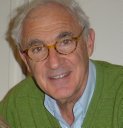 Alexandre Revcolevschi合作论文数Universite Paris-Sud18
 Dmytro S. Inosov合作论文数Max Planck Institute for Solid State Research16Christian Hess合作论文数Leibniz-Institut für Festkörper- und Werkstoffforschung Dresden/Bergische Universität Wuppertal16R. Kraus合作论文数16
 Hiroki Wadati (和達大樹)合作论文数Graduate School of Material Science, University of Hyogo16
 Ronny Sutarto合作论文数The Canadian Light Source, The University of Saskatchewan;Resonant Elastic and Inelastic X-ray Scattering Beamline15
 Helmuth Berger合作论文数15s partzsch合作论文数14Jan Trinckauf合作论文数Leibniz Institute for Solid State and Materials Research IFW Dresden14
 Jeroen van den Brink合作论文数Institute for Theoretical Solid State Physics, Leibniz Institute for Solid State and Materials Research Dresden14
 Alexander A. Kordyuk合作论文数IMP Kyiv13
 Valentina Bisogni合作论文数CNR/INFM and Dipartimento di Fisica, Politecnico di Milano13m zwiebler合作论文数12
 J. Hamann-Borrero合作论文数Institute for Solid State Research, IFW Dresden12Feizhou He合作论文数11
 John Hill合作论文数Brookhaven National Laboratory, U.S. Department of Energy11Markus Hucker合作论文数11
 Gaston Garbarino合作论文数Experiments Division, European Synchrotron Radiation Facility;High Pressure Laboratory, European Synchrotron Radiation Facility11
 Rolf Follath合作论文数11s kiele合作论文数10Liviu Hozoi合作论文数Institute for Theoretical Solid State Physics, Leibniz Institute for Solid State and Materials Research10Quirin Stahl合作论文数9
 Andrew Achkar合作论文数Dept Phys & Astron, Univ Waterloo9
 Thorsten Schmitt合作论文数Laboratory for Advanced Spectroscopy and X-ray Sources, Center for Photon Science, Paul Scherrer Institute9
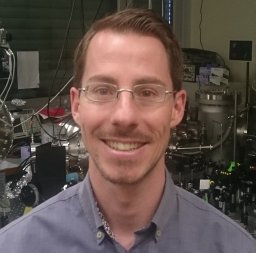 Claude Monney合作论文数Departement de Physique;Fribourg Center for Nanomaterials;Universite de Fribourg;Fribourg Center for Nanomaterials, Universite de Fribourg9
 Sabine Wurmehl合作论文数Department Synthesis and Crystal Growth, Leibniz Institute for Solid State and Materials Research9Q. Stahl合作论文数8
 Tobias Ritschel合作论文数Department of Computer Science, Faculty of Engineering Sciences, University College London8
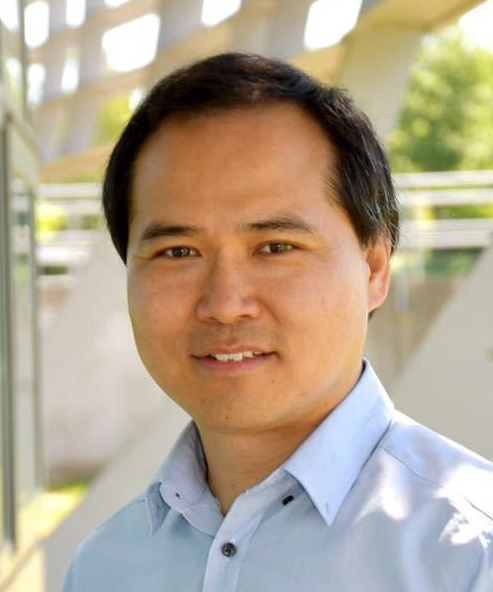 Ke-Jin Zhou (周克瑾)合作论文数School of Nuclear Science and Technology, University of Science and Technology of China;National Synchrotron Radiation Laboratory, University of Science and Technology of China8
 Thomas Kroll合作论文数IFW Dresden7Andrey Maljuk合作论文数Institute of Solid State Physics, Russian Academy of Sciences7P.Reutler Preutler合作论文数Laboratoire de Physico-Chimie de l'Etat Solide, Université Paris-Sud7
 Nikolay A. Bogdanov合作论文数6
 Kyle Shen合作论文数Department of Physics, College of Arts and Sciences, Cornell University;Laboratory of Atomic and Solid State Physics, Cornell University6
 Ruixing Liang合作论文数Advanced Materials and Process Engineering Laboratory, University of British Columbia6




