Knowledge distillation (KD) is the de facto standard for compressing large-scale multimodal models into smaller ones. Prior works have explored ever more complex KD strategies involving different objectives, teacher-ensembles, and weight inheritance. In this work, we explore an alternative, yet simple approach—active data curation as effective distillation for contrastive multimodal pretraining. Our simple online batch selection method, ACID, outperforms strong KD baselines across various model-,data-and compute-configurations. Further, we find such an active curation strategy to in fact be complementary to standard KD, and can be effectively combined to train highly performant inference-efficient models. Our simple and scalable pretraining framework, ACED, achieves state-of-the-art results across 27 zero-shot classification and image-text retrieval tasks with upto 11% less inference FLOPs. We further demonstrate that ACED yields strong vision-encoders for training generative multimodal models, outperforming larger vision encoders on image-captioning and visual question-answering tasks.
We introduce SigLIP 2, a family of new multilingual vision-language encoders that build on the success of the original SigLIP. In this second iteration, we extend the original image-text training objective with several prior, independently developed techniques into a unified recipe -- this includes captioning-based pretraining, self-supervised losses (self-distillation, masked prediction) and online data curation. With these changes, SigLIP 2 models outperform their SigLIP counterparts at all model scales in core capabilities, including zero-shot classification, image-text retrieval, and transfer performance when extracting visual representations for Vision-Language Models (VLMs). Furthermore, the new training recipe leads to significant improvements on localization and dense prediction tasks. We also train variants which support multiple resolutions and preserve the input's native aspect ratio. Finally, we train on a more diverse data-mixture that includes de-biasing techniques, leading to much better multilingual understanding and improved fairness. To allow users to trade off inference cost with performance, we release model checkpoints at four sizes: ViT-B (86M), L (303M), So400m (400M), and g (1B).
Large-scale multimodal representation learning successfully optimizes for zero-shot transfer at test time. Yet the standard pretraining paradigm (contrastive learning on large amounts of image-text data) does not explicitly encourage representations to support few-shot adaptation. In this work, we propose a simple, but carefully designed extension to multimodal pretraining which enables representations to accommodate additional context. Using this objective, we show that vision-language models can be trained to exhibit significantly increased few-shot adaptation: across 21 downstream tasks, we find up to four-fold improvements in test-time sample efficiency, and average few-shot adaptation gains of over 5%, while retaining zero-shot generalization performance across model scales and training durations. In particular, equipped with simple, training-free, metric-based adaptation mechanisms, our representations easily surpass more complex and expensive optimization-based schemes, vastly simplifying generalization to new domains.
Neural population activity in sensory cortex informs our perceptual interpretation of the environment. Oftentimes, this population activity will support multiple alternative interpretations. The larger the spread of probability over different alternatives, the more uncertain the selected perceptual interpretation. We test the hypothesis that the reliability of perceptual interpretations can be revealed through simple transformations of sensory population activity. We recorded V1 population activity in fixating macaques while presenting oriented stimuli under different levels of nuisance variability and signal strength. We developed a decoding procedure to infer from V1 activity the most likely stimulus orientation as well as the certainty of this estimate. Our analysis shows that response magnitude, response dispersion, and variability in response gain all offer useful proxies for orientation certainty. Of these three metrics, the last one has the strongest association with the decoder's uncertainty estimates. These results clarify that the nature of neural population activity in sensory cortex provides downstream circuits with multiple options to assess the reliability of perceptual interpretations.
PaliGemma is an open Vision-Language Model (VLM) that is based on the SigLIP-So400m vision encoder and the Gemma-2B language model. It is trained to be a versatile and broadly knowledgeable base model that is effective to transfer. It achieves strong performance on a wide variety of open-world tasks. We evaluate PaliGemma on almost 40 diverse tasks including standard VLM benchmarks, but also more specialized tasks such as remote-sensing and segmentation.
Most transformer-based video encoders are limited to short temporal contexts due to their quadratic complexity. While various attempts have been made to extend this context, this has often come at the cost of both conceptual and computational complexity. We propose to instead re-purpose existing pre-trained video transformers by simply fine-tuning them to attend to memories derived non-parametrically from past activations. By leveraging redundancy reduction, our memory-consolidated vision transformer (MC-ViT) effortlessly extends its context far into the past and exhibits excellent scaling behavior when learning from longer videos. In doing so, MC-ViT sets a new state-of-the-art in long-context video understanding on EgoSchema, Perception Test, and Diving48, outperforming methods that benefit from orders of magnitude more parameters.
Data curation is an essential component of large-scale pretraining. In this work, we demonstrate that jointly selecting batches of data is more effective for learning than selecting examples independently. Multimodal contrastive objectives expose the dependencies between data and thus naturally yield criteria for measuring the joint learnability of a batch. We derive a simple and tractable algorithm for selecting such batches, which significantly accelerate training beyond individually-prioritized data points. As performance improves by selecting from larger super-batches, we also leverage recent advances in model approximation to reduce the associated computational overhead. As a result, our approach–multimodal contrastive learning with joint example selection (JEST)–surpasses state-of-the-art models with up to 13× fewer iterations and 10× less computation. Essential to the performance of JEST is the ability to steer the data selection process towards the distribution of smaller, well-curated datasets via pretrained reference models, exposing the level of data curation as a new dimension for neural scaling laws.
Training deep networks requires various design decisions regarding for instance their architecture, data augmentation, or optimization. In this work, we find these training variations to result in networks learning unique feature sets from the data. Using public model libraries comprising thousands of models trained on canonical datasets like ImageNet, we observe that for arbitrary pairings of pretrained models, one model extracts significant data context unavailable in the other – independent of overall performance. Given any arbitrary pairing of pretrained models and no external rankings (such as separate test sets, e.g. due to data privacy), we investigate if it is possible to transfer such "complementary" knowledge from one model to another without performance degradation – a task made particularly difficult as additional knowledge can be contained in stronger, equiperformant or weaker models. Yet facilitating robust transfer in scenarios agnostic to pretrained model pairings would unlock auxiliary gains and knowledge fusion from any model repository without restrictions on model and problem specifics - including from weaker, lower-performance models. This work therefore provides an initial, in-depth exploration on the viability of such general-purpose knowledge transfer. Across large-scale experiments, we first reveal the shortcomings of standard knowledge distillation techniques, and then propose a much more general extension through data partitioning for successful transfer between nearly all pretrained models, which we show can also be done unsupervised. Finally, we assess both the scalability and impact of fundamental model properties on successful model-agnostic knowledge transfer.
Human ability to recognize complex visual patterns arises through transformations performed by successive areas in the ventral visual cortex. Deep neural networks trained end-to-end for object recognition approach human capabilities, and offer the best descriptions to date of neural responses in the late stages of the hierarchy. But these networks provide a poor account of the early stages, compared to traditional hand-engineered models, or models optimized for coding efficiency or prediction. Moreover, the gradient backpropagation used in end-to-end learning is generally considered to be biologically implausible. Here, we overcome both of these limitations by developing a bottom-up self-supervised training methodology that operates independently on successive layers. Specifically, we maximize feature similarity between pairs of locally-deformed natural image patches, while decorrelating features across patches sampled from other images. Crucially, the deformation amplitudes are adjusted proportionally to receptive field sizes in each layer, thus matching the task complexity to the capacity at each stage of processing. In comparison with architecture-matched versions of previous models, we demonstrate that our layerwise complexity-matched learning (LCL) formulation produces a two-stage model (LCL-V2) that is better aligned with selectivity properties and neural activity in primate area V2. We demonstrate that the complexity-matched learning paradigm is responsible for much of the emergence of the improved biological alignment. Finally, when the two-stage model is used as a fixed front-end for a deep network trained to perform object recognition, the resultant model (LCL-V2Net) is significantly better than standard end-to-end self-supervised, supervised, and adversarially-trained models in terms of generalization to out-of-distribution tasks and alignment with human behavior.
With the advent and recent ubiquity of foundation models, continual learning (CL) has recently shifted from continual training from scratch to the continual adaptation of pretrained models, seeing particular success on rehearsal-free CL benchmarks (RFCL). To achieve this, most proposed methods adapt and restructure parameter-efficient finetuning techniques (PEFT) to suit the continual nature of the problem. Based most often on input-conditional query-mechanisms or regularizations on top of prompt- or adapter-based PEFT, these PEFT-style RFCL (P-RFCL) approaches report peak performances; often convincingly outperforming existing CL techniques. However, on the other end, critical studies have recently highlighted competitive results by training on just the first task or via simple non-parametric baselines. Consequently, questions arise about the relationship between methodological choices in P-RFCL and their reported high benchmark scores. In this work, we tackle these questions to better understand the true drivers behind strong P-RFCL performances, their placement w.r.t. recent first-task adaptation studies, and their relation to preceding CL standards such as EWC or SI. In particular, we show: (1) P-RFCL techniques relying on input-conditional query mechanisms work not because, but rather despite them by collapsing towards standard PEFT shortcut solutions. (2) Indeed, we show how most often, P-RFCL techniques can be matched by a simple and lightweight PEFT baseline. (3) Using this baseline, we identify the implicit bound on tunable parameters when deriving RFCL approaches from PEFT methods as a potential denominator behind P-RFCL efficacy. Finally, we (4) better disentangle continual versus first-task adaptation, and (5) motivate standard RFCL techniques s.a. EWC or SI in light of recent P-RFCL methods.
Power-law scaling indicates that large-scale training with uniform sampling is prohibitively slow. Active learning methods aim to increase data efficiency by prioritizing learning on the most relevant examples. Despite their appeal, these methods have yet to be widely adopted since no one algorithm has been shown to a) generalize across models and tasks b) scale to large datasets and c) yield overall FLOP savings when accounting for the overhead of data selection. In this work we propose a method which satisfies these three properties, leveraging small, cheap proxy models to estimate “learnability” scores for datapoints, which are used to prioritize data for the training of much larger models. As a result, our models require 46% and 51% fewer training updates and up to 25% less total computation to reach the same performance as uniformly-trained visual classifiers on JFT and multimodal models on ALIGN. Finally, we find our data-prioritization scheme to be complementary with recent data-curation and learning objectives, yielding a new state-of-the-art in several multimodal transfer tasks.
Multimodal foundation models serve numerous applications at the intersection of vision and language. Still, despite being pretrained on extensive data, they become outdated over time. To keep models updated, research into continual pretraining mainly explores scenarios with either (1) infrequent, indiscriminate updates on large-scale new data, or (2) frequent, sample-level updates. However, practical model deployment often operates in the gap between these two limit cases, as real-world applications often demand adaptation to specific subdomains, tasks or concepts – spread over the entire, varying life cycle of a model. In this work, we complement current perspectives on continual pretraining through a research test bed as well as provide comprehensive guidance for effective continual model updates in such scenarios. We first introduce FoMo-in-Flux, a continual multimodal pretraining benchmark with realistic compute constraints and practical deployment requirements, constructed over 63 datasets with diverse visual and semantic coverage. Using FoMo-in-Flux, we explore the complex landscape of practical continual pretraining through multiple perspectives: (1) A data-centric investigation of data mixtures and stream orderings that emulate real-world deployment situations, (2) a method-centric investigation ranging from simple fine-tuning and traditional continual learning strategies to parameter-efficient updates and model merging, (3) meta learning rate schedules and mechanistic design choices, and (4) the influence of model and compute scaling. Together, our insights provide a practitioner's guide to continual multimodal pretraining for real-world deployment. Our benchmark and code is here: https://github.com/ExplainableML/fomo_in_flux.
Humans learn powerful representations of objects and scenes by observing how they evolve over time. Yet, outside of specific tasks that require explicit temporal understanding, static image pretraining remains the dominant paradigm for learning visual foundation models. We question this mismatch, and ask whether video pretraining can yield visual representations that bear the hallmarks of human perception: generalisation across tasks, robustness to perturbations, and consistency with human judgements. To that end we propose a novel procedure for curating videos, and develop a contrastive framework which learns from the complex transformations therein. This simple paradigm for distilling knowledge from videos, called VITO, yields general representations that far outperform prior video pretraining methods on image understanding tasks, and image pretraining methods on video understanding tasks. Moreover, VITO representations are significantly more robust to natural and synthetic deformations than image-, video-, and adversarially-trained ones. Finally, VITO's predictions are strongly aligned with human judgements, surpassing models that were specifically trained for that purpose. Together, these results suggest that video pretraining could be a simple way of learning unified, robust, and human-aligned representations of the visual world.
In-context learning$\unicode{x2013}$the ability to configure a model's behavior with different prompts$\unicode{x2013}$has revolutionized the field of natural language processing, alleviating the need for task-specific models and paving the way for generalist models capable of assisting with any query. Computer vision, in contrast, has largely stayed in the former regime: specialized decoders and finetuning protocols are generally required to perform dense tasks such as semantic segmentation and depth estimation. In this work we explore a simple mechanism for in-context learning of such scene understanding tasks: nearest neighbor retrieval from a prompt of annotated features. We propose a new pretraining protocol$\unicode{x2013}$leveraging attention within and across images$\unicode{x2013}$which yields representations particularly useful in this regime. The resulting Hummingbird model, suitably prompted, performs various scene understanding tasks without modification while approaching the performance of specialists that have been finetuned for each task. Moreover, Hummingbird can be configured to perform new tasks much more efficiently than finetuned models, raising the possibility of scene understanding in the interactive assistant regime.
The core problem in zero-shot open vocabulary detection is how to align visual and text features, so that the detector performs well on unseen classes. Previous approaches train the feature pyramid and detection head from scratch, which breaks the vision-text feature alignment established during pretraining, and struggles to prevent the language model from forgetting unseen classes. We propose three methods to alleviate these issues. Firstly, a simple scheme is used to augment the text embeddings which prevents overfitting to a small number of classes seen during training, while simultaneously saving memory and computation. Secondly, the feature pyramid network and the detection head are modified to include trainable gated shortcuts, which encourages vision-text feature alignment and guarantees it at the start of detection training. Finally, a self-training approach is used to leverage a larger corpus of image-text pairs thus improving detection performance on classes with no human annotated bounding boxes. Our three methods are evaluated on the zero-shot version of the LVIS benchmark, each of them showing clear and significant benefits. Our final network achieves the new stateof-the-art on the mAP-all metric and demonstrates competitive performance for mAP-rare, as well as superior transfer to COCO and Objects365.
The promise of self-supervised learning (SSL) is to leverage large amounts of unlabeled data to solve complex tasks. While there has been excellent progress with simple, image-level learning, recent methods have shown the advantage of including knowledge of image structure. However, by introducing hand-crafted image segmentations to define regions of interest, or specialized augmentation strategies, these methods sacrifice the simplicity and generality that makes SSL so powerful. Instead, we propose a self-supervised learning paradigm that discovers this image structure by itself. Our method, Odin, couples object discovery and representation networks to discover meaningful image segmentations without any supervision. The resulting learning paradigm is simpler, less brittle, and more general, and achieves state-of-the-art transfer learning results for object detection and instance segmentation on COCO, and semantic segmentation on PASCAL and Cityscapes, while strongly surpassing supervised pre-training for video segmentation on DAVIS.
General perception systems such as Perceivers can process arbitrary modalities in any combination and are able to handle up to a few hundred thousand inputs. They achieve this generality by using exclusively global attention operations. This however hinders them from scaling up to the inputs sizes required to process raw high-resolution images or video. In this paper, we show that some degree of locality can be introduced back into these models, greatly improving their efficiency while preserving their generality. To scale them further, we introduce a self-supervised approach that enables learning dense low-dimensional positional embeddings for very large signals. We call the resulting model a Hierarchical Perceiver (HiP). In sum our contributions are: 1) scaling Perceiver-type models to raw high-resolution images and audio+video, 2) showing the feasibility of learning 1M+ positional embeddings from scratch using masked auto-encoding, 3) demonstrating competitive performance on raw data from ImageNet, AudioSet, PASCAL VOC, ModelNet40 and Kinetics datasets with the same exact, unchanged model and without specialized preprocessing or any tokenization.
A central goal of machine learning is the development of systems that can solve many problems in as many data domains as possible. Current architectures, however, cannot be applied beyond a small set of stereotyped settings, as they bake in domain task assumptions or scale poorly to large inputs or outputs. In this work, we propose Perceiver IO, a general-purpose architecture that handles data from arbitrary settings while scaling linearly with the size of inputs and outputs. Our model augments the Perceiver with a flexible querying mechanism that enables outputs of various sizes and semantics, doing away with the need for task-specific architecture engineering. The same architecture achieves strong results on tasks spanning natural language and visual understanding, multi-task and multi-modal reasoning, and StarCraft II. As highlights, Perceiver IO outperforms a Transformer-based BERT baseline on the GLUE language benchmark despite removing input tokenization and achieves state-of-the-art performance on Sintel optical flow estimation with no explicit mechanisms for multiscale correspondence.
Self-supervised methods have achieved remarkable success in transfer learning, often achieving the same or better accuracy than supervised pre-training. Most prior work has done so by increasing pre-training computation by adding complex data augmentation, multiple views, or lengthy training schedules. In this work, we investigate a related, but orthogonal question: given a fixed FLOP budget, what are the best datasets, models, and (self-)supervised training methods for obtaining high accuracy on representative visual tasks? Given the availability of large datasets, this setting is often more relevant for both academic and industry labs alike. We examine five large-scale datasets (JFT-300M, ALIGN, ImageNet-1K, ImageNet-21K, and COCO) and six pre-training methods (CLIP, DINO, SimCLR, BYOL, Masked Autoencoding, and supervised). In a like-for-like fashion, we characterize their FLOP and CO$_2$ footprints, relative to their accuracy when transferred to a canonical image segmentation task. Our analysis reveals strong disparities in the computational efficiency of pre-training methods and their dependence on dataset quality. In particular, our results call into question the commonly-held assumption that self-supervised methods inherently scale to large, uncurated data. We therefore advocate for (1) paying closer attention to dataset curation and (2) reporting of accuracies in context of the total computational cost.
 Nikhil Parthasarathy合作论文数Center for Neural Science, New York University8
 Skanda Koppula合作论文数DeepMind, Google7
 João Carreira合作论文数Google DeepMind7
 Oriol Vinyals合作论文数Google DeepMind6
 Robbe Goris合作论文数5
 Eero P. Simoncelli合作论文数Faculty of Arts & Science, New York University;The Center for Neural Science, New York University;Courant Institute of Mathematical Sciences, New York University;Center for Data Science, New York University;Department of Psychology, New York University5
 Karsten Roth合作论文数The International Max Planck Research School for Intelligent Systems, University of Tuebingen;European Laboratory for Learning and Intelligent Systems, University of Tuebingen5
 Relja Arandjelovic合作论文数Google DeepMind5
 Zeynep Akata合作论文数School of Computation, Informationn and Technology, Technical University of Munich5
 Ivana Balažević合作论文数Google DeepMind4
 Talfan Evans合作论文数University College London4
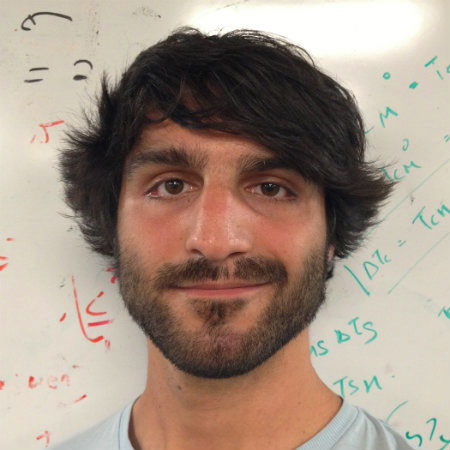 Evan Shelhamer合作论文数Department of Computer Science, Faculty of Science, The University of British Columbia4
 Andrew (Drew) Jaegle合作论文数Mirage4
 Andrew Zisserman合作论文数Department of Engineering Science, University of Oxford4
 Aäron Van Den Oord合作论文数Google DeepMind4
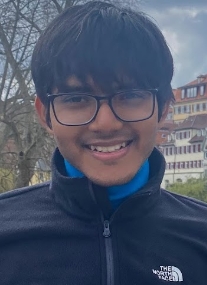 Vishaal Udandarao合作论文数University of Tübingen;University of Cambridge;International Max Planck Research School for Intelligent Systems;ELLIS3
 Zoe M Boundy-Singer合作论文数Center for Perceptual Systems, The University of Texas at Austin3
 Samuel Albanie合作论文数Google DeepMind3
 Jean-Baptiste Alayrac合作论文数DeepMind3
 Corey M. Ziemba合作论文数Center for Neural Science, New York University3
 Matthias Bethge合作论文数Bethge Lab, University of Tuebingen;Institute for Theoretical Physics, Faculty of Science, University of Tuebingen;AI Cente, University of Tuebingen;Bundeswettbewerb KI;European Laboratory for Learning and Intelligent Systems;Maddox AI;DeepArt UG3
 Daniel Zoran合作论文数Google DeepMind3
 Xiaohua Zhai (翟晓华)合作论文数Meta3
 Lucas Beyer合作论文数Meta3
 Mehdi Cherti合作论文数2Lukas Thede合作论文数2
 Muhammad Ferjad Naeem合作论文数Computer Vision lab, Eidgenössische Technische Hochschule Zürich;Google2
 Sebastian Dziadzio合作论文数Microsoft2
 Andreas Peter Steiner合作论文数Google Research2
 Hamza Merzic合作论文数Swiss federal institute of Technology2
 Ali Eslami合作论文数Google DeepMind;Gemini2
 Kristof Meding合作论文数Max-Planck-Institute for Intelligent Systems2
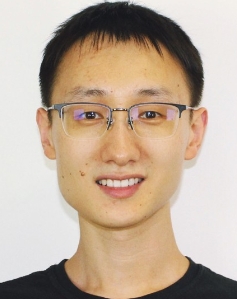 Xiao Wang合作论文数Google DeepMind2
 Ibrahim Alabdulmohsin合作论文数Google DeepMind2
 Pinelopi (Nelly) Papalampidi合作论文数Google DeepMind2
 Catalin Ionescu合作论文数DeepMind;Institute for Numerical Simulation, University of Bonn2
 Michael Tschannen合作论文数Google DeepMind2
 Jeremiah J. Harmsen合作论文数Google DeepMind2
 Carl Doersch合作论文数Google Deepmind2
 Ameya Prabhu合作论文数Tübingen AI Center, University of Tuebingen2
 Matthew Botvinick合作论文数Gatsby Computational Neuroscience Unit, University College London;Anthropic;Yale Law School2
 Alexey A. Gritsenko合作论文数Google DeepMind2
 Alexander Kolesnikov合作论文数Meta2
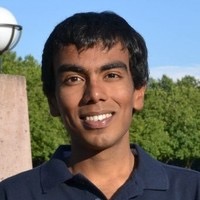 Rishabh Kabra合作论文数DeepMind;University College London1Matthias Bauer合作论文数1David Steiner合作论文数1
 Adrià Recasens合作论文数Google DeepMind1Xia Ye合作论文数1
 Jonathan Richard Schwarz合作论文数University College London;DeepMind1




