The Scientific Revolution and globalization were defining features of the early modern period, jointly laying the structural foundations of modernity. As tangible artifacts of these dynamics, painted enamels reflect the integration of Chinese porcelain expertise with European enamelling techniques introduced through Jesuit networks. However, the recent identification of anomalously purified pigments in these artefacts, compositions once considered chemically unattainable at the time and thus interpreted as diagnostic evidence of later replication, has fuelled longstanding authenticity controversies among scientists and historians. Here we overturn such assumptions by reconstructing the cobalt refinement process developed in Saxony as the earliest known application of selective precipitation, a wet-chemical technique leveraging differences in solubility products to reliably isolate chemically similar elements. Beyond resolving historical disputes, this reconstruction supplies the primary archival, compositional, and quantitative evidence for locating a procedural turning point of early modern chemistry inside the artisanal workshop, and demonstrates how archaeometric study of cultural heritage can test and refine intellectual historiographies of the Chemical Revolution. Furthermore, this study exemplifies the exceptional velocity and complexity of the transimperial circulation of blue enamels, from secretive Saxon laboratory via Vatican missions to the Qing court, revealing that alongside commercial expansion and colonial conquest, the entangled dynamics of experimental expertise, geopolitical rivalries, religious contestation, and diplomatic manoeuvres were integral to shaping early modern globalisation.
This study examines the production techniques of bronze foils excavated from the Sanxingdui site in southwestern China. The foils were mainly made of tin–copper–lead ternary alloys and tin–copper binary alloys, shaped through hammering, and decorated using incising, punching, embossing, and painting. Perforations were produced by single-sided striking, with burrs left untrimmed, reflecting a craft practice that balanced functional and ornamental considerations. The hammering techniques may have been influenced by metalworking traditions from the northern steppes, while the incised decoration likely drew inspiration from jade and gold carving techniques of the Central Plains, subsequently developing a distinctive local style. These bronze foils demonstrate both the technical innovation of Sanxingdui artisans and their ritual significance, highlighting the role of Sanxingdui within regional cultural exchange networks during the bronze age and providing insights into the technological and cultural characteristics of the ancient Shu civilization.
Abstract This chapter provides an overview of the development of archaeometallurgical research in China over the past 50 years. This can be divided roughly into three periods. Archaeometallurgical research in the first period (1974–1983) is represented by Professor Tsun Ko’s (Ke Jun 柯俊) work on a Shang bronze axe with a meteoritic iron blade, which exemplified the successful application of scientific analysis to archaeological metals. The second period (1984–2003) saw the beginning of institutionalisation of archaeometallurgical research, which laid a solid foundation for later growth and expansion. The third period (2004–2023) is characterised by a series of significant changes, such as the emergence of new generations of scholars, an expansion of postgraduate programs, and the implementation of national research projects. The transition from a nationalism-motivated framework to a science-oriented approach is significant in understanding recent developments in archaeometallurgical research in China. This chapter not only highlights important changes in research focuses and theoretical approaches but also explores the motivations and mechanisms behind these changes. The crucial role of the international conference series ‘The Beginnings of the Uses of Metals and Alloys’ (the BUMA conference) in the development of archaeometallurgical research in China is examined to show the long-term impact of growing cooperations and exchanges between Chinese scholars and international partners and colleagues.
This review summarizes the current state of bronze provenance studies in China, highlighting both recent trends and challenges for scholars working with Chinese artefacts and beyond. The first section addresses the issues surrounding highly radiogenic lead (HRL) from the Shang period, arguably the most widely discussed topic in Chinese bronze provenance research. In addition to providing an overview of the current discourse, this section emphasizes two critical questions: the metal(s) with which HRL is associated, and the meaning of its isochron-like trend line. Clarifying these questions could fundamentally alter our understanding of HRL and the metal circulation systems of the Shang period. The second section focuses on the emerging pattern in the rapidly growing body of publications on lead isotope analysis of Chinese bronzes, particularly the synchronic alteration of lead isotope features across vast regions over two millennia. Additionally, this section reviews specific spatial-temporal units, which have generated significant research in recent years and may reveal distinct metal circulation systems. The following sections shift attention to the provenance of copper and tin, essential components in the production of bronze artefacts but often overlooked in provenance studies. Methodological challenges are discussed, with a particular emphasis on the widely used trace element analysis technique. Furthermore, increasing archaeological evidence from metallurgical workshops related to mining, smelting, and alloying practices of these metals holds potential to shed new light on these issues in the near future. Finally, the review offers a brief discussion on model-informed provenance investigations, reflecting a global trend in the field, which is expected to have a substantial impact on the study of Chinese materials in various ways.
Sanxingdui, one of the most significant Bronze Age sites in China, has yielded unique bronze artifacts with varying styles: some exhibit distinct local characteristics, while others resemble central Shang designs, raising questions about their origins. This study applies semi-quantitative petrographic observations and elemental analysis to 39 casting core samples from Pits 1 and 2 at Sanxingdui. The results reveal distinct differences in production techniques and materials between vessel and non-vessel artifacts. Comparative analysis with local soils, sediment, and casting cores from other Chinese bronze production sites suggests that non-vessel bronzes were likely cast locally near Sanxingdui, while vessel artifacts show connections to the middle and lower Yangtze River region. Our findings indicate that Sanxingdui bronzes were part of a larger, interconnected circulation network for bronze products and ores, reflecting complex cultural, technological, and material exchanges with other regions during the Shang period.
The debate on whether lost-wax casting was used to make some exquisite bronze vessels during the Eastern Zhou period (8th-3rd centuries BCE) raises an important issue, that is how to identify the use of lost-wax casting in the archaeological record. This paper proposes a method based on the analysis of lipid residue in clay molds, assuming that the use of lost-wax casting technique might have left some lipid residue in clay materials involved. A series of simulation experiments were carried out in order to investigate the absorption behavior and chemical changes of beeswax during a casting process. The results show that a considerable amount of wax was absorbed by the clay core and underwent various chemical changes under the high temperature condition during the heating and pouring processes. It has been revealed that characteristic biomarkers of beeswax such as 14- and 15hydroxypalmitic acids can sustain a low temperature heating (<100 & DEG;C) while certain components including different acids and aldehydes retained when the heating temperature were kept between 100 and 300 & DEG;C. However, when the heating temperature exceeded 400 & DEG;C, no lipid components were detected in the clay mold and molds. This preliminary experimental work indicates some potential of the proposed method in exploring an effective way of identifying the use of lost-wax casting via analyzing organic residues that clay core may have absorbed and retained under certain circumstances.
The Mogou site in Lintan, Gansu, has yielded the largest collection of Qijia culture bronze artifacts discovered to date. More than 300 bronze artifacts were unearthed, including new forms such as bracelets, neck ornaments, and earrings with trumpet-shaped ends, reflecting the advanced bronze production technology during the late Qijia culture period. This paper presents an analysis of 146 bronze artifacts from the Mogou site, conducted through metallographic microscopy and SEM-EDS analysis. Our results indicate that a relatively high percentage of small ornaments, primarily made of tin bronze, underwent hot forging and cold working, while tools, primarily made of copper and tin-bronze, were typically cast. Furthermore, this study reveals the concurrent existence of leaded tin bronze and arsenical bronze during the late Qijia culture period, suggesting influences from multiple metallurgical systems.
本文揭示了秦始皇帝陵园K0007号祭祀坑出土的一组彩绘青铜水禽的铸造工艺特征.这组青铜水禽于2001-2003年被发掘出土,共计46件,包括20件鸿雁、20件天鹅和6件仙鹤,不仅是实体大小,而且造型生动、典雅而多样,不少水禽表面仍可见黑、白两色的彩绘残余.科学检测揭示出一系列前所未见的工艺特征,包括颈部铜隔档、芯骨、芯撑、空腔铸造和补缀铜片等,表明这组水禽很可能是采用失蜡工艺铸造成型的.这一发现意义重大,为战国至秦代中国与西方的文化联系提供了新的实物证据.
叶家山晚商青铜器组多数器物上有族氏铭文,对研究商代晚期青铜器流通、商末周初青铜器矿料利用规律和西周早期青铜器"分器"制度具有重要价值.研究结果表明,这批器物有铸造和铸后受热两种组织形态;合金类型以铅锡青铜为主,另有少量锡青铜和铅青铜;这批器物使用的一部分铜料、铅料与曾国铜器和殷墟四期铜器相同,表明商代晚期开发使用的一部分矿料到西周早期还在继续使用中,而商晚期"锡料来源紧缺",但西周早期曾国铜器锡料供应充足,这些锡料是晚商已开采使用后来被周人掌控,还是周人新开发的,亦需深入研究.
This article presents a technological analysis of the bronze artifacts excavated from the Western Zhou Dynasty cemetery at Beiyao, Luoyang. The results show that the tin content in the Western Zhou bronze artifacts from the Beiyao cemetery is comparable to that of the bronze artifacts from the Yinxu Phase II, indicating that the Western Zhou nobles were able to control and use stable tin sources in the early Western Zhou period. The lead isotope ratios of the artifacts are mostly within the range of ordinary lead, and some overlap with the lead isotope ratios of some bronze artifacts from Yinxu, suggesting that some of the minerals exploited by the late Shang people were also exploited on a large scale in the early Western Zhou period. The study also shows that the circulation of metal minerals was a common and normalized social behavior during the Western Zhou period and was the most important logistical entity in social production at that time.
湖北随州叶家山墓地是西周早期曾国的高等级贵族墓地,葬制独特,布局清晰,保存完整,随葬器物种类多、数量大,备受学界关注[1].其中M28、M65和M111三座墓葬尤为重要,是有确切铭文印证的曾侯墓,而且M28和M65均出土带有"曾侯谏"铭文的铜器[2].M111所出青铜礼器中,有15件可见"曾侯"铭文,完全可以确定其墓主身份为一位曾侯;其中2件铜簋上发现有"曾侯犺作宝尊彝"铭文,另有1件铜方座簋上发现有"犺作烈考南公宝尊彝"铭文,可进一步推定M111墓主为"曾侯犺"[3].需要指出的是,在叶家山西周墓地发现后,有学者指出M111是墓地中年代最早的一位曾侯墓[4],但M111发掘简报将其年代推定在西周早期偏晚阶段,约当昭王时期.
The beginning and early development of metallurgy in China have long been hot topics in Eurasian archaeology since they were suggested to be closely linked with the so-called “prehistoric globalization.” This paper assesses the available archaeological and archaeometallurgical evidence within their temporal-spatial framework and explores diachronic and cross-spatial developmental processes of early metallurgy in different regions in China. While recognizing the importance of long-distance interaction and exogenous technological stimulation, we draw attention to the local adoption and adaptation process of metallurgy and highlight the significance of local communities as sponsors, practitioners, and consumers of the metallurgical products and production as well as agents of technology transmission. While previous research has focused on individual object features that were seen as typical for specific archaeological cultures, current data shows considerable similarities in artifact typologies and material types among the early metal-using societies throughout Northwest China. We therefore argue that the modification of foreign metallurgical traditions through localized practice in Northwest China was crucial for their transmission further eastward and thus for the ultimate establishment of a new metallurgical tradition in the Central Plain of China.
前 言 石峁遗址位于陕西神木市高家堡镇,地处黄土高原北端的黄河西岸,毛乌素沙漠东南缘.自2011年以来,通过系统调查和考古发掘,确认了石峁遗址是以"皇城台"为中心,内城和外城以石砌城垣为周界的大型石城.石峁遗址城垣结构清晰,附属城防设施形制完备,城内面积逾400万平方米,是公元前2000年前后中国所见规模最大的城址,对于探索早期国家的形成具有重要意义[1].
The provenance of copper is a major focus in archaeometallurgical studies of Bronze Age China. Despite a large dataset of lead isotopes and trace elements accumulated over the last few decades, discussions surrounding this issue remains inconclusive. A new interpretation paradigm of trace element data called ‘copper group method’ prompted a new round of exchanges and publications on this issue. This paper sets out to reconsider the potential and problems of using trace elements data as a proxy of provenance with some recently published Western Zhou bronze data. It is found that grouping with arbitrary cut-offs causes ignoring of outliers and hides the linear correlation between elements. Bi and Co, excluded in copper group method for simplification, are potentially important indicators of metal provenance in the Western Zhou period. Dimensional reduction and cluster analysis of log-ratio transformed trace element data suggest a series of alternative interpretations about metal circulation of the Western Zhou bronzes, and highlight the regional variation between the Zeng and Jin states in terms of their metal supply networks.
前言 磨沟遗址位于甘肃省临潭县陈旗(今王旗)乡磨沟村洮河西南岸的一处台地上(图一,10),1980年调查时发现有马家窑文化、齐家文化、寺洼文化及宋代的遗存.2008~2012年,甘肃省文物考古研究所和西北大学文化遗产与考古学研究中心联合对磨沟遗址进行了抢救性发掘.墓葬区位于磨沟村北约100米处的遗址东北部,面积约1.2万平方米,清理以齐家文化为主的墓葬1688座.
The invention of yongzhong ((SIC)), the major chime-bell type of the Zhou ((SIC)) dynasty, has been seen as a key sign for the rise of Zhou ritual. From this perspective, the accidental discovery of 11 bronze bells dated to the Western Zhou period (11th-8th centuries BC) at the Wanfunao ((SIC)) site in Yichang, Hubei Province in 2012 is significant for understanding the development of early Chu ((IC)) culture in Hubei and its relationship with the metropolitan area of the Zhou kingdom in Shaanxi. This paper reports the results of scientific analyses of these bells using an optical microscope, portable XRF, SEM-EDS and ICP-EDS. It is revealed that some of these bells are made of Cu-Sn-As (Sb) alloys, while others are of Cu-Sn alloys. It is argued that the use of arsenic-containing bronzes for casting bells in the Western Zhou period has important social implications, and is significant for exploring the rise of regional bronze production as well as the circulation of metal resources in the Western Zhou period. (C) 2022 Elsevier Masson SAS. All rights reserved.
This chapter will expound the discovery of the bronze wares of the early periods as well as the thrive of bronze casting technology in the central China, followed by an introduction of the evolution and development of bronze casting industry in the Shang Dynasty, the Western Zhou Dynasty, the Spring and Autumn, as well as the Warring State periods, in addition to its contribution to the history of Chinese Sci-Tech Civilization.
591 is currently being revisited by thinkers such as Isabelle Stengers, Steven Shaviro, and Bruno Latour. These artists were working in the context of the Cold War, using the master’s weapons to dismantle the master’s house, and the systems thinkers offered the means to understand the complex systems that governed the Cold War world. Many of the artists discussed were closely involved in the Peace Movement, and the urgency of the situation confronting them made their work very compelling. Filippone also shows how, even amid the Cold War with the imminent possibility of total destruction, they aimed to build, or at least to imagine, the idea of a feminist techno-utopia. Such a utopia would reject the “perfect world” model with its closed systems and be based instead on fluid boundaries and open systems. The work of these artists comes from their own times and contexts, but also holds lessons for today, especially in light of the environmental catastrophe society is now witnessing. It is not just their engagement with technology and systems that offers models for current artistic practice, but also their utopianism. Utopias may be necessarily unrealizable in practice, but they can also offer a horizon of possibility—a sense that it is possible to imagine a future different from the one we seem doomed to endure. This act of imagination is something that artists are uniquely suited for. Christine Filippone is to be congratulated not just on an excellent work of scholarship, but also on a work that offers a template for future artistic activity. As such, it is an invaluable resource not just for the field of art history, but also for those thinking about how to respond artistically to our current crisis-ridden world.
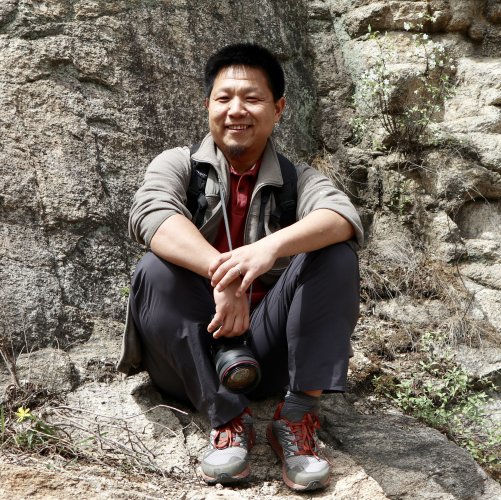 Kunlong Chen (陈坤龙 )合作论文数Institute of Cultural Heritage and History of Science & Technology, University of Science and Technology Beijing55
 AnDing Shao (邵安定)合作论文数21YongBin Yu (郁永彬)合作论文数12Yingchen Wang合作论文数8
 Siran Liu (刘思然)合作论文数Institute of Cultural Heritage and History of Science & Technology, University of Science and Technology Beijing8WeiGang Sun合作论文数8
 Thilo Rehren合作论文数Institute of Archaeology, Faculty of Social & Historical Sciences, University College London8FengChun Huang (黄凤春)合作论文数7
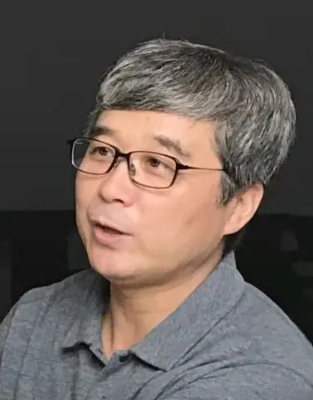 Junchang Yang (杨军昌)合作论文数Institute of Culture and Heritage, Northwestern Polytechnical University7
 Qinglin Ma (马清林)合作论文数Institute of Cultural Heritage, Shandong University7Congcang Zhao (赵丛苍)合作论文数School of Cultural Heritage, Northwest University7
 Yaxiong Liu合作论文数UCL Institute of Archaeology6Lu WANG (王璐)合作论文数6HuaiYing Chang (常怀颖)合作论文数6Rongni Zheng (郑蓉妮)合作论文数Institute of Marxism, Central South University6Yongbin Yu合作论文数5
 Marcos Martinón-Torres合作论文数Department of Archaeology, University of Cambridge4MingZhi Ma (马明志)合作论文数4
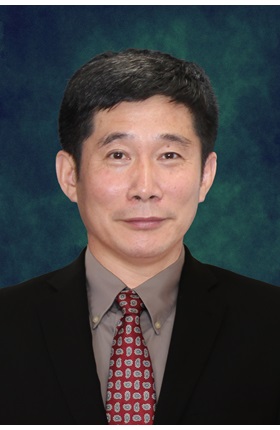 Jianli Chen (陈剑利)合作论文数Department of Land Surveying and Geo-Informatics, Faculty of Construction and Environment, The Hong Kong Polytechnic University4jianyu liu (刘建宇)合作论文数3Jing Shao (邵晶)合作论文数3
 Jianfeng Cui (崔剑锋)合作论文数School of Archaeology and Museology, Peking University3Yoshimitsu Hirao合作论文数2Chengyun Xiao合作论文数2Dexiang Zhao合作论文数2Ruilin Mao合作论文数2Liu Yong (刘勇)合作论文数2Meng-ya XIAO (肖梦娅)合作论文数2Guanghua Xiang (向光华)合作论文数2Lele Wang合作论文数2
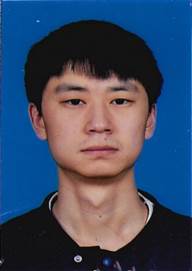 Zhimin Li (李志敏)合作论文数School of Archaeology, Shandong University;Institute of Cultural Heritage, Shandong University2yongle wang (王永乐)合作论文数2Jianjun QIAO (乔建军)合作论文数2Yu Dang (党郁)合作论文数2JianEn Cao (曹建恩)合作论文数2
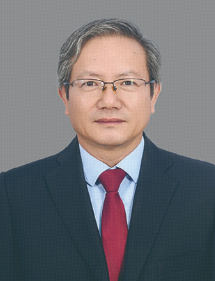 Yaoting Xie (谢尧亭)合作论文数School of Archaeology and Museology, Shanxi University2
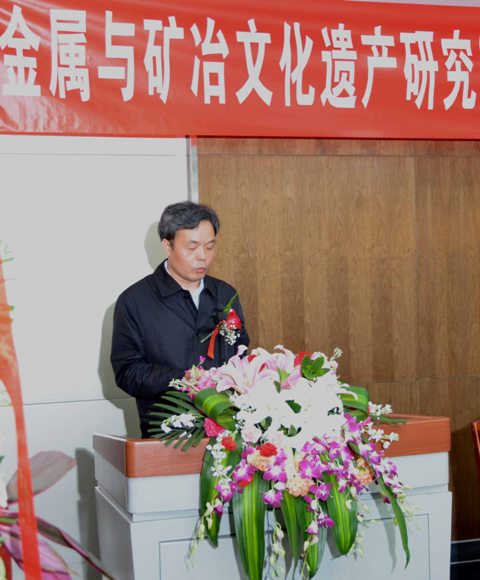 Yanxiang Li (李延祥)合作论文数北京科技大学科技史与文化遗产研究院冶金与材料史研究所2
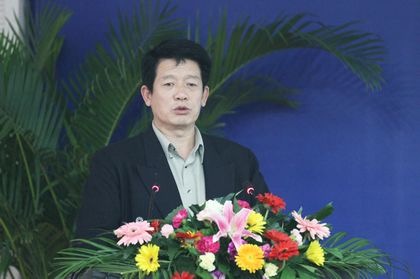 Cunxin Li (李存信)合作论文数中国社会科学院考古研究所2
 Lu Pan (潘路)合作论文数National Museum of China2Yaopeng Qian (钱耀鹏)合作论文数School of Cultural Heritage, Northwest University2
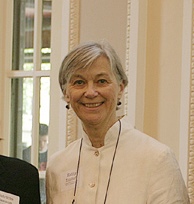 Katheryn Linduff合作论文数School of Architecture, Carnegie Mellon University2Jinbiao Jia (贾金标)合作论文数2
 Fude Tie (铁付德)合作论文数中国文物保护技术协会2
 Shuyun Sun (孙淑云)合作论文数Institute of Cultural Heritage and History of Science & Technology, University of Science and Technology Beijing2Yawei Dong (董亚巍)合作论文数2
 Wei Yang (杨蔚)合作论文数Institute of Geology and Geophysics, Chinese Academy of Sciences2




